




Tire Report: Tire 'Myth'-perceptions
Prominent Canadian journalist Allan Fotheringham offered the following bit of advice to aspiring journalists: "If your mother tells you her age, check it out." But the advantages of a little skepticism aren't limited to journalist

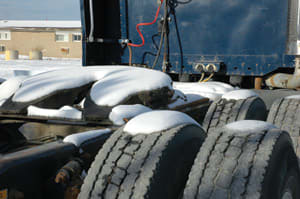
Tire casings are inspected and reconditioned before making two, three, or perhaps four journeys down the road of life. (Photo by Jim Park)
Prominent Canadian journalist Allan Fotheringham offered the following bit of advice to aspiring journalists: "If your mother tells you her age, check it out." But the advantages of a little skepticism aren't limited to journalists
. There's no shortage of people with advice on prolonging the life of tires, or achieving better fuel mileage, or a better way of checking inflation pressure. It's clear from the advice they dispense that many of them don't know tires from a hot rock.
But the myths persist. Some suggestions can wreck otherwise good tires. Some suggestions are dangerous. Others are downright amusing. Tire expert and president of Tire Stamp, Peggy Fisher, told us of one owner-operator who swore up and down that inflating his tires to 140 psi - and that's no typo - improved his fuel mileage dramatically.
"It would," Fisher acknowledged, "but not for long. That's well above the maximum pressure rating for the both the tire and the wheel. And I'd guess he probably had some center-wear issues with his steer tires."
Another good one comes to us from Clif Armstrong, director of marketing for Continental Tire North America, commercial vehicle tires: Green colored tire thumping sticks give you a better tire pressure reading.
Say what?
"Tire thumping sticks, regardless of color, won't give you an air pressure reading," Armstrong stresses. "The only sure way to get an accurate reading is to use a certified and calibrated commercial air pressure gauge, and checking pressure when the tire is cold."
There are others, of course. A few of the more commonly held myth-perceptions follow. Tim Miller, Goodyear's marketing communications manager, commercial tires, says the best way to find strategies that actually work is to consult a tire dealer or the dedicated tire salesperson who works your account.
"Don't try something unless you've checked it out," Miller advises. Otherwise, you might actually lower your tire performance, or even void your tire warranty, he says.
Shop floor myths
Myth: Antifreeze is a good balancing material.
Pure engine antifreeze will freeze in the cold, and when it does, the frozen chunks will cut the inner liner to shreds. In addition, the slick properties of antifreeze can render the tire unrepairable - patches will not stick to the liner. Undiluted antifreeze will corrode and eventually ruin both aluminum and steel wheels.
Myth: Valve caps are unnecessary; the valve core provides the seal.
Valve cores prevent air from escaping out through the valve stem, but they aren't always airtight. They are also susceptible to dirt and ice blockage that can keep the valve core open. A tight, metal valve cap with a gasket provides a sure seal, and protects the valve core, too. Flow-through caps are recommended, since these make pressure checks easier.
Myth: Balance problems? Try golf balls.
Many believe that using balancing material inside a tire can reduce tire/wheel vibration, but golf balls? Golf balls tend to compress into a cube pattern, which can damage the tire inner liner. Use lead weights or a compound that will not damage or react with the inside of the tire. Save your old golf balls for tricky, water-protected greens.
Myth: Vehicle alignment has little effect on vehicle fuel economy.
Tires that aren't running true to the direction of travel are literally being dragged sideways along the road surface the equivalent of a few feet for every mile of travel. This not only increases the rolling resistance of the tires, it also wears the tires down faster. Incorrect toe-in settings generally have the greatest effect on truck tire wear and are probably the easiest to correct, but don't stop there. Check camber, caster, and axle parallelism (the second leading cause of irregular wear, says TMC) regularly as well. Trailer misalignment can affect tire wear on the tractor, so keep trailer axles properly aligned too.
Myth: Tires do not need to be rotated.
Substantial improvements in life expectancy can result from rotating steer and drive tires. Lateral forces exerted on tires tend to wear right or left sides of the tread, especially in turns. Right hand turns tend to be sharp and taken at low speeds. Left turns tend to be sweeping, and are taken at higher speeds. Tires wear accordingly. Switching positions before wear becomes acute allows uneven tire wear to "equalize," thus prolonging tread life.
Tire selection myths
Myth: Retreads cannot be used on hazmat vehicles.
Retreads can be used on any type of vehicle, with only one exception. They cannot be used on the steer wheel positions of passenger-carrying buses.
Myth: Deeper treads guarantee better tread wear.
Really deep treads, notably lug-type treads, compress and squirm under load, which can lead to faster and uneven wear. For every truck, application, and load-bearing requirement, a specific tread depth and design exists that provides optimum tire life and the lowest possible cost-per-mile. More is not always better.
Myth: High load-range tires are more durable than lower load-range tires.
Higher load range tires can hold more inflation pressure than lower range tires and can carry more load at these higher pressures, but they are no more durable or less susceptible to road hazards, punctures, cuts, or abrasion than any other tire.
Myth: Retreads are just new treads glued onto old tire casings.
New tread rubber is applied to experienced tires, that much is true, but only after the casing is inspected, reconditioned, and readied for its second, third, or perhaps fourth journey down the road of life. The new tread is vulcanized to the tire casing in exactly the same fashion as it is applied when a new tire is manufactured. Examinations of road debris from dead tires show that most of the gators come from tires that have never been retreaded. Any tire will suffer a similar fate if proper inflation pressure is not maintained.
Myth: Buying cheap tires is the best way to reduce tire operating costs.
Lower acquisition costs do not necessarily translate into lower life-cycle costs. If the low-cost tire doesn't perform as well as a premium tire or deliver the same retreadability, it could be costing you more money in the long run. The single most effective way of lowering tire-related operating costs is to maintain proper inflation pressure. Period.
Operational myths
Myth: It's OK to limp home empty on a flat tire.
Running any tire flat, regardless of the weight on board, is a bad idea. Soft or underinflated tires will suffer sidewall damage, and if the tire has broken away from the rim, the bead could be damaged. Both will render a tire unusable and unrepairable in a short time.
Myth: Letting air out of steer tires improves ride quality.
With today's steer axle weights, proper inflation pressure is mandatory. Loads of 11,000 to 13,000 pounds are the norm now, and demand pressures of 110 psi or more. Follow Tire and Rim Association pressure recommendations for your load.
Myth: Over-inflating tires allows heavier loads without reducing speed.
Tires are designed to run at specific inflation pressures. Over-inflation changes the tire's footprint, placing more weight on the centerline of the tire. This not only reduces tread life, it also compromises traction, stability, and safety.
Myth: Tires are not affected by speed.
As speeds increase, the load-carrying capacity of many tires actually decreases. Tires that were able to carry a given load at or below 65 mph may require more pressure at higher speed and/or a reduction in load. Spec your tires for the speeds you plan to travel.
This is only a portion of the misconceptions we managed to uncover. So like Mr. Fotheringham suggests, if you get a hot tip on over-inflating your tires to save fuel, check it out. If you have tire questions, consult someone who knows tires, like a tire dealer or manufacture
More Equipment
Behind the Wheel of the New Mack Anthem [Video]
HDT takes the new Mack Anthem around Mack’s Pennsylvania test track to see how its driver-focused design, technology, visibility and handling perform from behind the wheel.
Read More →
DTNA Plans New U.S. Truck Plant as Manufacturing Footprint Shifts
Daimler Truck North America is evaluating sites for a new assembly plant expected to open in 2029 while winding down operations at its longtime Portland manufacturing facility.
Read More →
Great Dane Flatbed Trailer Offers Light Weight and Strength
Freedom Ultra is designed for a wide range of open-deck applications, including building materials, lumber, machinery, steel products, industrial freight, and coil hauling.
Read More →
What It's Like Inside this Custom 2025 Peterbilt 589?
Take a driver's-eye tour of this customized 2025 Peterbilt 589 in this video, as longtime driver Ingrid Brown explains its features, compares it to previous models, and shares plenty of personality along the way.
Read More →
Drivers Put Western Star Trucks to the Test at Star Nation Experience
Watch to get an inside look at the Western Star trucks, technology, and community behind the Star Nation Experience 2026!
Read More →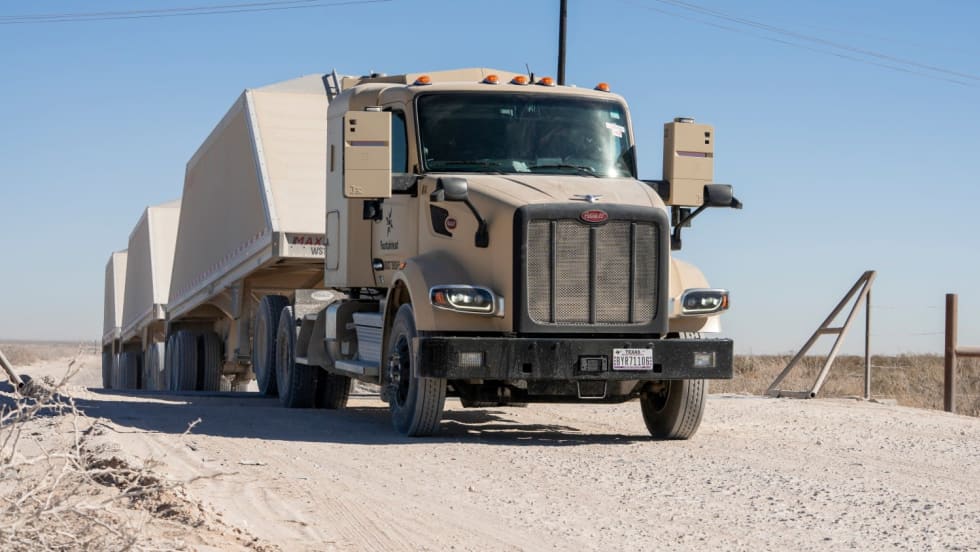
Atlas Expands Kodiak Driverless Truck Fleet in Permian Basin
Atlas Energy Solutions is expanding autonomous frac sand hauling in the Permian Basin with a second load-out location and plans for 100 driverless trucks by mid-2027.
Read More →
Putting Mack’s Command Steer to the Test
A test drive of Mack’s Command Steer active steering system evaluates how it can make truck driving easier and less tiring.
Read More →
Mack, Volvo Expand DEF Derate Software Updates
The updated software gives Mack and Volvo truck owners more time to address DEF-related issues before the engine derates or the vehicle goes into reduced-speed inducement, following new EPA guidance.
Read More →
Rush, MCT Team Up to Grow Refrigeration Service Network
The joint venture will operate MCT's network of Carrier Transicold dealerships and mobile service locations, with the companies promising greater service capacity and uptime for refrigerated fleets.
Read More →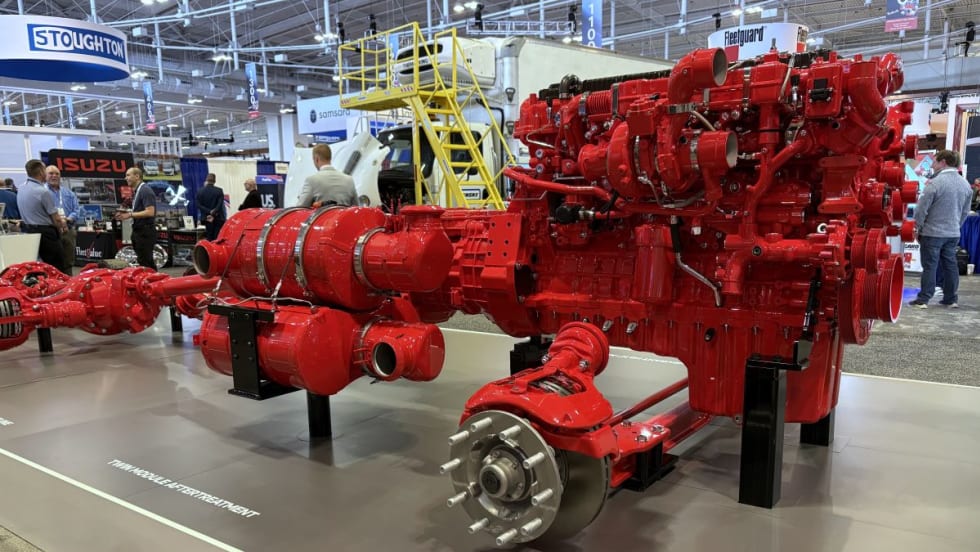
Cummins Adjusts 2027 Engine Rollout After EPA Proposal
The engine maker will gradually introduce its new Model Year 2027 diesel engines while continuing to offer current models during the transition, citing the EPA's proposed emissions rule changes.
Read More →