




Time for Preventive Maintenance on Fuel Surcharges
Funny how things change. Six months ago at $147 a barrel, oil prices were a catastrophe. In mid-December, hovering near $40, they were the only ray of light on an economic horizon that was grim and getting grimmer

Funny how things change. Six months ago at $147 a barrel, oil prices were a catastrophe. In mid-December, hovering near $40, they were the only ray of light on an economic horizon that was grim and getting grimmer.
It's probably best to think of this as a respite. The Organization of Petroleum Exporting Countries and other producers are cutting back to bring supplies in line with falling demand. Sometime in the future, market forces will converge and fuel prices will start to go up. And the primary lesson of last summer's price run-up will reassert itself: The trucking industry can't control the cost at the pump but it must manage what it can.
There are numerous tools for managing fuel, but one essential is a well-structured surcharge program. And now that the pressure is off a little bit, it's a good time for preventive maintenance.
Hundreds of carriers did not survive the run-up in fuel prices last spring. For those that did, a fuel surcharge was the vital difference.
"Fortunately, we have a mechanism that works and is adjustable," said Jim Latta, vice president of business development for A. Duie Pyle, a less-than-truckload fleet in the Northeast. The surcharge gives carriers the flexible response they need to cover their most volatile cost, he said. "Without (it), many of the carriers that operate today would not be in business."
Taking a Step Back
But a surcharge program does not run on autopilot. In times of extreme price fluctuations, carriers must step back and review their programs.
"Everybody is revisiting individual negotiations very carefully and very frequently in this kind of environment," said Tom Nightingale, vice president of communications for the Con-way companies.
Lending urgency to these reviews is the timing of carrier-shipper negotiations covering not just surcharges but also freight rates, Nightingale said. "That gets you into a volatile place and makes you have to reexamine your fuel surcharge policies more often - not just the macro-economic environment of global fuel prices, but the micro-economic environment of what the customer is doing."
There are two primary considerations in surcharge maintenance, Nightingale explained: the step function, and surcharge caps.
The step function refers to the fuel price intervals at which the surcharge changes. For example, a typical plan might use a 5-cent rise in the per-gallon fuel price to trigger a 1-cent increase in the fuel surcharge.
One of the lessons of last spring's run-up is that carriers might want to make adjustments in their intervals. If the interval is too broad, the surcharge cannot keep up with the actual cost of fuel. "In periods of rapid escalation, that always leaves you as a carrier further behind," said Nightingale.
The run-up also taught carriers a lesson about putting caps in their surcharge programs, he said. Carriers had installed caps because they were contractually required, but no one thought they would ever be breached.
"Carriers had to go back to their customers and say, we never thought we'd have to have this discussion - but we're having it. There is a ceiling in this contract that has been blown away."
A Different Approach
This also might be a time to look at an add-on to a fuel surcharge. James Burr, vice president, energy products, for commodity risk manager FC Stone Trading, said he offers a hedging program though which a carrier or a shipper can in effect control fuel prices for a set period.
Burr described a range of insurance-like products designed to reduce the risk of price volatility. "Insuring yourself against fuel price fluctuations is as basic as buying fire insurance," he said. "Which is the bigger risk, the plant catching on fire or the price of diesel going up?"
One product will lock in a surcharge rate for a time. Another caps the surcharge at a set level but allows surcharges to fall if fuel costs go down. A third "collars" the surcharge so that it does not go out of a set range.
"What we're trying to do is get the carrier to see that they can offer fuel surcharge protection to their customer base," Burr said. The value is the ability to say to a shipper that, in return for a premium, you can guarantee that freight costs will stay the same, he said.
"What I keep waiting for is the first big trucking company to come out with an ad campaign (that says) move all your business to us and we won't give you a surcharge. That ability is there."
Burr acknowledged that the concept is bucking resistance in the trucking industry. "People have a hard time buying insurance," he said.
Some carriers are wary because they see fuel hedging as an activity that distracts from their core business.
"We've looked at fuel hedging on multiple occasions and we've never gotten real serious about it," said Nightingale. "What we'd like to do too, is we'd like to make money on moving freight and nothing but moving freight. When you're hedging fuels, obviously, there's always a winner and there's always a loser - that's the nature of a hedge. We'd rather stay out of that game if we had our choice."
At the same time, he said he has no doubt that a lot of shippers are interested. "We have all, from shipper to carrier, been whiplashed with this thing this year. It was such a shock to the system, it's got to be a wakeup call for people to take closer looks at what they can do."
Pass-Through Law
In another surcharge development, the regulatory environment changed last fall with passage of a law that requires surcharges on Defense Department shipments to be passed through to the person who bought the fuel.
This is a scaled-back version of a measure introduced last summer by Rep. Peter DeFazio, D-Ore. That proposal would have required all carriers, brokers and freight forwarders of truckload freight that do not buy fuel for a shipment to reimburse the person who does buy the fuel.
The new law does not confine the requirement to truckload freight. It says that DOD must, "to the maximum extent practicable," ensure that in all contracts that include a fuel surcharge, the surcharge goes to the buyer of the fuel.
DOD will have to make sure that all of its truck transport contracts include the pass-through clause. The department also is charged with publishing a report on its implementation of the provision next summer.
Owner-operator interests approve of the measure. Todd Spencer, executive vice president of the Owner-Operator Independent Drivers Association, said it is a step in the right direction.
The measure had been opposed by the American Trucking Associations and shipper interests. The Transportation Intermediaries Association, representing the third-party logistics industry, said the bill is not necessary, but applauded Congress's decision not to require DOD to report on each shipment. TIA also said that it won a fight against creation of a private right-of-action in the provision, reducing the threat of class-action lawsuits against carriers, brokers, forwarders and shippers.
From the January 2009 issue of Heavy Duty Trucking.
More Fleet Management

Long-Awaited Canadian Border Bridge to Open in Detroit
For trucking, the bridge opening should offer immediate improvements in efficiency and reliability, with new customs facilities, expanded inspection capacity, and direct freeway-to-freeway connections.
Read More →
Aurora Rolls Out Next Generation of Driverless Trucks for Commercial Freight
Aurora's latest autonomous trucks it's rolling out with International feature lower-cost hardware designed for a million miles as the company expands commercial driverless freight operations across the U.S. Sun Belt.
Read More →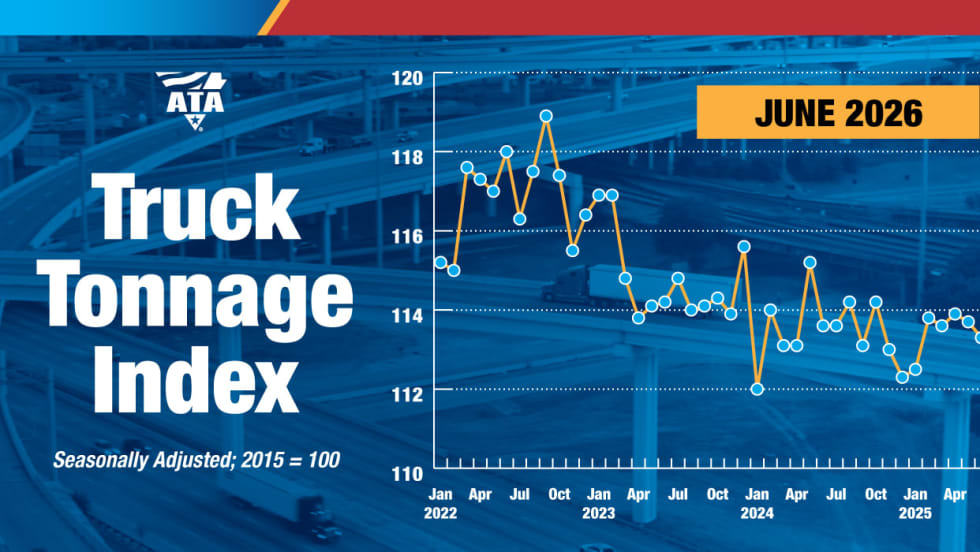
Freight Tonnage Down, Rates up, as Lower Capacity Powers Trucking Recovery
The recovery from the freight recession continues to be driven by reduction in capacity rather than by increased demand.
Read More →

Think Your Trucking Fleet Isn't Using Much AI? Think Again
Shadow AI — the use of unauthorized artificial intelligence tools at work — is becoming increasingly common, putting sensitive company data at risk. Learn how trucking fleets can protect sensitive data while embracing AI.
Read More →
ArcBest Consolidates Brands, Cuts Workforce
The company will bring three business units under the ArcBest brand, eliminate about 2% of positions, and expects the changes to generate $40 million in annual savings.
Read More →
Trucking Fleets Faced Record Operating Costs During Third Year of Freight Recession
ATRI's annual operational cost report shows carriers trimmed fleets, delayed equipment purchases, and ran older trucks as expenses continued to outpace freight rates.
Read More →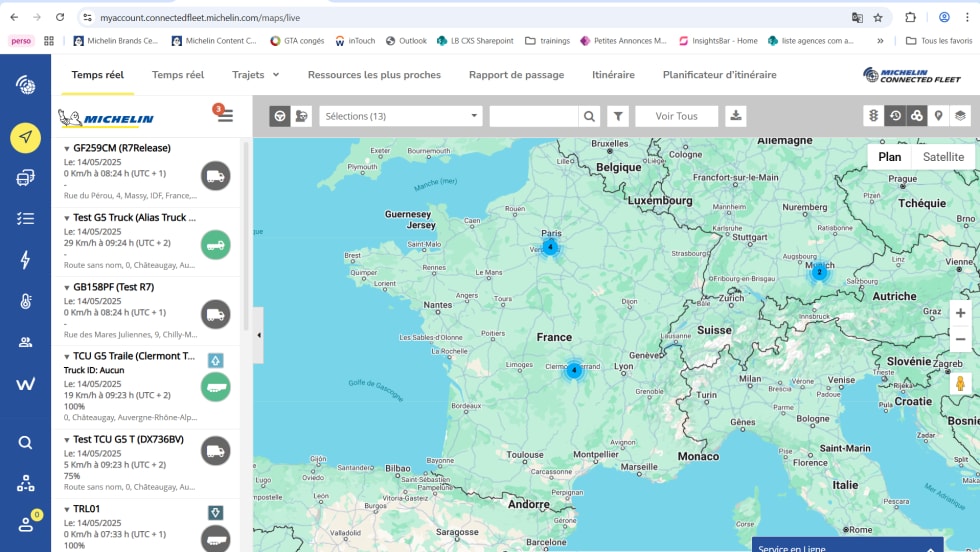
Michelin Adds AI Assistant to MyConnectedFleet Platform
Michelin’s new generative AI tool delivers instant fleet insights, helping managers analyze fuel use, tire maintenance, vehicle status, and operational performance without manually creating reports.
Read More →
LytxOne Platform Now Features AI, Compliance, and Asset Tracking Tools
New enhancements add AI-powered insights, asset tracking, compliance automation, and configurable privacy controls to Lytx's all-in-one fleet management platform.
Read More →
July Imports Poised to Set Container Record
The National Retail Federation projects July container imports will surpass the pandemic-era record as shippers frontload freight ahead of expected August tariff increases.
Read More →
HDT Announces 2026 Truck Fleet Innovator Finalists
From AI and fleet electrification to safety, operations, and leadership, these HDT Truck Fleet Innovator finalists are changing how trucking gets done.
Read More →