




The Right Stuff
What's not to like about the new Toyota pickup?

Toyota knows its brand-new Tundra full-size pickup isn't going to put Ford, General Motors or the Dodge division of DaimlerChrysler out of business. In showing it to reporters at a press event early last fall, Toyota executives noted that their extensive research showed that pickup owners are loyal to their brands, but that a third of them will switch to something different if it's good enough. So this Tundra is for that one-third, especially if they use pickups for serious hauling and towing.
The new Tundra is every bit as big as the American Big Three's half-tonners, and its payload and towing ratings are as strong. It's got a hefty V-8 among its engine choices, along with three cab styles, handsome and easy-to-live-with interiors, and a bunch of work-truck accessories such as ladder and pipe racks, tool boxes and caps developed with recognized aftermarket suppliers.
During the long-lead-time introduction last fall in and near Louisville, Ky., executives emphasized the Tundra's American heritage. It was designed and engineered in California and will be assembled in Indiana and Texas from parts and pieces manufactured in Michigan, Alabama and North Carolina, among other places. If you want to Buy American, this Tundra will qualify, as do the current Tundra and smaller Tacoma (and similar trucks from Nissan, for that matter).
That's all swell, but is the new Tundra itself worthy of consideration? You betcha. Of course, you'd have to like the styling, particularly that bold, chromey nose and high, bulging hood. There are fender bulges that take the aggressive stance from front to rear, and nice creases in the tailgate to punctuate it. Still, there's a faint resemblance to earlier models, which should comfort drivers of 7/8-size Tundras and compact (now midsize) Tacomas (which are also made in the USA). Some of them might upsize – research shows that many do – and Toyota hopes they'll stay loyal.
Get behind the wheel and that high hood noticeably cuts the view to the road just ahead. I quickly adjusted to that, though, and found that the several Tundras I drove were nimble, with tight wheel cuts that made them seem smaller than they actually are. That was most true on the back roads and trails east of Louisville that our hosts had mapped out for us. But the first leg for a driving buddy and me was straight out of downtown and onto Interstate 64, pulling a four-wheel trailer laden with pallets of bricks weighing 8,540 pounds – 2,060 pounds less than the Double Cab truck was rated for.
The suspension felt entirely stable, just like a properly equipped full-size pickup should. Like most other Tundras at the event, this one had the optional, new 5.7-liter (345.6-cubic-inch) i-Force V-8, which makes as much as 381 horsepower and 401 pounds-feet – more than enough for this chore. In a 2x4 Double Cab, the maximum payload, including people and cargo, is 1,755 pounds; a 4x4 is rated for a few hundred less, and a Regular Cab for a few hundred more. All capacities are on a par with those of full-size competitors.
The hefty V-8 is smooth and quiet, and is about as sophisticated as they come: double overhead cams, sequential fuel injection, variable valve timing, twist-the-key-and-release starting (electronic controls engage the cranking motor and release it when the engine's started and turning), and aluminum block with steel cylinder liners. Its bore and stroke are 3.70 by 4 inches, a long-stroke design that contributes to the strong torque.
But it doesn't switch from eight cylinders to four to save fuel, as do similar-size engines from General Motors and Dodge, and it won't burn ethanol, like they will.
Toyota executives said that these things "are being studied." They are being conservative in these matters, partly because this is a new model. A gasoline-electric hybrid version might be tried in the future, but probably not a diesel, in case you're wondering.
The new AB60E six-speed automatic transmission (an AB60F is used with 4x4s) seemed to pick the correct gear for every situation, including downgrades when a Tow-Haul mode had it downshifting to use engine compression to try to maintain the cruise control's set speed. I soon quit playing with the selector and let the tranny think for itself. Fifth and sixth gears are overdrives (0.728 and 0.588, respectively), so engine revs can be kept low on the highway, and the four lower ratios allow rapid propulsion at low and middle road speeds.
We took a 4x4 Tundra Double Cab onto a narrow trail, and there I resumed playing with the shift selector, holding the tranny in first and second to maintain speed on downhills without punching the brakes on the loose gravel surfaces, even if ABS might've kept the wheels from sliding. Over bumps the truck rode well when I was busily driving, but jostled me when I was the passenger and was able to fret about what we were about to bang over. A rotary switch allows easy changing from 2-Hi to 4-Hi and, after stopping and shifting the tranny into Neutral, into 4-Lo.
HVAC switches are also rotary types, which can be operated with just a fast glance and quick twist. You can operate these rotaries and other controls with gloved hands, Toyota marketers insisted. But the weather was warm this day and they neglected to issue us gloves for a proper test. You'd have to take off any gloves to run the Tundra's radio-navigation system, which has pushbuttons you've got to examine to operate. I ignored the system except to listen to some tunes on the stereo to verify that it sounded powerful and pleasant.
That color screen is put to better use with an optional backup camera, which one truck had. The camera hides in a small pod on the tailgate and uses the navigation screen as a monitor. When you shift into Reverse, you can see what you're about to bump into before you actually do. The image is flipped so what's on the right and left sides of the screen corresponds to what's toward either side of the truck, as though you have eyes in the back of your head.
Our off-roading also took us through a pasture of grazing cattle, which lounged along the trail. The beefy black beasts moved out of our way only after being tooted at by the Tundra's authoritative horn; we were glad that none head-butted our truck. Although this was the land of the Kentucky Derby, the vast ranch that we were on seemed to stable no race horses. Neither this trail nor the gravel one were rough enough to require four-wheel drive, but might've been in wet, rainy weather.
Toyota is more or less following Dodge's lead in cab styles. The new Tundra's four-door Double Cab has sedan-style front-hinged doors, and replaces the shorter Access Cab in the current Tundra. A new four-door Crew-Max Cab is longer still, and replaces the current Double Cab with a cabin that claims more rear-seat leg room than Dodge's MegaCab. Rear seats fold to make more room for items too fragile or valuable to be left in the bed. A Tundra two-door Regular Cab, which Toyota thinks will be its main work truck, has a foot-long, full-width plastic tray behind the seat on which to stow small tool boxes and so on.
Two bed lengths measuring slightly over 6.5 and 8 feet are fitted appropriately to the various cab styles. The Regular and Double Cabs can be had with short or long beds, and the Crew-Max gets the short bed only.
I spent much of my time in a Double Cab with the longer bed, which might be chosen by tradesmen who'd use the truck for both work and family duties. It would serve them well, if they'll include it in their truck shopping when they're ready to buy.
Neither Toyota nor Nissan (with Titan full-size pickup) offer 3/4- and 1-ton models, but Ford, GM and Dodge have built them for many years and they help add to their sales numbers. Toyota executives hint that a 3/4-ton Tundra is in the works, but meanwhile the new 1/2-tonner will cover 70 percent of the pickup market. Its sales goals are comparatively modest – 200,000 for the coming year, which is a small fraction of the 2.3 million annual market.
Like Nissan (which sold only 89,000 Titans in 2005), Toyota might continue to find the full-size pickup market a tougher row to hoe than the one for cars. The new, brawnier Tundra seems to have the right stuff, but so do those of the Big Three, and they aren't the giant sloths they were in the 1970s and 1980s.
It'll be a competitive slug fest, and consumers, including those who employ pickups in commercial service, will continue to benefit.
More Fleet Management

What Geotab's New AI Connector Means for Fleets
Fleets can now ask their usual AI assistants questions about maintenance, safety, fuel use, and vehicle performance, using their live Geotab data, and take action on the answers without leaving their preferred AI tool.
Read More →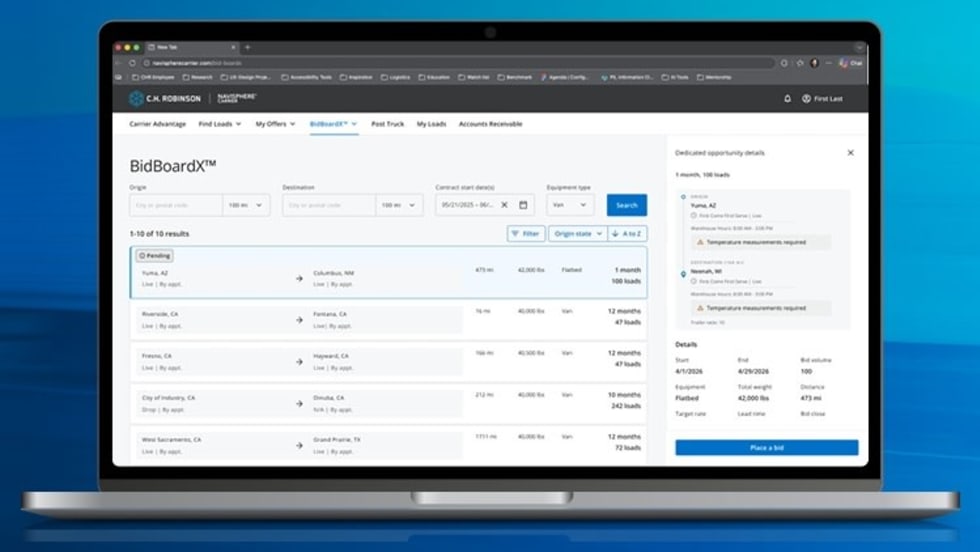
New C.H. Robinson Tool Opens Door to More Predictable Freight
BidBoardX lets carriers search, bid on, and secure committed freight opportunities through a single digital marketplace.
Read More →
New York City's Microhub Project is Delivering Results
Trucking, last-mile delivery companies, and environmental advocates like what they are seeing so far with New York's microhub program.
Read More →
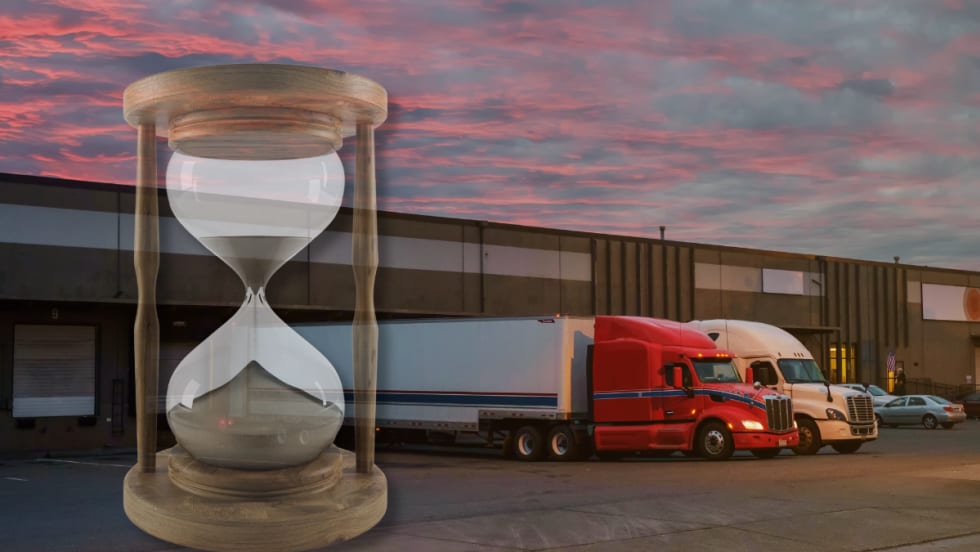
Why Truck Detention Keeps Costing Fleets Time and Money
A 2024 ATRI study found detention affects nearly 40% of truckload stops and costs the industry more than $15 billion annually. Despite the toll on drivers, fleets, and supply chains, the problem remains stubbornly persistent.
Read More →
Time is Running Out to Apply for Exclusive HDT Event
Heavy Duty Trucking Exchange brings fleet managers and suppliers together for the deeper conversations that lead to ideas, partnerships, and solutions. Time is running out to apply for the September event.
Read More →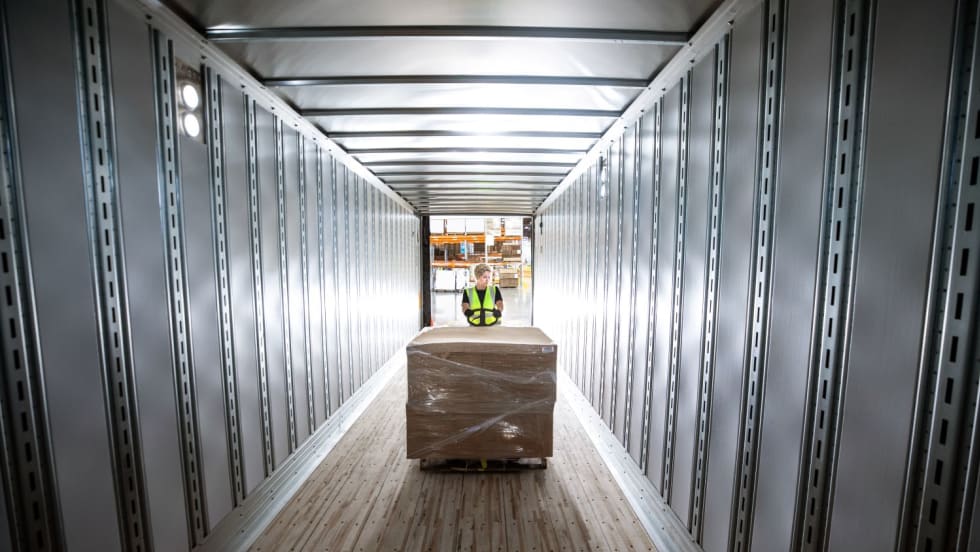
Amazon Launches Less-Than-Truckload Freight Offering for All Businesses
This launch is the latest addition to Amazon Supply Chain Services, a portfolio of supply chain capabilities from Amazon, including freight, distribution, fulfillment, and parcel shipping.
Read More →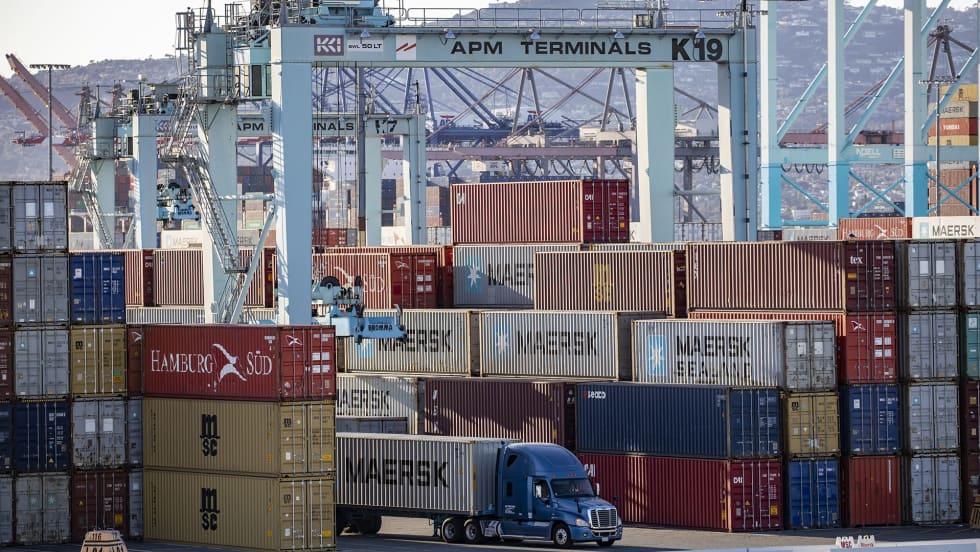
Import Cargo Volume to See Year-Over-Year Gain Again in June, Then Remain Below 2025 Levels Into Fall
After July, the report predicts a weakening in import volume as consumer uncertainty remains high and the impact of increasing inflation takes its toll.
Read More →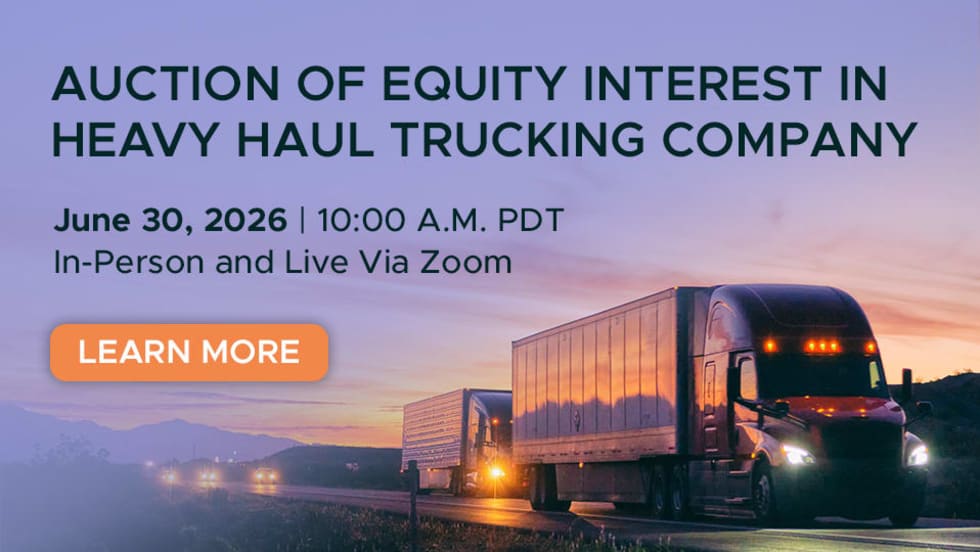
AUCTION OF EQUITY INTEREST IN HEAVY HAUL TRUCKING COMPANY!!
Mark your calendar: June 30, 2026 (10:00 a.m. PDT). A 37.5% ownership interest in MagnaTrans, LLC, a California limited liability company doing business as Magna Transportation Group, will be sold in an in-person and online auction to the highest bidder or bidders under Article 9 of the Uniform Commercial Code. The Rancho Cucamonga-based heavy haul and over-dimensional trucking company operates across California, Oregon, and Arizona.
Read More →
Volvo Trucks Adds Unattended Over-the-Air Software Update Capabilities
The latest evolution of Volvo’s over-the-air update technology allows software updates to run while trucks are parked, helping fleets keep vehicles current without disrupting operations.
Read More →
How Waste Connections is Using Data, Telematics, and AI
How do you manage and maintain more than 18,000 connected trucks? Data. Lots of it.
Read More →