




The Driver Connection
Fleets seeking to modify driver behavior have many more tools at their disposal today than ever before.

We got caught with our pants down this time. Fuel prices are pushing operating costs through the roof, but the traditional fix won't work anymore. As badly as many fleet managers would like to see a return to the old "double nickel" days, it's just not a practical solution right now. We're gear-bound. Slowing down too much negates any hoped-for savings, while creating a ton of drivability issues in the process. Nobody wants a bunch of frustrated drivers running around the country in ninth gear because the trucks run better one cog back.
As we marched toward EPA 2007, we knew engine speed would be critical in maintaining fuel economy. We knew, too, that drivers would head for the door in a heartbeat if anyone so much as mentioned the word "fifty-five." Stuck, we were, between a rock and a hard place. Now we're stuck with a bunch of trucks geared too tall to cruise at anything less than 65.
Making the best of it, fleets across the country are cutting road speed back as much as practical. Schneider went to 60 mph from 65. Con-way Truckload cut back from 70 to 65 mph. Depending on where they started, a 5-mph cut seems to be as much as most drivetrains will take.
Bruce Stockton, vice president of maintenance and asset management at Con-way Truckload in Joplin, Mo., says the 5-mph cut will yield an improvement of 3/10 of a mile per gallon per truck.
"Over our fleet of 2,700 power units, that's almost 2.8 million gallons of fuel saved over 58 million gallons per year," he says. "That's still huge."
Stockton says driver acceptance of the speed reduction was high, but it came at a cost of a penny per mile. Con-way Truckload began talking with drivers about a roll-back last summer. The company held driver forums, meetings, and training sessions between August and November to prepare drivers for the change.
"We were talking with our drivers back when fuel was $2.50 a gallon, saying that we had to change the way we think about the fuel we use," Stockton says. "The drivers told us they'd be willing to give up 5 mph if they saw some compensation in pay. In December, we announced a penny-a-mile increase that took effect in January."
With fuel well over the $4 mark, the company is ahead on the penny-a-mile deal right now, but Stockton says fuel surcharges aren't keeping pace in the short term with rapidly rising fuel prices, so the gain is moot.
He also indicated there's little chance of the company reverting back to a higher road speed even if fuel prices comes down.
"If we were still running 3.55 gears, we could have achieved a half-mile-per-gallon by cutting back to 65," he says.
You can't ignore those numbers anymore.
Other fleets are cutting back road speed, as well, like Green Bay's Schneider National. They implemented a 65 to 60 mph cut without coughing up a penny a mile, but the carrier is offering incentives to drivers that will make the cutback easier to take.
"Surprisingly, we had almost no resistance from our drivers," says the fleet's director of engineering, Dennis Damman. "In fact, we'd had quite a bit of support from the drivers."
Schneider tested their speed change with a number of drivers and found that it resulted in only an additional 15-20 minutes of driving time per day. There was concern among the rank and file that the reduction would produce smaller paychecks.
"It turned out not to be a significant factor over an 11-hour day," Damman says. "All the time we spend in traffic and at docks minimizes the impact of the change."
Damman says Schneider is offering bonuses to drivers who meet or exceed company objectives for minimum idle time and time in top gear at highway speeds. And they're throwing in training and performance evaluation to help drivers meet those targets.
Among the more egregious driving habits revealed during the driver evaluation and training exercises, Damman says, are improper shifting, aggressive acceleration and deceleration, and excessive road speed.
Breaking Bad Habits
Since grabbing back a mile-per-gallon through speed reductions isn't likely, fleets will have to become a little more imaginative in seeking savings.
Driver evaluation and training offer substantial savings opportunities, because at the end of the day, the driver is the one working the throttle pedal. Ed Saxman, drivetrain product marketing manager with Volvo Trucks, makes the point that while there's enough technology on a truck today to take the driver right out of the fuel economy equation, that approach can undermine a good driver's skill and professionalism. "And good drivers are very sensitive about the skill and experience they bring to their jobs," he notes.
Proper gear selection, for example, shouldn't be a matter of driver preference. On non-interstate roadways, the 5-mph overall speed reduction could create drivability issues in some cases. Would you leave gear selection on a 55-mph highway entirely up to an inexperienced or ill-informed driver? Saxman says you'd be ill-advised to do so.
"Running a gear down at higher rpm gives better performance," he says. "But it kills fuel economy. Helping the driver understand the harm that causes might encourage them to reconsider. If not, there are fuel bonus incentives or time-in-top-gear incentives for drivers. And if they don't work, all engine OEs offer engine speed limiting capability in the top two gears."
Schneider's Damman says they monitor driver performance in near real time with SensorTracs's Performance Monitoring.
"We monitor speed, rpm, and idle time," he says. "Drivers get immediate feedback in the truck, and we get reports to review at a later date."
The immediacy of the real-time monitoring can modify behavior right on the spot, rather than a month later when management views the report. Among other things, SensorTracs can provide individual driver performance reports and extended idle time identification. All data can be displayed for the driver via Qualcomm's mobile in-cab system, or downloaded on demand or at user-defined intervals by fleet management.
Of all driver bad habits, one of the most stubborn to resolve seems to be the propensity to idle the engine when it's not necessary. And it can be only that - a habit.
Most of the old wives tales justifying idling a big diesel just don't hold water any longer - if they ever did. Some include, "it take less fuel to idle than to restart the engine," or, "it'll cool down too quickly and be difficult to start in cool weather." Even in moderate ambient temperatures, drivers are well-known to idle the truck while sleeping. Some say they can't sleep in a quiet truck. Others say the sound of their own engine drowns out all the other background noise in a truckstop parking lot.
"They're all bunk," says Detroit Diesel application engineer Chuck Blake. "There's utterly no justification for idling an engine except in extreme ambient temperatures where driver comfort is in question."
Automatic shutdown times are one solution, and that's really nothing more than an ECM setting. If you have the reader tool, there's no cost to set up the shutdown timer.
"Even a few minutes of idling here and there can add up to several hours in a day," Stockton says. "We've taken lately to walking our terminal parking lots and turning off engines that have been left idling by someone. We've got designated no-idle areas in most of our terminals, and we're glad to see the drivers making use of them."
Con-way Truckload, like many other companies, is now equipping trucks with heaters and in some cases APUs or on-board climate control systems.
"We're still evaluating some of the more expensive technologies," he says. "But our drivers pointed out one obvious solution that we had overlooked: screened windows in the sleepers.
"Kenworth didn't offer a big screened window when we first approached them about changing our fleet spec, but they came to the table and designed it in for us," Stockton says. "The drivers told us a breeze in the bunk would be nice when the weather is mild. That made sense to us."
Carrot or Stick?
Bonus payments can be contentious, especially fuel bonuses. In the past, they were difficult to quantify, and that left the door open to arguments and lots of ill-will from the less decorated drivers. Today, fuel consumption numbers are easier to determine, but drivers will still feel put out if they feel they're getting heavier loads, a poorly spec'd truck, or just get stuck in a lot of bad weather.
Volvo's Performance Bonus Guide is a tool that levels the playing field considerably by rewarding adherence to good driving practices rather then the results.
"Take a driver who gets hauled back to Chicago from Denver empty because there's no freight there," says Volvo's Saxman. "He'd log a fuel consumption bonus that would last for weeks, but he's really doing nothing for the company."
The Performance Bonus Guide watches parameters like throttle application and time in the "sweet spot." It encourages responsible driving.
"Things like gross weight, headwinds, or a new set of lug tires will kill mpg," Saxman says. "They'll have an effect on mpg without taking into account, how is the driver trying to drive. I call it the great equalizer."
It has icons on Volvo's Driver Information Display to tell the driver to ease up on the throttle or to shift to a higher gear to keep engine rpm low, both of which help keep the engine in the sweet spot. It also has a "bonus" feature that can be programmed to reward drivers with a brief period of higher speed for passing or which can be tied in to a company's incentive program.
Celadon has a speed policy that is tied to staying within the company's maximum idle time parameters. Trucks were governed at 68 mph, but if a driver idled more than 40 percent of the time, speed was cut back to 65 mph. As a fuel-saving measure, last December Celadon reduced the top speed to 66 mph, and the lower speed setting to 63.
"If they idle too much, they'll go slower," Celadon's CEO, Steve Russell, told an audience of fleet owners at Toronto's Truck World in April. "To a driver that's driving 11 hours a day, that 3-mph difference means an extra 30 miles. It's only 12 bucks a day, but close to $3,000 over 300 days on the road. That's significant to them."
ECM data is a good place to look for driver performance data, but Detroit's Diesel's Blake points to some ECM data that can be misleading if taken at face value, like average vehicle speed.
"I can show you how two drivers can report nearly identical average road speed, but can have a 26-percent difference in fuel economy," he says. "You have to go a bit beyond the obvious to get the full picture."
To illustrate, Blake recalls some ECM download data he saw recently that shows one driver in a fleet reporting 50 percent of driving time in cruise mode and 4 percent of his driving time above 65 mph. Another driver could report 13 percent driving time in cruise and 45 percent of time above 65 mph.
"The first guy was averaging 6.64 mpg, the other was getting 4.88. That's a 26 percent difference, with the same average road speed," he says. "Cruise control has some influence. If you look at the time in cruise, you can determine that the driver using his foot may be really cramming the throttle, and he may be showing more time above 65 than the driver using cruise and spending less time above 65."
Which driver would you award with a performance bonus?
THE ROAD SPEED DICHOTOMY
Slow down, save fuel, everybody says. To a point, they're correct, but there's a problem: Today's engines are very sensitive to speed, and don't deliver optimum performance or fuel economy if you stray a couple of hundred rpm above or below the so-called "sweet spot."
"Poorly thought out speed reduction strategies will cause problems," says Mack's power train marketing manager, Dave McKenna. "The most efficient road speed is the one your truck was spec'd for."
During the last fuel crisis, when everyone slowed to 55 mph, the gear-fast/run-slow philosophy didn't exist. Engine speed wasn't as critical a parameter as it is today, and trucks could be slowed from 65 to 55 mph with impunity. Reducing road speed today runs the risk lowering engine speed to a point where drivability suffers. As a consequence, drivers might choose to run a gear back to compensate for the poor performance - and eat up more fuel. Reducing road speed by 10 mph today could cost you more than leaving it alone.
Consider the following example:
70 mph - 10 speed @ 26% OD - 11R22.5 w/ 3.36 rear-axle ratio gives us an engine speed of 1425 rpm - good all-around performance, speed, power, gradability and fuel economy.
65 mph - 10 Speed @ 26% OD - 11R22.5 w/ 3.36 rear-axle ratio = 1323 rpm - marginal performance, speed too low, below power, poor gradability and marginal fuel economy. Run one gear lower, and the performance is poor in the other direction, as the engine speed is 1813 rpm, well above optimal fuel economy performance.
60 mph - 10 Speed @ 26% OD - 11R22.5 w/ 3.36 rear-axle ratio = 1221 rpm - extremely poor top-gear performance. Running one gear lower, the performance is poor in the other direction, as the engine speed is 1673 rpm - still well above optimal fuel economy performance..
"Multi-speed transmissions such as 13- and 18-speeds tend not to be impacted as severely as a 9- or a 10-speed," says Mack's powertrain marketing manager, Dave McKenna. "The top gear step in a 10-speed is 26 to 27 percent. It's closer to 16 percent with the multispeed transmissions."
ECM SETTINGS THAT SAVE MONEY
Most ECMs can track and tabulate hundreds of operating parameters. That’s data overload in most circumstances, but you can harvest a few dozen very useful bits of information from the reports generated by downloading ECM data. Among the more useful:
TRIP DATA CUMULATIVE DATA DRIVING HABITS
Vehicle distance Total time % Time in high gear
Engine hours Total PTO time % Time in cruise
Max vehicle speed Total idle time % Time at idle
Cruise control setting Total distance Hard braking incidents
Trip avg. fuel economy Total fuel Avg. shift points (rpm)
Fuel used Total PTO fuel % Time at speed
Idle hours Total idle fuel
Idle fuel Total max. fuel
PTO hours Avg. load factor
PTO fuel
Note: engine-maker terminology varies across the brands, but for the most part, they all include something similar to what you see here. These terms are generic, though some might apply specifically to your ECM.
More Fleet Management
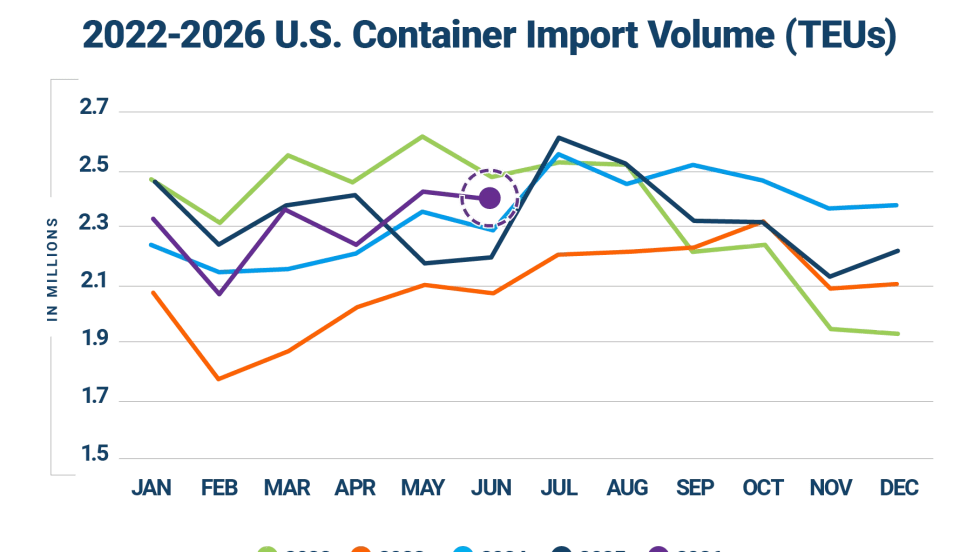
Import Cargo’s Early Peak Season is Winding Down
There was an early start to peak season this year at the nation's gateway ports, as retailers brought in merchandise ahead of tariff changes in late July and responded to other supply chain uncertainties,
Read More →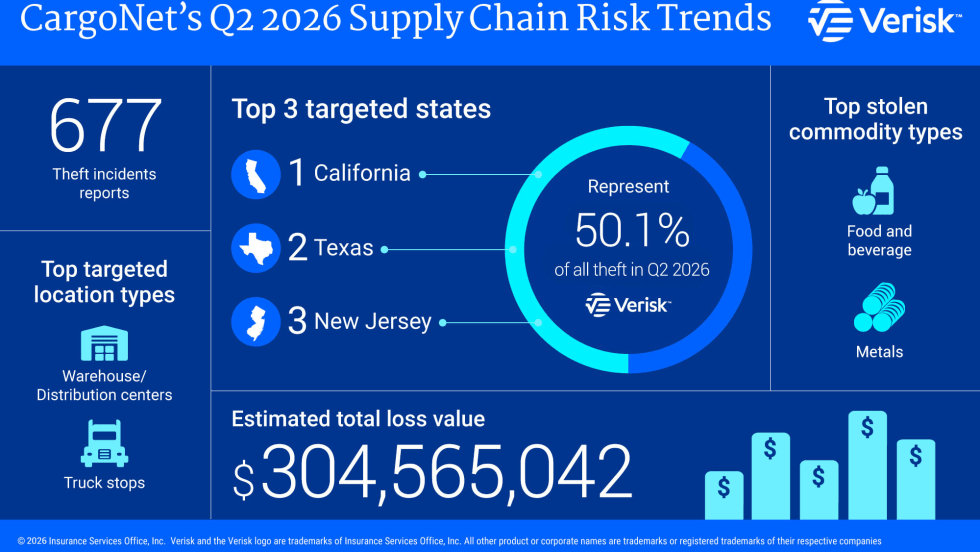
Fewer Cargo Thefts, Bigger Losses: Criminals Target Higher-Value Loads
CargoNet says organized theft rings are stealing fewer shipments but choosing more valuable freight, including metals and technology, resulting in record losses.
Read More →
How Innovative Trucking Leaders Turn Change Into an Advantage
As the pace of change accelerates in trucking, the fleets that adapt best have more than the latest technology. They have cultures that embrace improvement.
Read More →
Freight Broker Bonds Just Got Harder to Get. Here's What That Means for Your Fleet.
When it gets harder for a freight broker to prove they are financially sound, the ones who cannot clear that bar get pushed out of the market. And those are exactly the brokers who used to leave motor carriers holding the bag.
Read More →
Long-Awaited Canadian Border Bridge to Open in Detroit
For trucking, the bridge opening should offer immediate improvements in efficiency and reliability, with new customs facilities, expanded inspection capacity, and direct freeway-to-freeway connections.
Read More →
Aurora Rolls Out Next Generation of Driverless Trucks for Commercial Freight
Aurora's latest autonomous trucks it's rolling out with International feature lower-cost hardware designed for a million miles as the company expands commercial driverless freight operations across the U.S. Sun Belt.
Read More →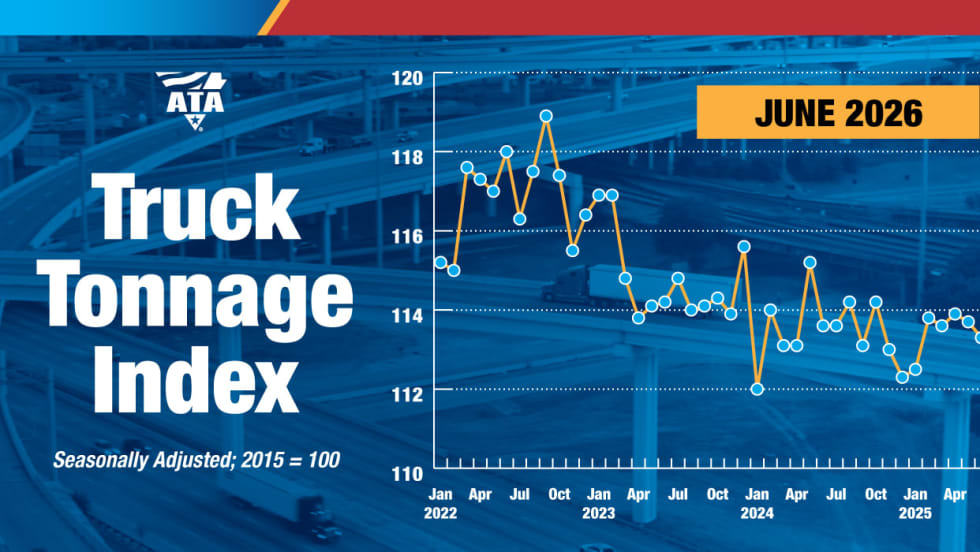
Freight Tonnage Down, Rates up, as Lower Capacity Powers Trucking Recovery
The recovery from the freight recession continues to be driven by reduction in capacity rather than by increased demand.
Read More →
Think Your Trucking Fleet Isn't Using Much AI? Think Again
Shadow AI — the use of unauthorized artificial intelligence tools at work — is becoming increasingly common, putting sensitive company data at risk. Learn how trucking fleets can protect sensitive data while embracing AI.
Read More →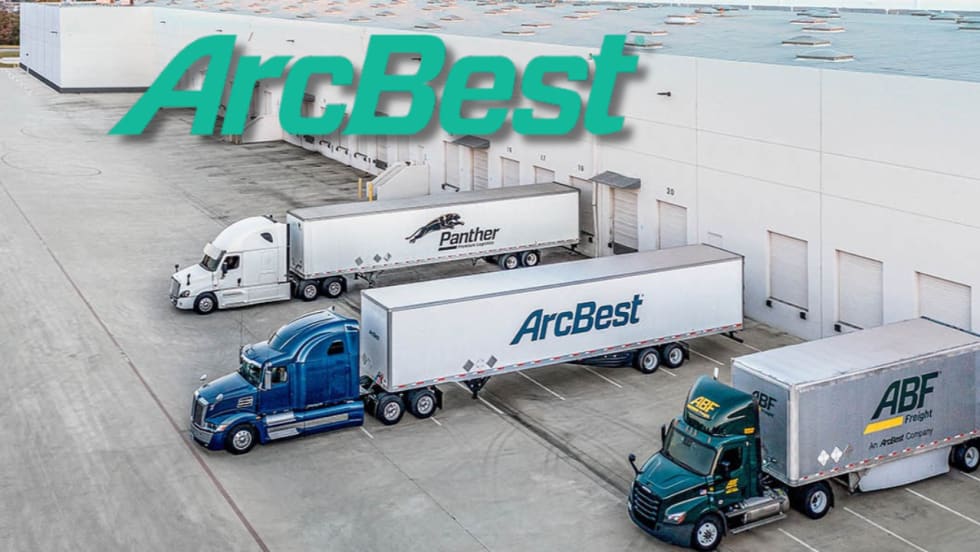
ArcBest Consolidates Brands, Cuts Workforce
The company will bring three business units under the ArcBest brand, eliminate about 2% of positions, and expects the changes to generate $40 million in annual savings.
Read More →
Trucking Fleets Faced Record Operating Costs During Third Year of Freight Recession
ATRI's annual operational cost report shows carriers trimmed fleets, delayed equipment purchases, and ran older trucks as expenses continued to outpace freight rates.
Read More →