




The Clock is Ticking on ELD Compliance
Carriers and drivers have a scant four months to be running under the FMCSA's new electronic logging rule.
August 14, 2017

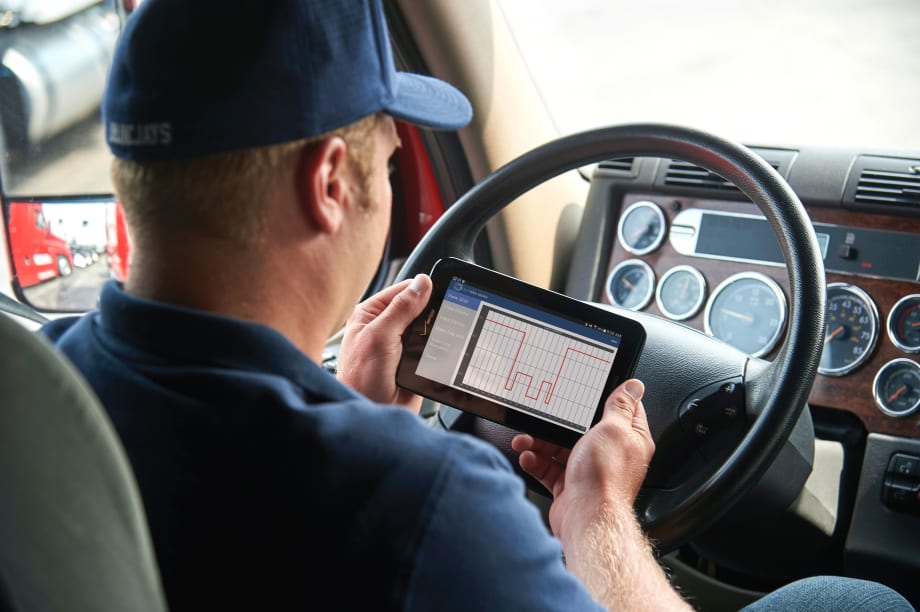
Despite how easy it is to install electronic logging devices and having the ability to use an app to log time, “it still takes fleet management and drivers generally a couple of months to get comfortable with the technology,” advises Tom Reader of ELD supplier J.J. Keller. Photos: J.J. Keller
8 min to read
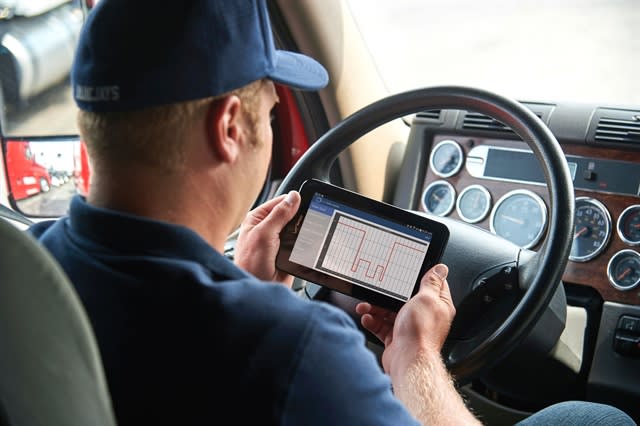
Despite how easy it is to install electronic logging devices and having the ability to use an app to log time, “it still takes fleet management and drivers generally a couple of months to get comfortable with the technology,” advises Tom Reader of ELD supplier J.J. Keller.Photos: J.J. Keller
To loosely paraphrase what John Wayne barked at the dawn of a long day in “The Cowboys,” if you haven’t started gearing up to comply with the new ELD rule, you could end up burning more than daylight.
When it comes to complying with the electronic logging mandate, fleets and drivers alike are now well into the eleventh hour before the new rule kicks in. That will be just about four months from now, on Dec. 18.
Come that day, all carriers subject to the ELD rule will have to convert from using paper logs or logging software to a registered ELD if they do not have an automatic on-board recording device in use. And those using AOBRDs prior to the mandate will only be able to keep using them until Dec. 16, 2019.
The other key part of the rule applies to ELD suppliers, which must ensure their devices conform to technical specs set by the Federal Motor Carrier Safety Administration, self-certify those devices, and register them with FMCSA.
FMCSA last year advised carriers and drivers that before buying an ELD, they “should confirm that the device is certified and registered with FMCSA...Devices not vendor-certified by manufacturers and registered with FMCSA may not be compliant with the FMCSRs.”
Something critical to grasp is that the rule will not be stopped or even delayed at this point. The last, best hope to stave off the mandate came on June 12 when the Supreme Court denied the Owner-Operator Independent Drivers Association’s petition that it rule on whether the regulation violates the Fourth Amendment right to privacy of truck drivers.
“In crafting the ELD rule, FMCSA took great care to avoid potential harassment issues for drivers,” explains Pete Allen, executive vice president of MiX Telematics. “The Supreme Court has essentially sent a message saying that the ELD mandate is legal and fleets are expected to comply.”
“The days of assuming that something will stop the ELD rule are over,” says Avery Vise, president of compliance-support firm TransComply. There is no path left through the courts. And it is only remotely possible that any anti-ELD measure introduced in Congress this year will become law. And even if one did, it would be nearly impossible for it to be in place before the mandate kicks in.
Unwelcome as the mandate may be to some, it’s high time to get in the ELD game one way or another. If you have not already, you’d better pick a device and get used to running with it – or risk being shut out of trucking altogether.
According to Allen of MiX Telematics, in recent weeks the ELD supplier has received numerous requests from fleets concerned about meeting the compliance deadline. “It’s not too late to get started,” he says, “but soon it will be tough to find a vendor who can handle an implementation before the end of this year.”
Tom Reader, director of marketing – ELDs, Forms, and Services for J.J. Keller & Associates, says to bear in mind there are a scant few types of drivers who will be exempt from this far-reaching rule:
Drivers who are required to complete paper logs on eight or fewer days out of the last 30 days; these include short-haul drivers and intermittent drivers
Drivers operating a power unit that is part of a driveaway/towaway shipment
Drivers who are driving or towing a recreational vehicle that is part of a driveaway/ towaway shipment
Drivers who are operating vehicles older than model year 2000 — and that must be verified via the vehicle’s VIN number
“Generally speaking, if a driver filled out a log book before the mandate, the driver will need to use an ELD unless one of the items above applies.”
Reader says there’s “a definite uptick in fleets purchasing ELDs. We perform quarterly surveys of our customer base, and over half of smaller fleets are still holding off on purchasing. Fortunately, many to most of the larger fleets have either installed or are taking active steps to install ELDs.”
But he cautions that despite the ease of installing devices and the ability to use an app to log time, “it still takes fleet management and drivers generally a couple of months to get comfortable with the technology.
“Drivers use apps all the time on their smartphones, so that’s not the issue,” Reader continues. “It’s understanding how the ELD affects productivity and daily routines. Many drivers have said the ELD actually improves their productivity, but it simply takes time to figure out how the technology changes the work day.”
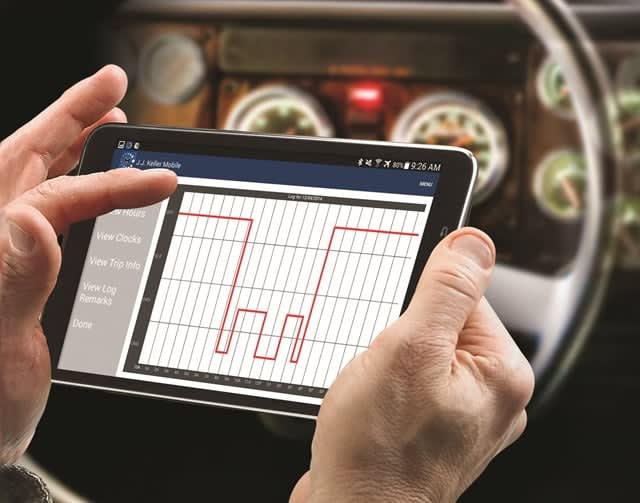
“It’s not a driver-only transition,” says Tom Cuthbertson of Omnitracs. “Dispatchers need to understand what ‘personal conveyance’ use and ‘yard time’ means, and maintenance personnel have to understand the eight-day requirement. The training needed by all will vary based on [fleet] size and complexity.”
How do you know a device is ELD-compliant?
One of the stumbling blocks to the quick adoption of electronic logging devices compliant to the new rule has been the question of how — or when — users can be certain that the mandated devices will be able to electronically transfer data files of records of duty status for review by law enforcement officials who use portable computers.
The rule requires that ELDs must be able to transmit hours-of-service information to portable computers via several methods (wireless web/email, USB2.0, and/or Bluetooth). However, many major suppliers of electronic logs in use today were waiting to self-certify and cited concerns about the lack of a way to test those data files to be sure they could be read by enforcement personnel. (ELDs must also provide either an on-screen display of the driver’s sequence of duty status entries or a printout of the same.)
In July, it appeared that those concerns were finally being addressed. John Seidl, transportation consultant with Integrated Risk Solutions and a former Wisconsin state trooper and FMCSA investigator, alerted HDT that FMSCA had just come out with an “ELD File Validator” on its ELD-specific website.”
The agency states online that ELD suppliers can use the tool to “ensure their ELD output file conforms to the technical specifications in the ELD rule.” FMCSA notes that using the File Validator is “not a mandatory step of the self-certification process [for suppliers],” but it will make the process “go as smoothly as possible.”
Seidl sees another use for the tool: “When selecting a device, motor carriers should request a data file now from their ELD supplier and do their own test to ensure ELD compliance. It’s a great way to verify if a vendor that has already self-certified has a compliant data file to transfer, per the ELD rule. If the data file does not work, do you really have an ELD?”
He adds that those vendors that still have not self-certified may be able to provide the data file at this point — but “you the customer have to ask them.”
Still, the whole picture of what device registration is meant to accomplish remains cloudy even at this late date. Critics note that being registered on the FMCSA website may not guarantee a device will prove compliant as an ELD in actual use. Tom Cuthbertson, vice president of regulatory affairs for Omnitracs, calls the system FMCSA set up “a registration process; not a certification process.” And Integrated Risk Solutions’ Seidl puts it this way: “You just have to say it’s an ELD to put it on the list.”
TransComply’s Vise cautions that using an ELD on the list of self-certified devices “doesn’t provide that much comfort.” He says the agency is “not routinely verifying that these devices are compliant and FMCSA — by its own admission — is not revoking the registration of any devices until after the December 18 compliance date. Moreover, if a registered ELD ultimately is found to be non-compliant, motor carriers using it will have just eight days to replace it.
Noting that some of the largest suppliers of electronic logs have yet to register any ELDs with FMCSA, Vise suggests that carriers consider installing AOBRDs that could be upgraded to ELD standards without replacing hardware. “Also, because carriers are incurring some risk in the case of non-compliance, they should seek language in ELD vendor contracts that provide damages in the event FMCSA revokes registration. If a vendor is unwilling to even consider such language, that could be a red flag – especially in the case of vendors that don’t have an established reputation.”
Reader of J.J. Keller, which has several ELDs registered with FMCSA, says that while the company “continues to have regulatory clarification questions for FMCSA, we have confidence in our interpretation of the regulations as they stand, which is why we’ve self-certified to be on the [agency’s] list.”
The rule ultimately is about driver safety, but “it’s not a driver-only transition,” says Cuthbertson. “For example, dispatchers need to understand what ‘personal conveyance’ use and ‘yard time’ means, and maintenance personnel have to understand the eight-day requirement. The training needed by all will vary based on the size and complexity of the trucking operation. And policies will need to be set across the carrier to address such specifics as criteria for editing log entries.”
David Heller, vice president of government affairs for the Truckload Carriers Association, notes that “fleet size and device platform will determine how long it takes to get up to speed with the mandate. Large fleets are already done with it; smaller fleets that aren’t are probably looking for user-friendly devices.”
As to enforcement, he’s experiencing “a little heartburn as the compliance date approaches. We’re a 50-state country and no two states are alike. That means some will be more ready than others for enforcement. But make no mistake — enforcement of the rule will begin on Dec. 18.”
Subscribe to Our Newsletter
More Fleet Management

What the U.S.-Canada Trade War Means for Trucking
Escalating U.S.-Canada tariffs could disrupt cross-border freight, reduce truck volumes, raise costs, and create new uncertainty for carriers on both sides of the border.
Read More →
What Are Trucking’s Top Concerns for 2026?
The American Transportation Research Institute wants to know what's worrying trucking fleet managers, drivers, and other stakeholders in its annual Industry Issues survey.
Read More →
American Trucking Associations Looks for a New Leader
ATA President and CEO Chris Spear abruptly left his job at the association on August 21, at a pivotal time for the trucking industry.
Read More →
Public Wi-Fi Cybersecurity Risks: How Truck Drivers and Fleets Can Protect Their Data
Public Wi-Fi can expose truck drivers and fleets to credential theft, malware, and other cyber threats. Here’s how to reduce the risk on the road.
Read More →
For Nicky Cupp, Fleet Innovation Starts With Frustration
HDT Truck Fleet Innovator Nicky Cupp turns everyday pain points at Fraley & Schilling into opportunities for better technology and smarter processes.
Read More →
Adam Buttgenbach’s Approach to Electric Trucks: Start With Where They Fit
HDT Truck Fleet Innovator Adam Buttgenbach helped PepsiCo build one of North America’s largest EV fleets by focusing on where electric trucks make operational sense.
Read More →
Deen Albert: Let Automation Do the Math, People Make the Decisions
HDT Truck Fleet Innovator Deen Albert makes sure people are still at the heart of operations at Grand Island Express, even while adopting artificial intelligence tools. AI-assisted dispatch helped boost revenue 25% with the same number of trucks.
Read More →
Trimble’s New AI Agent Takes Aim at Fleet Back-Office Busywork
Arc Agent works across Trimble TMS products to automate repetitive tasks such as freight orders, maintenance, invoices, fuel costs and more.
Read More →
How HDT’s 2026 Truck Fleet Innovators Are Rethinking Fleet Operations
Meet five trucking leaders who are challenging assumptions, solving operational problems, and putting innovative ideas to work.
Read More →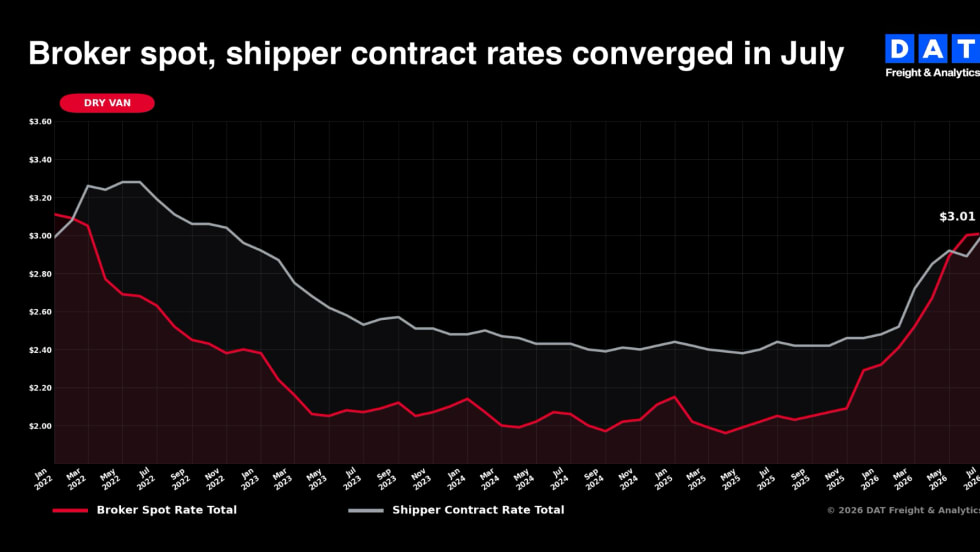
Tight Trucking Capacity Pushes Rates Higher Even as Freight Volumes Fall
“Spot rates moving ahead of contract rates have historically signaled a tightening market, but we haven’t seen a capacity-driven market quite like this one,” said DAT's Dean Croke.
Read More →