




The Changing Supply Chain: It Takes More Than Trucks
In 1932, the Brown family started National Hauling with one truck. Today the New Jersey-based company, rebranded as NFI, offers regional truckload, drayage, intermodal (including refrigerated containers), dedicated fleets, warehousing, cross-docking operations, packaging, and global logistics

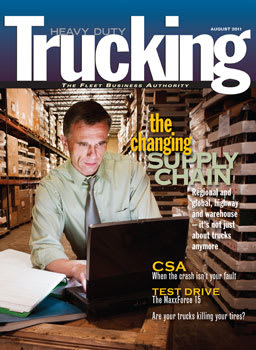
In 1932, the Brown family started National Hauling with one truck. Today the New Jersey-based company, rebranded as NFI, offers regional truckload, drayage, intermodal (including refrigerated containers), dedicated fleets, warehousing, cross-docking operations, packaging, and global logistics.
NFI is an example of how the trucking industry is changing, reinventing itself to take advantage of changes in the supply chain — how products get from the supplier to the consumer.
"If you don't have these other supply chain services to offer, you might miss opportunities," says Joe Roeder, president of NFI Logistics.
Just 50 years ago, the U.S. supply chain was pretty simple. Most goods were manufactured and consumed on our shores. A lot of distribution was regional.
In the 1970s, containerized shipping made it easier to move cargo across the oceans. Global supply chains emerged in the following decades, fueled by cheap oil, and continue to evolve and change today.
Today's supply chains are longer and more complex, involving worldwide networks of sourcing, manufacturing and consumption. Transportation costs are going up, thanks to high fuel prices and other factors. Efficiency in transportation is paramount. Supply chain professionals have become more important and more sophisticated, employing technology to optimize complex and ever-changing combinations of transportation modes.
These changes have prompted many trucking companies to expand their services to better meet their customers' transportation and logistics needs.
"As a result, it is becoming more and more difficult to apply historical terminology such as LTL, TL, parcel, etc., to individual service providers," notes John Langley, clinical professor of supply chain management at Penn State University.
Langley explains that many providers of logistics and transportation services are trying to "become a more meaningful component of their customers' overall supply chains. In effect, this is a vertical integration into the business of the customer."
We've also seen the growth of third-party logistics. These companies, which may or may not have trucks of their own, allow shippers to outsource part or all of their transportation planning.
Entrepreneurs Diversifying Trucking
Some of the top names in the trucking business got that way because they were entrepreneurs who took a chance on the chaotic environment following deregulation in 1980. Today that same entrepreneurial spirit is driving trucking companies to diversify.
Today's big transportation companies "have the flexibility to adjust to ever-changing customer expectations and the nature in which we need to move freight, whether that's intermodal, truckload, LTL, etc.," says Darren Miesner, director of operations for third-party logistics provider Transplace.
As NFI's Roeder says, "Most company leaders will tell you, it's grow or die, and just having a couple trucks out there no longer keeps the competitive edge in play."
However, he says, "It takes capital and resources and a great deal of entrepreneurship."
At C.R. England, it's a similar story.
"There's a lot of entrepreneurial spirit that's part of our makeup," says President Chad England. The company today has about 30 different business units related to transportation. They offer long-haul and regional truckload freight, dedicated fleets, logistics, intermodal, LTL, international freight forwarding, and more.
He warns fleets of the potential dangers of getting pigeon-holed in one segment.
"You never know when the macro economic dynamics will change and put your business model in jeopardy," he says. "The more diverse you are, the safer you are in the long term."
Old Dominion Freight Line had been offering container drayage since the mid-'60s in addition to its main less-than-truckload business. But in the late '90s, when David Congdon became president, the senior management team put together a strategic plan to build the company.
"The vision of the plan was to be the premier transportation company in domestic and global markets served," explains Chip Overbey, senior vice president of marketing and strategic development. To do that, he said, they realized the company needed to build its brand and also its product offerings.
From there they developed OD-Domestic, OD-Global, OD-Expedited and OD-Technology. Over time, offerings have been added to respond to the requests of the marketplace.
Most recently, the company has been expanding its global offerings in the Pacific container arena. Its new "Pacific Promise" program gives businesses standard guaranteed transit times and simplified rates from 13 Chinese or Taiwanese ports to any U.S. destination. The offering also includes port-to-door tracking of all shipments - a service many providers do not offer.
"We realize that as a supply chain provider we are operating in a global economy," Overbey says. "In order to be fully participant in the global supply chain you must have offerings that provide value and speed."
It's not just the for-hire fleets that are changing in response to today's more complex supply chain. The private fleets operated by shippers are changing, as well.
The Changing Role of the Private Fleet
There seem to be two schools of thought when it comes to private fleets in this new supply chain environment:
Shippers increasingly are deciding that transportation is not their core competence and that they're going to outsource that job, typically to one or more third-party logistics providers.
As the supply chain has gotten more complex and transportation more expensive, shippers are paying more attention to their transportation options than ever as a differentiating factor.
Clint Dearing, director of operations for contract logistics at third-party logistics provider Transplace, explains that "as things become more complex, it takes more people and more resources to manage it, and sometimes that can take away from shipper's primary focus, making their product and getting it on the shelves."
NFI's Roeder predicts that more companies will collapse their private fleets and go to outsourcing.
"If I'm a Fortune 100 company and up to now I've been doing transportation myself with my own private fleet, and I've got some cash here in my financial statement, why not take that money and instead of investing in a warehouse, why not invest it in equipment that can manufacture my product better, and let someone manage that warehouse who's good at it and does it for a living?"
However, Gary Petty, president and CEO of the National Private Truck Council, sees private fleets and other transportation options working together in a complementary fashion, rather than an "either-or" situation.
"We see many companies that have all these solutions working together in relative harmony," Petty explains, "and the private fleet is one component and a very important one, complemented by dedicated or 3PL or even intermodal."
In fact, Petty says, many companies are focusing on transportation more than ever before. He takes exception to the idea that manufacturers and retailers are saying transportation is not one of their core competencies.
"If it isn't, why not?" Petty says.
In fact, he believes, transportation is hardly differentiated from the product itself.
"If you don't get the product to market at a reasonable enough cost, you've missed a competitive opportunity. They're realizing they've got to have expert talent inside the company, making the right decision about what types of transportation work best."
However, the successful private fleet of today and tomorrow looks rather different from one of the past. These days, private fleets seek out backhauls to use the equipment more efficiently, perhaps even become a profit center rather than an expense.
More Fleet Management

How Telematics Improves Visibility, Control, and Performance in Refrigerated Fleets
Explore how telematics help refrigerated fleets improve visibility, uptime, efficiency, compliance, and cargo protection across connected cold chain operations.
Read More →
What the U.S.-Canada Trade War Means for Trucking
Escalating U.S.-Canada tariffs could disrupt cross-border freight, reduce truck volumes, raise costs, and create new uncertainty for carriers on both sides of the border.
Read More →
What Are Trucking’s Top Concerns for 2026?
The American Transportation Research Institute wants to know what's worrying trucking fleet managers, drivers, and other stakeholders in its annual Industry Issues survey.
Read More →

American Trucking Associations Looks for a New Leader
ATA President and CEO Chris Spear abruptly left his job at the association on August 21, at a pivotal time for the trucking industry.
Read More →
Public Wi-Fi Cybersecurity Risks: How Truck Drivers and Fleets Can Protect Their Data
Public Wi-Fi can expose truck drivers and fleets to credential theft, malware, and other cyber threats. Here’s how to reduce the risk on the road.
Read More →
For Nicky Cupp, Fleet Innovation Starts With Frustration
HDT Truck Fleet Innovator Nicky Cupp turns everyday pain points at Fraley & Schilling into opportunities for better technology and smarter processes.
Read More →
Adam Buttgenbach’s Approach to Electric Trucks: Start With Where They Fit
HDT Truck Fleet Innovator Adam Buttgenbach helped PepsiCo build one of North America’s largest EV fleets by focusing on where electric trucks make operational sense.
Read More →
Deen Albert: Let Automation Do the Math, People Make the Decisions
HDT Truck Fleet Innovator Deen Albert makes sure people are still at the heart of operations at Grand Island Express, even while adopting artificial intelligence tools. AI-assisted dispatch helped boost revenue 25% with the same number of trucks.
Read More →
Trimble’s New AI Agent Takes Aim at Fleet Back-Office Busywork
Arc Agent works across Trimble TMS products to automate repetitive tasks such as freight orders, maintenance, invoices, fuel costs and more.
Read More →
How HDT’s 2026 Truck Fleet Innovators Are Rethinking Fleet Operations
Meet five trucking leaders who are challenging assumptions, solving operational problems, and putting innovative ideas to work.
Read More →