




The Changing Face of Trucking, Part 3: The Rise of Third-Party Logistics
Werner Enterprises has grown from a single-truck owner-operator in 1956 to one of the top truckload carriers in the U.S., with more than 7,000 trucks - but it sees its major growth coming not in trucking, but in the third-party logistics business

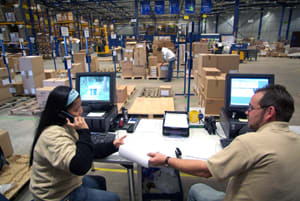
Many 3PLs offer warehousing and other services along with various modes of transportation. (Photo courtesy Menlo Logistics)
Werner Enterprises has grown from a single-truck owner-operator in 1956 to one of the top truckload carriers in the U.S., with more than 7,000 trucks - but it sees its major growth coming not in trucking, but in the third-party logistics business.
"The logistics part of our business has been the fastest-growing part of our business for several years," said Derek Leathers, president of Werner Global Logistics and chief operating officer of Werner Enterprises, speaking at eyefortransport's 3PL Summit in Atlanta this summer. "We've stuck by our trucking roots; we plan to stay in truckload for the long term. But we have roughly $625 million in truckload business, $661 billion in dedicated contract business, and $372 million in logistics. We want that logistics number to be over $600 million."
In addition to its traditional truckload business, Werner now also handles less-than truckload, ocean and air services, and does business in about 100 countries.
Werner is hardly the only "trucking" company that's into logistics in a big way these days. On the top 30 North American 3PLs, ranked by 2009 gross revenue by logistics analyst Armstrong & Associates, names such as Schneider, Landstar and J.B. Hunt are there alongside big international supply chain companies such as DHL or DB Schenker, as well as C.H. Robinson, founded in 1905 as a wholesale produce brokerage house, which did $7.6 billion in gross revenues last year and handled 7.5 million shipments.
The third-party logistics sector in the U.S. is expected to expand by more than 13 percent this year, said Evan Armstrong, president of Armstrong & Associates, at the Atlanta 3PL Summit. About 75 percent of Fortune 400 companies are using at least one 3PL, Armstrong explained. The larger the firm, the more likely they are to use 3PLs. Within the Fortune 100, he said, 93 percent of the companies use one or more 3PLs.
Yet it's not just large shippers that are increasingly using 3PLs, explains John Beckett, vice president, Menlo Worldwide Logistics. He explains that while Menlo handles larger shippers, a relatively new division, Con-way Multimodal, focuses on mid-size customers.
"When there's a small- to mid-market customer and there's global sourcing going on, and the customer hasn't necessarily invested in the infrastructure to manage complex supply chain needs, there's a big market demand for this type of capability," Beckett says. "We find they value single-point coverage."
What IS 3PL, anyway?
The term third-party logistics, or 3PLs, started to emerge in the '80s. Essentially, it's a supply chain practice where one or more logistics functions of a firm are outsourced. It's a broad and sometimes nebulous term, covering everything from a fancy word for a broker up to a company that takes total control of a manufacturer's supply chain, including not only transportation via multiple modes - truck, rail, ocean, air, often globally - but also warehousing, and even packaging, order fulfillment and other services.
Larger 3PLs that handle many elements of the supply chain say the term 3PL is often mis-used by brokers who are trying to distance themselves from the fly-by-night brokers the industry has seen too often.
"Yes, we might have capabilities with respect to brokerage, but it's more than that," says Mathew Menner, senior vice president of sales and alliances for Transplace. Originally founded by a handful of major truckload carriers 10 years ago, the 3PL had its best year ever last year. "The shipper is our customer, and we are controlling either the entire aspect of the supply chain or the transportation function of the supply chain, to their direct benefit. We might be involved in network design, in setting up the supply chain. We're looking through the lends of the shipper first and foremost."
In the past, big manufacturers and retailers built up their own internal transportation departments. "A lot of them have now said transportation's not a core competency, and they're not going to invest in the human capital and technology required to manage an increasingly complex supply chain," Con-way's Beckett says.
Kyle Alexander, director of strategic carrier development for Transplace, says a 3PL provides that core competency for the shipper, offering scale, efficiency, flexibility, lower costs, and a depth and bench strength it's nearly impossible for even a large shipper to have on their own.
"You have some 600 people within Transplace to help you, at a particular transaction cost per shipment," he says. "And in many cases that's a whole lot more effective than a staff of 20 or 30 transportation people (in an internal transportation department) trying to cover loads every day."
Transplace's Menner puts it this way: "This is what we do. We don't manufacture metal or toilet paper; we manage shippers' freight."
At Greatwide Logistics, the company has a number of divisions, including dedicated contract transportation, brokerage and warehousing, with about 5,000 trucks. Technology allows them to analyze all the aspects of those operations, so they can find ways to drive efficiencies for all their customers, such as putting backhauls onto empties that are moving on their dedicated fleets.
"We're not content to simply provide 'a truck for a buck,'" says Jim Kitz, vice president of business development. "We're able to provide an integrated service for our customers, from the point where the product is created, to where it is inventoried, to where it is distributed, and right down to where it's inserted into a retail outlet for sale."
You also can divide the 3PL business into asset-based and non-asset-based. Asset-based 3PLs can provide trucks and warehouses but supplement them with capacity from their qualified carriers. Non-asset-based 3PLs focus on having the people, the systems and the technology to manage a supply chain.
And technology is definitely a big part of what 3PLs provide their customers. Technology gives customers full visibility to the whole supply chain, says Doug Ostrowski, vice president of transportation for Michigan-based Evans Distribution Services, which contracts with about 100 carriers on a regular basis. "Even though there might be three or four companies involved - a steam ship line, a rail line, a trucking company - you have that system in place where you have one key point of contact that can give visibility to the customer all the way through."
The growth of 3PL
There are a number of trends driving the growth of third party logistics, including:
* Global sourcing, and the speed in which it can change. A manufacturer could be sourcing materials or parts in Asia this year and in Latin America next year. Or a retailer could change its source for a product from China to Mexico. A 3PL offers the flexibility to respond to that change.
* Fuel costs. Multimodal operations, including intermodal/rail, can help offset volatile fuel costs. Related to that is more focus on sustainability and being "green."
* Shippers are positioning inventory closer to the end customer, resulting in shorter lead times and a need for a more responsive supply chain. "You've got to be able to get the product on the shelf when the customer needs it there," says Con-way's Beckett.
* The difficulty of finding and keeping drivers, especially on irregular-route, long-haulf freight. Large carriers, says Noel Perry with Freight Transportation Research, have "ceded that business to smaller fleets and to C.H. Robinson and the brokers."
Jim Kitz at Greatwise says from the 3PL's standpoint, "the more integrated, or the broader the solution is that a trucking company can provide to a customer, the greater value that service is to the customer, the better margin I will get
More Fleet Management

How Innovative Trucking Leaders Turn Change Into an Advantage
As the pace of change accelerates in trucking, the fleets that adapt best have more than the latest technology. They have cultures that embrace improvement.
Read More →
Freight Broker Bonds Just Got Harder to Get. Here's What That Means for Your Fleet.
When it gets harder for a freight broker to prove they are financially sound, the ones who cannot clear that bar get pushed out of the market. And those are exactly the brokers who used to leave motor carriers holding the bag.
Read More →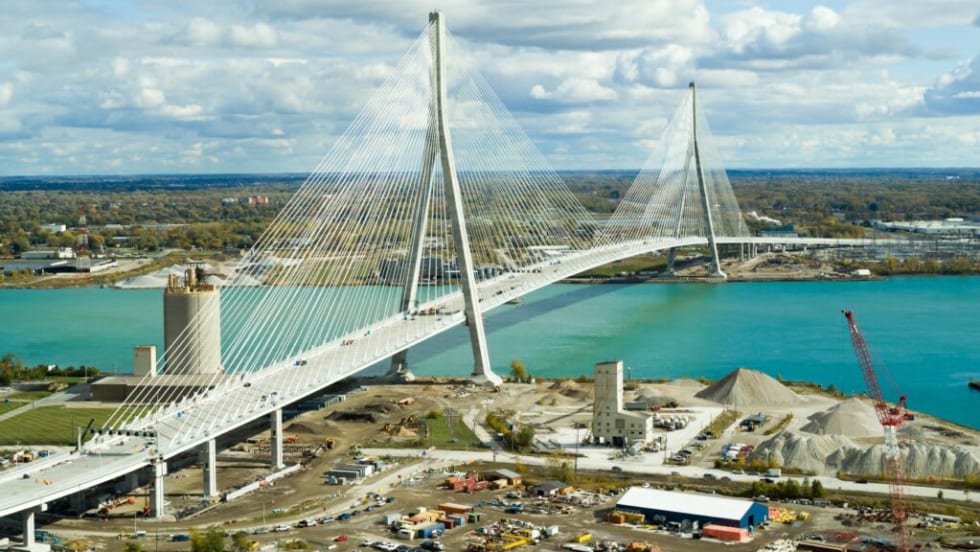
Long-Awaited Canadian Border Bridge to Open in Detroit
For trucking, the bridge opening should offer immediate improvements in efficiency and reliability, with new customs facilities, expanded inspection capacity, and direct freeway-to-freeway connections.
Read More →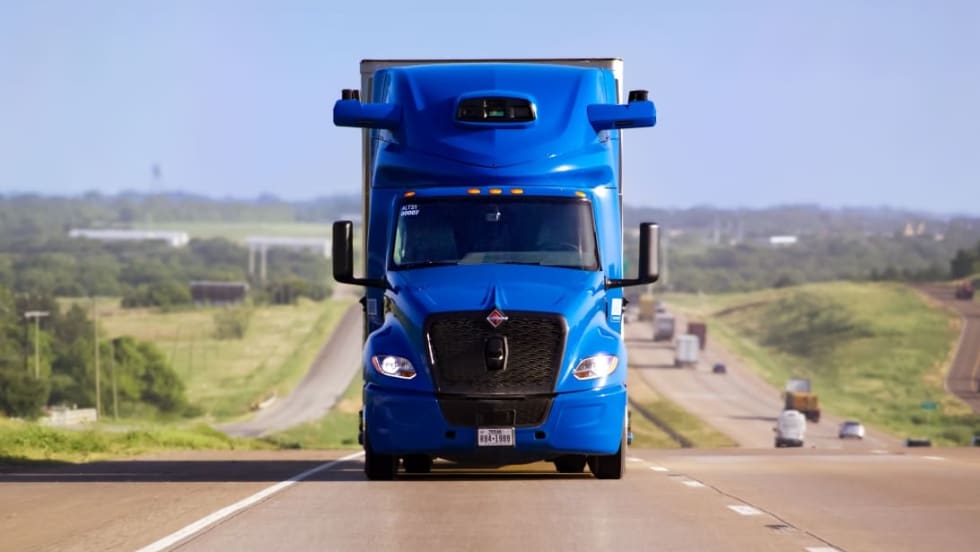
Aurora Rolls Out Next Generation of Driverless Trucks for Commercial Freight
Aurora's latest autonomous trucks it's rolling out with International feature lower-cost hardware designed for a million miles as the company expands commercial driverless freight operations across the U.S. Sun Belt.
Read More →
Freight Tonnage Down, Rates up, as Lower Capacity Powers Trucking Recovery
The recovery from the freight recession continues to be driven by reduction in capacity rather than by increased demand.
Read More →
Think Your Trucking Fleet Isn't Using Much AI? Think Again
Shadow AI — the use of unauthorized artificial intelligence tools at work — is becoming increasingly common, putting sensitive company data at risk. Learn how trucking fleets can protect sensitive data while embracing AI.
Read More →
ArcBest Consolidates Brands, Cuts Workforce
The company will bring three business units under the ArcBest brand, eliminate about 2% of positions, and expects the changes to generate $40 million in annual savings.
Read More →
Trucking Fleets Faced Record Operating Costs During Third Year of Freight Recession
ATRI's annual operational cost report shows carriers trimmed fleets, delayed equipment purchases, and ran older trucks as expenses continued to outpace freight rates.
Read More →
Michelin Adds AI Assistant to MyConnectedFleet Platform
Michelin’s new generative AI tool delivers instant fleet insights, helping managers analyze fuel use, tire maintenance, vehicle status, and operational performance without manually creating reports.
Read More →
LytxOne Platform Now Features AI, Compliance, and Asset Tracking Tools
New enhancements add AI-powered insights, asset tracking, compliance automation, and configurable privacy controls to Lytx's all-in-one fleet management platform.
Read More →