




Test Drive: Single-Rear-Axle Granite MHD
Is this single-rear-axle truck the type of medium-heavy-duty model that Mack should have brought out first? I asked that question two years ago when I saw the initial offering, the tandem-axle Granite MHD. I figured other than the tandem, it was just right for municipal fleets and others who don’t need high carrying capacity.

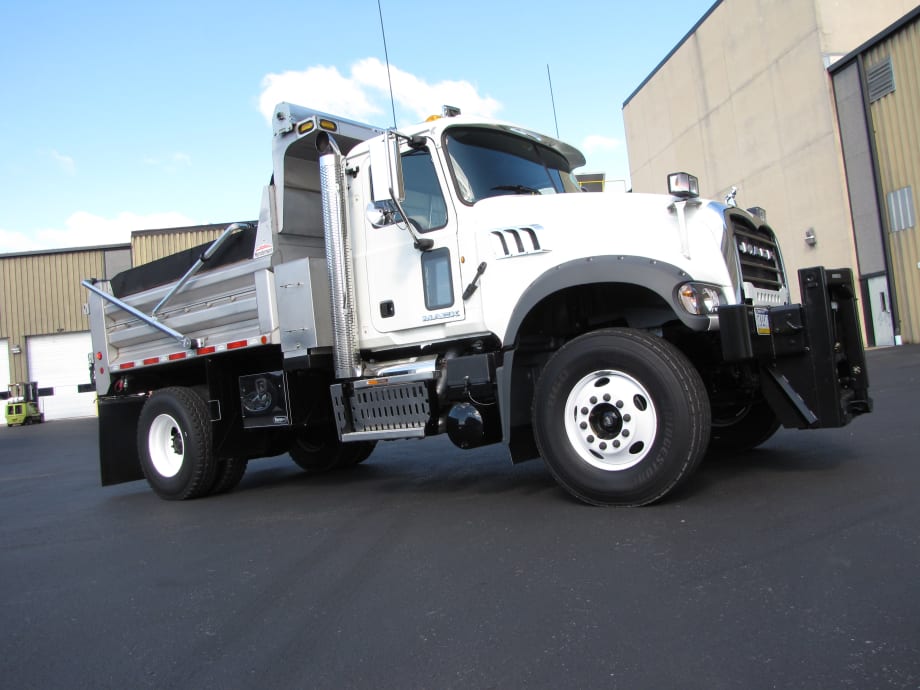
The single rear axle allows Class 7 ratings, but this one’s decidedly Class 8, with axles totaling 44,000 pounds in capacity. The steer axle is set forward to better handle weight of the plow mount and, when it snows, a long steel blade.
Is this single-rear-axle truck the type of medium-heavy-duty model that Mack should have brought out first? I asked that question two years ago when I saw the initial offering, the tandem-axle Granite MHD. I figured other than the tandem, it was just right for municipal fleets and others who don’t need high carrying capacity.
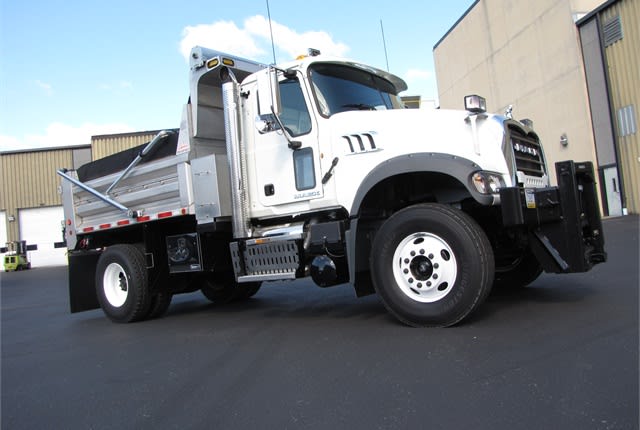
The single rear axle allows Class 7 ratings, but this one’s decidedly Class 8, with axles totaling 44,000 pounds in capacity. The steer axle is set forward to better handle weight of the plow mount and, when it snows, a long steel blade.
I asked it again of Stu Russoli, Mack’s marketing product manager for construction, during our drive in a new MHD around Allentown and other communities in the Leheigh Valley of northeastern Pennsylvania. We did this early on a mild summer morning from Mack’s Customer Center, formerly its technical center, where the truck was waiting for us out back.
Russoli briefed me on it, and we both familiarized ourselves with the controls for the Henderson stainless steel dump body, because later we’d have to offload the sand that had been poured aboard to weigh down the rear end.
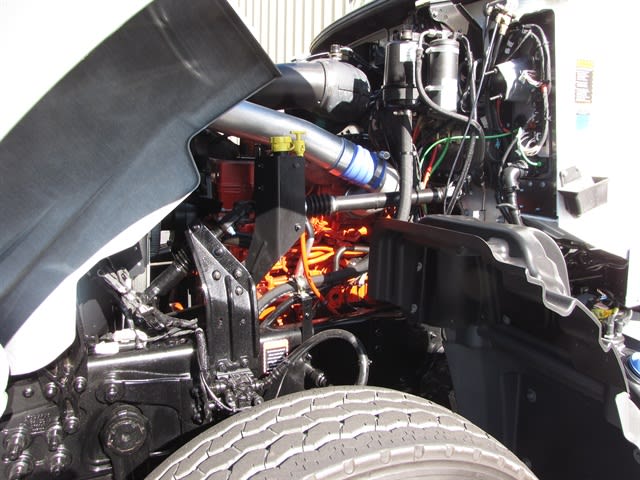
The Cummins ISL9 is masked by plumbing, but daily fluid checks are within easy reach. The 8.9-liter diesel cuts cost but still ably propels the truck with output of 345 horsepower and 1,150 pounds-feet.
He didn’t know the answer, but even with a tandem-axle, the Baby 8 MHD with its Cummins ISL9 diesel was a less costly alternative to full Class 8 Granites, which come with large-bore Mack Power diesels and equally strong drivetrain components. Now with the less expensive single drive axle, the latest MHD can be presented to city, township, county and state fleets whose needs are closer to medium- than full heavy-duty.
An MHD can be outfitted as a Class 7 truck, and the basic version is rated right at 33,000 pounds gross vehicle weight, one pound under Class 8. Some commercial customers, such as landscapers, pool installers and others who need a lighter dump truck, might choose it that way to avoid the 12% federal excise tax.
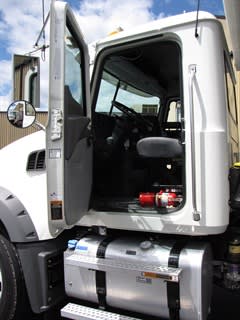
This Granite galvanized steel cab is rugged and roomy. The fuel tank and blue-capped DEF tank are both on the left side for convenience.
But most will be built with higher-capacity axles, and this one definitely was.
Being a plow truck, our “muni” demo unit had an 18,000-pound steer axle set close to the bumper to bear the 2 tons or so of the hefty mount and a heavy steel plow. Add the 26,000-pound drive axle, which is there more for durability than actual carrying capacity, and the GVW rating was 44,000 pounds.
Government agencies are exempt from the FET, so the Class 8 threshold doesn’t deter them from ordering what they need, though it probably wouldn’t anyway. Managers backed by elected officials can also afford to choose what holds up best. Here a Mack shines, as anybody who works for the Bulldog brand will tell you, including Russoli. “It’s a premium truck and it will command a premium price,” he said, “but there are ways to take out cost” to lower a bid price.
A money-saver
The midrange-size, heavy-duty Cummins ISL9 is a major cost reducer, saving several thousand dollars over a bigger MP7 or 8 diesel. The Allison 3000 RDS automatic transmission lists at $12,000 to $15,000 over a manual, but would cost thousands more if it were a 4000 series needed to handle the output of a bigger engine. (Allisons are virtually standard in municipal fleets because they save more in wear and tear on drivelines and people than they cost.)
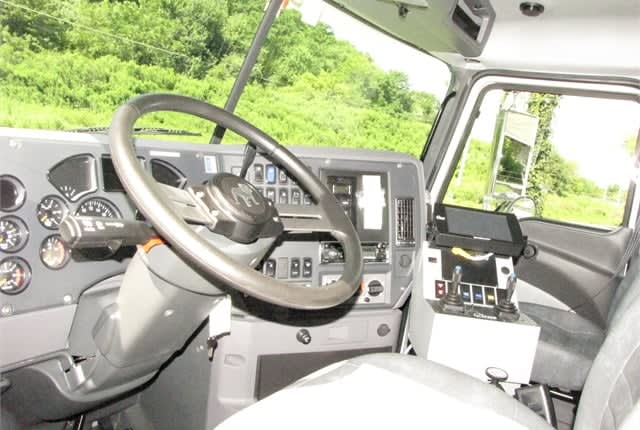
The interior has lots of plastic and vinyl, but still looks good. Gauges and controls are where the driver needs them.
Another money-saver is the interior trim. This truck had the base-level Purebred trim package, so its seats and the door and wall panels were covered in vinyl – but it neither looked nor felt cheap.
And certainly premium were the basic items from the heavier Granite line: a stout Cornerstone chassis that’s stiffer than many competitors’; a rugged, galvanized steel cab with doors that go “thunk!” when slammed; a large, two-panel dashboard with more-than-adequate gauges and nicely designed switches and controls, including big rotary knobs for the HVAC that are easy to see and quick to use; and a big-rig-style composite hood that housed the engine and its accessories yet tilted easily for servicing and repairs.
The drive
The MHD felt rugged – and rode like it. There’s only so much that beefy leaf springs can do to soften blows caused by bowed and broken concrete and undulating asphalt, so the truck bounced over them. On smoother surfaces it rode decently, and with a heavy plow hitched to the mount up front it’d probably settle down. Likewise for a heavier load; there were about 5 tons of sand in the stainless steel body, far less than what the truck could haul.
The powertrain was a smoothie, though. The 8.9-liter Cummins was lively and readily revved to 1,900 and beyond when I put my foot into the pedal, and the Allison automatic shifted positively but without any harshness. This one was a 5-speed, so had just one overdrive gear and that, along with the 5.38 rear axle ratio, caused the engine to spin busily at highway speeds, though well within the bounds of a relatively high-revving midrange-size diesel. Still, if I were the fleet manager, I’d try to sell the folks on the city council or township board on a 6-speed to lower revs and save some fuel.
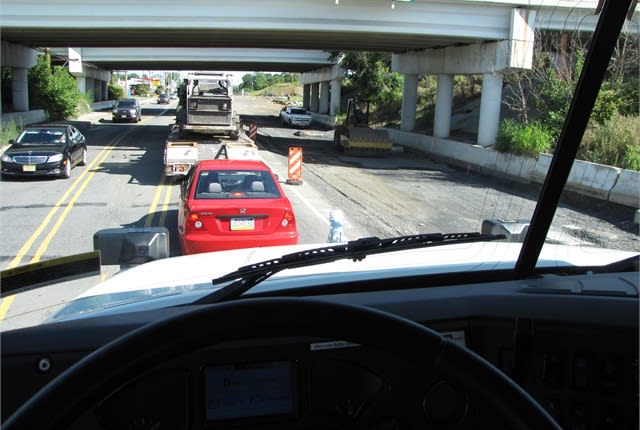
A big windshield and sloping hood allow good views of traffic ahead, even if it’s annoyingly backed up.
All in all, the Granite MHD with the Allison was more like wheeling a big pickup around town. Punch D for drive or R for reverse and go where you have to.
The truck was short and looked official enough that I didn’t worry about going through residential areas, though I saw no restriction signs on the streets we traveled. With the short, 180-inch wheelbase it turned easily, and with big windows and good mirrors it was easy to maneuver and back up.
By the way, this is a show truck, which explains some of its bright-metal trim. Why white paint, though? Shouldn’t a muni truck be Omaha Orange or maybe yellow or red, especially if it’s going to plow white snow? It could easily be repainted after it’s done making the rounds at trade shows. Whichever municipality ends up owning it might do that, but either way, it will still have a rugged and capable piece of equipment.
More Equipment

PlusAI Going Public to Fund Autonomous Truck Launch
A SPAC deal could provide PlusAI with up to $300 million as it works toward a 2027 commercial launch of factory-built autonomous trucks.
Read More →
NHTSA Moves to Rewrite Truck Fuel-Economy Rules
The National Highway Traffic Safety Administration says it lacks authority to regulate medium- and heavy-duty truck engines separately from complete vehicles, but the existing standards have not yet been eliminated.
Read More →
Detroit Opens Orders for EPA 2027 Engines
Detroit isn’t starting from scratch to meet EPA 2027 diesel emissions standards. Its Gen 6 DD13 and DD15 engines keep much of today’s platform while updating the fuel and aftertreatment systems.
Read More →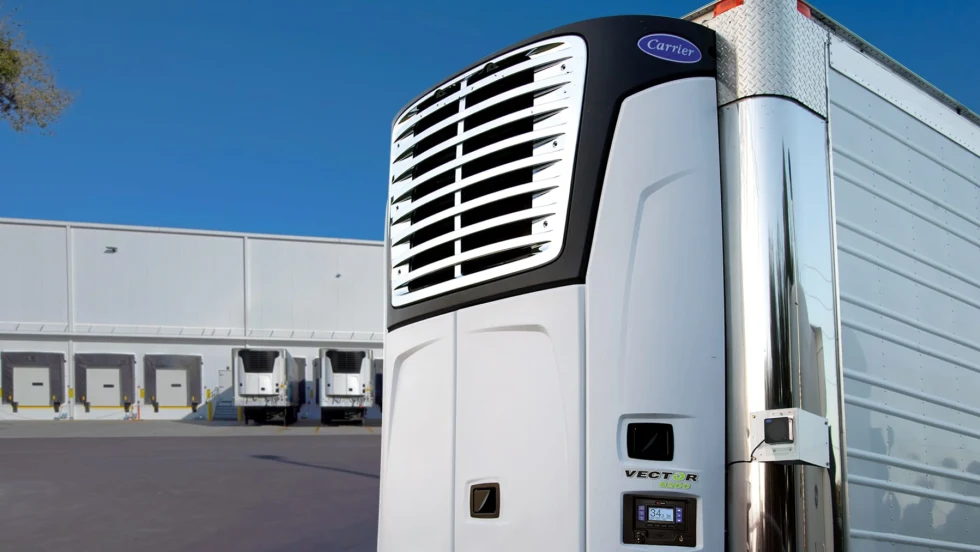
Carrier Transicold Adds All-Electric TRU for Stationary Cold Storage
Carrier Transicold’s new Vector 8200 all-electric transport refrigeration unit gives fleets a diesel-free option for temporary refrigerated and frozen trailer storage.
Read More →
A Closer Look at Kenworth’s Electric T880E Vocational Truck [Video]
Learn more about Kenworth's T880E battery-electric vocational truck at the Paccar Technical Center, including its range, applications, upfitting considerations, and PTO options, in this HDT Spotlight video.
Read More →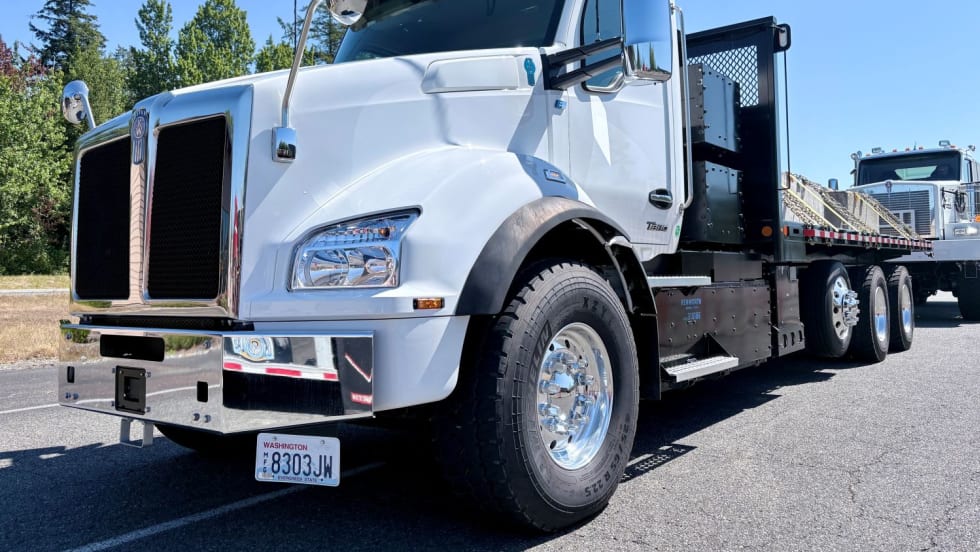
Kenworth T880E Brings EV Power to Vocational Trucks
A closer look at the Kenworth T880E’s range, charging, powertrain and upfit options — and where fleets are showing the most interest.
Read More →
What the U.S.-Canada Trade War Means for Trucking
Escalating U.S.-Canada tariffs could disrupt cross-border freight, reduce truck volumes, raise costs, and create new uncertainty for carriers on both sides of the border.
Read More →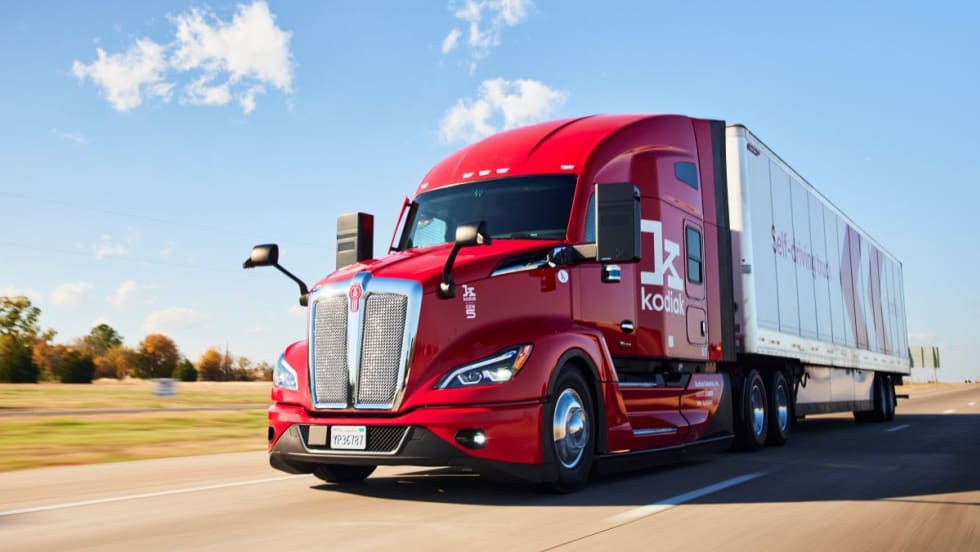
Autonomous Truck Testing Moves Ahead in California as Teamsters Challenge Rules
California has begun permitting heavy-duty autonomous truck testing, with Aurora and Kodiak among the first to receive approval, as the Teamsters sue the DMV over the new regulations.
Read More →
Behind the Wheel of the New Mack Anthem [Video]
HDT takes the new Mack Anthem around Mack’s Pennsylvania test track to see how its driver-focused design, technology, visibility and handling perform from behind the wheel.
Read More →
DTNA Plans New U.S. Truck Plant as Manufacturing Footprint Shifts
Daimler Truck North America is evaluating sites for a new assembly plant expected to open in 2029 while winding down operations at its longtime Portland manufacturing facility.
Read More →