




'Tall' gearing and a big engine deliver 12 mpg in a Class 7 truck, expedited-freight hauler claims
"Tall" gearing and a large engine are giving an expedited freight hauler the high fuel economy he sought, even if most factory engineers won't approve his spec'ing requests
"Tall" gearing and a large engine are giving an expedited freight hauler the high fuel economy he sought, even if most factory engineers won't approve his spec'ing requests.
Tom Buchwald, who heads Expedel Services out of Shelbyville, Tenn., recently purchased a Class 7 straight truck with an engine and transmission about twice the size of what such trucks usually have.
He says it's getting about 12 mpg in highway service, compared to 6 or 7 mpg with a typical medium-duty truck whose powertrain components are much smaller and whose engine races to keep up speed.
While cruising at 55 mph, the 385-horsepower Paccar MX engine in his new Peterbilt 384 loafs at 1,100 rpm, where its torque output is highest at 1,650 pounds-feet. The Eaton UltraShift Plus transmission is in 13th gear, the higher of its two overdrive ratios. This is with a 3.21 to 1 axle ratio.
"I wanted a 2.50 ratio but the engineers wouldn't approve it," he said. "With it, the transmission would've been in 11th-direct, for even more efficiency" while the truck cruised at 55.
With the two overdrive ratios still available, higher road speeds would've been possible without revving up the engine.
He knows that his idea isn't new. Old-timers used to preach that a big engine could get better fuel mileage because it loafed instead of working its heart out like smaller engines did. As someone with 30 years in trucking, he's an old-timer himself.
"It's pretty ridiculous that they build trucks that get only 6 mpg," Buchwald says. "Engineers limit us tremendously. You can't get a 10- or 13-speed transmission in a medium-duty truck. They're underpowered and undergeared. "
He chose an aerodynamically styled Model 384 because it's a Class 8 that offers the components he wanted. It allowed him to spec a large engine and multi-speed transmission while downsizing the axles for a gross weight rating of 33,000 pounds. Its typical loaded weight is 28,000 pounds.
He went this route after investigating Eaton's diesel-electric hybrid system in medium-duty trucks from all the major builders. No one would approve his over-the-road application using a tall axle ratio. Engineers feel a short, 5.00-plus ratio is needed for high driveline speeds needed to generate electricity.
This frustrates him because even without a lot of stop-and-go driving, the usual application for a hybrid, the up-and-downgrade terrain profiles in many parts of the country offer sufficient opportunity for regeneration.
Electric power generated on downgrades could charge the hybrid's batteries and that energy can be used to climb hills, saving fuel. Even more would be saved by the slow-revving engine when it operates alone.
Falling back to the-diesel-only design, "I looked for alternatives," Buchwald relates. "They don't want me lugging the engine and won't give me higher horsepower. I searched for a 350- to 400-horsepower engine that I could gear real low. My experience was 330 got higher economy than a 300, 9.5 to 10 mpg instead of 5, 6, 7 that all these trucks are getting."
He also runs seven Mercedes-made Sprinter vans that have small 2.7- and 3-liter diesels but "big" 5-speed transmissions. The latest have 3.73 axle ratios compared to 4.10 on the older models, and with the taller ratio his Sprinters get 19 and 20 mpg vs. 17.
Buchwald says he will test his Pete 384 some more and might order another with a taller rear end. That would "push" the transmission so it puts more ratios at highway speeds, where they can be better used in his type of operation.
"It's all about gearing," he declares. And engine size.
More Equipment

EPA Proposal Could Ease 2027 Truck Costs and Buying Uncertainty
The proposal doesn't change the tougher NOx standard, but it would revise key implementation requirements that manufacturers say have driven up costs and complicated fleet purchasing decisions.
Read More →
Cummins, Paccar Ease DEF Derates After EPA Guidance
Updated diesel engine software gives truck operators more time to address emissions-system issues while staying compliant with EPA emissions standards.
Read More →
America at 250: How the Truck Helped Connect a Continent
America was founded on revolutionary ideas, but it was built by movement. For 250 years, the nation has depended on ever-better ways to move people, products, and prosperity across a vast continent. No machine has carried that mission further — or more faithfully — than the truck.
Read More →
Mack Unveils America 250 Tribute Truck to Celebrate Nation's Semiquincentennial
Just in time for the Fourth of July! Mack unveils a brand-new patriotic, limited-edition, red, white, and blue truck wrap.
Read More →
Enhance Fleet Performance with High-Efficiency Auxiliary Power Units
Drive sustainable cost savings while increasing driver comfort during short- and long-haul logistics operations.
Read More →
Rush Expands Gulf Coast Peterbilt Network With Louisiana Acquisition
The expanded Rush network gives fleets additional sales, service, leasing and collision repair support across Louisiana's major trucking markets.
Read More →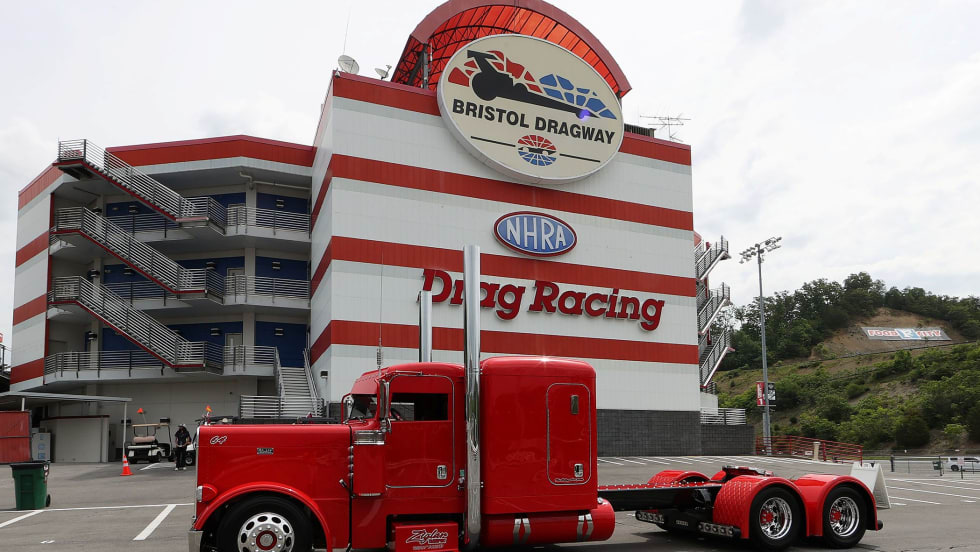
Photos: Shell SuperRigs Light Up Bristol Tennessee
Kenny Ziglar II of Rawlins, Wyo., captured Best of Show honors for the second consecutive year with his 2007 Peterbilt 379, nicknamed “Scrapin By,” at the 44th Annual Shell Rotella SuperRigs competition held June 25-27 at Bristol Motor Speedway in Bristol, Tenn.
Read More →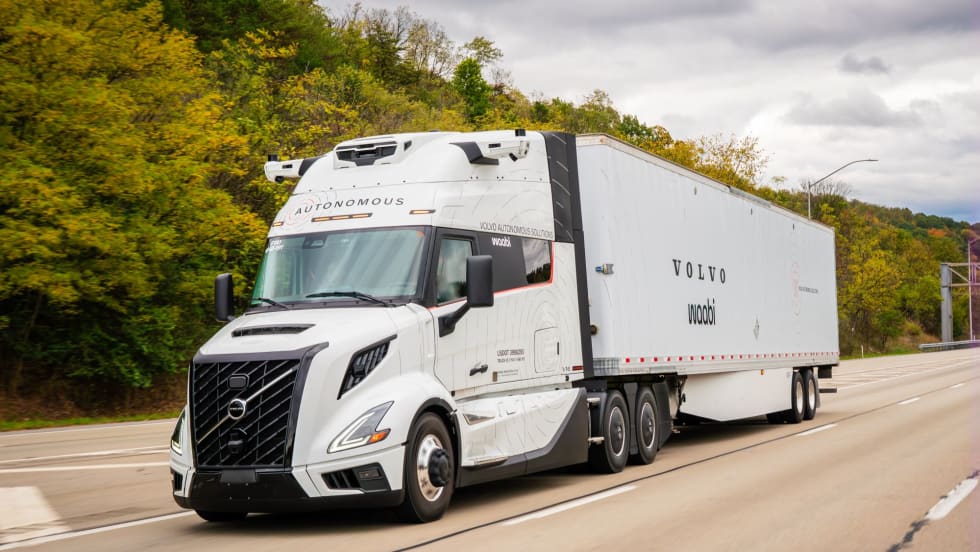
Waabi, Volvo Claim Breakthrough in Scaling Autonomous Trucking
Waabi says its AI-powered virtual driver successfully transferred to Volvo Autonomous Solutions' Volvo VNL Autonomous platform without retraining or additional data, a milestone the companies say could dramatically accelerate commercialization of autonomous trucks.
Read More →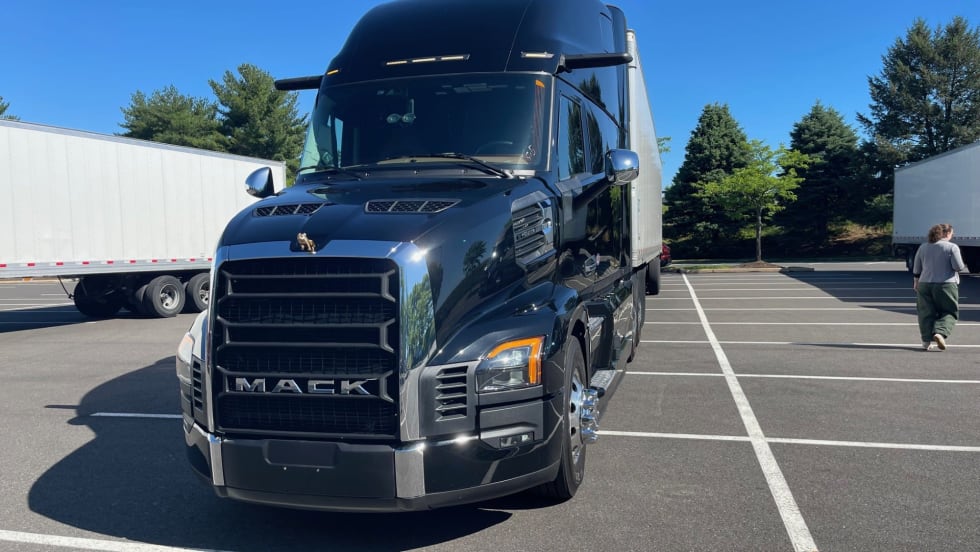
Why the Mack Pioneer Signals a New Era in Class 8 Truck Design
After a public-road drive through eastern Pennsylvania, one thing became clear: Mack's new Pioneer isn't simply packed with technology -- it's been engineered around the driver in ways that could redefine long-haul trucking.
Read More →
Mack Defense Secures $47 Million to Continue Military Dump Truck Production
President Trump visited Mack Defense’s Macungie, Pennsylvania, facility on June 23 to tout a $47 million Heavy Dump Truck order.
Read More →