




Related: 5 Things Fleets Should Know About Fuel Quality and Filtration
Tackling Bulk Fuel Quality Issues
Fuel quality is an increasingly important issue and diesel that isn’t pristinely clean can cause unexpected downtime, shortened maintenance intervals and costly engine overhauls.
by Donaldson
July 26, 2019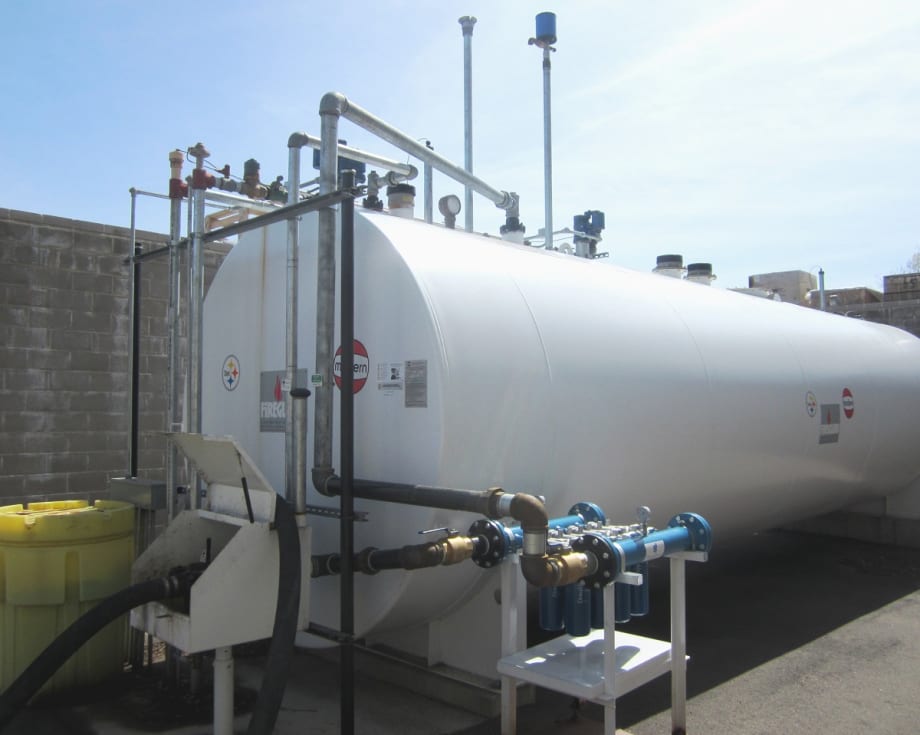
A Thermally Reactive Advance Protection (TRAP) breather.
Photos courtesy Donaldson
5 min to read
Modern high-pressure common rail engines are now commonplace in the trucking industry and with that, fuel quality becomes an increasingly important issue. Diesel that isn’t pristinely clean can cause unexpected downtime, shortened maintenance intervals and costly engine overhauls.
In today’s low-emission diesel engines, the HPCR fuel system injects fuel at pressures exceeding 40,000 p.s.i. These high pressures allow for proper atomization and better fuel economy, but to accomplish this, tight injector design tolerances are necessary.
Tight tolerances leave HPCR injectors more vulnerable to failure from dirt, water and deposits compared to engines with unit injectors. In the “old days,” an operator could simply visually inspect fuel for cleanliness, and “clear and bright” was the standard. Today, fuel that isn’t pristinely clean, dry and free of chemistry issues can wreak havoc on HPCR engines. Particles the size of red blood cells (2-5 microns) can cripple HPCR fuel components.
How to tell you have a fuel-quality issue
Fuel-quality issues — from dirt, water and chemical deposits — typically manifest as:
Prematurely plugged on-engine fuel filters
Premature/ frequent injector replacement
More frequent exhaust system re-gens
The outcome from fuel quality issues might result in reduced horsepower or fuel economy, your engine-oil analysis might test positive for ‘fuel dilution’, a higher rate of diesel particulate filter failures or injector replacement. HPCR injector replacement including parts and labor can exceed $10,000 for a V6 engine. And let’s not forget, the lost revenue from equipment downtime can be more expensive than the actual injector replacement.
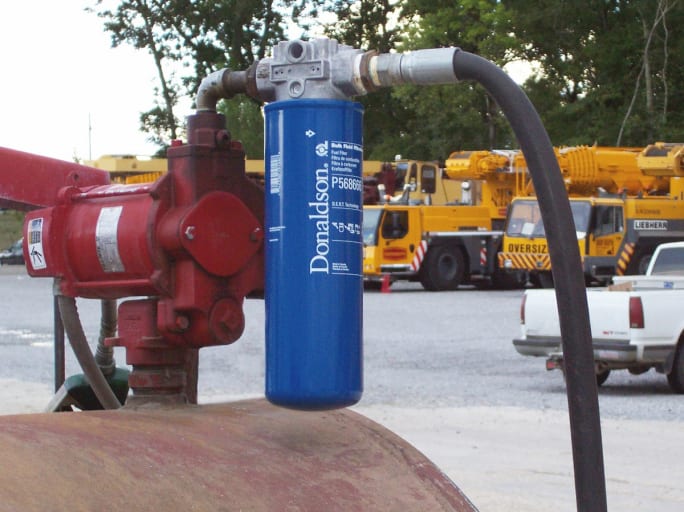
The pump is the most critical place to filter fuel.
What can you do about your fuel quality?
To answer this question, you need to better diagnose your specific fuel quality issue. But you may ask, “Isn’t my diesel delivered in the cleanest state possible?” The short answer is, no. Standards on diesel cleanliness have not kept up with today’s new HPCR engine technology, specifically when it comes to dirt and water.
“Every time fuel is transported, it has the opportunity to pick up dirt, water and chemistry issues,” says Paul Klick, global sales manager at Donaldson. “The best thing a fleet manager can do to protect their fleet is to improve ‘housekeeping’ and install safeguards to ensure they don’t burn diesel that isn’t fit for use.”
That means you should:
Have your fuel tanks inspected and cleaned
Install filtration safeguards at your fuel tank
Set a maintenance plan to inspect your tank semi-annually
Proper housekeeping for your bulk diesel tank
Bulk fuel tanks, from 750,000-gallon concrete-encased behemoths to 50-gallon slip-tanks typically have at least 1-2 inches of sludge and sediment on the bottom. Windblown dirt and moisture can get in through the top of the tank, but water in bulk tanks is the most common issue.
Water makes biodiesel unstable, causing glycerin fallout, which can plug on-engine filtration. Water can also change the spray pattern of fuel at the injector, affecting the atomization of the fuel and resulting in loss of horsepower and reduced fuel economy. Inspect all of your fuel tanks -- bulk and on-engine -- and get them professionally cleaned to remove the years of sludge, sediment, microbial growth and water trapped at the bottom of your tank in the “rag layer.”
Filter out problems before, during and after the bulk tank
“You cannot overlook proper filtration on every fuel tank you have,” Klick says. “Donaldson recommends an approach that starts with high-efficiency onboard filtration, but supplements that protection with three-stage bulk filtration: clean, protect and polish.”
Clean diesel at delivery
A good single-pass filtration manifold system on the inlet of above ground bulk storage tanks reduces the risk of introducing contamination into your fuel storage infrastructure and helps maintain desired cleanliness levels.
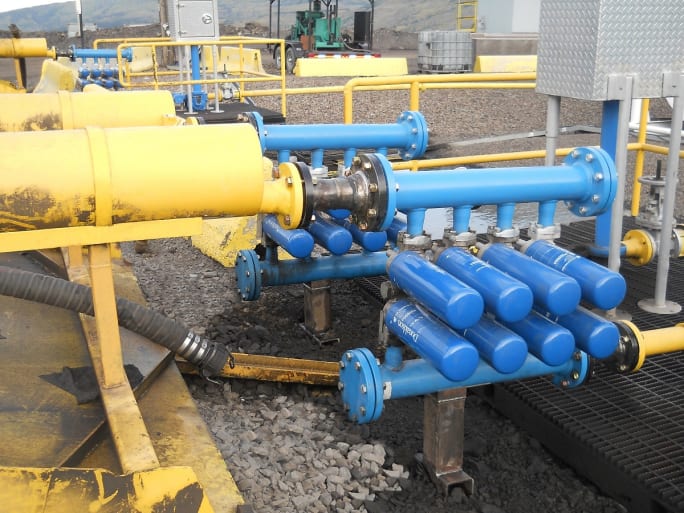
Filtration manifold system on the inlet.
Protect your fuel from dust and moisture
“Once clean fuel is in your bulk tank, you want to protect it,” Klick says. “A thermally reactive advance protection breather stops debris as small as 3 microns as well as atmospheric moisture from entering the diesel tank as it breathes. If you go through the effort of keeping diesel clean and dry when it’s pumped in, why not keep it that way?”
Polish as you dispense into your engine
Dispense filters polish or remove any contaminants that may have been picked up in storage or during final fuel transfer.
“This is the most critical place to filter,” Klick says. “This is the last checkpoint before the fuel goes into the equipment. It’s also a great opportunity to add water-absorbing filter solutions to ensure your fuel is both clean and dry – making it fit for use in your modern engine.”
If you purchase fuel from truck stops, have your maintenance team reach out and determine what safeguard your fuel supplier has in place to protect your engines. You might be surprised to know that low-efficiency 30-micron filters are generally all that is required in bulk diesel dispensing. As stated earlier, much tighter filtration of 2-5 micron high-efficiency is recommended for HPCR engines. Additionally, be extremely careful about what and how much additive you dump in your saddle tanks. Often, fuel is already treated for cold weather operability and introducing more additive can exacerbate a fuel quality issue.
Unplanned downtime can be costly in any industry, and there is a growing concern that many of these events are related to fuel quality. Avoiding unscheduled downtime and extending maintenance intervals is a surefire way to lower your total cost of ownership. One of the most certain returns on your investment is to add safeguards to improve your fuel infrastructure.
“One of best thing you can do to keep your equipment running,” Klick says, “is to make sure that the fuel it’s burning is as clean and dry as possible.”
Donaldson Company is a global filter manufacturer with manufacturing and distribution locations in 44 countries. This article was authored under the guidance and editorial standards of HDT’s editors to provide useful information to our readers.
Subscribe to Our Newsletter
More Fuel Smarts

Trucking’s Diesel Squeeze Isn’t Letting Up
With diesel topping $6 a gallon nationally, ATA's Bob Costello explains why fleets should prepare for continued pressure at the pump.
Read More →
FlowBelow Redesigns Trailer AeroSlider to Cut Fuel Use
The lighter trailer aerodynamic system installs in less than 45 minutes, according to the company, with potential payback in under a year depending on fuel prices and trailer mileage.
Read More →
Why Diesel Price Relief Efforts May Fall Short
Diesel prices have eased from September’s record high, but doubts about additional Russian supply and limits on dyed-diesel tax relief mean trucking fleets still face expensive fuel. And prices could go higher.
Read More →
Why Small Fuel Savings Matter in Trucking
Can better fuel economy help pay for driver raises? In this podcast, GP Transco explains how small efficiency gains create room to reinvest in its people.
Read More →
How GP Transco Cuts Trucking Fuel Costs, a Tenth of a Gallon at a Time
What’s another tenth of a mile per gallon worth? GP Transco shares how equipment upgrades and driver coaching turn small gains into meaningful fuel savings.
Read More →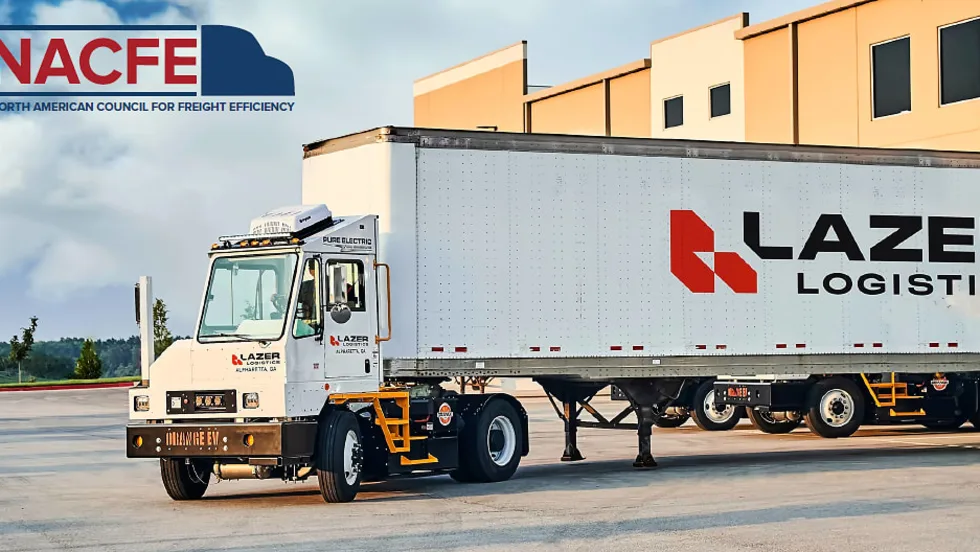
Electric Yard Tractors Move Beyond Pilots
Operating-cost savings have overtaken sustainability goals as the leading reason surveyed fleets are adopting battery-electric terminal tractors, according to new NACFE research.
Read More →
Geotab Links Fleet Card to Vehicle Data
The new card combines fuel discounts with telematics-based purchase controls. Geotab’s analysis also points to potential savings from choosing lower-priced fuel stops.
Read More →
Fleet Economics Shape Electric Truck Outlook
ACT Research expects costs, charging infrastructure, and technology improvements to drive zero-emission commercial vehicle adoption as federal regulations and incentives retreat.
Read More →
Wex Adds Cardless Fuel Payments for Over-the-Road Customers
A new fuel card feature for Wex customers offers convenience and security.
Read More →
New California Law Could Shed Light on Electric Truck Prices
Why do battery-electric Class 8 trucks remain so expensive? A California bill signed by Gov. Gavin Newsom would give fleets and state agencies more visibility into what manufacturers charge.
Read More →