




Suspension Maintenance
The key to keeping suspensions working for you rather than against you is to keep everything tight. When suspension components work themselves loose, tires wear badly, springs break, fuel economy suffers, and drivers complain

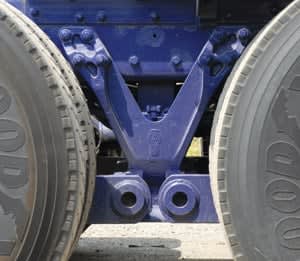
Keep everything pointing in the right direction: retorque your fasteners.
The key to keeping suspensions working for you rather than against you is to keep everything tight. When suspension components work themselves loose, tires wear badly, springs break, fuel economy suffers, and drivers complain.
Regardless of the type or brand of suspension on your truck or trailer, the most critical aspect of suspension maintenance is fastener torque.
John Knutson, tech support manager, on-highway products, at Hendrickson says retorque intervals will vary by suspension type and especially by application.
"Hendrickson offers guidelines on inspection and retorqueing intervals, but every application is unique. What would serve one customer well might be overkill to another, he says. "The user knows what the suspension is up against in that application and is the best judge of when periodic maintenance might be required."
Visual inspections should be done at a minimum every three to six months, and retorques at least annually, he suggests. Since you can't always tell when a fastener has backed off below its recommended torque, Knutson says to watch for trails of rust running down from the fastener, or for gaps and breaks in the paint around the fastener. Normally, fasteners will build up rust or dirt around the joint, so another clue to a loose fastener is that the joint between the head of the bolt or the nut will be cleaner than a tight one.
When retorqueing any suspension fastener, ensure the joint is clean and free of rust before applying the torque wrench. On reasonably new fasteners, simply tightening it will do once or twice. Older fasteners should be replaced with new parts of the same size and torque values. Torque to manufacturer's specs.
Torque your U-bolts
U-bolts are another matter. Greater care is required when replacing loose or broken U-bolts. These things clamp the axle to the suspension, and are therefore subject to huge stresses. The fasteners need to be torqued properly. Never reuse a U-bolt or the nut. Once they have been properly torqued, they stretch and can't be retorqued properly again.
The Technology and Maintenance Council's Recommended Practice 643 recommends using a wax-based lubricant on the U-bolt threads to ensure proper clamping force, and using a torque wrench to precisely set the fastener clamping force. Also, TMC recommends running the truck on a course where maximum articulation of the suspension occurs after installation, then loading the suspension before retorqueing the U-bolts. They should be retorqued again between 3,000 and 5,000 miles after replacement.
Bob Borsam, tech support manager, vocation product, at Hendrickson, recommends a suspension torque check on every new vehicle before it goes into service. Not to speak ill of the OE assemblers, but torque values set at the factory can slip as the suspension settles during delivery.
"It's a really good idea to torque the suspension fasteners when the truck is new, and again after a couple of thousand miles of regular service," Borsam says. "We've found that makes a big difference a year and a half down the road, especially in severe service applications."
Bushed bushings
Bushings designed to provide flexibility between moving parts while maintaining a degree of stiffness get tired over time and need replacing. Visual inspections are usually adequate, as the gaps between the end caps and the fastener are obvious. On heavier applications, like walking-beam vocational suspensions, a little induced movement may be necessary for a proper evaluation. Borsam recommends placing a bottle jack under the end of the beam and moving it up and down, watching for movement between the parts.
"This is something we suggest every six months," he says. "Users will know best how their suspensions measure up to the work environment, and how often they need service, but at a minimum, these inspections can save a bundle down the road, if you get to the problem before they go out of tolerance."
Most suspension bushings no longer require lubricant, but front spring bushings need a good supply of clean lube on a regular basis, like every B service at least. Jack up the frame and relieve the weight from the axle and the spring before applying grease, and make sure the bushing is purged - clean, fresh grease emerges from the far side of the bushing.
Bushing condition on a mechanical suspension might be a little more critical because as they wear, the suspension will go out of alignment. With that comes tire cupping, excessive load and fatigue on the equalizer bushing, and a host of other costly issues. SAF Holland's manager of technical services, Rob Nissen, says the torque arm bushings should be inspected regularly, and even more often if the suspension runs light or empty a high percentage of the time.
"When the suspension is unloaded, it just bounces around and beats itself up because there's no weight to hold everything in place," he says.
Fasteners, of course, are a big issue with mechanical suspensions. Loose U-bolts are the number one cause of broken springs, Nissen says, so a little PM at the clamping group will save some grief down the road.
Lift and self-steer axles
Lift and self-steer axles pose a few unique challenges, in that you have the usual stuff to worry about, and then additional issues with alignment and the lift mechanism. Tire wear is a big concern -- and a clue to problems - because a self-steer mechanism has a lot of castor and toe-in built into it to keep the wheels following properly. Wayne Powell, marketing manager at Reyco Granning Suspensions suggests particular attention be paid to tie-rod ends and to the bushings in the parallel lift mechanism.
"Wheel bearings are another maintenance item with self-steer axles," Powell notes. "The wheel just follows the terrain and the direction of the vehicle. You can't provide input force the way you can with a steering axle, so the bearings tend to flop around a little more."
Additionally, because of their placement mid-chassis, lift axles can be overloaded by running over a high-center terrain, which places excessive load on the wheels, the axle, and the supports. Keep an eye on this area for crack and sign of bending, Powell suggests.
Don't overlook leveling valves. Normally, once these have been set to factory specs, they don't need much adjustment, but then along comes a driver. They have been known to "adjust" leveling valves in pursuit of a "softer" ride. Not only will tampering with the leveling valve not produce a smoother ride, it could wreak havoc with driveline angles, U-joints, and steel springs in an air-over-spring set up.
And finally, if an alignment is in order for the truck, don't bother sending it to the alignment bay until all the suspension components have been inspected and restored to original specs. A loose and sloppy suspension will stay that way after the alignment, and so will the axle alignment. You'll just be wasting time and money.
Shock absorber Maintenance
Even the best shock absorbers won't last forever, though one might not suspect a problem from outward appearances. While the Technology and Maintenance Council of the American Trucking Associations strongly recommends establishing a shock replacement interval, its Recommended Practice 643 stresses that no two operations or vehicles for that matter will experience shock deterioration at the same rate. As a guideline, TMC suggests replacing shocks when installing new tires.
Visually inspect the shocks during the "A" service, or every 10,000 to 20,000 miles. Examine the shock body for damage, dents, cracks, etc. Inspect the mounts and bushings as well for deformation or looseness, and watch for raw oil leaking from under the dust tube. An oily residue on the shock body is acceptable and considered normal under some conditions. Liquid oil running down the shock body demands a replacement.
During the "B" servic
More Maintenance

Mack Expands Extended Coverage With Four Chassis System Plans
Mack Trucks' new system-specific coverage options allow heavy-duty fleets to select protection for driveline, cab, HVAC, electronics, and advanced safety components.
Read More →
What an Out-of-Service Order Really Costs, and How to Plan for One
The repair invoice is the first number you see — and often one of the smallest. Here’s what else an out-of-service order can cost a fleet, and how planning can reduce the damage.
Read More →
International Launches Online Truck Parts Store
Fleetrite.com lets fleets and repair shops find OEM and all-makes parts, check prices and availability, and order without calling a parts counter.
Read More →

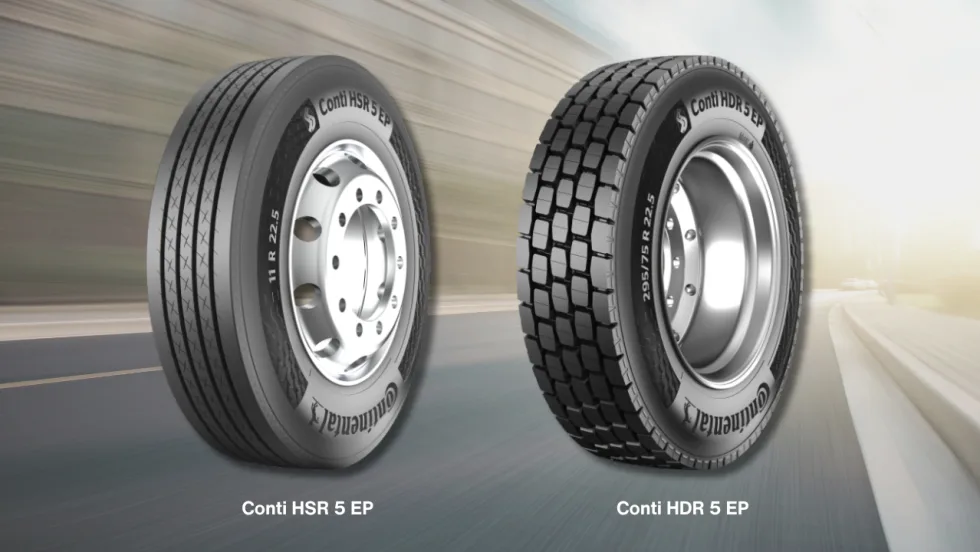
Continental Introduces New Regional Truck Tires
Continental says its new Generation 5 steer and drive tires for regional operations offer longer tread life, with estimated mileage gains of 22% and 19%, respectively.
Read More →
How AI Can Help Your Techs’ Efficiency
The technician shortage isn't going away, and no single fix can close the gap on its own. Trent Broberg makes the case that AI's real job in the shop is protecting the billable hours and job satisfaction of the techs you already have, not asking them to work faster.
Read More →
Color Match Smarter: Tools That Restore & Perform
For fleet managers and collision repair professionals keeping heavy-duty trucks on the road, getting the color right the first time isn't just about appearance — it's about efficiency, turnaround time, and bottom-line results. Discover how today's digital color tools are transforming the repair process from guesswork to precision.
Read More →
Wrong Repair Prompts Recall of Freightliner, Western Star 4x2 Trucks
DTNA is recalling more than 2,400 trucks that received an incompatible software fix instead of the hardware repair required to address brake valve corrosion.
Read More →
Truck Drivers Need More Than Another Alert
Fleets have more visibility into truck health, safety events, and driver activity than ever. The next challenge is turning all that information into useful guidance for the person who has to decide what to do next.
Read More →
The Maintenance Checks Trucking Fleets Should Prioritize Before Fall Freight Picks Up
Making it through August isn’t the same as being ready for the next several months of operation. Find out what systems may have suffered from summer heat and need to be checked out before fall.
Read More →
What Three Fleets Are Doing Differently When Buying Truck Parts in 2026
With freight improving but costs still climbing, fleet maintenance executives explain how they're balancing price, quality, and supplier relationships.
Read More →