




Studies Show Strict Fleet Cell Phone Policies More Effective Than State Cell Phone Laws
A fleet safety study recently released by the Network of Employers for Traffic Safety, suggests that companies that strictly enforce their no-cell-phone policies have a lower crash rate than companies with milder enforcement policies
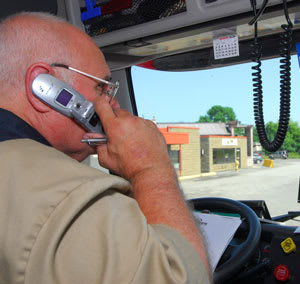
A fleet safety study recently released by the Network of Employers for Traffic Safety, suggests that companies that strictly enforce their no-cell-phone policies have a lower crash rate than companies with milder enforcement policies.
The year-long Strength in Numbers Fleet Benchmarking Study covered 45 companies, 400,000 vehicles and 8 billion miles traveled. It found the significant commonalities among the leading performers were not only that they were more likely to have a total ban on mobile phone use, but six of the eight leading companies were also more likely to terminate a driver for violating the company's mobile device policy. By comparison, all 13 companies that fell in the bottom of the rankings had some degree of a mobile device policy, but none had the option to terminate a driver for violating the policy.
The participating fleets came from the pharmaceutical, oil and gas, food and beverage, telecommunications, transportation, package delivery and insurance industries. The study participants' crash rate per million miles ranged from less than one to nearly 12.
"This is the first evidence we've seen that shows the combination of a strong mobile device policy and strict consequences can result in lower crash rates," said Bill Windsor, NETS Board Chairman. "The benchmark study shows the potential for well-written state laws combined with strong enforcement to eventually reduce crash rates in the general population."
Policy Versus Regulation
Conversely, in September, researchers at the Highway Loss Data Institute in Arlington, Va., released findings of a study showing laws prohibiting motorists from texting while driving are not bringing down crash rates. The HLDI said crash rates tend to increase after a ban goes into effect.
HDLI (an affiliate of the Insurance Institute for Highway Safety) released its findings at the annual meeting of the Governors Highway Safety Association, which took place Sept. 25-26 in Kansas City. HDLI's conclusions are based on comparisons of claims rates in four states before and after texting bans were enacted, compared with patterns of claims in nearby states.
"Texting bans haven't reduced crashes at all. In a perverse twist, crashes increased in three of the four states we studied after bans were enacted. It's an indication that texting bans might even increase the risk of texting for drivers who continue to do so despite the laws," says Adrian Lund, president of both HLDI and the Insurance Institute for Highway Safety.
U.S. Transportation Secretary Ray LaHood called that study misleading, and accused the Insurance Institute for Highway Safety and HLDI of working to discredit his national anti-distracted driving efforts over the last year.
Another study released late last month by the Virginia Tech Transportation Institute found that drivers' odds of using a cell phone while driving were 17 percent less likely under a fleet cell phone policy compared to no fleet cell phone policy. However, state cell phone laws did not significantly impact drivers' likelihood in using their cell phone while driving.
Setting Up a Cell Phone Policy
The NETS Strength in Numbers members offer these tips when constructing a corporate mobile device policy:
* Make sure you have a policy, not a guideline. Guidelines are typically interpreted as suggestions and are more difficult to enforce.
* Policy language must be clear. One member's policy prohibits employees from using "any electronic device in any gear other than park." Another company's policy language clearly prohibits "all electronic devices" so there is no confusion over which devices are allowed-they ban them all.
* Contractors should abide by the same rules as employees. Make sure the policy also covers any contractors working on behalf of the organization and that they are aware of and have signed off on the policy.
* Enforcement is key. One NETS member emphasized they make sure their employees and contractors understand "if you break the rules, you don't work for us."
The Strength in Numbers fleet benchmarking study brings together socially responsible companies willing to look at their own crash metrics, compare findings and share what they've learned. The program is for all types of companies and organizations- large or small, local or global, public or private. Participants collect standardized data over a 12-month period.
More info: NETS.
More Safety & Compliance
Driver Trust Can Make or Break the Success of Fleet Safety Technology
New Teletrac Navman research suggests that onboarding, transparency about driver data, and positive feedback can play a significant role in how commercial drivers respond to safety and coaching technology.
Read More →
FMCSA: Stop Using These 15 Electronic Logging Devices
Fleets and drivers must replace the revoked ELDs with ones on the FMCSA's registered device list of electronic logging devices.
Read More →
How HDT’s 2026 Truck Fleet Innovators Are Rethinking Fleet Operations
Meet five trucking leaders who are challenging assumptions, solving operational problems, and putting innovative ideas to work.
Read More →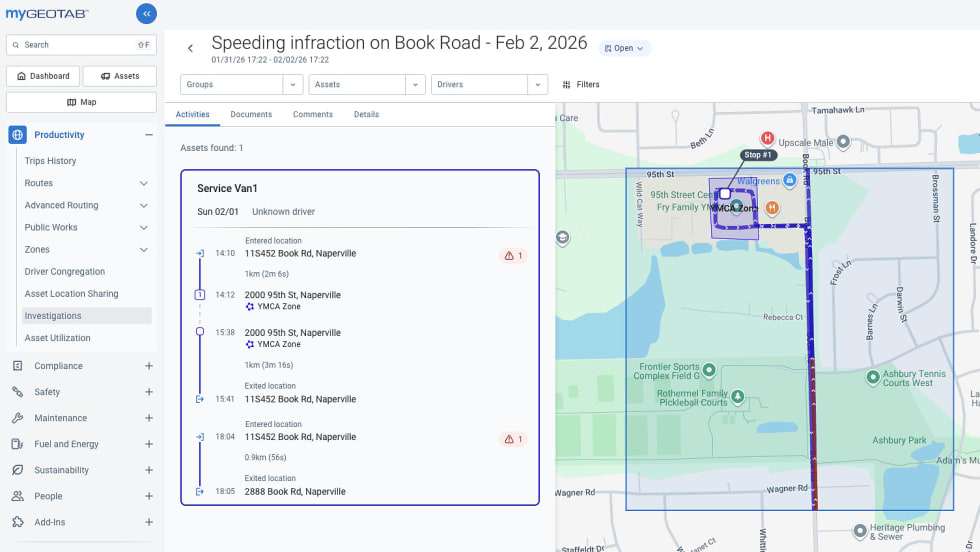
Geotab Launches Tool to Speed Fleet Incident Investigations
Geotab Investigations brings telematics data, video, photos, reports and other evidence into one case file to help fleets determine what happened and resolve incidents faster.
Read More →
FMCSA Moves to Codify English Language Requirements for Commercial Drivers
By changing regulations on English-language proficiency requirements for commercial drivers, rather than relying on a guidance memo, the FMCSA said future administrations won't be able to walk back the Trump administration's stricter enforcement with just a memo.
Read More →
Trump Administration Expands Homeland Security's Role in Trucking Enforcement
The administration's latest trucking crackdown goes beyond roadside inspections, expanding Homeland Security's role in commercial vehicle enforcement and investigations involving CDL training schools.
Read More →
Paccar Recalls 2027 Trucks Built This Summer for Possible Electrical Problem
The nearly 6,000 Kenworth and Peterbilt trucks in the recall could potentially lose engine power, among other things.
Read More →
Brake Safety Week to Focus on Drums and Rotors
Commercial vehicle inspectors will be focusing on brakes during CVSA's Brake Safety Week, August 23-29.
Read More →
Trump Administration Looks to Put More Veterans Behind the Wheel
The Freedom Haulers program pulls together existing and expanded programs at several federal agencies to recruit veterans to drive commercial heavy-duty trucks and cut the red tape for them to get a CDL, training, and employment.
Read More →
$604 Million Verdict Tests Broker Liability After Supreme Court Ruling
C.H. Robinson plans to appeal after a Texas jury found it bore the largest share of responsibility for a fatal 2021 crash, in a case that follows the Supreme Court's Montgomery decision allowing negligent hiring claims against freight brokers.
Read More →