




Steer Axle Weights Have Increased: Are Your Steer Tires up to the Challenge?
It’s not uncommon to find highway trucks with front axles and suspensions rated for 13,200 pounds. While 12,000-pound axles were the industry norm for many years, the move to 13,200-pound axles came with the addition of all that emissions reduction gear. Are you running a steer tire rated for that weight?

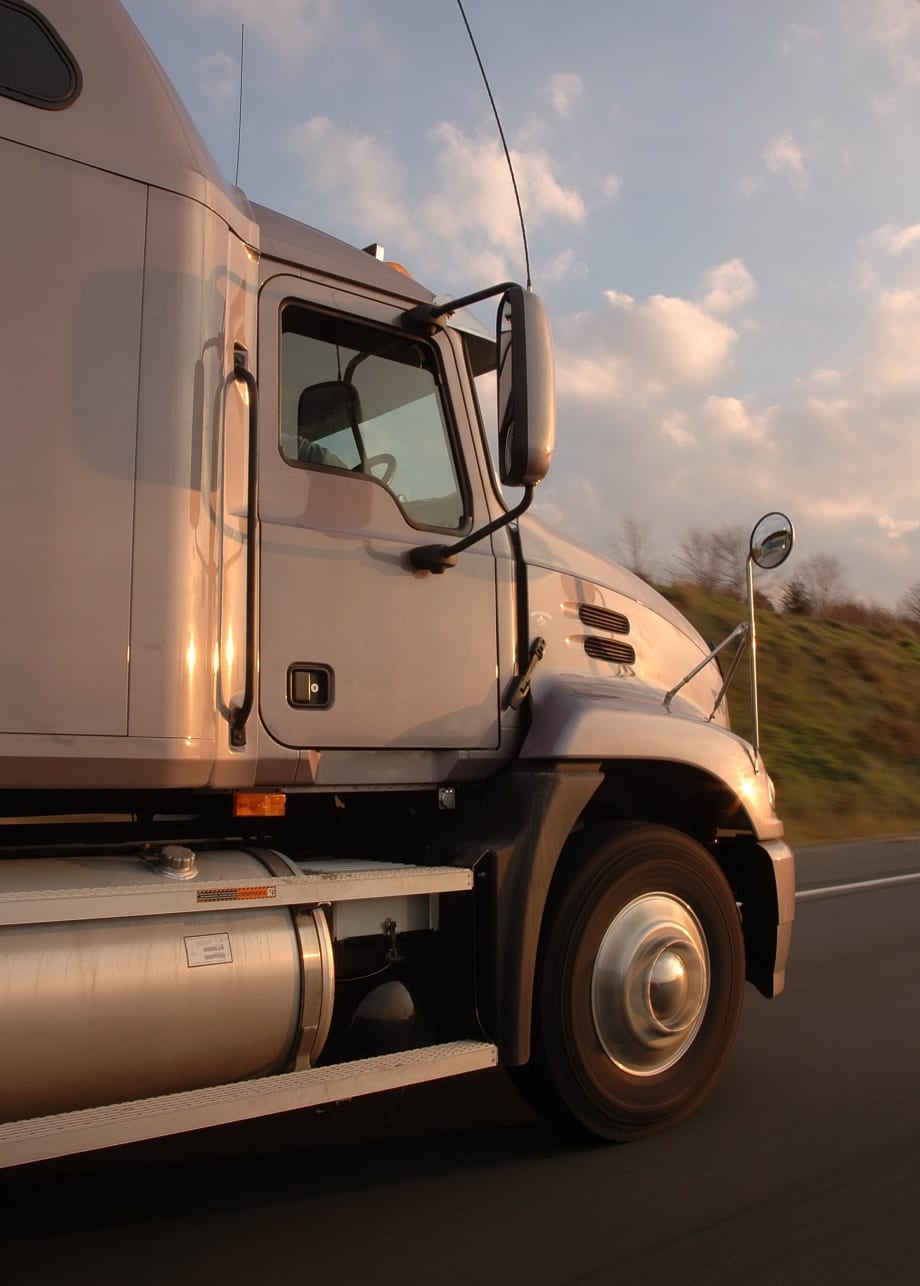
Underrated steer tires can be hazardous. Steer axle loads approaching 13,000 pounds are not uncommon today.
Underrated steer tires can be hazardous. Steer axle loads approaching 13,000 pounds are not uncommon today.
Here’s one more thing for which we owe thanks to the U.S. Environmental Protection Agency: heavier steer axle loads. Not only do we have to sacrifice payload to tote around diesel particulate filters, exhaust coolers and DEF tanks and all their associated plumbing and hardware needed to meet the past decade of EPA emissions regulations, but we also need to ensure our steer tires are capable of handling all that dead weight.
“We have been watching this trend for some time,” says Paul Crehan, director of product marketing at Michelin Truck Tires. “In recent years, truck manufacturers have added significant equipment to their chassis, primarily to comply with emissions regulations. That has added to the weight of the tractor and in particular the steer axle.”
It’s not uncommon to find highway trucks with front axles and suspensions rated for 13,200 pounds. While 12,000-pound axles were the industry norm for many years, the move to 13,200-pound axles came with the addition of all that emissions reduction gear.
Are you running a steer tire rated for that weight?
In mixed fleets running trucks with both 12,000-pound and 13,200-pound axles, it would be easy to overlook the heavier axle rating. It could be even more of a problem if your techs or your maintenance service provider are in the habit of pulling any old steer tire off the rack and throwing it on the truck.
Last month, we covered underinflation and its consequences. Regular readers will recall that steer tires typically run very close to the margin as it is, i.e., a 12,000-pound axle with two tires running 105 psi could carry 11,960 pounds. On many of today’s newer trucks, those tires would be overloaded.
According to Curtis Decker, manager of product development at Continental Tire North America, fleets are running heavier on the steers whether they know it or not.
“Back in 2000, everyone considered 12,000 pounds as the standard steer weight,” he says. “But even with all the changes to trucks we’ve seen since then – aerodynamic packages, emissions controls, set-back axles, etc. – none of us looked as critically at the extra loads on steer tires as we looked at the under-hood heat issue, for example.”
This traditional way of thinking can cause problems, adds Decker.
“When we’re talking about inflation, people are using the same 95 to 100 psi target they used back in 2000 when the standard steer axle was 12,000 pounds,” he says. “Today, we’re going above 13,000 pounds without even thinking about it. Unfortunately, the tires don’t respond well to underinflation.”
Proper practice in the tire world is to inflate the tires for the heaviest load they will carry, so fleets really do need to audit steer axle loads to see where they stand. Decker thinks many trucks are running significantly heavier than 12,000 pounds on steers.
“When I see steers inflated to 100 psi, I think 9 times out of 10 that’s an arbitrary number based on historical perspective,” he says. “Frankly, 100 psi isn’t enough for a 12,000-pound load. Realistically, the steers need to be 105 to 110 in most cases for that weight; 110 to 115 psi for 13,000 pounds.”
The right load range?
According to Bridgestone, there are two ways to increase the load capacity of a tire:
1. Increase the volume of air in the tire (increase the tire’s size) for a given air pressure, or
2. increase the pressure of the air in the tire (increase psi) for a given volume (size).
If you check Bridgestone’s load and inflation tables, you’ll notice that 22.5-inch and 24.5-inch tires (both load range G) have different weight ratings at the same pressures. An 11R22.5 single at 100 psi is good for 5,950 pounds, while an 11R24.5 can carry 6,350 pounds. That’s because the 24.5-inch tire contains a larger volume of air to support the load.
Michelin’s tables show that the same model and size (11R22.5) steer tires have two available load ranges, G and H. The LRG tires can carry 6,175 pounds at 105 psi. The LRH tire is good for 6,610 pounds at 120 psi.
Or, as Donn Kramer, Goodyear’s director of product marketing innovation, puts it, “For a 12,000-pound axle in sizes 11R22.5 and 295/75R22.5, fleets generally would use a load range G tire with single load carrying capacity of 6,175 pounds at 110 psi cold inflation. For a 13,000-pound axle in sizes 11R22.5 and 295/75R22.5, fleets would generally use a load range H tire with a single load-carrying capacity of 6,610 pounds at 120 psi cold inflation.”
The load range rating of the tire ensures the tire is capable of carrying the weight at a given pressure while maintaining the same footprint and amount of sidewall flex. Tire manufacturers may take different approaches to the design and construction of their tires when it comes to load range, but all are designed to meet certain government and industry standards.
So what’s the correct load range and inflation pressure for your steer axles?
Have your drivers axle-weigh each load over a period of time to get an idea what your steer axle loads are, and don’t forget to account for the amount of fuel on board. If the tanks are half full, there could be 100 pounds or more not appearing on the scale ticket.
Once you have determined your steer axle loads, discuss the axle loads with your tire supplier. But be prepared to increase the inflation pressure in the steer tires. A load range G tire at or close to 12,000 pounds needs 110 psi, while a load range H at anything over 12,500 pounds is probably going to need 110 psi to 115 psi cold pressure.
Michelin’s Crehan notes his product line is designed with specific dimensions, load ratings and sizes for a particular loads and applications.
“Our Data Book contains inflation charts for truck tires. A customer locates the tire’s size on the sidewall and then can utilize the table for proper inflation,” he suggests. “These charts are broken down by wheel diameter and the specific psi for singles and duals. The maximum load and pressure on sidewalls are also listed.”
The same applies to the other premium brands. It can be a confusing process, and tire suppliers are always willing to help. Make use of the
resource.
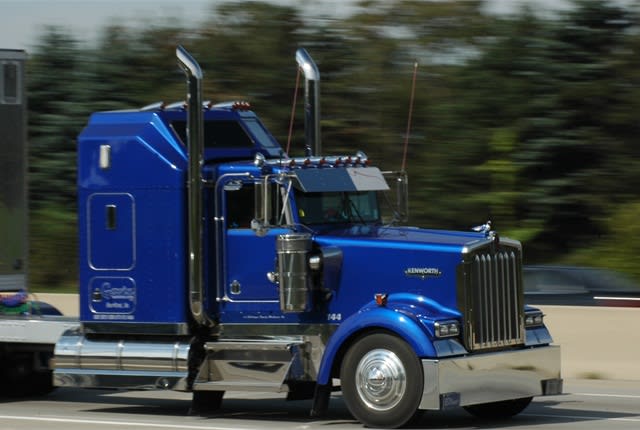
Road speed and inflation pressure
Hardly anyone gives this a second thought anymore, but road speed does have an impact on inflation pressure. You won’t see many on-highway tires from the top-tier manufacturers rated for less than 75 mph today – and truthfully you don’t see many trucks going much faster than that. However, some of the off-shore brands and less expensive tires on the market may still have 65-mph speed ratings. Also, if your tires happen to be underinflated through neglect or mismanagement, you could inadvertently be exceeding speed or load capacity of the tire.
When a tire manufacturer rates a tire for 75 mph, it assumes the tire is properly inflated. Steer tires carrying a 12,000-pound axle load (6,000 pounds per tire) must be inflated to a pressure that allows for at least that much load on the tire. Many of the brand-specific load and inflation tables recommend 110 psi for a 6,175-pound load. Note that those same tables show the load at 105 psi is just 5,980 pounds. Sure it’s just under 6,000 pounds, but it’s under.
This is hardly an issue with drive and trailer tires at 100 psi, as they are inflated to well above the minimums for normal axle loads and road speeds.
Steer tires, however, run much closer to the margins where proper inflation pressure becomes critical.
In cases where steer axles are commonly overloaded, for example with auto-haulers, Michelin’s Truck Tire Data book recommends a 275/70R22.5 XZE or XZA2 Load Range J tire be inflated to 130 psi to handle loads of 6,940 pounds. A maximum speed of 75 mph is possible at such inflation pressures.
Lower speeds would be possible at less pressure, but Michelin recommends scrapping the tire if either the speed or tire loading has been exceeded.
“If you want to load your steer tires heavier, you’ll have to consider road speed,” says Continental’s Curtis Decker. “Conversely, if you want to go faster, you will have to increase the pressure or lessen the load on the tire.”
Goodyear’s Donn Kramer recommends increasing the normal inflation pressure by 5 psi when traveling at speeds above 65 mph to 75 mph.
Also, don’t overlook the potential for running tires in unintended applications. An urban or regional tire, for instance, can easily wind up on a highway truck with potentially devastating consequences.
More Equipment

How Volvo Updated Its D13 for EPA 2027 [Watch]
Volvo’s updated D13 promises lower emissions without sacrificing performance or fuel economy. Take a closer look at what changed inside the engine in this HDT Spotlight video.
Read More →
Michelin Tire Improves Efficiency and Durability for Regional Fleets
The Michelin X Multi Energy D2 is a regional haul drive tire engineered to help fleets improve fuel efficiency, durability and traction in demanding stop-and-go operations.
Read More →
ZF Expands Commercial Vehicle Push in North America
ZF is expanding its North American commercial-vehicle presence with new transmission applications, electrification, trailer technology and autonomous-driving systems.
Read More →
Tesla Wants a Self-Driving Semi. Are Cameras Enough?
Could Tesla’s camera-only autonomous driving technology work on an 80,000-pound Semi? In this commentary, HDT's Deborah Lockridge takes a look at Tesla, Cybercab, and how autonomous trucks see the road.
Read More →
Kodiak: Driverless Long-Haul Truck Launch on Track for 2026
Kodiak AI says its driverless long-haul safety case is 93% complete and it remains on track to begin commercial operations by year-end 2026.
Read More →
What DOT’s Automated Vehicle Strategy Means for Trucking
The U.S. Department of Transportation issued a new automated-vehicle strategy that outlines plans for driverless-truck regulations, cross-state freight corridors, and federal safety standards.
Read More →
East Coast Port Launches $45M Electric Truck Push
The Port Authority of New York and New Jersey announced millions in incentives for zero-emission drayage trucks, yard tractors, and new charging hubs near the port.
Read More →
PlusAI Going Public to Fund Autonomous Truck Launch
A SPAC deal could provide PlusAI with up to $300 million as it works toward a 2027 commercial launch of factory-built autonomous trucks.
Read More →
NHTSA Moves to Rewrite Truck Fuel-Economy Rules
The National Highway Traffic Safety Administration says it lacks authority to regulate medium- and heavy-duty truck engines separately from complete vehicles, but the existing standards have not yet been eliminated.
Read More →
Detroit Opens Orders for EPA 2027 Engines
Detroit isn’t starting from scratch to meet EPA 2027 diesel emissions standards. Its Gen 6 DD13 and DD15 engines keep much of today’s platform while updating the fuel and aftertreatment systems.
Read More →