




How to Stay Ahead of Suspension and Steering Defects
CVSA is planning to pay close attention to suspensions and steering systems in this year's 72-hour Roadcheck inspection blitz. Will your maintenance procedures keep your trucks off the sidelines this year?

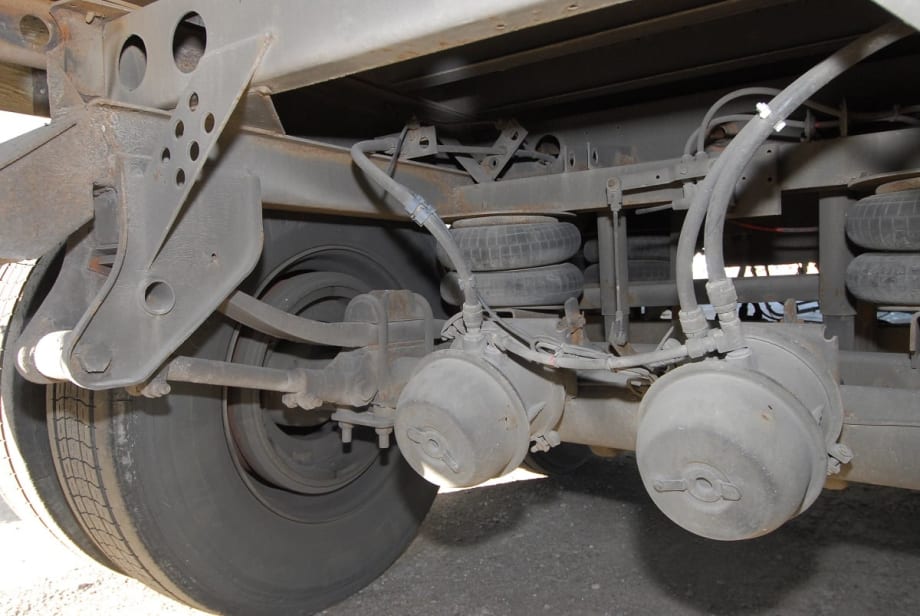
CVSA will put a special emphasis on suspension and steering system defects during this year's Roadcheck inspection blitz.
Photo: Jim Park
The first week of June is like spring break for many truckers, who view it as a great week to take a vacation. That's when the Commercial Vehicle Safety Alliance stages its annual 72-hour inspection blitz, called Roadcheck. For those not planning a fishing trip or a week of home renovations, CVSA will be paying special attention to suspensions and steering systems during this year's blitz.
Steering components and suspensions tend to be pretty reliable and don't require a lot of shop time, but problems can sneak up as the equipment ages. It might be safe to leave them more or less alone for the first few years, but you definitely don't want to ignore them completely.
According to Mike Beckett of Des Moines, Iowa-based MD Alignment, the average truck visiting his shop needs $1,000 worth of suspension work before he can even start doing an alignment.
"The average 3.5- to 4-year-old truck with half a million miles on it will have some undercarriage issues," he says. "We often see loose U-bolts, particularly on trucks with under-slung suspensions. The weight of the truck rest on the nut, and that stretches the bolt."
Once the bolt stretches, the axle can move within the assembly, which can cause misalignment, loose spring packs, cocked air springs and other issues.
And if guys like Mike Beckett can see loose U-bolts, so can CVSA inspectors.
Suspension problems can be difficult to spot, as much of what matters is down below or underneath the suspension. Somebody on a creeper is in a better position to spot trouble than someone looking down from above.
Steering Violation Descriptions | OOS Violations | Non-OOS Violations | OOS and Non-OOS Violations Combined | Description of Common Issues |
|---|---|---|---|---|
Steering system components worn welded or missing | 259 | 99 | 358 | Ball and socket joint movement, loose nuts or any welded repairs |
Loose steering column | 11 | 3 | 14 | Caused by loose mounting components |
Power steering violations | 7 | 425 | 432 | Leaks or power steering assist cylinder loose |
Excessive steering wheel lash | 5 | 9 | 14 | Caused by worn steering box or loose pitman arm (in some cases) or other loose steering components |
Steering wheel not secured/broken | 4 | 1 | 5 | Steering wheel not secured or broken |
Grand Total | 286 | 537 | 823 |
Suspension Violation Descriptions | OOS Violations | Non-OOS Violations | OOS and Non-OOS Violations Combined | Description of Common Issues |
|---|---|---|---|---|
Axle position parts defective/missing | 287 | 176 | 463 | Loose suspension tracking rods or missing spring hanger bolts or cracked spring hangers |
Air suspension pressure loss | 109 | 205 | 314 | Leaking air bag or air line to air bag |
Leaf spring assembly defective/missing | 88 | 56 | 144 | Broken, missing or separated leaves |
Adjustable axle locking pins missing or not engaged | 54 | 53 | 107 | Adjustable locking pins missing or not engaged |
No/defective air suspension exhaust control | 0 | 10 | 10 | No or defective air suspension exhaust control |
Grand Total | 538 | 500 | 1,038 |
Tallies from last year's Roadcheck event list 538 out-of-service violations for suspension defects and 286 steering-related OOS violations. More than 1,000 additional violations were recorded, too, but they were classified as non-OOS. Hardly what you call an alarming number out of the 60,321 Level 1 inspections conducted during the 2018 blitz, but suspension and steering systems are pretty important.
"Steering and suspension are safety-critical systems for any commercial motor vehicle," said CVSA President Jay Thompson of the Arkansas Highway Police. "Not only do they support the heavy loads carried by trucks and buses, but they also help maintain stability and control under acceleration and braking, keeping the vehicle safely on the road. Furthermore, they keep tires in alignment, reducing chances of uneven tire wear and possible tire failure, and they maximize the contact between the tires and the road to provide steering stability and good handling."
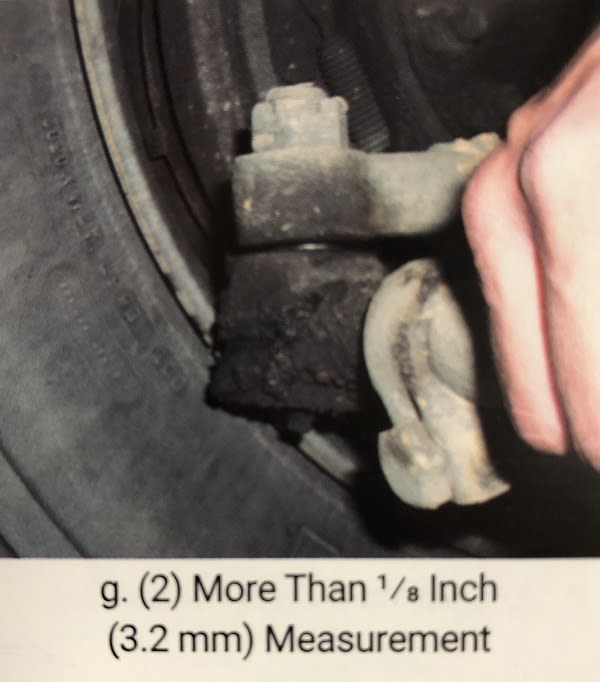
Credit: CVSA
Among the most common suspension violations was Axle Positioning Parts Missing or Defective. These include loose suspension tracking rods, missing or damaged spring hangers and spring hanger bolts. Leaking air springs or air spring air lines were next on the list, followed by broken, missing or separated spring leaves.
The most common steering related defect was Steering System Components Worn, Welded or Missing, meaning movement within the ball and socket joint of the steering king pin, any loose fasteners on steering components or any welded repairs to steering components. Loose steering columns were second on the list, followed by leaks or looseness in the power steering system. Fourth was excessive steering wheel lash (sometimes referred to as free play) caused by a worn steering box, loose pitman arm or other loose steering components.
Trailers are included in the suspension stats mentioned above, but there's another OOS defect that inspectors continue to find that somewhat alarming: sliding-axle locking pins missing or not engaged.
Proactive Inspections

Credit: CVSA
Roadcheck begins June 4, so there are still a few days to get your trucks inspected for these common steering and suspension problems. Here's what CVSA recommends fleets do to ensure trucks will get successfully through steering and suspension checks:
Steering: Check the steering lash by first turning the steering wheel in one direction until the tires begin to pivot. Then, place a mark on the steering wheel at a fixed reference point and turn the wheel in the opposite direction until the tires again start to move. Mark the steering wheel at the same fixed reference point and measure the distance between the two marks. The amount of allowable lash varies with the diameter of the steering wheel.
Suspension: Inspect the suspension for indications of misaligned, shifted, cracked or missing springs; loose shackles; missing bolts; unsecured spring hangers; and cracked or loose U-bolts. Also, check any unsecured axle positioning parts and for signs of axle misalignment. On the front axle, check for cracks, welds and obvious misalignment.
CVSA suggests drivers pay attention to the feel and handling of the vehicle and report any changes or abnormalities to the fleet.
Identifying Issues With Steering and Suspension
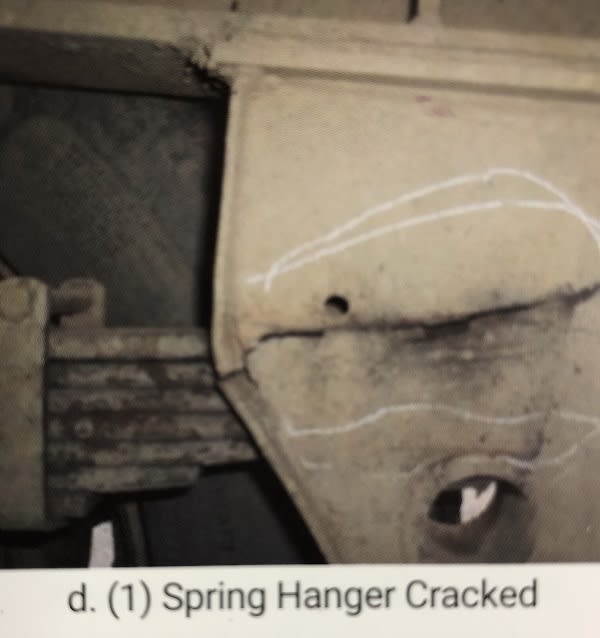
Credit: CVSA
If you begin to feel more bumps and shakes as you drive, there may be an issue with your suspension.
Take note if your vehicle pulls to the side or makes knocking or squealing sounds during turns.
Pay attention to swaying and bouncing at low speeds. Your vehicle should have no difficulty withstanding bumps in the road at low speeds. If you go over a bump and feel your vehicle sway back and forth or bounce after passing the bump, the suspension may be struggling to support the weight of the vehicle.
Your suspension should support the weight of your vehicle and keep it fairly level during most situations. With the vehicle parked, walk around it and visually assess how level it seems to be sitting. If one side of the vehicle rests higher than the other, worn out or broken suspension components may be to blame.
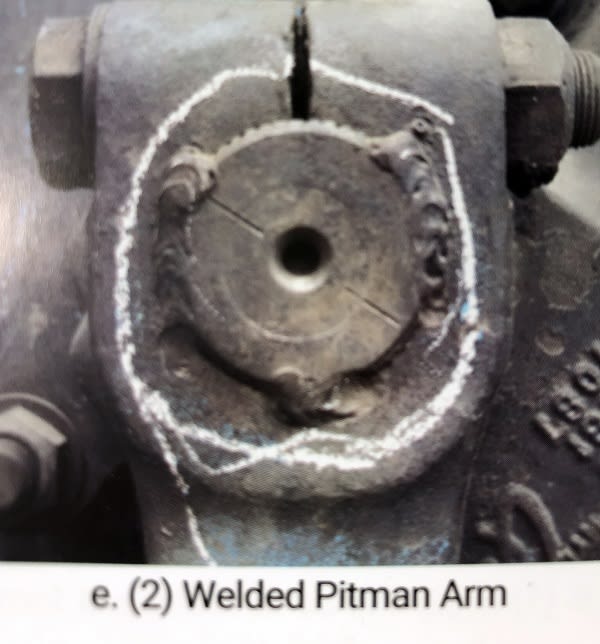
Credit: CVSA
Inspectors will check the following items during the inspection of the steering mechanism:
Steering wheel lash (free play)
Steering column and shaft
Front axle beam (including hub)
Steering gear box (rack and pinion, if applicable)
Pitman arm and output shaft
Upper and lower steering arms
Power steering reservoir
Ball and socket joints
Tie rods and drag links
Steering nuts
Inspectors will check the following suspension components during an inspection:
Axle parts/members
Spring hangers
Leaf spring assembly
Coil/rubber spring and air suspension
Composite springs
Torsion bar suspension
Suspension connecting rods and bushings
Other tracking components
Sway bar components
Adjustable axle(s) (locking pins, body rails, slider guides)
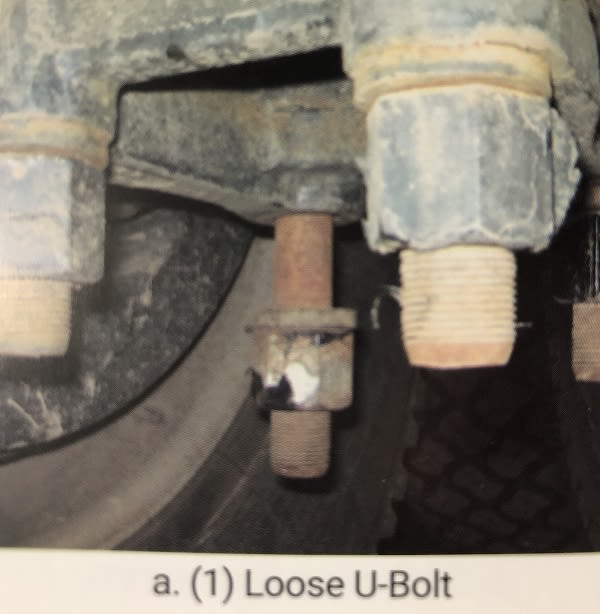
Credit: CVSA
If you do not already own a copy of CVSA's North American Standard Out-of-Service Criteria handbook, get one. In fact, make sure you get the pictorial edition. It has nearly 100 pages of pictures (six pictures per page) of some of the horrors discovered during previous inspections. Those will stand your hair on end, but the guide is a really useful supplement to your maintenance regime in that it illustrates and describes the sort of defects the inspectors are looking for (with associated regulatory references).
It was never intended as a maintenance guide, but reverse-engineering the defect tables and the photos will bring some clarity to vehicle inspections and help drivers and technicians spot defects that otherwise may not always be that obvious to the untrained eye.
If you're not going fishing next week, good luck with Roadcheck 2019.
More Maintenance

Color Match Smarter: Tools That Restore & Perform
For fleet managers and collision repair professionals keeping heavy-duty trucks on the road, getting the color right the first time isn't just about appearance — it's about efficiency, turnaround time, and bottom-line results. Discover how today's digital color tools are transforming the repair process from guesswork to precision.
Read More →
Wrong Repair Prompts Recall of Freightliner, Western Star 4x2 Trucks
DTNA is recalling more than 2,400 trucks that received an incompatible software fix instead of the hardware repair required to address brake valve corrosion.
Read More →
Truck Drivers Need More Than Another Alert
Fleets have more visibility into truck health, safety events, and driver activity than ever. The next challenge is turning all that information into useful guidance for the person who has to decide what to do next.
Read More →

The Maintenance Checks Trucking Fleets Should Prioritize Before Fall Freight Picks Up
Making it through August isn’t the same as being ready for the next several months of operation. Find out what systems may have suffered from summer heat and need to be checked out before fall.
Read More →
What Three Fleets Are Doing Differently When Buying Truck Parts in 2026
With freight improving but costs still climbing, fleet maintenance executives explain how they're balancing price, quality, and supplier relationships.
Read More →
Paccar Recalls 2027 Trucks Built This Summer for Possible Electrical Problem
The nearly 6,000 Kenworth and Peterbilt trucks in the recall could potentially lose engine power, among other things.
Read More →
Will API PC-12 Oil Change Trucking Fleet Maintenance?
The new API PC-12 heavy-duty engine oil category reflects the changing demands of modern diesel engines. But fleets like Foodliner are looking to getting their own data before making decisions on adopting the new oils and questions such as extending oil drain intervals.
Read More →
Brake Safety Week to Focus on Drums and Rotors
Commercial vehicle inspectors are focusing on truck brakes during CVSA's Brake Safety Week, August 23-29.
Read More →Possible Battery-Cable Fires Prompt Recall of 15,000+ International MV and HV Trucks
On the recalled vehicles, manufacturing variations can cause the battery interconnect cable to contact the auxiliary stud and hold down the bracket.
Read More →
Rush, MCT Team Up to Grow Refrigeration Service Network
The joint venture will operate MCT's network of Carrier Transicold dealerships and mobile service locations, with the companies promising greater service capacity and uptime for refrigerated fleets.
Read More →