





Why Higher Pay Isn’t Fixing the Heavy-Duty Technician Shortage
Fullbay Report: Heavy-Duty Shop Revenue Up, Rates Rising, but Shops Still Short on Techs
Strong growth across the heavy-duty repair sector is being tempered by workforce shortages and an aging technician pipeline.
March 19, 2026
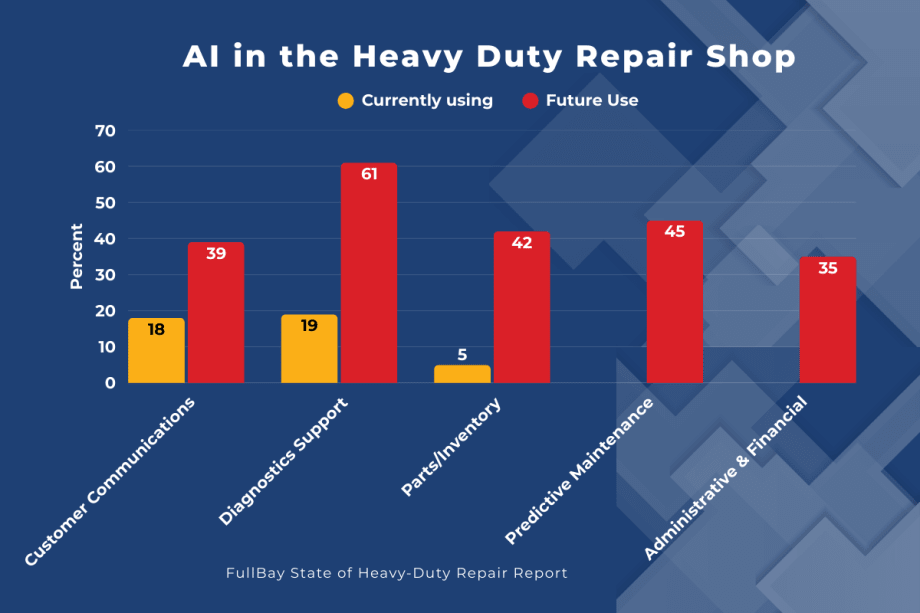
The report also highlights early but growing adoption of artificial intelligence tools in repair operations.
Credit:
HDT Graphic/Fullbay data
3 min to read
Heavy-duty repair shops saw strong business conditions and rising revenues last year, but a persistent technician shortage continues to shape operations across the industry.
That’s one of the key takeaways from Fullbay’s latest State of Heavy-Duty Repair report, based on responses from more than 900 industry professionals.
At the Technology & Maintenance Council’s annual meeting in Nashville, a panel discussion highlighted some of the findings from the report.
Strong Business, Rising Rates
On paper, the numbers are solid.
Total shop revenue reached $5.04 billion in 2025, up 68% since 2023. And 61% of respondents said business conditions improved compared to the previous year:
- 4% said a lot worse
- 16% said a little worse
- 19% said they were doing the same
- 38% said they were doing a little better
- 23% said they were doing a lot better
But those gains are happening alongside the ongoing shortage of qualified diesel technicians.
At the same time, shops have been charging more for labor and paying technicians more to attract and retain them.
The median labor rate climbed to $149 per hour, up about 10% year over year, while technician wages increased 14.1%. Mobile repair work continues to command a premium, with rates about 7.6% higher than in-shop service.
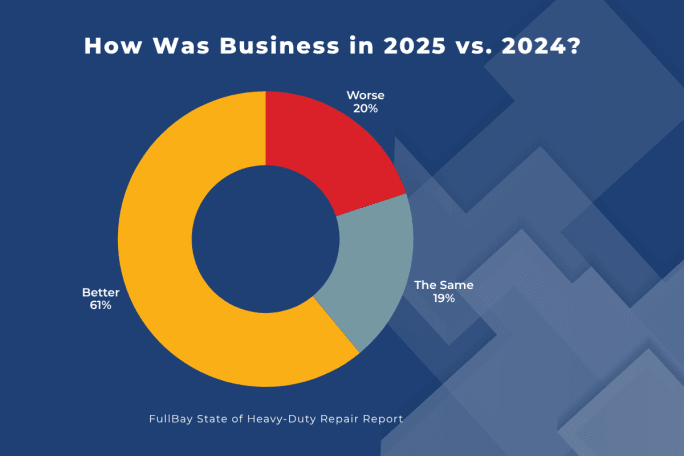
Only 20% of respondents reported a decline in business from the previous year.
Still Not Enough Technicians
“Fifty-four percent of the shops reported as understaffed in 2025,” said Fullbay CEO Trent Broberg during the TMC panel.
Panelists pointed to intense competition for technicians as a driver behind rising wages. Shops are increasing pay to attract and retain workers, but compensation alone isn’t solving the problem.
Broberg noted that benefits, incentives, and overall working conditions are becoming just as important as hourly pay.
And that shortage isn’t showing signs of easing. Among survey respondents, 40% said hiring technicians has become more difficult. That shortage appears to be long-term rather than cyclical.
The workforce itself is aging. Survey respondents reported a median age of 41 and an average of 17 years of technician experience. Just 17% were under age 30—a number that underscores how thin the pipeline of new technicians has become.
Older Trucks, More Work
At the same time, demand for repair work is being driven by a years-long freight recession and uncertainty about emissions regulations.
Fleets have been keeping equipment in service longer, pushing up the average age of trucks, especially in the secondary market.
“Older trucks are just easier to fix,” said Jack Poster, VMRS Services Manager for the Technology & Maintenance Council.
With some green shoots of more business for many fleets heading into 2026, some equipment that had been sitting idle is coming back into service.
“You’re seeing people pull those trucks off the fence and trailers with lot rot and get them back into working order,” Broberg said.
That means more trucks needing attention, and often more intensive work before they can get back on the road.
Put those pieces together—older equipment, deferred maintenance, and more units returning to service—and it helps explain why shops are staying busy even as hiring remains a challenge.
That combination of older equipment and limited labor supply is contributing to sustained pricing pressure across the industry.
Tariffs and Repair Shops
External factors such as tariffs are also having an effect. Nearly half of respondents (46%) reported tariffs had led to higher parts prices, while 47% said tariffs had no significant impact on their operations.
Some shops reported shifting suppliers or delaying equipment purchases in response.
The panelists also speculated that the full impact of tariffs may not yet have hit respondents at the time the survey was conducted.
Artificial Intelligence
The report also highlights early but growing adoption of artificial intelligence tools in repair operations. About 35% of shops reported using AI tools such as ChatGPT, though usage remains concentrated in customer communications and basic diagnostic applications.
However, planned adoption suggests much broader use ahead, particularly in diagnostics, parts inventory management, and predictive maintenance.
While zero percent of respondents said they were currently using AI for predictive maintenance, 45% said they plan to use it in the future.
More Maintenance

Sponsored•September 16, 2026
Color Match Smarter: Tools That Restore & Perform
For fleet managers and collision repair professionals keeping heavy-duty trucks on the road, getting the color right the first time isn't just about appearance — it's about efficiency, turnaround time, and bottom-line results. Discover how today's digital color tools are transforming the repair process from guesswork to precision.
Read More →
Wrong Repair Prompts Recall of Freightliner, Western Star 4x2 Trucks
DTNA is recalling more than 2,400 trucks that received an incompatible software fix instead of the hardware repair required to address brake valve corrosion.
Read More →
Truck Drivers Need More Than Another Alert
Fleets have more visibility into truck health, safety events, and driver activity than ever. The next challenge is turning all that information into useful guidance for the person who has to decide what to do next.
Read More →
The Maintenance Checks Trucking Fleets Should Prioritize Before Fall Freight Picks Up
Making it through August isn’t the same as being ready for the next several months of operation. Find out what systems may have suffered from summer heat and need to be checked out before fall.
Read More →
What Three Fleets Are Doing Differently When Buying Truck Parts in 2026
With freight improving but costs still climbing, fleet maintenance executives explain how they're balancing price, quality, and supplier relationships.
Read More →
Paccar Recalls 2027 Trucks Built This Summer for Possible Electrical Problem
The nearly 6,000 Kenworth and Peterbilt trucks in the recall could potentially lose engine power, among other things.
Read More →
Will API PC-12 Oil Change Trucking Fleet Maintenance?
The new API PC-12 heavy-duty engine oil category reflects the changing demands of modern diesel engines. But fleets like Foodliner are looking to getting their own data before making decisions on adopting the new oils and questions such as extending oil drain intervals.
Read More →
Brake Safety Week to Focus on Drums and Rotors
Commercial vehicle inspectors are focusing on truck brakes during CVSA's Brake Safety Week, August 23-29.
Read More →
Possible Battery-Cable Fires Prompt Recall of 15,000+ International MV and HV Trucks
On the recalled vehicles, manufacturing variations can cause the battery interconnect cable to contact the auxiliary stud and hold down the bracket.
Read More →
Rush, MCT Team Up to Grow Refrigeration Service Network
The joint venture will operate MCT's network of Carrier Transicold dealerships and mobile service locations, with the companies promising greater service capacity and uptime for refrigerated fleets.
Read More →