




Spec'ing Tires With Fuel Efficiency in Mind
Spec'ing tires is a lot like photography. It's a series of trade-offs and compromises. Let's say you're after a night shot of a city skyline. Because it's dark, you have to use a long exposure, which could make the photo blurry

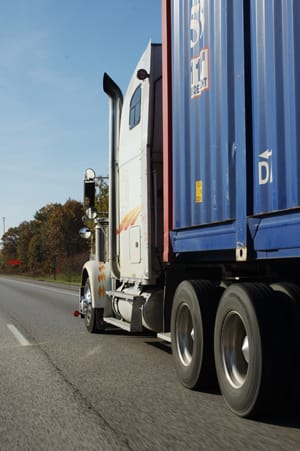
Spec'ing tires is a lot like photography. It's a series of trade-offs and compromises. Let's say you're after a night shot of a city skyline. Because it's dark, you have to use a long exposure, which could make the photo blurry.
Or you could use a high sensitivity setting, which will make the image look grainy. Or you could use a very wide aperture, which will narrow the depth of field considerably. Since you can only set the camera to shoot one way out of the three options, you decide which will best suit your purpose and optimize the shot accordingly.
With tires, until recently, you spec'd for traction, or for tread life, or for low rolling resistance. It was difficult to get all three in equal measure. But recent improvements in tire design have allowed users to nearly optimize two out of the three - and that's not bad.
It should be noted that tires are optimized around certain parameters. Traction and cut-and-puncture resistance are prime concerns in the off-road world, for example. The longhaul crowd is more concerned with tread life, retreadability, and to a growing extent, fuel efficiency. So you can still get the tires you want for your application, but you can now spec a little more of what once was a trade-off.
Even a quick look at a fuel-efficient tire reveals how designs have changed to reduce rolling resistance: shallower tread, close-spaced ribs rather than lugs, low-profile sidewalls, and closed shoulders are common features.
"One of the contributing factors to rolling resistance is the tread design, both tread depth and tread pattern," says Don Baldwin, market segment manager, Michelin Americas Truck Tires. "Deeper tread depths and more open tread designs tend to have higher rolling resistance than shallower tread depths and more closed tread designs."
Bridgestone tells us that tire casings (including belts) contribute about 50 to 65 percent of tire rolling resistance. The advent of the low-profile sidewall back in the 1980s produced significant reductions in sidewall flex, and hence, improved fuel efficiency. They weren't called low-rolling-resistance tires at the time, but they were the precursors to today's more fuel-efficient designs.
Today's casings are further optimized to lower rolling resistance by refining stress distribution and minimizing internal friction caused when the sidewall flexes under load. And in the case of wide-base single tires, two sidewalls per wheel position are eliminated, further reducing the tires' overall rolling resistance.
The remaining percentage of a tire's rolling resistance comes from the tire tread, so much of the focus in developing fuel-efficient tires has been on tread design.
"Some compounds, especially those incorporating silica, or using formulas that combine natural and engineered synthetic rubber, can reduce tire rolling resistance significantly," says Guy Walenga, director of engineering for commercial products and technologies at Bridgestone.
The tread face - where the rubber literally meets the road - has several mandates. It must be robust enough to resist wear and damage, it must be supple enough to provide decent traction, and it has to stable enough to resist the squirming and wiggling under load that creates both heat in the tread/casing interface area, and adds rolling resistance.
Modern manufacturing processes also allow tire makers to use different rubber compounds in different areas of the tire to optimize wear and traction where appropriate.
Bridgestone, for example, uses a two-layer, or "cap-base" tread. The cap compound, which is nearest the road, is chosen for resistance to abrasion, long tread life and traction on wet roads, while the base layer, between the cap and the casing, is made of a cooler-running compound - to protect the casing from heat buildup.
Tread design is another factor in a tire's fuel efficiency. Rib-type tread designs tend to offer less resistance to motion than lug-type treads, and so are the predominant tread type in designated fuel-efficient tires. But they are by no means exclusive. Lug treads are still used, but in combination with closed shoulder (solid outer rib) designs, and they often feature tightly spaced lugs for improved rolling resistance and minimal sacrifice of traction. Certain closed-shoulder drives claim to offer overall fuel economy equal to or even better than some rib designs.
Goodyear's newest SmartWay-approved drive tire, the G572 LHD Fuel Max, as well as Michelin's XDA3 and Continental's HDL Eco Plus are examples of such designs.
Common, too, are the so-called all-position tires - steer tires in essence - featuring a five-rib tread pattern with solid shoulders. Bridgestone's R287A, Goodyear's G399 LHS Fuel Max, and Yokohama's RY617 are typical of this design.
Common among many fuel-efficient tire designs is relatively shallow tread depth - some as low as 16/32 of an inch. Usually, shallow treads are more fuel-efficient than deep ones.
"Shallower tread - rib or block - is less subject to energy-wasting squirm," Walenga points out.
And this is where the selection of low-rolling-resistance tires over conventional tires gets a little contentious.
Despite the fuel-savings benefits of these tires, there's still some reluctance to embrace the product. Fleets can expect modest reductions in miles-to-take-off in many cases, and fleets that operate in northern parts of the country have expressed concern about traction on snowy or icy roads - and even in rainy weather.
According to Larry Tucker, marketing manager for commercial tires at Goodyear, the economic argument against shallower tread is moot today. He says the fuel savings over the life of the tire more than offsets its shorter life.
"With rising fuel costs, all fleets are looking at ways to improve fuel economy, even fleets that were once concerned only with tread life," he says. "With the proper tools we can calculate exactly the cost per mile and operating cost of each tire and determine the tire that is the most economical to use in their application. We can show fleets that even though they may sacrifice some tread depth they are offsetting that with improved fuel economy. In a majority of the cases the fuel efficient tires are always more economical to run than deeper tread tires."
Traction, too, is a matter of buyer preference and tire design. Tucker says tire makers prioritize the features they want in a new product.
"If the number one objective is improved rolling resistance, then you design accordingly," he says. "In today's world, tire manufacturers are designing tires to deliver the best balance of rolling resistance, traction and tread life. In most cases if you are designing for the ultimate in rolling resistance then there will be a potential tradeoff with tread depth and tread design. Requiring the tire to give up a few 32nds will produce the best rolling resistance, but it will also sacrifice some wet weather traction."
One of the largest truckload carriers in the country runs a very efficient drive tire year round and has little or no trouble with it. Its drivers are paid fuel bonuses, so they are onside with the modest reduction in traction. On the other hand, one of the largest private fleets in the country will not run low-rolling resistance dual drive tires because its drivers are concerned about traction.
A lot of that thinking may soon need to change. Advances in rubber compounding and tire design are producing increasingly efficient tires with fewer of the traditional trade-offs.
"The true cost of ownership is still tied to overall performance of all key aspects of a tire," Tucker stresses. "Original tread life, retreadability, evenness of wear and others are key points to consider."
Fuel efficiency is on everyone's radar screen today, but it m
More Equipment
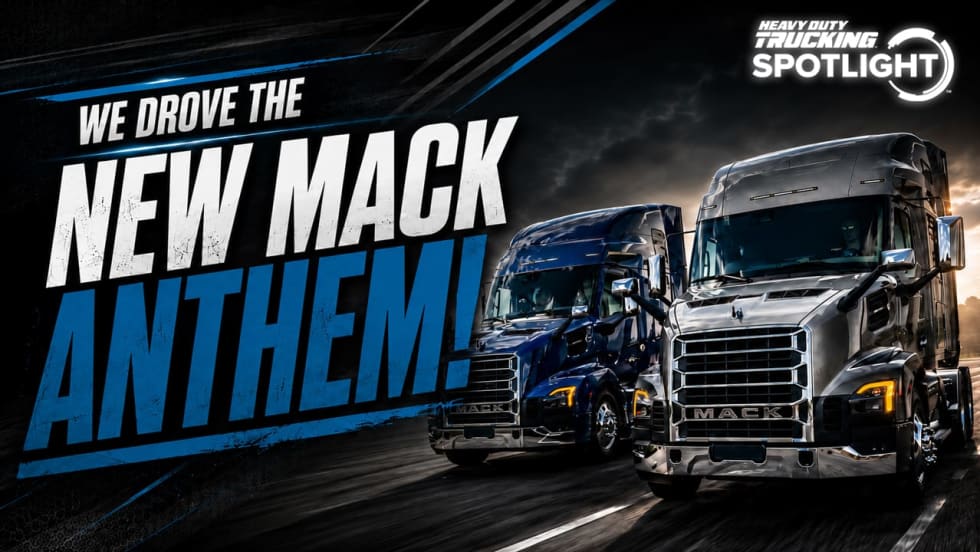
Behind the Wheel of the New Mack Anthem [Video]
HDT takes the new Mack Anthem around Mack’s Pennsylvania test track to see how its driver-focused design, technology, visibility and handling perform from behind the wheel.
Read More →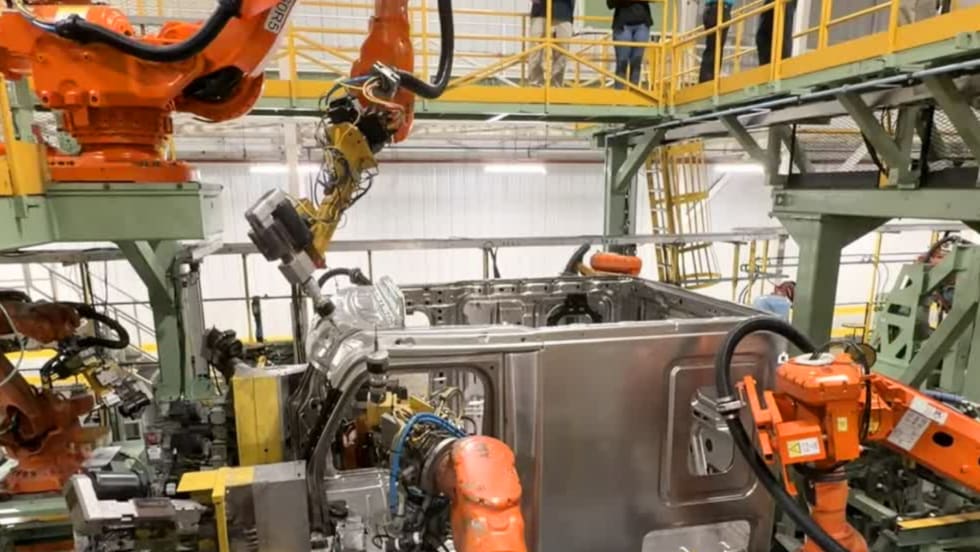
DTNA Plans New U.S. Truck Plant as Manufacturing Footprint Shifts
Daimler Truck North America is evaluating sites for a new assembly plant expected to open in 2029 while winding down operations at its longtime Portland manufacturing facility.
Read More →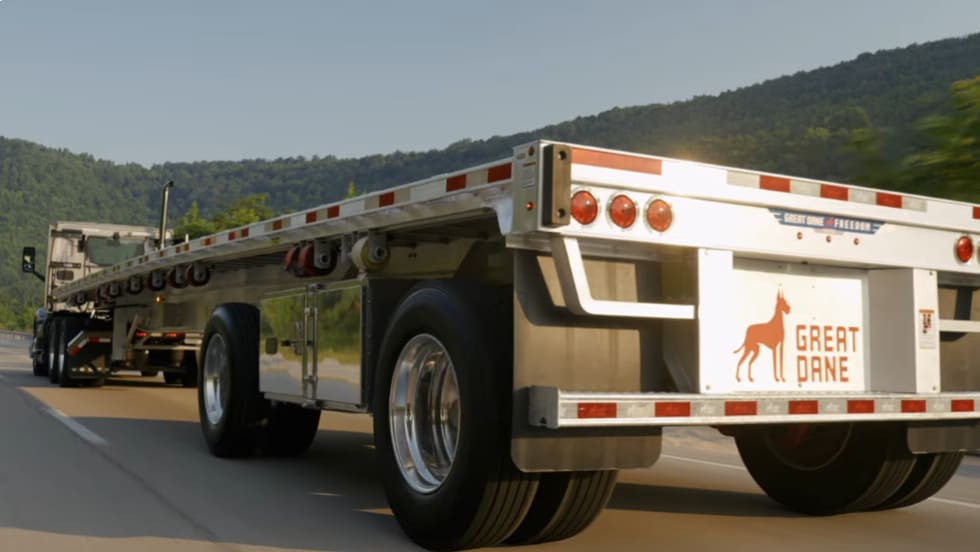
Great Dane Flatbed Trailer Offers Light Weight and Strength
Freedom Ultra is designed for a wide range of open-deck applications, including building materials, lumber, machinery, steel products, industrial freight, and coil hauling.
Read More →
What It's Like Inside this Custom 2025 Peterbilt 589?
Take a driver's-eye tour of this customized 2025 Peterbilt 589 in this video, as longtime driver Ingrid Brown explains its features, compares it to previous models, and shares plenty of personality along the way.
Read More →
Drivers Put Western Star Trucks to the Test at Star Nation Experience
Watch to get an inside look at the Western Star trucks, technology, and community behind the Star Nation Experience 2026!
Read More →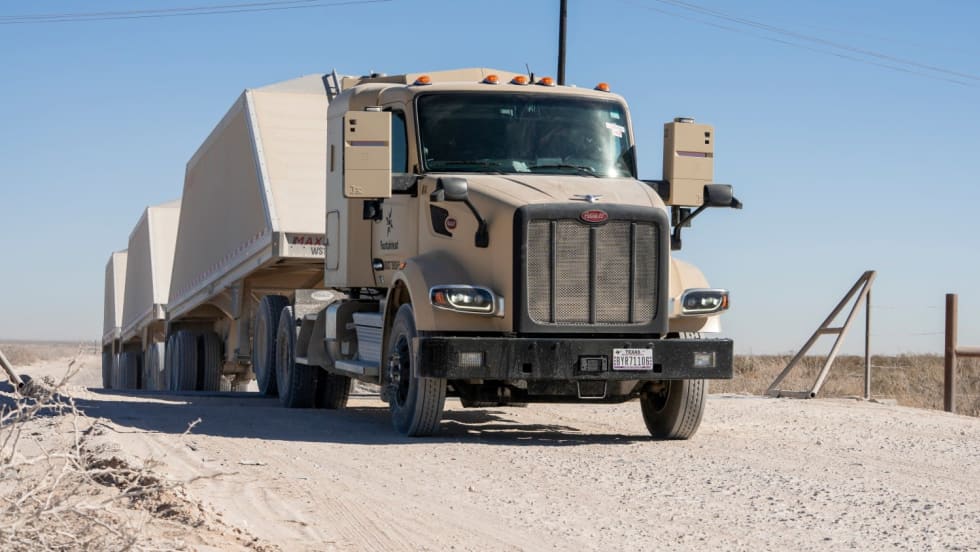
Atlas Expands Kodiak Driverless Truck Fleet in Permian Basin
Atlas Energy Solutions is expanding autonomous frac sand hauling in the Permian Basin with a second load-out location and plans for 100 driverless trucks by mid-2027.
Read More →
Putting Mack’s Command Steer to the Test
A test drive of Mack’s Command Steer active steering system evaluates how it can make truck driving easier and less tiring.
Read More →
Mack, Volvo Expand DEF Derate Software Updates
The updated software gives Mack and Volvo truck owners more time to address DEF-related issues before the engine derates or the vehicle goes into reduced-speed inducement, following new EPA guidance.
Read More →
Rush, MCT Team Up to Grow Refrigeration Service Network
The joint venture will operate MCT's network of Carrier Transicold dealerships and mobile service locations, with the companies promising greater service capacity and uptime for refrigerated fleets.
Read More →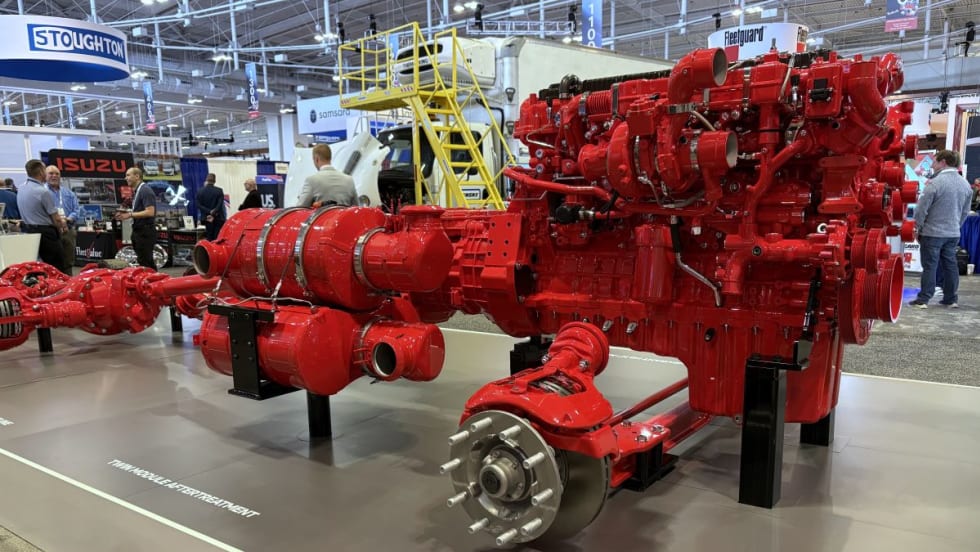
Cummins Adjusts 2027 Engine Rollout After EPA Proposal
The engine maker will gradually introduce its new Model Year 2027 diesel engines while continuing to offer current models during the transition, citing the EPA's proposed emissions rule changes.
Read More →