




Smart Trailers Face a Huge Hurdle
Find out why the challenge of building a backward-compatible smart trailer with future-proof connectivity will be one of the industry’s greatest challenges.
December 23, 2020


Smart trailers can give fleets unprecedented access to the secret lives of trailers, but future connectivity needs will change the way we connect to trailers.
Photo: Jim Park
6 min to read
The smart trailer concept is still in its infancy, and already the potential seems almost limitless. Over the past five years, trailers have gone from boxes on wheels to sources of business intelligence and data that can help fleets be more proactive with maintenance. Smart trailers even offer the possibility of shrinking the trailer fleet through improved uptime and more efficient fleet utilization.
Smart trailers’ humble beginnings started with real-time tire pressure monitoring and add-ons such as door open/close sensors, cargo sensors, and temperature monitoring in refrigerated trailers. The next frontier includes electronic stability control for trailers, 360-degree video blind-spot detection, back-up cameras, and even full vehicle-to-vehicle two-way communication and control for autonomous tractor-trailers.
Add-on trailer technology is advancing at a blistering pace, but we are up against a technological wall.
Or maybe I should say plug.
We still rely on 60-year-old technology to manage communications between the tractor and trailer: the seven-pin J560 connector.
“The seven-way [J560] should have been obsolete many years ago,” says Jim Epler, general manager at Phillips Connect Technologies. “Fleets want expandability way beyond 10 years. They are already talking about 30-pin connectors. From Phillips’ perspective, we’re trying to come up with a standard that everybody will want to go with.”

The humble SAE J560 7-pin connector has finally outlived its usefulness. The search for a suitable replacement could lead us to a 15-pin Euro-style J2691 connector, but some are looking at 30 pins.
Photo: Jim Park
In the early days of smart trailers, Epler says, it was tough to get all the suppliers to agree on connectivity standards. They all came in with their own sensors and analytics and telematics devices. But Phillips and several other companies started offering central telematics hubs that work with multiple smart-trailer products.
“These things eventually get driven by the customers, and they told us they were not going to have four or five different cellular devices on their trailers,” he says.
However, Epler notes that as customers start to experience the benefits of connectivity, they want more and more of it. “You offer them 10 and they soon want 30.”
Some of what customers want can be handled by wireless connections, and they are bypassing the constraints of the J560 through telematics. But there are limits to how far that will take us. Conventional wireless communication is too slow for the demands of future connectedness needed for autonomous vehicles, for example.
Before the smart trailer technology can reach its full potential, the industry will have to settle on a few core technologies that will enable effective and reliable future connectivity between tractors and trailers – while maintaining backward compatibility and future growth potential. That will require a lot more imagination than dreaming up new things to do with trailers.
For perspective, there are about 6 million trailers in service today. About 23% of them had some sort of telematic capability in 2019, says Paul Menig, CEO of Business Accelerants and chair of two new Technology & Maintenance Council task forces charged with future-proofing tractor-trailer communication and future technological standardization. That number is expected to swell to about 42% by 2022.
Meanwhile, we are building 225,000-300,000 new trailers a year, with 12- to 20-year life expectancies. Technology lifecycles, however, are much shorter, notes Charlie Willmott, CEO of WillGo Transportation Consulting.
“If we were to start building nothing but state-of-the-art smart trailers today, it would take 20-25 years to replace the existing fleet. But by then, today’s technology would be long obsolete and we’d have to start all over again,” he says.
The scope of the challenge is daunting.
Too Many Trailer Connection Possibilities
Do we need a 30-pin connector? Will the 15-pin J2691 they use in Europe suffice? Will we settle on something entirely different? Epler says some type of upgraded wired connection will be necessary to connect the tractor’s CAN (controller area network) to the trailer to enable two-way communication for cameras and various other sensing devices. He thinks there’s also room for more wireless connections, but there’s a tradeoff.
“I don’t think that everything needs be wired, but with more wireless sensors come more batteries that you’ll need to change out over the life of the trailer,” he says. “Fleets don’t want to swap out batteries when they have a sensor go out. We built our IntelliSense harness with pigtails all over it to connect to different sensors so that you don’t have to have everything wireless.”
We are seeing the first stages of what Willmott calls “innovative dysfunction.”
“There are so many choices, and so many possible directions, that there’s a tendency to just go back to the basics, and hope that somebody else will figure it out and let you know later,” he jokes.
But there’s some truth to that. Every supplier and OEM with some skin in the game, plus the customer, wants a say in how this unfolds. The tractor-trailer connection will need to be backward-compatible to maintain connectivity with the 6 million pieces of rolling stock already out there. At the same time, it needs to be future-proofed for any emerging technologies, such as the massive data transfer rates that will be required for autonomous vehicles. There will need to be some cost-effective retrofit possibilities as well. And of course, interchangeability will be foremost on many fleets’ minds.
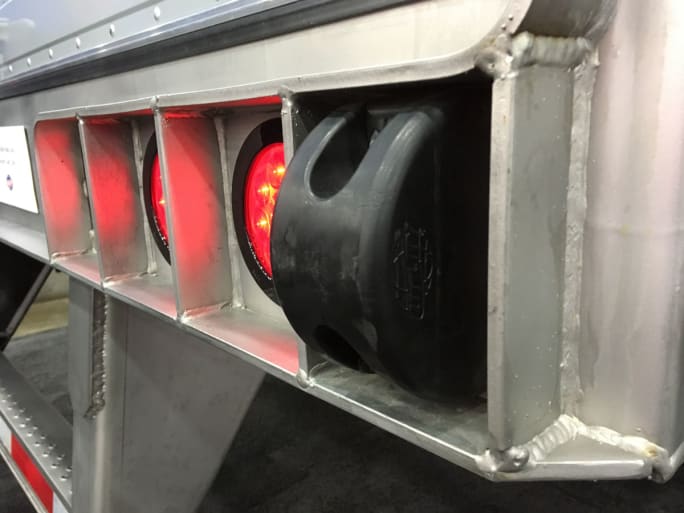
Without adding another connector, we can't add something as simple as an ultrasonic sensor on the rear of a trailer to prevent backing damage, much less backup cameras.
Photo: Jim Park
Adding to the challenge is the fact that the telematics universe is about to change as cellular providers phase out 2G and 3G networks and migrate to 4G LTE and 5G.
One possibility is a tractor OEM acquiring a trailer manufacturer and building a proprietary electronic architecture – something Willmott sees as a distinct possibility.
ESmartt: The Search for the Answer
In the fall of 2020, Menig and Willmott formed a collaboration called eSmartt (an acronym for enhanced safety, maintainability and readiness through technology), dedicated to researching and understanding new technology tools for the transportation industry, and the many complex issues around future technological standardization and equipment interchangeability.
“ESmartt is not is not the answer; it’s the search for the answers,” Willmott says. “We’ll be surveying all the stakeholders to get some perspective about moving intelligent systems forward.”
They plan to begin with trailer rental and leasing companies, which represent a healthy chunk of the trailer population. They are also developing surveys for different carrier audiences, such as private carriers, truckload carriers, and the less-than-truckload sector, as they all have very different business models. They will be speaking with full-service truck lessors such as Ryder and Penske, as well as system and component suppliers.
“We feel that if we can collect and analyze their thoughts on the path forward, then on a combined and aggregate basis, we might be able to find some common territory,” Willmott says.
There are a lot of people to talk to.
Many of the suppliers that will be putting systems onto trailers of the future, particularly braking systems, are global, Menig says. “They have some ideas of how to solve these problems. The people that provide the trailer harnesses and the trailer lighting have some ideas as to how they can improve things. Then we have the multitude of telematics suppliers who also have ideas about what should be done.”
Wheel-end manufacturers, tire makers, and tire-pressure monitoring and inflation suppliers have some ideas for solving at least part of the problem. “And then there are people who produce connectors and cables between the tractor and trailer that are also concerned about what’s going on.”
Work has already begun in earnest, with the Technology & Maintenance Council convening two new task forces in the S.7 Trailers, Bodies & Material Handling and S.1 Electrical study groups, led by Paul Menig, to work on the problem. Menig hopes to have a report by 2022 that will point the industry in the right direction.
Replacing the J560 connector with something that offers potential for future expansion, but is backward-compatible and retroffitable, while allowing all and sundry into the game, and delivering something customers will be happy to pay for, will be one of the greatest challenges trucking has ever faced.
Subscribe to Our Newsletter
More Equipment
How GP Transco Cuts Trucking Fuel Costs, a Tenth of a Gallon at a Time
What’s another tenth of a mile per gallon worth? GP Transco shares how equipment upgrades and driver coaching turn small gains into meaningful fuel savings.
Read More →
Electric Yard Tractors Move Beyond Pilots
Operating-cost savings have overtaken sustainability goals as the leading reason surveyed fleets are adopting battery-electric terminal tractors, according to new NACFE research.
Read More →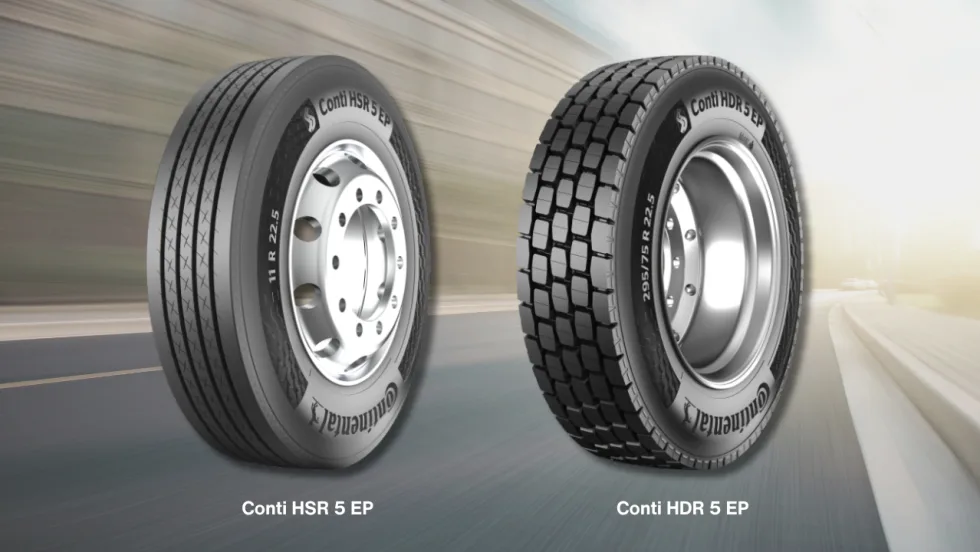
Continental Introduces New Regional Truck Tires
Continental says its new Generation 5 steer and drive tires for regional operations offer longer tread life, with estimated mileage gains of 22% and 19%, respectively.
Read More →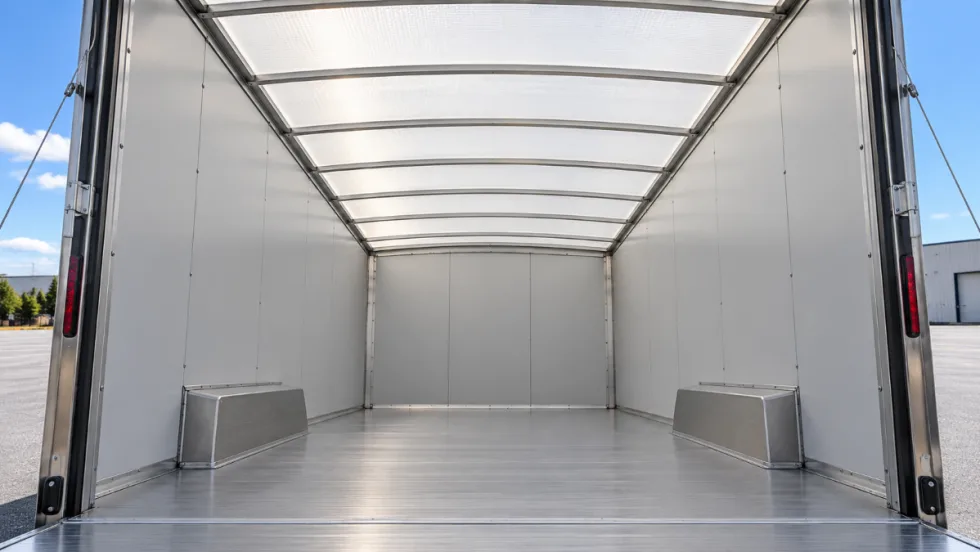
Tekmodo Introduces CargoBright Brand for Translucent Trailer Roofs
CargoBright is designed to diffuse daylight across the cargo area while performing as a working vehicle roof.
Read More →
Fleet Economics Shape Electric Truck Outlook
ACT Research expects costs, charging infrastructure, and technology improvements to drive zero-emission commercial vehicle adoption as federal regulations and incentives retreat.
Read More →
Kodiak Targets Dallas–Houston for Driverless Trucks
The company says its autonomous trucks are completing the I-45 run without a safety observer taking control. It plans to remove the observer by the end of 2026.
Read More →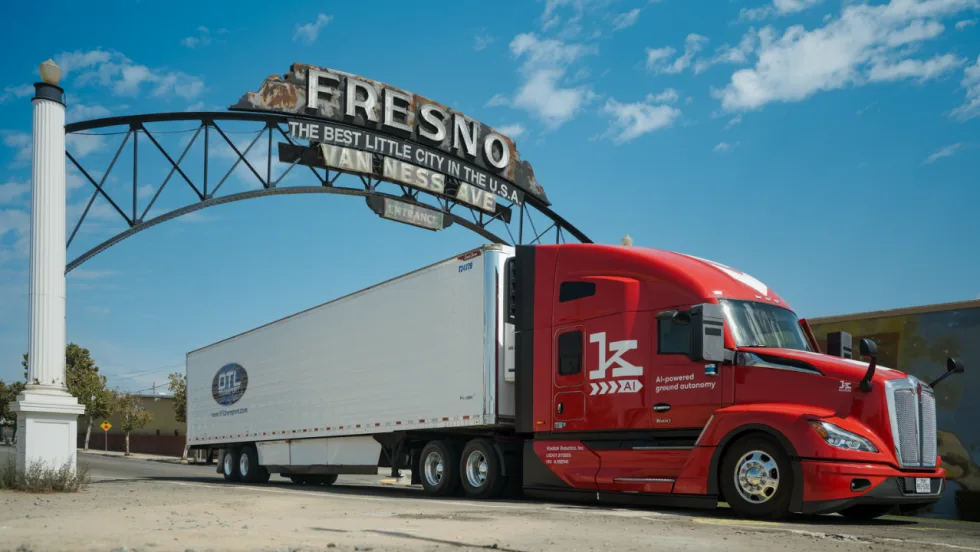
Kodiak Hauls Produce in California Autonomous Truck Pilot
Kodiak AI and DTL Transport have begun hauling produce between Fresno and Los Angeles under California’s new rules for testing heavy-duty autonomous trucks. A safety driver remains behind the wheel.
Read More →
Used-Truck Remarketing Math Is Changing
Used-truck value is no longer just a concern at trade-in. Decisions made throughout a truck’s first life can influence what it’s worth years later.
Read More →
How Volvo Updated Its D13 for EPA 2027 [Watch]
Volvo’s updated D13 promises lower emissions without sacrificing performance or fuel economy. Take a closer look at what changed inside the engine in this HDT Spotlight video.
Read More →
Michelin Tire Improves Efficiency and Durability for Regional Fleets
The Michelin X Multi Energy D2 is a regional haul drive tire engineered to help fleets improve fuel efficiency, durability and traction in demanding stop-and-go operations.
Read More →