




Smaller truck tire buyers to benefit from greenhouse gas and CAFE regs
Mike Yap is a plumbing and heating contractor near Buffalo, N.Y. He operates two GMC 3500-series cargo vans and two utility trailers. He buys tires from a local auto supply jobber. He's a price shopper

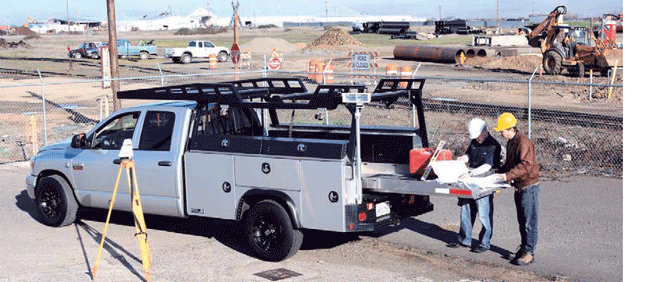
Mike Yap is a plumbing and heating contractor near Buffalo, N.Y. He operates two GMC 3500-series cargo vans and two utility trailers. He buys tires from a local auto supply jobber. He's a price shopper.
"I don't have any real problems with my tires, except when I work on a new construction jobsite," he says. "I almost always lose a couple of tires to nails or debris when I go to a new subdivision. It's just a cost of doing business."
Yap says he doesn't see much point in investing in a "better" tire versus a cheaper tire because it's not going to provide any better return.
"To me, a tire is a tire. What can I say," he says.
Yap's viewpoint is shared by many owners of light- and medium-duty commercial trucks, but there are some trends to be aware of for buyers and maintainers of these tires.
A longhaul, on-highway tire has a potential life span of several years when you retread.
From the time it's new, a well-maintained tire can be expected to run anywhere from 80,000 miles to several hundred thousand miles, depending on the circumstances, There's also opportunity to optimize the tire spec for the truck, the road and the application. You can drill pretty deep into that well to get the best possible tire life.
On-highway fleets tend to focus on cost: cost per thousandth, cost per mile, etc. If there's a fraction of a penny per mile to be saved, highway fleets are doing it.
That's not typically the case when it comes to tires for light-and medium-duty trucks. Someone who owns a couple of panel vans delivering baked goods, or a tree-trimmer who has a few three-quarter-ton pickups with utility bodies, might have other things on their minds To them, tires are like shoelaces: They never get a second thought until they break.
It's not unreasonable to assume that for these buyers, acquisition cost would be more of a factor in tire selection than life-cycle cost.
Compared to tires for Class 8 trucks and tractors, light- and medium-duty tires are relatively inexpensive.
An off-the-shelf, all-purpose LT245/75R/16 tire can be had at Pep Boys for $165 - with a 50,000-mile warranty. For a 14,500-pound-GVW truck, a name-brand tire might run as high $225.
Move up to a 19.5-inch tire, and the prices start looking more like tires for Class 8 highway trucks. Sears carries a name brand 245/70R19.5G tire for a 26,000-pound-GVW truck for $460 - even less on a buy-three-and-get-the-fourth-free sale. Still, at $500 with tax and installation, a little TLC can pay off.
"Some smaller fleets may seek a less expensive tire," says Donn Kramer, director of product marketing innovation, Goodyear Commercial Tire Systems. "However, larger fleets generally look for products that provide the overall lowest cost of ownership, which include tires that offer a balanced performance between fuel economy, mileage to removal, and good start/stop traction," no matter what the tire size.
Many manufacturers have dedicated commercial light truck product lines. But until recently, few options were available to casual buyers of light- to medium-duty tires. Brand, price and tread pattern were as complex as it got.
In the 19.5-inch market, rental fleets such as Ryder and Penske and small package delivery fleets such as FedEx and UPS are the leading tire consumers, says Libor Heger, director of Truck Tire Technologies for the Americas at Continental, who replaced the recently retired Roger Stansbie. "Those companies have driven the market by demanding a long-wearing tire with durable casings to keep lifetime operating costs low. That's what we delivered. There was little room for innovation there, because the largest players in the market were so price-sensitive."
Even though tire makers haven't been adding many new sizes in this segment, the demands being placed on the performance of commercial light truck tires are increasing. With the rising price of fuel combined with the shortage of CDL drivers, many companies are now using more light trucks and vans to deliver freight and to move goods. There's a trend to design commercial light truck products that can carry more weight to maximize the efficiency of these vehicles.
With the pending greenhouse gas reduction regulations for larger trucks and Corporate Average Fuel Economy standards coming into force for lighter trucks - not to mention $4-a-gallon diesel - there's also some movement toward a more fuel-efficient tire.
"The landscape is changing with regard to fuel economy," says Brad Weaver, product category manager at Michelin. "The impact of the new regulations will be the first step in changing the priorities. The next generation of these tires will have lower rolling resistance."
That's a concept easily understood and appreciated by big, sophisticated fleets. But what about by Bob the Baker? Or the legions of independent small package delivery services, home building contractors and tradespeople?
Weaver says they will get the benefits of less rolling resistance too, though they may not notice or appreciate it.
"They might not look long and deep at the performance attributes that could lower costs over the life of the tire, like low-rolling-resistance compounding, long-wearing tread compounds or improved sidewall armoring, but they are there," he says. "We obviously try to draw their attention to those attributes at the point of sale, but they tend to be much more sensitive to the cost."
When you can buy a name-brand light-duty tire for less than $200 with three to five years of warranty, you might not think of looking into tire pressure monitoring systems, although they could make a difference in how long those tires last.
If you're a light- or medium-duty truck owner, chances are you won't be retreading your tires, so casings matter very little. Better fuel economy would be good, but that's tough to measure if you're operating in a stop/start environment with variable loads and varying operating conditions.
Still, Goodyear's Kramer says truck OEMs have established rolling resistance standards and they have requested that tire manufacturers who supply tires to them comply with the standards. It won't affect in-service trucks or tires, but starting with the 2014 model-year, new vehicles will have "better" tires.
"Fleets that are running non-fuel-type tires today could receive measurable cost of operation benefits by purchasing tire products that are deemed SmartWay-approved," Kramer says.
At least they'll be getting some thing for their money, whether they're looking for it or not.
From the December issue of HDT magazine.
More Equipment
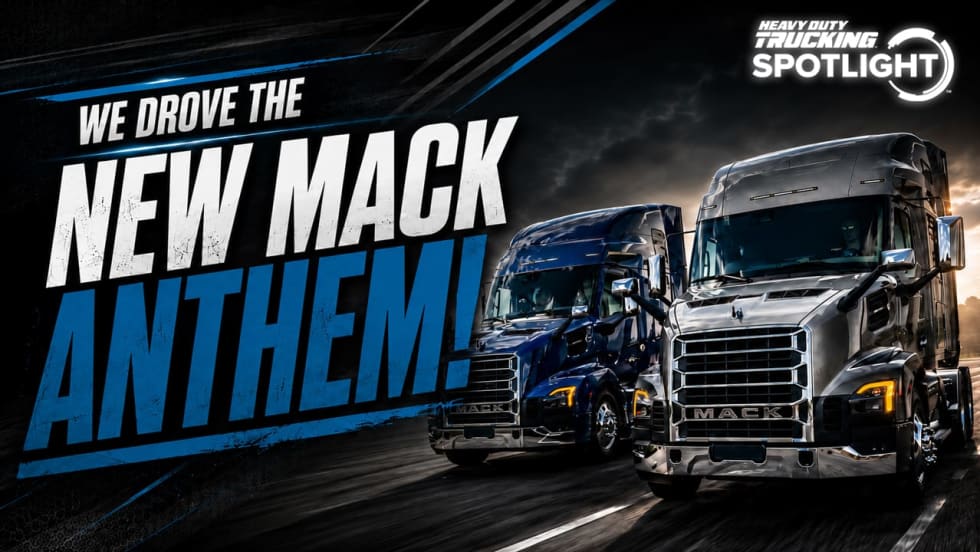
Behind the Wheel of the New Mack Anthem [Video]
HDT takes the new Mack Anthem around Mack’s Pennsylvania test track to see how its driver-focused design, technology, visibility and handling perform from behind the wheel.
Read More →
DTNA Plans New U.S. Truck Plant as Manufacturing Footprint Shifts
Daimler Truck North America is evaluating sites for a new assembly plant expected to open in 2029 while winding down operations at its longtime Portland manufacturing facility.
Read More →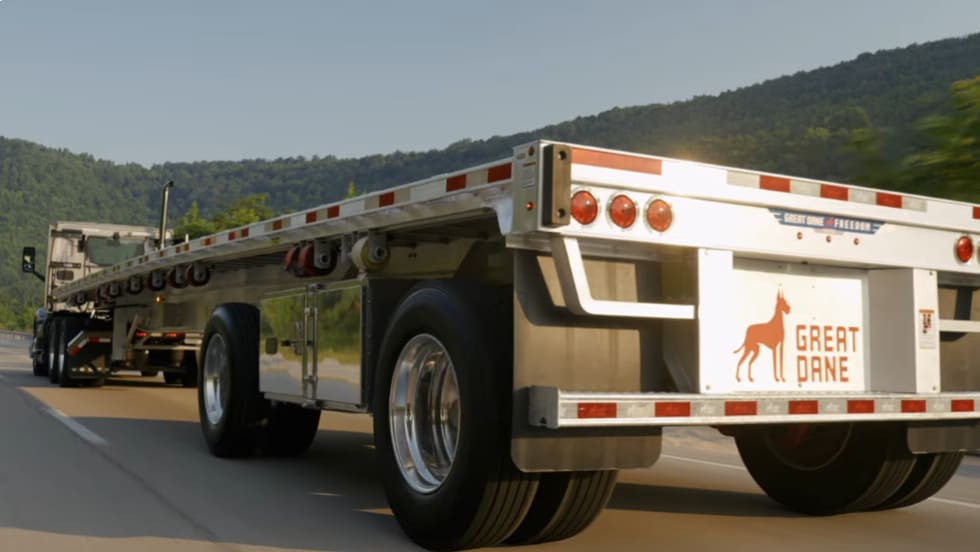
Great Dane Flatbed Trailer Offers Light Weight and Strength
Freedom Ultra is designed for a wide range of open-deck applications, including building materials, lumber, machinery, steel products, industrial freight, and coil hauling.
Read More →
What It's Like Inside this Custom 2025 Peterbilt 589?
Take a driver's-eye tour of this customized 2025 Peterbilt 589 in this video, as longtime driver Ingrid Brown explains its features, compares it to previous models, and shares plenty of personality along the way.
Read More →
Drivers Put Western Star Trucks to the Test at Star Nation Experience
Watch to get an inside look at the Western Star trucks, technology, and community behind the Star Nation Experience 2026!
Read More →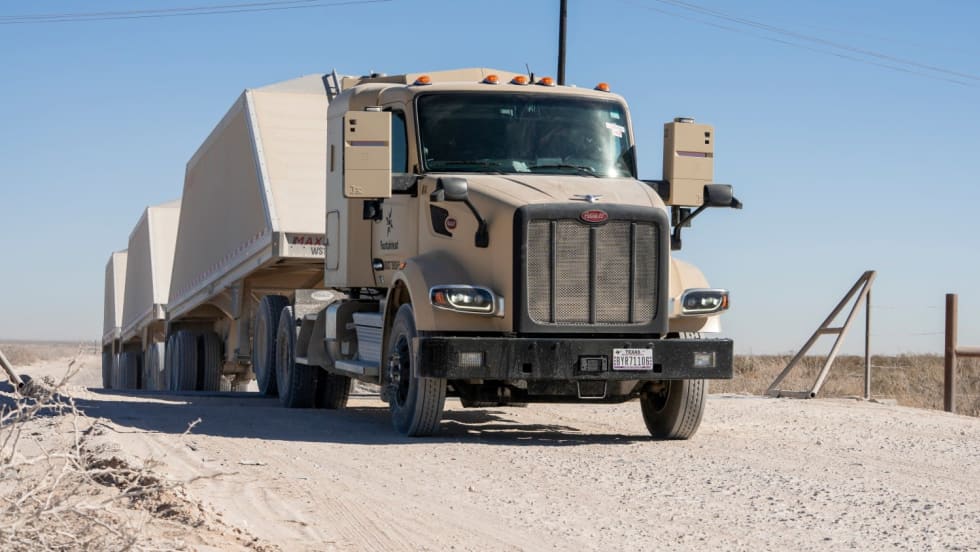
Atlas Expands Kodiak Driverless Truck Fleet in Permian Basin
Atlas Energy Solutions is expanding autonomous frac sand hauling in the Permian Basin with a second load-out location and plans for 100 driverless trucks by mid-2027.
Read More →
Putting Mack’s Command Steer to the Test
A test drive of Mack’s Command Steer active steering system evaluates how it can make truck driving easier and less tiring.
Read More →
Mack, Volvo Expand DEF Derate Software Updates
The updated software gives Mack and Volvo truck owners more time to address DEF-related issues before the engine derates or the vehicle goes into reduced-speed inducement, following new EPA guidance.
Read More →
Rush, MCT Team Up to Grow Refrigeration Service Network
The joint venture will operate MCT's network of Carrier Transicold dealerships and mobile service locations, with the companies promising greater service capacity and uptime for refrigerated fleets.
Read More →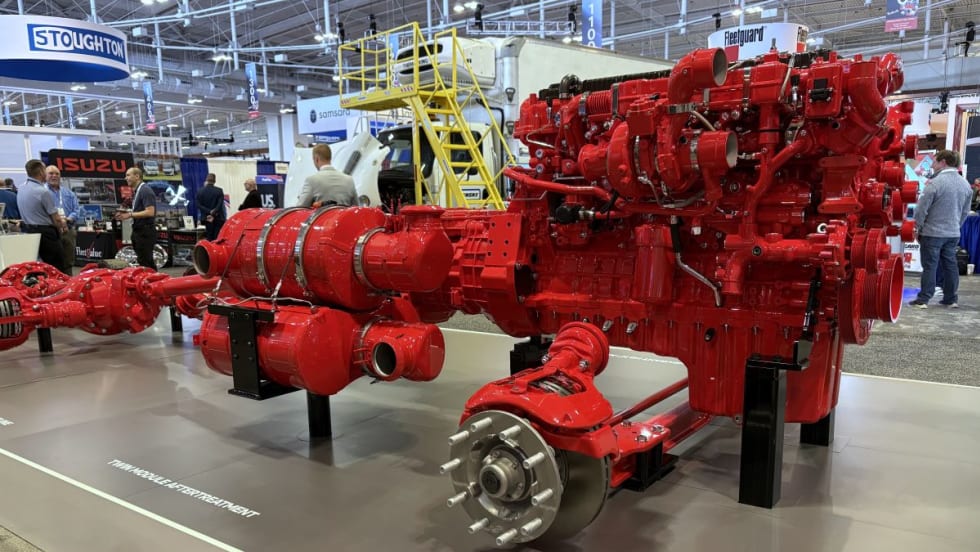
Cummins Adjusts 2027 Engine Rollout After EPA Proposal
The engine maker will gradually introduce its new Model Year 2027 diesel engines while continuing to offer current models during the transition, citing the EPA's proposed emissions rule changes.
Read More →