Read about HDT’s 2021 Safety & Compliance winner, Donielle Dziedzic, and how a background in environmental compliance helps her guide the loss-prevention efforts for less-than-truckload carrier A. Duie Pyle.
A. Duie Pyle has its own driver training school, as well as an extensive and comprehensive new driver orientation program that provides both classroom and behind‐the‐wheel training.
Photo: A. Duie Pyle
8 min to read
Donielle Dziedzic came to her trucking safety career via a somewhat unusual route. With an environmental biology degree, she spent 20 years in the environmental consulting industry. A. Duie Pyle was a longtime client. She performed environmental assessments for new terminals for the Northeast less-than-truckload, dedicated, logistics and warehouse company. She liked the family-owned carrier so much that when a position opened up for a health safety and environmental specialist that she was vastly overqualified for, she applied.
Company executives were so impressed that they developed a new position for Dziedzic. She would work under then-director of loss prevention Pete Dannecker, with the goal of her eventually succeeding him. After about three years, Dannecker moved up to vice president of risk and integrated resources, and now Dziedzic is director of loss prevention. Today, only about 5% of her focus is environmental. The rest is on OSHA and DOT compliance, reducing accidents and injuries, and more.
Dziedzic’s passion, determination, and attention to detail were recognized with HDT’s 2021 Safety & Compliance award, sponsored by J.J. Keller. The award was presented virtually in September during the Fleet Safety Experience event put on by HDT and sister Bobit fleet brands, with a panel discussion that also included the 2020 winner.
HDT’s 2021 Safety and Compliance Award winner is Donielle Dziedzic, CDS, director of loss prevention at A. Duie Pyle. She has been with the company for six years, but previously worked with its safety team as an environmental safety consultant for 10 years.
Photo: A. Duie Pyle
A different perspective
When asked what her environmental background brings to her current role, Dziedzic points out that she spent 20 years working within the maze of federal and state regulatory requirements.
“I had a very strong background in regulatory interpretation,” she says. “I think that really allowed me to catapult into the trucking industry with the Federal Motor Carrier Safety Administration and being able to digest and interpret those regulations and be able to put policies and procedures in place and implement them.”
When A. Duie Pyle executives asked how she felt about coming into an industry where she wasn’t the subject matter expert, she shared a story about getting a call to do stormwater permitting for a fleet. She didn’t hesitate to say yes — even though she had never done it before. “I said, ‘I can do that.’ The next thing I did was start looking up the regulations.” That company? A. Duie Pyle.
“I think my work ethic brings a lot to my position,” she says. “I’ve always been someone who learns on the fly. I wasn’t trained in college on how to do spill plans or hazmat response or stormwater permitting, but all of it is just a part of putting the time in and paying attention.”
Safety culture
Safety, Diedzic says, is intertwined with the company’s core values, which include empathy, candor, citizenship, service first, integrity, and profitability, when dealing both with customers and fellow team members.
“At A. Duie Pyle, safety is more than a passion, it’s our culture,” she says. “Safety is and continues to be in the forefront of company leadership and operations, with an extensive and comprehensive new-driver orientation program that provides both classroom and behind-the-wheel training.”
Just a sampling of its additional training and safety programs include new dockworker on-the-job training, monthly safety meetings, Smith System training (both initially and annually), governed pedal and cruise speeds, and severe-event video monitoring, coaching, and progressive discipline through forward-facing in-cab cameras.
Another part of the foundation of Pyle’s safety program is to understand the root cause of each accident and involve operations and its driver force in a team effort to address it. Every event that could be interpreted as an accident, no matter how minor, is investigated and documented. Preventable accidents are turned into a learning experience, including the service center manager meeting with the driver. This “sends a powerful message to the fleet that all accidents are significant at our company and that reducing accidents is a critical mission of our operations team.”
“An important element of the program is to obtain driver buy-in,” Diedzic explains. “Drivers should genuinely understand what they could have done differently to prevent their accident. In order to maintain credibility for the preventability decisions, drivers have the right to appeal an accident decision to a Driver Accident Review Team, which has full authority to overturn accident decisions.”
In the event of a catastrophic loss (multiple injury, fatality or major environmental damage), special response teams are dispatched that include a professional photographer, attorney and hazmat clean-up responders.
Speeding initiative
A recent project Dziedzic is particularly proud of showed dramatic results in reducing speeding.
In mid-2019, A. Duie Pyle was seeing a rise in speeding violations across the fleet. “The company was going through a fast growth spurt, and with that comes pain,” she says. “We had to come up with something very quick to get it under control and make a change.”
Pyle leadership implemented a new policy on speeding and reckless driving, setting forth expectations and consequences under the company’s progressive discipline policy. Violations of the policy could be citations, warnings, tickets, roadside inspections or observations by police enforcement personnel, regulatory authorities or company personnel.
Pyle also implemented SpeedGauge, an Omnitracs offering that records the speed of each unit every time it is pinged on the GPS. The fleet’s safety professionals use weekly SpeedGauge reports to identify drivers who are speeding and use the policy’s discipline procedures to correct the behavior.
The program was implemented in November 2019. At that time, Pyle’s CSA percentile for Unsafe Driving was at 74%. As of July 2021, it had drastically improved — to just 3%.
“I was really proud that we put in SpeedGauge,” she says. “Leadership jumped right in with us. It made a great impact.”
When working with drivers on issues such as this, it helps that the company’s safety department includes many former longtime drivers in addition to people who weren’t drivers such as Dziedzic. “We find that extremely important, because the former drivers add a different perspective, and that captures the respect of the drivers as well.”
Digging into data
Every month, graphs showing safety data and trends are sent to every A. Duie Pyle facility to post on highly visible public bulletin boards, as well as copies to top management, showing data such as:
Miles and hours between preventable crashes
Preventable crash trend lines for all drivers, linehaul drivers, P&D drivers, and dedicated drivers
OSHA recordable injuries
Preventable crash rate relative to service center size
Roadside inspection out-of-service rates
In addition, there are many reports used by management that aren’t posted at service centers, such as a big-picture LTL safety performance metric, company-wide injury report, OSHA recordable injuries, miles between preventable crashes, DOT recordable crash rate 12-month rolling average, and much more.
Diedzic meets with Dannecker on an as-needed basis to discuss progress, programs and observations. And she analyzes various numbers and brings forward items of special interest that would not normally be reported. For instance, looking at non-preventable accidents led them to add deer whistles to the trucks to help limit deer strikes. Another example was adding LED lighting to the backs of trailers to reduce the number of vehicles rear-ending Pyle vehicles when stopped in traffic.
The pros and pitfalls of safety technology
A. Duie Pyle has been implementing advanced safety technology, such as collision mitigation with active braking, lane-departure warning and forward-facing cameras. Currently 78% of the fleet has the latest active collision avoidance, and about half has cameras and LDW.
Among its many safety awards and recognitions, A. Duie Pyle sponsors a series of local championships, with food, music and safety awareness activities for driver families. Winners are sponsored at the state level. State winners go on to nationals. The company includes spouses on the national trip and makes it a special event.
Photo: A. Duie Pyle
However, Dziedzic points out spec’ing new tech on the trucks is only the first step. The technology comes with its own challenges for the safety department.
“We have to make sure that we’re planning the training of our drivers when any new technology comes out,” she says. “We have the challenge of having to train 1,700-plus drivers on a new piece of technology.”
In addition, you must have a process in place to monitor the technology and use the data to coach and discipline drivers. “The worst thing that we could do is implement a new piece of technology and then not do anything with it.”
She also believes safety professionals have to work to ensure that the technology does not create complacency, both on the part of the driver and the safety department. If you don’t monitor and act on the data coming from the systems, the technology has the potential to mask unsafe driving habits, “where the driver behavior might have been more apparent pre all this technology,” she says.
“So, I think it’s incorporating all of that together and keeping the safety still in the forefront, and making it all work — not just the piece of technology, but for the driver and for the company, and for the overall safety culture.”
Safety advice for smaller fleets
Pyle has more than 1,500 power units, which means Dziedzic has more safety resources than many smaller fleets. So, we asked what her advice would be for smaller companies, which may only have one person in the safety “department,” or even someone who’s responsible for safety and compliance along with other hats.
“I think the crawl-walk-run mentality is very prudent in the world of safety,” she says. “You have to come up with your plan, then figure out how can you execute your plan. Even with one person, gathering the buy-in and working together with other departments such as fleet maintenance and operations. You have to look at what you have and then also what support you can glean from other departments.”
Working with other departments is a key aspect of A. Duie Pyle’s safety efforts. For instance, during safety blitzes like the Commercial Vehicle Safety Alliance’s Roadcheck, operations is doing spot checks in the yard and the maintenance department is on alert for additional vehicle checks outside the normal preventive maintenance schedule.
In fact, at Pyle, the maintenance department is part of the safety department, and technicians work closely with safety trainers. Mechanics are included in driver safety meetings.
“We’re all on the same team and all have the same goal,” Dziedzic says. “Our main concern every day we walk into work is that everybody’s going home the way that they came in. That’s first and foremost, above any regulation.”
This article originally appeared in the November print issue of HDT.
Can trucking’s standard seven-way connector handle more cameras and trailer data? Grote’s Adam Slade shows HDT how the company is using new technology with its 4See trailer system, not only to add a new backup camera but also to expand other capabilities — without adding another connection.
PrePass Intelligence helps fleets measure bypass savings, flag potential toll overcharges, and spot suspicious transactions by combining data from separate systems.
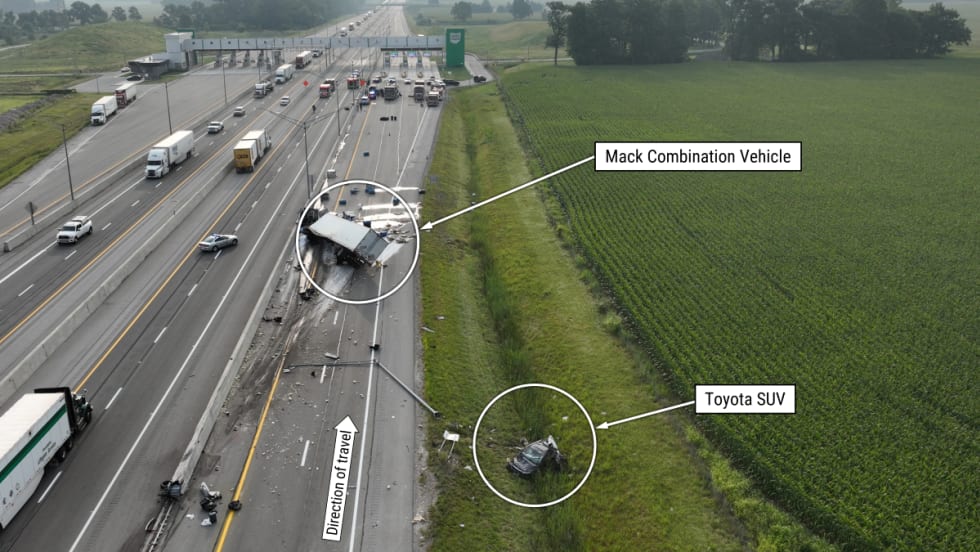
An NTSB investigation found that last-minute lane changes and large speed differences at an Ohio toll plaza created a hazard the truck driver couldn't avoid in time.
English language proficiency rules for commercial drivers aren’t new, but renewed out-of-service enforcement has raised the stakes. Here’s what carriers need to know before a driver reaches a roadside inspection.
Marijuana is getting stronger, laws are changing, and drug tests still can’t reliably establish impairment. What does that mean for truck drivers and the fleets that employ them?
The system will allow enforcement agencies to verify Enhanced Inspection information and decide whether Kodiak’s autonomous trucks can bypass roadside screening sites.
After three decades in trucking, Harold Perry shares what he's learned about driver safety, mentorship, and helping the next generation build confidence behind the wheel.
Carriers whose updates were due on or after June 1 have more time, while FMCSA works to stabilize its new registration system and warns of phishing sites impersonating its new carrier registration system, Motus.