




Report: Unlikely U.S. Can Meet Cellulosic Biofuel Mandates
Some U.S. biofuel mandates can't be reached, according to a new report from the National Research Council. At least not without major technological innovations or policy changes
Some U.S. biofuel mandates can't be reached, according to a new report from the National Research Council. At least not without major technological innovations or policy changes.
The "cellulosic" biofuel mandates contained in the current Renewable Fuel Standard (RFS2), amended in the 2007 Energy Independence and Security Act, want to see consumption of - by 2022 -- 16 billion gallons of cellulosic biofuels produced from wood, grasses, or non-edible plant parts.
The Act demands that by 2022 the consumption of renewable fuels should also include 15 billion gallons of conventional biofuels, mainly corn-grain ethanol; 1 billion gallons of biomass-based diesel; and 4 billion gallons of advanced renewable biofuels, other than ethanol derived from cornstarch.
In each case there's a specific demand that the fuel in question should achieve a certain lifecycle GHG threshold, referring to total emissions from planting to harvesting and on to distribution and ultimate use in a vehicle.
The NRC report, entitled "Renewable Fuel Standard: Potential Economic and Environmental Effects of US Biofuel Policy," allows that conventional biofuels and biomass-based diesel fuel can probably meet consumption mandates.
Cellulosic biofuels, however, are different because there are countless economic, policy, environmental, and social barriers to be met first. It's still a developing industry, and to see it through to meeting the mandate would demand federal budget outlays that may or may not be available. As well, the report says, the likely economic and environmental effects are at best "mixed."
"A key barrier to achieving RFS2 is the high cost of producing biofuels compared to petroleum-based fuels and the large capital investments required to put billions of gallons of production capacity in place," the report says. "As of 2010, biofuel production was contingent on subsidies, tax credits, the import tariff, loan guarantees, RFS2, and similar policies. These policies that provide financial support for biofuels will expire long before 2022 and cannot provide the support necessary for achieving the RFS2 mandate."
Right now, there simply aren't any refineries in the U.S. for converting cellulosic biomass to fuel, at least none that are commercially viable.
More Equipment

ZF Expands Commercial Vehicle Push in North America
ZF is expanding its North American commercial-vehicle presence with new transmission applications, electrification, trailer technology and autonomous-driving systems.
Read More →
Tesla Wants a Self-Driving Semi. Are Cameras Enough?
Could Tesla’s camera-only autonomous driving technology work on an 80,000-pound Semi? In this commentary, HDT's Deborah Lockridge takes a look at Tesla, Cybercab, and how autonomous trucks see the road.
Read More →
Kodiak: Driverless Long-Haul Truck Launch on Track for 2026
Kodiak AI says its driverless long-haul safety case is 93% complete and it remains on track to begin commercial operations by year-end 2026.
Read More →
What DOT’s Automated Vehicle Strategy Means for Trucking
The U.S. Department of Transportation issued a new automated-vehicle strategy that outlines plans for driverless-truck regulations, cross-state freight corridors, and federal safety standards.
Read More →
East Coast Port Launches $45M Electric Truck Push
The Port Authority of New York and New Jersey announced millions in incentives for zero-emission drayage trucks, yard tractors, and new charging hubs near the port.
Read More →
PlusAI Going Public to Fund Autonomous Truck Launch
A SPAC deal could provide PlusAI with up to $300 million as it works toward a 2027 commercial launch of factory-built autonomous trucks.
Read More →
NHTSA Moves to Rewrite Truck Fuel-Economy Rules
The National Highway Traffic Safety Administration says it lacks authority to regulate medium- and heavy-duty truck engines separately from complete vehicles, but the existing standards have not yet been eliminated.
Read More →
Detroit Opens Orders for EPA 2027 Engines
Detroit isn’t starting from scratch to meet EPA 2027 diesel emissions standards. Its Gen 6 DD13 and DD15 engines keep much of today’s platform while updating the fuel and aftertreatment systems.
Read More →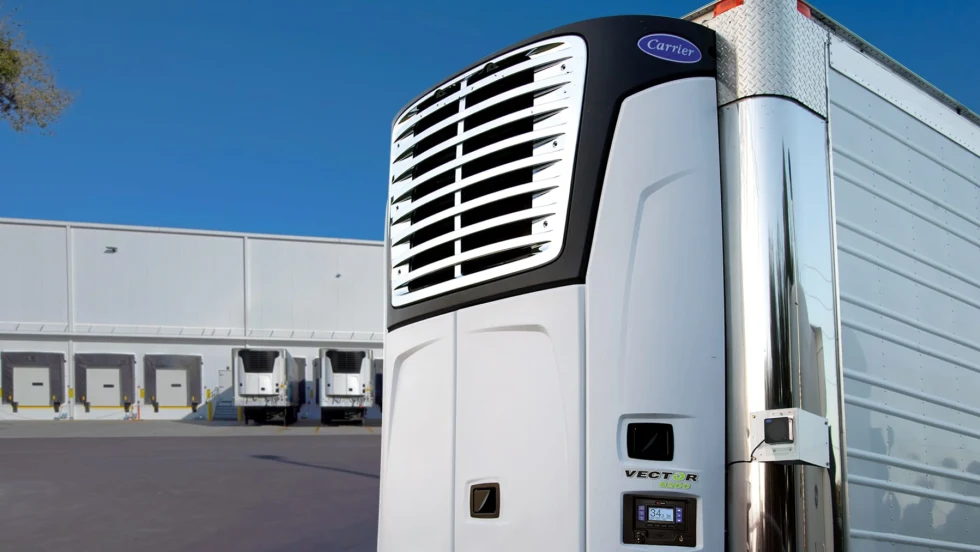
Carrier Transicold Adds All-Electric TRU for Stationary Cold Storage
Carrier Transicold’s new Vector 8200 all-electric transport refrigeration unit gives fleets a diesel-free option for temporary refrigerated and frozen trailer storage.
Read More →
A Closer Look at Kenworth’s Electric T880E Vocational Truck [Video]
Learn more about Kenworth's T880E battery-electric vocational truck at the Paccar Technical Center, including its range, applications, upfitting considerations, and PTO options, in this HDT Spotlight video.
Read More →