




Regulations, Drivers, Truck Capacity Focus of Shipper Meeting
Shippers must work smarter and cooperate closely with their carrier partners to offset expected losses in truck capacity caused by government regulation, according to presentations at the 11th Annual Transplace Shipper Symposium held earlier this month in Dallas.

Transplace CEO Tom Sanderson, right, shares the stage with trucking analyst Thom Albrecht, managing director at BB&T Capital Markets, during the 11th Annual Transplace Shipper Symposium held in Dallas earlier this month. Sanderson and Albrecht encouraged shippers to treat drivers with respect — or risk not having reliable truck service as capacity tightens. (Photo courtesy Transplace)

Shippers must work smarter and cooperate closely with their carrier partners to offset expected losses in truck capacity caused by government regulation, according to presentations at the 11th Annual Transplace Shipper Symposium held earlier this month in Dallas.
“Everyone is in favor of safety. The trucking industry has done a phenomenal job,” Transplace CEO Tom Sanderson told the gathering of shippers, carriers, industry experts, analysts and academics. “But regulations that drive up our costs, that make life for the trucking industry more difficult and don’t improve highway safety, are not benefitting anyone.”
In a session to explain recent legislative and economic impacts on freight transportation, attendees heard updates on the regulatory ABCs so familiar to the trucking industry — CSA, HOS, and EOBRs — along with the driver shortage, the rise in intermodal freight, and the possibility of a capacity crunch to rival 2004.
But shippers were told they won’t need a complex economic model to predict the arrival of a truck and driver shortage.
“Just look at your own service record,” said trucking analyst Thom Albrecht, managing director at BB&T Capital Markets, who shared the stage with Sanderson. “When you start to see a decay in either on-time pick up or on-time delivery, there’s probably a reaction up the chain and it’s probably tied to drivers. And watch your load tender/acceptance figures. When those begin to deteriorate, it’s either someone having problems with drivers, or your fleets are starting to play poker with you and they may not be honoring their commitments.”
While carrier representatives in attendance might have been disheartened to learn of innovative methods designed to reduce truckload freight costs, the event is a valuable gauge of shipper sentiment and a look at trends in industry practices.
Transplace was founded by a group of large carriers, so the meeting historically emphasizes cooperation, regardless of the swings in the transportation supply and demand marketplace.
Why Shippers Shouldn't Use CSA
Sanderson opened his presentation with a discussion of his latest blog post, an update to his running criticism of the Federal Motor Carrier Safety Administration's Compliance, Safety, Accountability enforcement program launched in late 2010.
Sanderson is also the front man for ASECTT, a group suing to remove carrier scores in the CSA performance categories (BASICs) from public view.
Starting on a positive note, Sanderson characterized CSA as a mechanism designed to prioritize the enforcement resources of the Federal Motor Carrier Safety Administration.
“The original intent was good, and that’s still valid,” he said.
He also noted that many carriers appreciate the feedback and have used CSA data to improve safety within their operations.
His remaining remarks, however, were detailed and critical.
Sanderson told the shippers’ meeting that CSA is “in flux” and “not ready for prime time.”
Among its numerous flaws, he said, CSA still doesn’t measure most carriers. Of those carriers with enough inspection data to be scored in one of the BASICs, about 55% have at least one score above the intervention threshold, according to Sanderson’s analysis.
“That is absolutely crazy. When you look at the track record of the motor carrier industry, it’s a phenomenal record of safety over the last 30-plus years,” Sanderson said. “To brand over half the carriers that FMCSA measures as having some kind of deficiency is absurd.”
Additionally, the BASIC scores do not correlate with a carrier’s accident frequency, he suggested.
“The system is not suitable for use by the shipping public to determine which carriers they’re going to do business with,” Sanderson said.
Hours of Service and Productivity
The expected July 1 changes to the hours of service rule will take capacity off the highway, Sanderson said, which will lead to higher prices for shippers. He cited specifically the new 34-hour restart provision and its impact on scheduling for some segments, particularly those who rely on early morning deliveries.
The new 30-minute driver rest break may or may not prove to have a significant impact on productivity, he noted. Still, he pointed out a possible safety risk if drivers feel compelled to “make up for lost time” after the mandated mid-shift pause.
Tightly scheduled routes with multiple deliveries will feel the change more than over-the-road operations, Albrecht agreed. He also questioned how many drivers actually are going to be back on the road in exactly 30 minutes, and not 45 minutes or more.
“Some organizations are going to be left with a 1% to 2% impact on productivity, while others are going to see at least 10%,” he said. “The food warehouse industry is going to very vulnerable. It’s going to be very challenging.”
The net effect will be a 2% to 5% reduction in productivity, Sanderson said. Doing the math, even a comparatively modest impact will result in the need for another 100,000 drivers.
“Where are we going to find 100,000 more truck drivers?” Sanderson said. “And does anyone think that new drivers are going to be safer than the 3 million professional drivers on the road today? Not a chance.”
Albrecht added that a driver currently gets 660 minutes of time behind the wheel in the daily duty cycle.
“The challenge for your organization is how can you help carriers find 20 or 30 more minutes a day,” Albrecht said. “A carrier can work smarter, but are you working with them to help them accomplish their goals? They can’t do it as a solo effort.”
Electronic Logs and Sitting at the Dock
The new rule mandating electronic on-board recorders, or electronic logging devices as they're now being called, will probably be published sometime next year, Sanderson said, likely to be followed by legal challenges and a grace period for universal adoption.
“From a practical standpoint, it’s going to be five or six years from now,” Sanderson said, adding that he supports EOBRs and sees the potential for modest productivity gains rather than losses.
“The real pinch point could be when EOBRs are scheduled to be implemented,” Albrecht said, noting that while most large carriers have already adopted EOBRs, many, many small carriers have not. “However, until there is a level playing field, [shippers] are going to have a little bit of a relief valve from carriers willing to ‘run hot and heavy.’ There’s going to be a part of the carrier population willing to operate that way, and they’re not going to change. “But think twice,” he cautioned shippers.
“A lot of driver dissatisfaction has to do with hassles at the dock, when that driver has to sit and wait,” Sanderson said, adding that electronic logs can’t be fudged. “When the clock’s up, it’s up. And sitting really takes money out of the driver’s pocket. Just make sure that you’re better than the next guy by being a shipper that is friendly to drivers, and that you’re a shipper that a trucking company wants to do business with.”
Next Page: Why shippers should care about the driver shortage
[PAGEBREAK]Driver Pay and Respect
According to a BB&T driver survey, pay was the leading reason most leave their jobs, followed closely by the lack of recognition and respect, at more than 30%, Albrecht reported. He encouraged shippers to take steps to make drivers feel more welcomed.
“As an organization, you’ve got to get across to your people to treat these folks with respect,” Albrecht said.
With regard to driver retention, Albrecht suggested that tiered driver pay, based on meeting performance goals, will mean premium pay for premium drivers.
“Pay for performance is now back in vogue. Ten years ago it went out of vogue for pure pay raises,” he said. “But pay for performance is going to stick because of the regulatory climate, equipment is very expensive and fuel is way up. And EOBRs take some of the subjectivity out of the pay-for-performance programs from the late ‘90s.”
Still Sanderson, who spent several years in the trucking industry, including positions at J. B. Hunt Transport at Schneider National, recalled persistent worries of a driver shortage “Armageddon," a concern that loomed large in 2004 but otherwise has never substantially materialized.
“It’s because the industry has taken smart actions. We’re not sitting still waiting for the shortage to overrun us.”
Capacity Deja Vu?
Indeed, Albrecht posed the question: Is there another 2004 out there?
“By most accounts, 2004-2005 was nirvana for trucking companies, and the ultimate migraine for shippers,” Albrecht said. "Supply was tight, but not because the van sector was booming."
Capacity had been reduced through the confluence of substantial HOS changes, three years of carrier bankruptcies, Bush administration tax cuts and an economy that was doing fairly well. “But the actual trend underneath was that loads were shrinking,” Albrecht said. “These changes were coming on eight, nine, 10 years ago, and they’ve only accelerated as a result of the Great Recession.”
A recurrence of a truck shortage similar to 2004 is possible in 2014, but not likely, Albrecht explained, because most of those underlying factors are not present currently.
More importantly, shippers have taken steps to be prepared when truck capacity becomes extremely tight, with alternatives such as shifting more freight to intermodal or dedicated fleets, expanding the core carrier base and using more brokered loads and 3PL services.
“I’m not convinced it’s going to be as tight as ’04, but it is going to be tighter than what we’ve seen the last couple of years because of hours of service — that’s the one commonality with 2004,” Albrecht said.
Intermodal Trends
Albrecht reported that van loads are 19% below their 2006 peak, the result of an economic downturn and the supply chain alternatives shippers have explored. This is in contrast to flatbed, tank and refrigerated loads, which have recovered ground since the recession while van loads continue to fall.
“Intermodal is having a real impact,” Albrecht said, noting that the truckload market for runs of more than 700 miles is worth about $40 billion. Currently, intermodal is a $14 billion market, but that is expected to grow to $20 billion by the end of decade, if not sooner.
And that gain is coming out of the truckload share, a 15% loss. While domestic intermodal loads have increased for 11 years in a row, van truckloads have contracted in eight of the past 11 years. Domestic container growth has averaged 9.1% annual growth since 2007, compared to GDP growth of about 1.5%, according to Albrecht’s figures.
“East of the Rockies, we think there is tremendous opportunity to convert truckload to intermodal,” Sanderson added.
Sanderson credits improved rail service, compared to the not-so-distant day when a rail load “would get there when it got there” — but the transportation cost savings were significant. Now, the schedules are tighter and the savings are less, though long-haul rail rates are still more than competitive with truckload.
“It’s no longer a big discount for poor service. It’s a smaller discount for truck-like service,” Sanderson said.
More Fleet Management

How Innovative Trucking Leaders Turn Change Into an Advantage
As the pace of change accelerates in trucking, the fleets that adapt best have more than the latest technology. They have cultures that embrace improvement.
Read More →
Freight Broker Bonds Just Got Harder to Get. Here's What That Means for Your Fleet.
When it gets harder for a freight broker to prove they are financially sound, the ones who cannot clear that bar get pushed out of the market. And those are exactly the brokers who used to leave motor carriers holding the bag.
Read More →
Long-Awaited Canadian Border Bridge to Open in Detroit
For trucking, the bridge opening should offer immediate improvements in efficiency and reliability, with new customs facilities, expanded inspection capacity, and direct freeway-to-freeway connections.
Read More →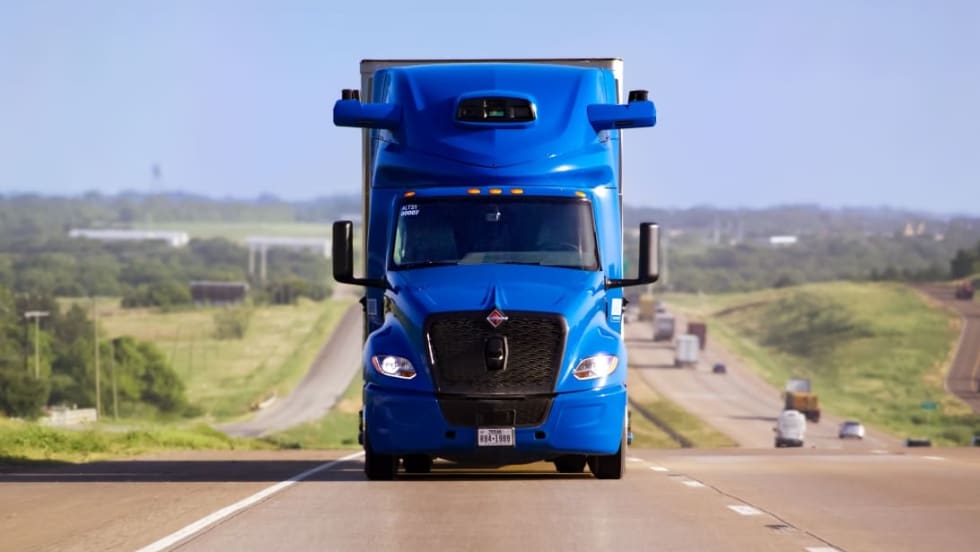
Aurora Rolls Out Next Generation of Driverless Trucks for Commercial Freight
Aurora's latest autonomous trucks it's rolling out with International feature lower-cost hardware designed for a million miles as the company expands commercial driverless freight operations across the U.S. Sun Belt.
Read More →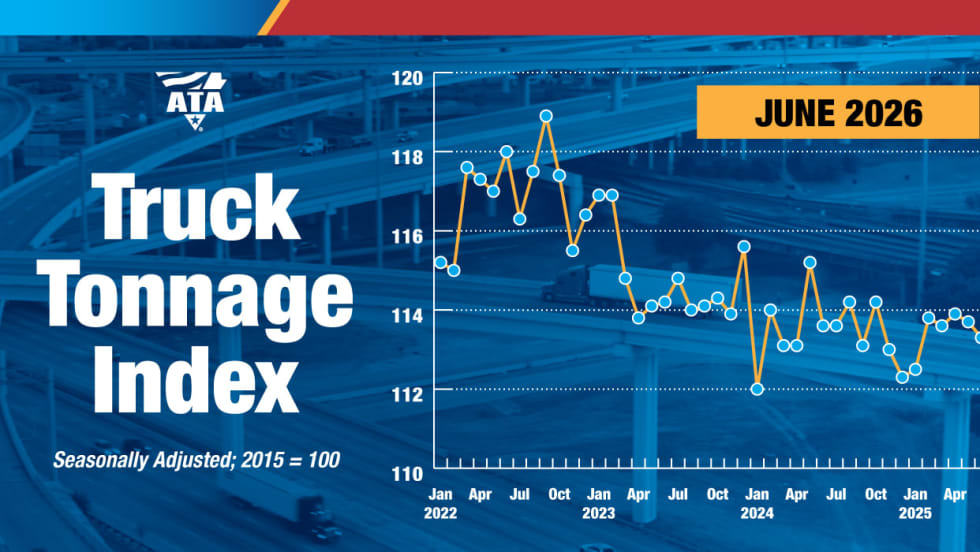
Freight Tonnage Down, Rates up, as Lower Capacity Powers Trucking Recovery
The recovery from the freight recession continues to be driven by reduction in capacity rather than by increased demand.
Read More →
Think Your Trucking Fleet Isn't Using Much AI? Think Again
Shadow AI — the use of unauthorized artificial intelligence tools at work — is becoming increasingly common, putting sensitive company data at risk. Learn how trucking fleets can protect sensitive data while embracing AI.
Read More →
ArcBest Consolidates Brands, Cuts Workforce
The company will bring three business units under the ArcBest brand, eliminate about 2% of positions, and expects the changes to generate $40 million in annual savings.
Read More →
Trucking Fleets Faced Record Operating Costs During Third Year of Freight Recession
ATRI's annual operational cost report shows carriers trimmed fleets, delayed equipment purchases, and ran older trucks as expenses continued to outpace freight rates.
Read More →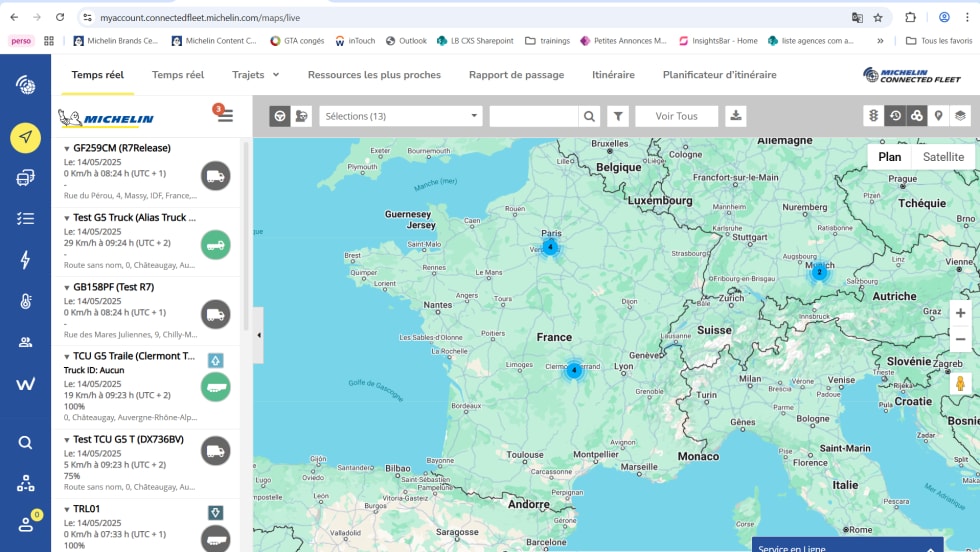
Michelin Adds AI Assistant to MyConnectedFleet Platform
Michelin’s new generative AI tool delivers instant fleet insights, helping managers analyze fuel use, tire maintenance, vehicle status, and operational performance without manually creating reports.
Read More →
LytxOne Platform Now Features AI, Compliance, and Asset Tracking Tools
New enhancements add AI-powered insights, asset tracking, compliance automation, and configurable privacy controls to Lytx's all-in-one fleet management platform.
Read More →