





Related: Dana Preparing ‘Dual Range Disconnect’ 6x4-6x2 Tandem
QuickSpin: Spicer Dual Range Disconnect
It’s easier to describe the performance of Dana’s Spicer AdvanTEK Dual Range Disconnect concept than to explain how it works.
October 23, 2015
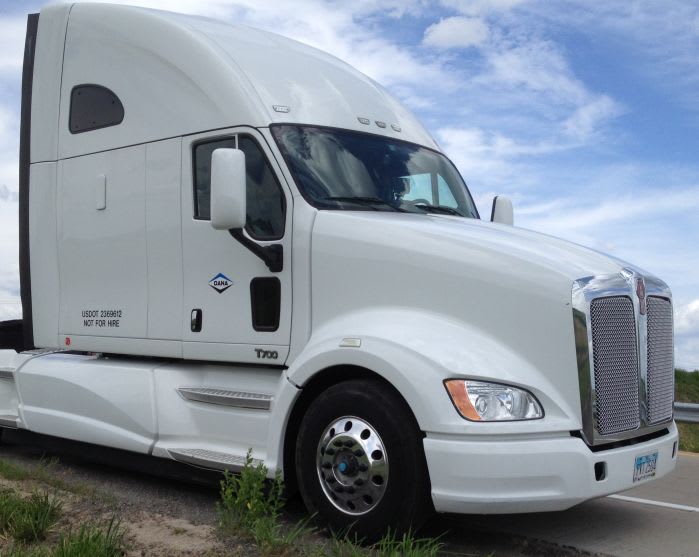
Dana’s Test & Evaluation truck, a Kenworth T700 with a Cummins ISX15 at 450 hp and 1,650 lb-ft, and an Eaton 10-speed UltraShift Plus transmission. Photos: Jim Park
3 min to read

Dana’s Test & Evaluation truck, a Kenworth T700 with a Cummins ISX15 at 450 hp and 1,650 lb-ft, and an Eaton 10-speed UltraShift Plus transmission.Photos: Jim Park
Fortunately, it’s easier to describe the performance of Dana’s Spicer AdvanTEK Dual Range Disconnect concept than to explain how it works.
I had an advance test drive on a truck equipped with a DRD concept drive axle at Dana’s Maumee, Ohio, facility. It was one of three test trucks equipped with the system. Were it not for the little video screen on the dash used by the engineers to monitor the system, I wouldn’t have known it was there.
At this point in the development and testing phase, the DRD is designed to disengage the rear axle of the tandem at a predetermined speed, somewhere between 52 and 54 mph. Steven Wesolowski, the senior director of global advanced engineering at Dana Holding Corp., explains that’s the optimal speed for the powertrain/drivetrain they are working with now, but notes that the axle shifting strategy could change as engineers further refine the system.
At 54 mph, when a mechanical clutch disengages the numerically-higher-ratio rear axle, the “blending” effect of the planetary gears combining the two axle ratios (2.26:1 front; 4.88:1 rear; 3.10:1 combined) is uncoupled and numerically-lower-ratio front axle becomes the sole driving axle. This effectively puts the truck into 6x2 configuration with a 2.26:1 drive axle ratio.
Still with me?
Steve Slesinski, Dana’s director of global product planning, explains that the Dual Range Disconnect provides benefits of a numerically higher ratio 6x4, including full four-wheel traction, slightly livelier response from the engine and less torque-induced stress on the driveline while at lower speeds, and fuel-saving performance of a lower-ratio 6x2 at highway speed. There’s also a slight benefit from the reduction in mechanical drag with the inter-axle driveshaft and the rear-axle gearing being physically disconnected.

The forward drive axle sports an additional bit of hardware that facilitates the axle shift from 6x4 with all wheels driving to 6x2 with just the forward axle driving.
“Depending on your starting point, the DRD axle system can improve powertrain and driveline efficiency somewhere in the range of 2% to 5%,” he says. “You’ll also get the downsped 6x2 efficiency at highway speed, and better low-speed performance for startability or when backing a trailer into a dock. There, you can go one or two miles per hour rather than three or four with a low-ratio axle.”
Without getting too far into the mechanical details, for all intents and purposes, the Dual Range Disconnect feels like a modern-day 2-speed rear axle. When the axle-range shift occurs, automatically of course, the driver feels nothing different from a normal 9th to 10th gear shift. The engine decelerates to break the torque, the rear axle disconnects and the inter-axle stops rotating, and the engine rolls the power back on about 400 rpm slower than it was prior to the shift.
It feels the same during a downshift. At the predetermined speed, the engine revs up by about 400 rpm, the rear axles re-engage and the truck is now back in 6x4 configuration with combined axle ratios producing a final drive ratio of 3:10:1.

The inter-axle driveshaft engagement clutch is located on the left side of the diff housing on the rear axle.
We were bobtail for the test drive of the DRD system, so I couldn’t really compare the performance difference of the two configurations, but I did notice the drop in engine speed when the rear axle disconnected, and I also noticed the difference in creep speed in reverse between the two ratios while moving at idle.
Going strictly by the numbers, that 400 rpm reduction in engine speed provides a functional downspeed setup, which could produce fuel savings on the order of up to 4%, based on the assumption of 1% savings for every 100-rpm drop in engine speed.
That, along with the reduction in torque stress on the rest of the driveline, and the advantages of 6x4 traction when it’s required, suggests to me that Dana might be onto something here.
Topics:Equipment
Subscribe to Our Newsletter
More Equipment
Autonomous Truck Testing Moves Ahead in California as Teamsters Challenge Rules
California has begun permitting heavy-duty autonomous truck testing, with Aurora and Kodiak among the first to receive approval, as the Teamsters sue the DMV over the new regulations.
Read More →
Behind the Wheel of the New Mack Anthem [Video]
HDT takes the new Mack Anthem around Mack’s Pennsylvania test track to see how its driver-focused design, technology, visibility and handling perform from behind the wheel.
Read More →
DTNA Plans New U.S. Truck Plant as Manufacturing Footprint Shifts
Daimler Truck North America is evaluating sites for a new assembly plant expected to open in 2029 while winding down operations at its longtime Portland manufacturing facility.
Read More →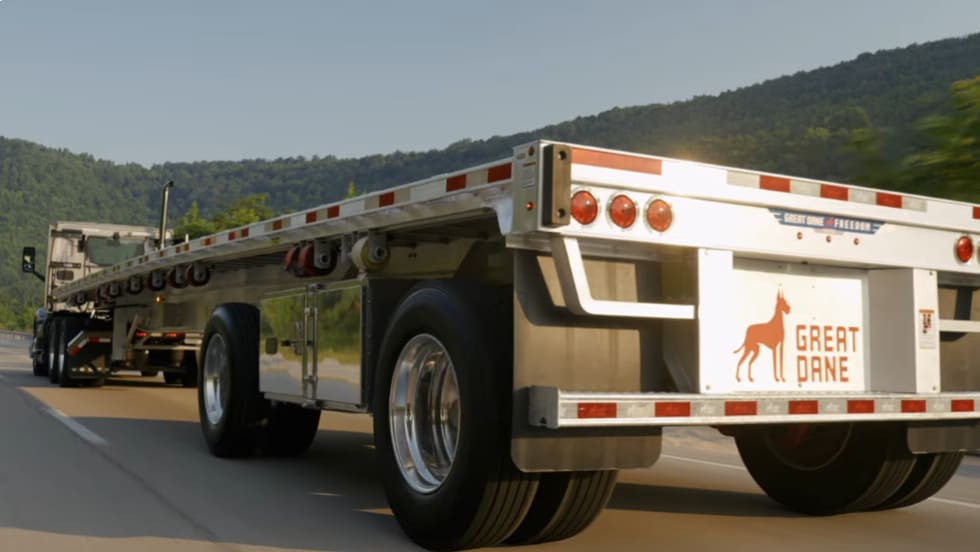
Great Dane Flatbed Trailer Offers Light Weight and Strength
Freedom Ultra is designed for a wide range of open-deck applications, including building materials, lumber, machinery, steel products, industrial freight, and coil hauling.
Read More →
What It's Like Inside this Custom 2025 Peterbilt 589?
Take a driver's-eye tour of this customized 2025 Peterbilt 589 in this video, as longtime driver Ingrid Brown explains its features, compares it to previous models, and shares plenty of personality along the way.
Read More →
Drivers Put Western Star Trucks to the Test at Star Nation Experience
Watch to get an inside look at the Western Star trucks, technology, and community behind the Star Nation Experience 2026!
Read More →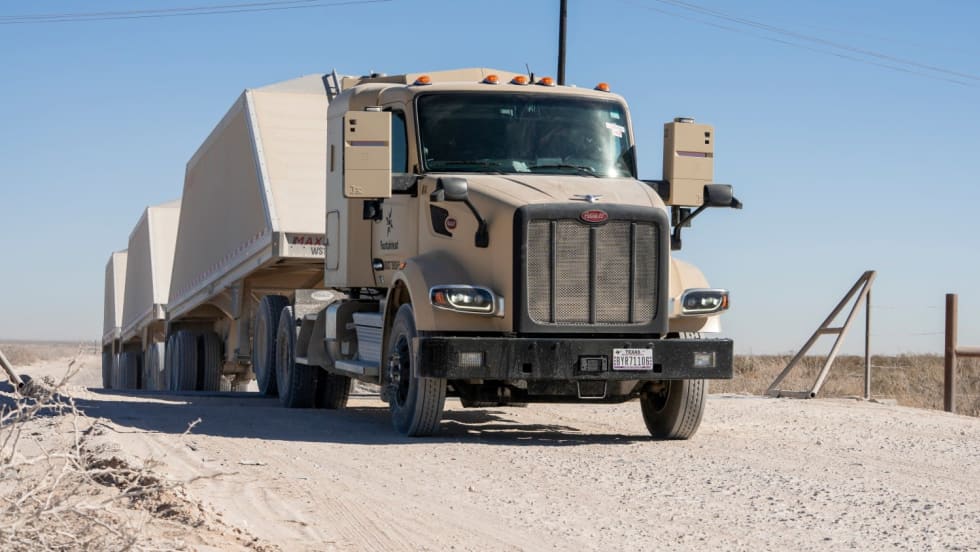
Atlas Expands Kodiak Driverless Truck Fleet in Permian Basin
Atlas Energy Solutions is expanding autonomous frac sand hauling in the Permian Basin with a second load-out location and plans for 100 driverless trucks by mid-2027.
Read More →
Putting Mack’s Command Steer to the Test
A test drive of Mack’s Command Steer active steering system evaluates how it can make truck driving easier and less tiring.
Read More →
Mack, Volvo Expand DEF Derate Software Updates
The updated software gives Mack and Volvo truck owners more time to address DEF-related issues before the engine derates or the vehicle goes into reduced-speed inducement, following new EPA guidance.
Read More →
Rush, MCT Team Up to Grow Refrigeration Service Network
The joint venture will operate MCT's network of Carrier Transicold dealerships and mobile service locations, with the companies promising greater service capacity and uptime for refrigerated fleets.
Read More →