





"We're seeing this massive evolution of digital technology on the truck as we move to this concept of software-defined vehicles."
Q&A: What's Real in Advanced Truck Tech? ACT Expo's Erik Neandross Weighs In
The 2026 ACT Expo is focusing heavily on what organizer Erik Neandross calls trucking's digital frontier. This interview excerpt dives into artificial intelligence, zero-emission vehicles, and tips to make sense of it all.
March 27, 2026
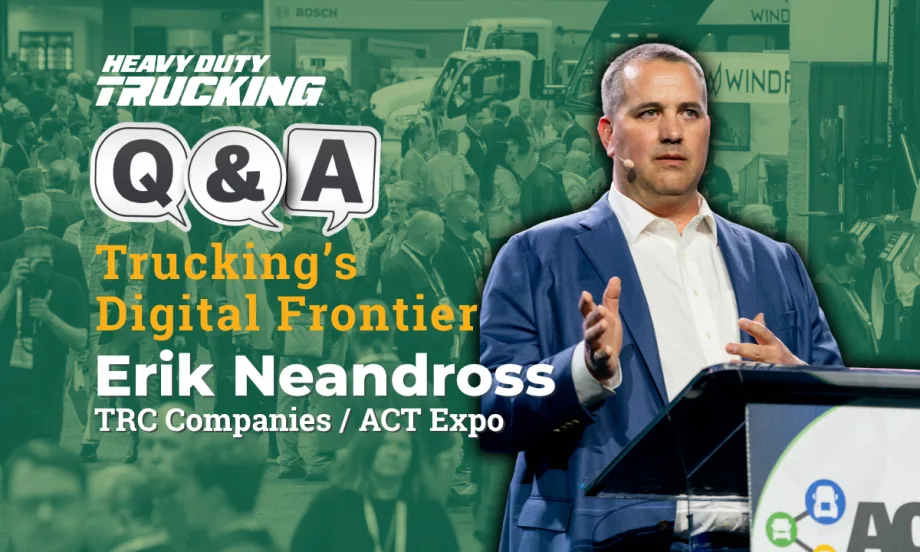
"As we have increasingly digitized technology, we have an opportunity to use AI."
Credit:
HDT Graphic/TRC photos
5 min to read
Artificial intelligence. Software-defined vehicles. Electric trucks. Autonomous technology. If it feels like commercial transportation is being pulled into a new era all at once, that’s because it is.
Trucking fleets are navigating a rapid acceleration of advanced technologies even as the regulatory landscape around zero-emission vehicles and diesel emissions shifts beneath them.
AI is showing up in everything from predictive maintenance systems to in-cab safety cameras. Electric truck adoption is recalibrating around cost and product capability rather than mandates. And connected vehicle platforms are generating more data than most fleets know what to do with.
“The commercial fleet sector has been forever and ever very mechanically focused,” said Erik Neandross, president of TRC’s Clean Transportation Group and the organizer of the Advanced Clean Transportation Expo, which is now in its 17th year, May 4-7 in Las Vegas.
“And we're now in this digital transformation,” he said in an HDT Talks Trucking interview. That’s why ACT Expo this year is leaning into “this digital frontier around advanced technologies for commercial vehicles.”
Neandross works closely with trucking fleets, OEMs, and technology suppliers. The challenge for many trucking operations isn’t a lack of innovation. It’s sorting out what’s practical, what delivers a return on investment, and what can wait.
Heavy Duty Trucking spoke with Neandross about where advanced truck technology stands today, how fleets are using AI in real-world applications, and what the recent policy shifts mean for electric vehicles, diesel engines, and alternative fuels.
The following interview excerpt has been edited for clarity and length. Watch or listen to the HDT Talks Trucking podcast for more.
Q: It’s seemed like a tidal wave of new technologies the past few years — AI, connected vehicles, autonomous trucks. Let’s start with AI.
A: We've seen industry after industry these last couple of months being impacted by the promise of AI, and the commercial transportation space is certainly no different. It is going to happen. The question is just how and where, and we don't really have all the answers.
There's so much hype and excitement around AI, I think it’s hard for some fleets to sort through and understand, what does this all mean? What's real, what's available, and what makes sense? And the key, like any technology we've covered over the years at ACT Expo, is just finding the right fit [for their operation].
As we have increasingly digitized technology, we have an opportunity to use AI. And that's why AI has been just such a huge focus of the last six months in particular.
I really think we're at the onset of this right now, and it's only going to accelerate in the couple of years ahead. We've seen some of the larger, more sophisticated, better-resourced fleets; they've been working on this, and they're beginning to really figure out how to take advantage of the connected vehicle platform and apply AI to it.
One of the fleets I was talking to said they are now at the point where they can predict the breakdown eight days ahead of when it would happen.
As we see the advancements in the world of AI capabilities and data centers, that's a massively expanding world. At the same time, though, we're seeing this massive evolution of digital technology on the truck as we move to this concept of software-defined vehicles.
We're adding more sensors, we're adding more ECUs that are now controlling engine parameters, engine operations, emission systems, safety systems, telematics. A typical vehicle today is going to have 30 to 40 ECUs that are spinning out data.
Are we really making the most of these telematic systems? I would say, not yet.
But as we now can apply the increased capabilities of AI to all of this digital data that are coming off of these ECUs and vehicles, we're going to really start to see some amazing things happening.
Q: A lot of early adopters tend to be large fleets. For smaller to mid-sized fleets, how should they think about starting to make decisions on technology?
A: Regardless of whether it's AI, autonomy, EVs, NGVs, whatever, the key is to just get started. You've got to get on the train. Talk to suppliers, talk to other fleets that have done this before you, and just begin to learn. One of the core areas of focus for us with ACT Expo is just providing the opportunity for a small to mid-sized fleet to come out and put their toe in the water.
From there, begin to test. Try one, buy one, borrow one. Just start to get your hands on it and understand. And I think that that's really, really critical in any of these clean tech or advanced tech spaces.
And if it doesn't work, fine. You're only trying it. You're not converting the fleet. But if it does work, and if you're seeing the positive ROI on the investment, great. Now you can begin to scale and do more.
Q: There's been a lot of recalibration around zero-emission vehicles this past year. Where are we really at right now?
A: That's a great question and one that we are getting asked frequently. Certainly, the market for zero-emission vehicles is in a bit of a state right now [with ZEV regulatory rollbacks.]
I think it's forcing the industry to take a look in the mirror and say, 'Where are we? And where are we headed? And how are we going to continue to drive this market forward?'
And I think the answer, like any technology out there, it’s got to be a good product and it has to have value to the customer. And I think that's kind of where we are in the EV market right now. You have to have total cost of ownership that's at least equivalent or better than what we're doing today.
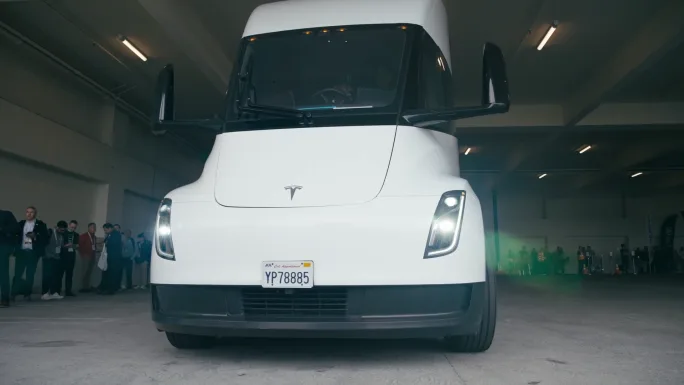
Don't write off the Class 8 electric truck yet.
Credit:
TRC/ACT Expo
Dan Priestley from Tesla is coming back to ACT Expo. Their [battery-electric] Semi production plant is coming online this year. They recently announced they've got not only their 500-mile truck, but their 300-mile truck.
And I think they want to talk about how they're going to begin to massively scale the deployment of fully electric Class 8 tractors. They’re very aggressive on pricing, and [the Semi] can go a long distance with a charging network that they've also made some news about.
Many have written the EV market off as dead, but I certainly wouldn't.
Watch the HDT Talks Trucking conversation with Erik Neandross — including a deeper discussion on AI, software-defined vehicles, EVs, diesel emissions regulations, what to expect at ACT Expo, and more.
Subscribe to Our Newsletter
More Fleet Management

Geotab Links Fleet Card to Vehicle Data
The new card combines fuel discounts with telematics-based purchase controls. Geotab’s analysis also points to potential savings from choosing lower-priced fuel stops.
Read More →
How MFA Helps Protect Trucking Fleets
Multi-factor authentication adds protection when passwords are stolen. Here’s how it works and where fleets should start.
Read More →
How Better Freight Data Helps Trucking Teams Get Ahead of Disruption
Trucking and logistics teams have plenty of data. The problem is getting the right information in front of the right people soon enough to act. Better-connected data can help teams spot trouble earlier and make smarter decisions before small problems become big ones.
Read More →
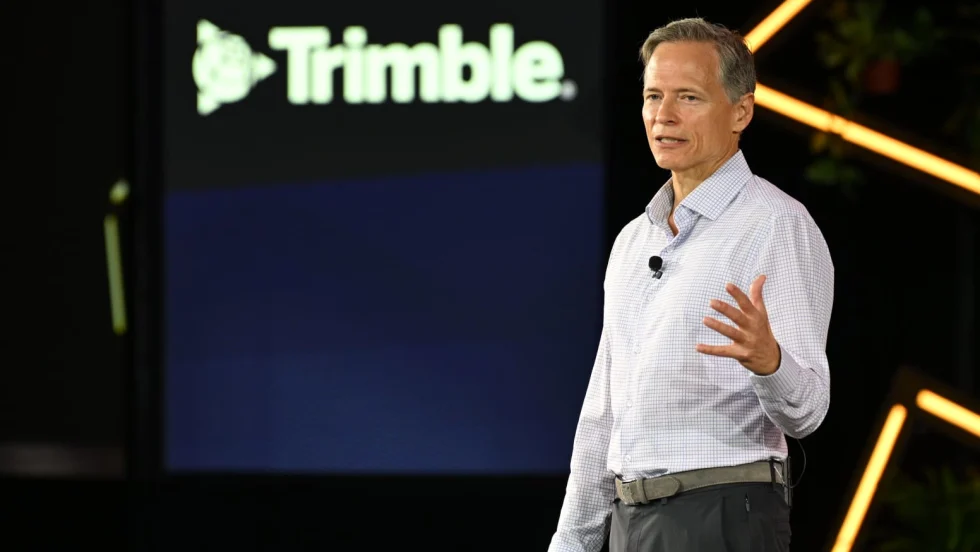
Trimble: Taking Artificial Intelligence in Trucking Beyond Faster Tasks
At Insight 2026, Trimble executives argued that fleets may need to redesign workflows to get more from AI as it introduced new products and enhancements. AI’s value will depend on how fleets combine automation with their people's knowledge.
Read More →
Sponsored•September 28, 2026
Build a bulletproof fleet: Uniting ELDs and dash cams for total compliance
An ELD can prove compliance, but it cannot always prove what happened on the road. Discover how uniting accurate ELD data with AI-powered dash cam video can help your fleet strengthen compliance, defend against liability, protect drivers and reduce operational costs.
Read More →
Nominations Open for HDT Emerging Leaders
Heavy Duty Trucking is looking for accomplished trucking fleet professionals under 40 who are making an impact and helping lead the industry forward.
Read More →
Why Private Fleets Are Taking More Freight
Private fleets are putting their own trucks on demanding customers and high-cost lanes as companies seek greater control over service, costs, and capacity.
Read More →
Sponsored•September 16, 2026
Color Match Smarter: Tools That Restore & Perform
For fleet managers and collision repair professionals keeping heavy-duty trucks on the road, getting the color right the first time isn't just about appearance — it's about efficiency, turnaround time, and bottom-line results. Discover how today's digital color tools are transforming the repair process from guesswork to precision.
Read More →
FMCSA Pauses Biennial-Update Enforcement Amid Motus Transition
Carriers whose updates were due on or after June 1 have more time, while FMCSA works to stabilize its new registration system and warns of phishing sites impersonating its new carrier registration system, Motus.
Read More →
Sponsored•September 14, 2026
2026 Blueprint for Countering Smarter Supply Chain Theft
Cargo theft is no longer just the cost of doing business. It's a multi-billion-dollar criminal enterprise exploiting vulnerabilities across your fleet, drivers, and supply chain.
Read More →