




Q&A: Kodiak's James Reed Offers Fleet Perspective on Self-Driving Trucks
What does the former CEO of USA Truck think about autonomous truck technology now that he's COO of Kodiak Robotics? Find out in this interview.

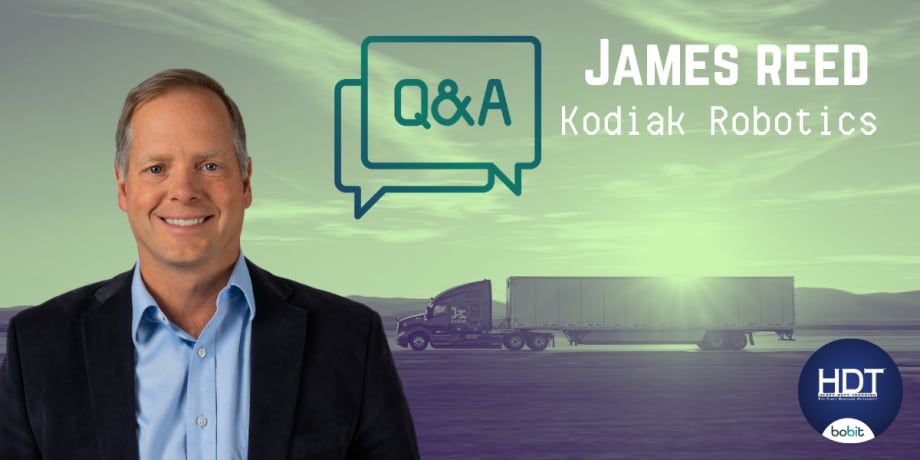
James Reed brings his experience in trucking and Silicon Valley to Kodiak Robotics.
HDT Graphic from Kodiak photos
During his six years as CEO of USA Truck, James Reed assessed a lot of future technologies to understand the implications to the fleet's business — including autonomous truck technology.
"I went through a pretty rigorous assessment of the landscape to understand who a good partner for USA Truck would be," Reed told HDT in a recent interview. "Over time, Kodiak [Robotics] ended up being one of our suppliers. It was a great partnership. We felt Kodiak had a lot to offer and believed in autonomy."
So it's not surprising that Reed recently took over as chief operating officer for Kodiak.
Before he was in transportation, Reed pointed out, he spent 14 years in Silicon Valley. Over his career, all roads led to Reed’s new position, with a career spanning executive and financial leadership not only in trucking but also in technology and finance, including at well-known companies such as Intel, EMC, T-Mobile, and J.P. Morgan Chase. This experience, he said, will come together to help him drive Kodiak’s future growth.
"I always had a tech perspective, and I got into trucking a bit serendipitously. But I fell in love with trucking. I love the drivers. I love the experience. I love the customers. I love everything about it."
We recently caught up with Reed in an interview on the HDT Talks Trucking video/podcast to discuss his first months as COO, autonomous-truck technology, and the future of Kodiak Robotics and the self-driving truck industry. Read highlights of the interview below or watch the full interview below.
HDT: For commercial viability of autonomous-truck technology, what are some things that have to happen?
Reed: If you were to ask a layperson about the challenges of autonomy, we would all think getting the truck to drive down the road in the lane and to respond to external stimuli would be most difficult. And of course, they are in order to create the software, the use case and the experience. Safely driving the truck down the road is a hard engineering lift.
But if we’re going to use superlatives, the most challenging thing is to validate the safety case. Kodiak has an aspiration to create the safest driver on the road. We’re really serious about that. At Kodiak, I see people that are maniacally focused on making sure safety is the first, foremost and most important thing we consider. The next step, the next challenge, the next opportunity is validating the safety case, assembling the data that proves we are safer than a human driver in the truck.
HDT:Speaking of safety, the Federal Motor Carrier Safety Administration recently began gathering information on how it should regulate Level 4 or Level 5 autonomous trucks. Any thoughts from Kodiak’s perspective and as a fleet guy?
Reed: FMSCA also did this back in 2019, which I think just reflects a focus on having meaningful dialogue with people and enabling autonomy as a viable technology that works within the framework that exists. I view this, maybe not as a commitment, but as an indication that they want to enable and empower. They want to see autonomy and get started.
It’s a really exciting time for us. If you go back and look at Kodiak’s history working on the new inspection standards, we’ve always worked with police officers. We have a member of our team who is a former captain in the California Highway Patrol. He is helping us lead the conversation with state safety agencies and police agencies. We’ve also been working with various state agencies. Of course, we’ve been very involved with the FMCSA and the CVSA in helping define these standards. To us, it’s a really exciting and necessary step to the next step in our progression.
HDT: I hear many people say, ‘Well, it’s one thing to have the truck going down the road and interstate. But what happens if it breaks down? How does it put out its triangles? How does it interact with a tow truck driver or repair? What if there’s a law enforcement issue? There are a lot of questions about how autonomous trucks will function in a real-world setting.
Reed: We must understand the complexities of over-the-road trucking. That’s really my job. My job is to understand from beginning to end what it takes to get a truck on the road, to operate that truck safely, and to ultimately deliver freight safely and on time.
There are other things that people ask about. We’ve talked to potential customers who asked, Who is going to service the equipment? Who’s going to have the inventory to repair the [sensor] pods? We’re thinking through the whole matrix of possibilities, including safety markers, slowing down and pulling over to the side of the road, and other things truckers need to know. They’re all on our roadmap, and we’re working through each one of them.
HDT: Recently there have been efforts in California to ban fully autonomous vehicles. The LA Times quoted a Teamster driver, who told a story where he had a passenger car get wedged beneath his trailer. He said he knew what to do. He knew not to slam on the brakes. He made his way to the side of the road and drove next to some bushes to dislodge the car. He didn’t think it was possible to program something like that into a computer. Can you?
Reed: God bless that driver. What he did was heroic and likely saved lives. We appreciate professional drivers who do that kind of stuff.
But we need to understand the difference between instinct and impulse. Instinct is very difficult to describe logically. I have driven semi-trucks. And I will tell you, I was not born with the instinct to know how to drive and maneuver the truck. But there’s also this thing called impulse, which is more of a response to a stimuli. It’s not instinctive at all. It’s quite logical about what should be done in different circumstances. You can program impulses into trucking situations.
Kodiak has a video where we tested a tire blowout on an autonomous truck. In the video, we’ve got a real truck on a test track, and we intentionally blew out the front tire. As the tire blows out, we wanted to prove our technology could handle the impulse external stimuli. The truck stays perfectly centered on the lane; it veers just five or six centimeters from center. But to the human eye, it looks like it doesn’t move at all. I have showed this video repeatedly to industry professionals. Everyone who has run a fleet has had the experience of a left tire blowout, resulting in a truck losing control and flipping with some pretty severe consequences. The video is an example of how autonomous tech responds more quickly, more consistently, and more predictably to external stimuli than we can ever do as humans.
As much as I recognize and commend the heroic actions taken by that driver, we think in situations where external forces and stimuli are pushed, we can design in impulse control that will help us mitigate those situations.
HDT: What’son tap for Kodiak and the autonomous trucking industry this year?
Reed: Most of us are in the same spot from a development standpoint. You’ll see or hear a lot of autonomous providers talk about being feature complete in 2023. That’s a goal that we have too. In 2023, we expect to roll out the first commercially operable truck port. We also expect to deepen our relationships with customers to understand the intricacies and implications of running trucking in an autonomous mode and create an ecosystem in that environment. That’s a priority for us. In the second half of this year going into 2024, we will zero in on the safety case. We will continue to do simulations and road testing. Our full focus will be on the safety case because it’s our goal to deliver the safest driver on the road.
More Fleet Management
Your Trucks Are Busy. That Doesn’t Mean They’re Winning.
High utilization doesn’t always mean strong margins. Looking beyond the current load can help fleets make better dispatch decisions and get more value from each truck’s time.
Read More →
Why This Trucking Recovery Is Different
Freight demand remains sluggish, but rising costs and tougher enforcement have taken enough capacity out of the market to change the outlook for motor carriers.
Read More →
Platform Science Adds Dispatch and Safety Tools
Four additions to PS Fleet help fleets monitor loads, manage driver coaching, share truck locations and adjust video system settings.
Read More →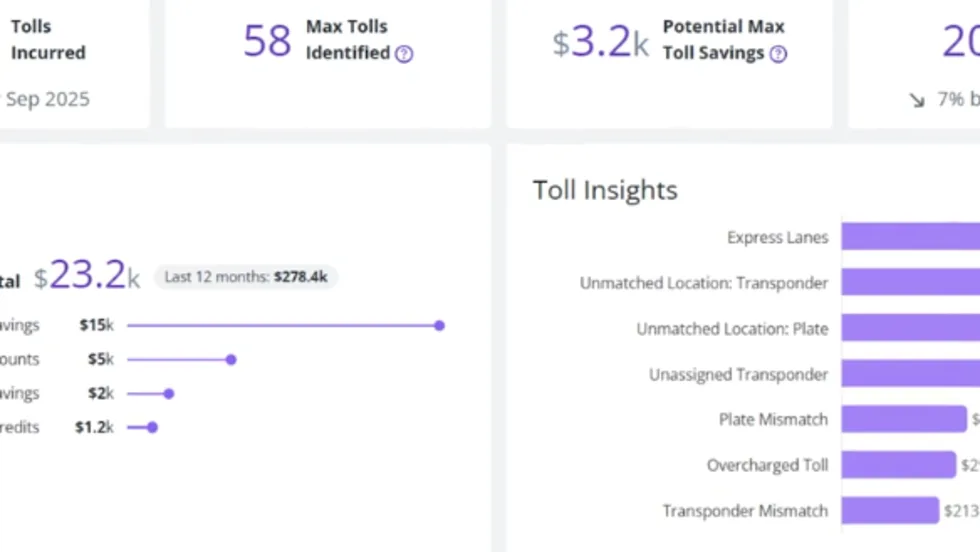
PrePass Intelligence Mines Fleet Bypass, Toll and Safety Data
PrePass Intelligence helps fleets measure bypass savings, flag potential toll overcharges, and spot suspicious transactions by combining data from separate systems.
Read More →
Motive Adds AI Agents for Fleet Operations
New tools automate follow-up on fleet data, from maintenance work orders to driver alerts, with two-way voice conversations planned for later this year.
Read More →
Can You Beat Our Trucking Trivia Challenge?
Test your truck knowledge with 19 trivia questions from Heavy Duty Trucking Exchange. Can you keep up with the fleet pros?
Read More →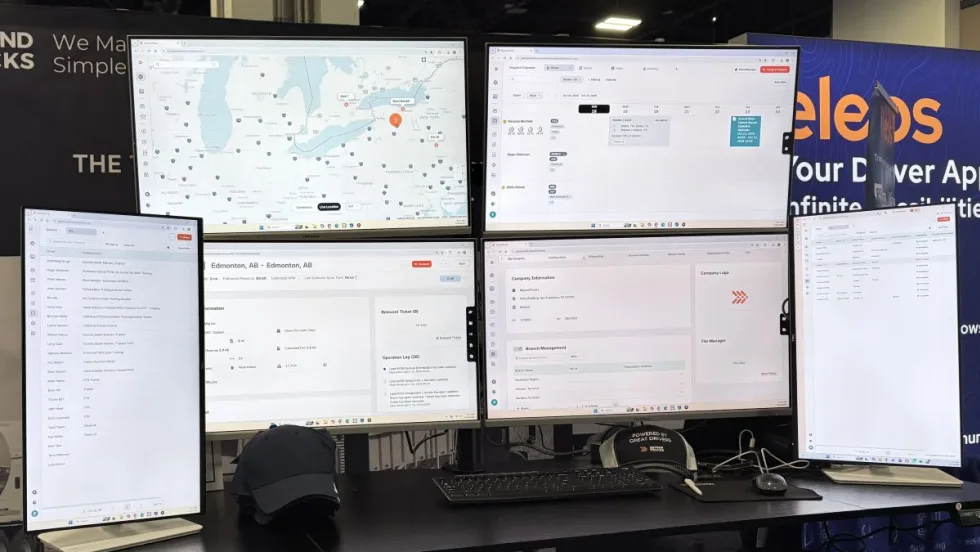
BeyondTrucks Adds Rules Checks to Dispatch
New Compatibility Engine checks driver qualifications, equipment requirements and fleet policies before loads are dispatched.
Read More →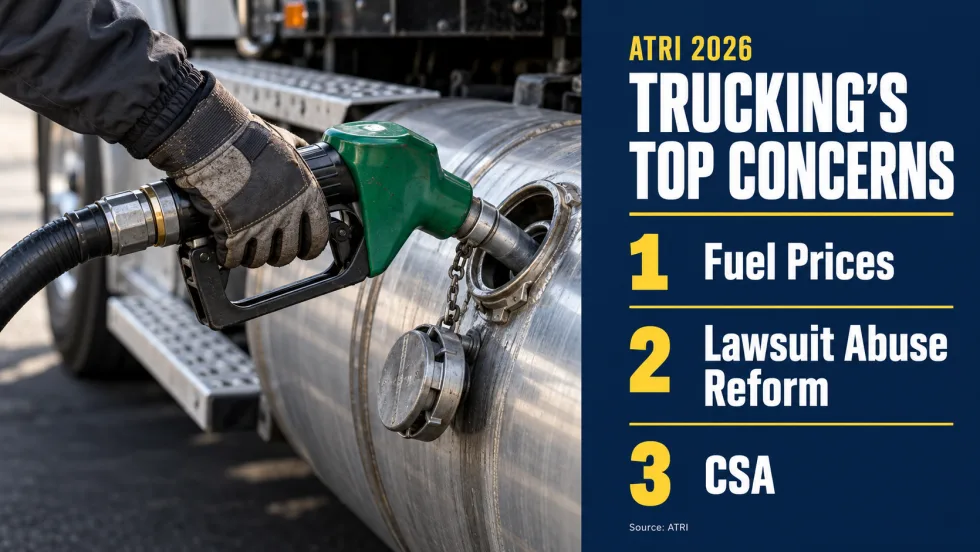
Diesel Prices Hijack Trucking’s Worry List
ATRI’s annual survey finds cautious optimism about freight, but diesel costs, litigation, and insurance continue to squeeze fleets. Drivers have different priorities on several issues.
Read More →
Nomination Deadline Extended for HDT Emerging Leaders
Just a few more days to nominate accomplished trucking fleet professionals under 40 who are making an impact and helping lead the industry forward for the HDT Emerging Leaders award. Deadline extended to October 20!
Read More →
What Will ATA’s New Leader Bring to Trucking's Table?
Incoming President and CEO Mark Colson’s record in Alabama offers clues about his priorities and approach following Chris Spear’s abrupt departure as the head of the American Trucking Associations.
Read More →