




Q&A: Kodiak's Next-Gen Autonomous Truck
In an interview with HDT, Kodiak Robotics CEO Don Burnette discusses the company’s plans to more than double its fleet with its newly unveiled fourth-generation autonomous truck.


Kodiak will begin taking delivery of 15 new tractors starting later this year.
Photo: Kodiak
Kodiak Robotics unveiled its fourth-generation autonomous truck Sept. 28, which is set to debut on-road starting later this year as the company takes delivery of 15 new Paccar tractors. The move will double the size of Kodiak’s autonomous fleet, and CEO and Co-Founder Don Burnette told HDT the company has no plans to slow down.
Kodiak’s fourth-generation truck features a modular and discreet sensor suite designed to simplify sensor installation and maintenance. The sensors are housed in three locations: a slim-profile “center pod” on the front roofline of the truck, and pods integrated into both of the side mirrors.
The truck features Luminar’s Iris Lidar, ZF Full Range Radar, Hesai 360-degree scanning lidar for side- and rear-view detection, Cummins X15 Series engines, Bridgestone Americas smart-sensing tire technology, and the Nvidia Drive platform.
Kodiak Sensor Suite
Kodiak’s fourth-generation truck further improves Kodiak Vision, the company’s perception system, which fuses together information from every sensor and considers the relative strength and weaknesses of each type. Kodiak Vision now incorporates the ZF Full Range Radar and Luminar’s long-range Iris lidar.
The ZF Full Range Radar provides four-dimensional capabilities, measuring the distance, height, lateral angle, and velocity of an object out to 300 meters. Kodiak officials said in a news release that the 4D radar is critical for autonomous trucks because it allows the system to distinguish overhead objects — such as road signs and bridges — from road hazards like stopped vehicles under a bridge or an overhead sign.

The sensors are housed in a center pod on the front roofline of the truck, and on pods integrated into both of the side mirrors.
Photo: Kodiak
Luminar’s Iris lidar’s wide horizontal and vertical field of view enables Kodiak trucks to recognize objects both near and far, adding further redundancy for long-range detections up to 600 meters. The lidar is 10 centimeters, so it integrates into Kodiak’s discreet center roof pod in the front of the truck.
These sensor integrations, combined with Kodiak’s previously announced integration with Hesai 360-degree scanning lidars, provide the “necessary reliability needed for long-haul trucks,” Kodiak officials said.
Kodiak Robotics’ patent-pending mirror pods — which will start with one Hesai lidar, two long-range 4D radars, and three cameras — don’t require specialized sensor calibration for easy upfit and repair. Rather than replacing a sensor in need of maintenance, a technician can replace the mirror pod. This single point of integration will allow maintenance and serviceability at scale, Kodiak officials said.
Equipment
Under the hood, Kodiak’s fourth-generation trucks will be powered by Cummins X15 Series engines. These engines feature the Cummins ADS Powertrain interface, a control interface allowing the autonomous system to communicate with the engine.
In addition, the 2021 X15 engines meet EPA Greenhouse Gas Phase 2 requirements, providing a fuel economy improvement over previous generation engines and further enhancing the environmental benefits of Kodiak autonomous trucks.
Kodiak trucks run exclusively on Bridgestone tires, and will be equipped with Bridgestone cloud-connected sensors that capture critical tire-centric data. That data will be analyzed and processed into live actionable insights.
The fourth-generation truck will feature Nvidia Drive Orin as the supercomputing platform, once available. With more than 250 TOPS (trillion operations per second) of compute performance, Drive Orin is designed for addresses systematic safety standards such as ISO 26262 ASIL-D. In the interim, Kodiak will use the current generation Nvidia Drive AGX Pegasus to process the data from the cameras, allowing the autonomous system to perceive the surrounding environment.

Don Burnette
In an interview with HDT, Kodiak CEO and Co-Founder Don Burnette shared what sets the fourth-generation truck apart from Kodiak's previous autonomous trucks, and his vision for the company. (This interview was edited for length and clarity).
HDT: What sets the fourth-generation truck apart from Kodiak’s previous generations?
Burnette: From the beginning of the company, we’ve tried to build well-integrated automotive-quality components into our system. We've been iterating over the last three-and-a-half years, incorporating lessons as we learn them and doing additional analysis. And we've been running on our third generation of the platform. We're super excited to now announce our fourth generation.
In this iteration, it features the industry’s most modular and discreet sensor suite. We've been building upon this idea of mirror-mounted sensors since the founding of the company, but the fourth generation really takes it to the next level, vastly simplifying sensor installation and maintenance. Those are two of the main pushes that we put into this design. We think that ultimately that increases safety: trying to move the sensors into a location that is good for performance, good for reliability, easy to install, and — in the field — really easy to maintain, replace and swap out.
If a fleet has an autonomous truck in their fleet, they want to know that if there's a sensor that malfunctions, if something breaks within that suite, that it’s something that technicians — ideally not super sophisticated AV technician, but general truck mechanic technicians — can easily swap in replacements and get the trucks back from the road. That's really what the fourth generation of Kodiak Drivers is all about.
Q: The sensor suite on the Kodiak truck has been described as “discreet” and “low profile.” Is it still accessible and serviceable?
A: We've really replaced the truck's existing mirror mount assembly with our own custom mirror assembly that houses all the sensors, very — to the extent possible — integrated within the housing itself. So, when you look, you don’t see at a lot of cameras, there’s not a lot of things sticking out, you don't see any of the radar. Though we do have a lidar. Lidar needs to see; you can’t put anything in front of it. But I think most motorists who drive by the fourth-generation Kodiak Driver are probably not even going to think twice about what they just saw; it just looks like any other truck out there on the road.
Dan Goff, Kodiak’s head of policy: This is a question that a lot of people in the industry are thinking about: How do you service these vehicles across tens and thousands of American miles? Having this really discreet sensor design, where if the sensor breaks or something happens, you literally just pop on a replacement mirror pod, and have the truck go on its way, it's an incredible advantage in terms of actually being able to commercialize this technology.
Additionally, from a technical perspective, mirrors actually turned out to be a really great place to mount sensors. They're really low vibration. Humans don't like it when their mirrors are vibrating any more than computers do.

Kodiak’s fourth-generation truck features a modular and discreet sensor suite designed to simplify sensor installation and maintenance.
Photo: Kodiak
Burnette: It’s easy to just bolt on sensors to a truck. You can take a mounting bracket and some nails into it and send it out on the road. It's a lot harder to put a lot of thought and analysis into integration in industrial design to make this system well integrated into the truck. This is something that we're extremely proud of. We put a ton of work into this fourth-generation vehicle. I think when they hit the roads, people are going to be very impressed by what they see.
Q: Is delivery and deployment going as planned?
A: We're looking to take delivery of our first trucks later this year. I do know truck availability and general component availability can be a challenge these days, but they're scheduled to arrive in the next couple of months, and we'll be steadily building them out over the following year.
Q: Where will the next-generation trucks be running?
We're currently operating in California where our headquarters are in Mountain View, where we do testing and warranty. And we have our main operations hub in Dallas, Texas. We're currently driving between Dallas and Houston. We're also driving between Dallas and San Antonio. We will be expanding on our routes, but we don't have anything yet to announce. For now, these trucks will be driving in and around Texas and also California.
Q: This deployment will double the size of your fleet. What are your plans for growth beyond this, and when do you expect your platform to be available for customers?
A: We're definitely planning to expand beyond that. This will be an ever-expanding process for Kodiak. We think that self-driving trucks, driverless trucks, will be ready to hit the roads in the next couple of years. When specifically is going to be hard to say, but we think it will happen in the next couple of years. Within a year or so of that happening, these trucks [Kodiak] are going to be able to get into the customers' hands and be able to be utilized by fleets out there. The private fleets, the big carriers, and the entire industry.
[Editor's note: Over the next couple years, the company says it plans to expand throughout the southern half of the United States into other freight-rich corridors.]
Q: You're partnering with a lot of familiar industry names. What does that mean for your company?
A: Exactly as you said, there are really well-known brands, trusted brands. They have a pedigree of producing high-quality components; components that folks within the industry know and trust, and they're familiar with. Having these companies behind Kodiak in our effort to deliver this technology safely and efficiently to the trucking industry is really what the process is all about. We want to partner with the best of the best. We think that these partners are world class. It's fantastic to see all the collaboration that happens. I know a lot of folks don't get to see it, but these are truly deep partnerships. We collaborate on the technology side, on the component side. And these are relationships that we want to maintain and cultivate into the future as this industry grows and matures. I think these are the folks who are going to play a large role in the rollout and scale of eventual autonomous fleets.
Q: Earlier this year you partnered with SK, bringing your technology to the Asia Pacific market. Do you envision Kodiak being global?
A: We're starting here in the United States, which is where we're based. The U.S. has a really great, rich economy. Obviously it's a very massive market. But, freight is a major market in most of the developed world, and we think that our technologies are applicable to those other markets as well. We're actively in the process of exploring what are the differences between the U.S. markets and the international markets. How is our technology applicable? Those are all things that we're very interested in and, over time, you're going to see the Kodiak Driver technology deployed, not just here in the United States, but also worldwide in many other markets.
More Equipment

How GP Transco Builds Fuel Savings a Fraction at a Time
Aerodynamic specs, solar panels, and driver incentives help GP Transco turn small efficiency gains into savings it can reinvest in its people.
Read More →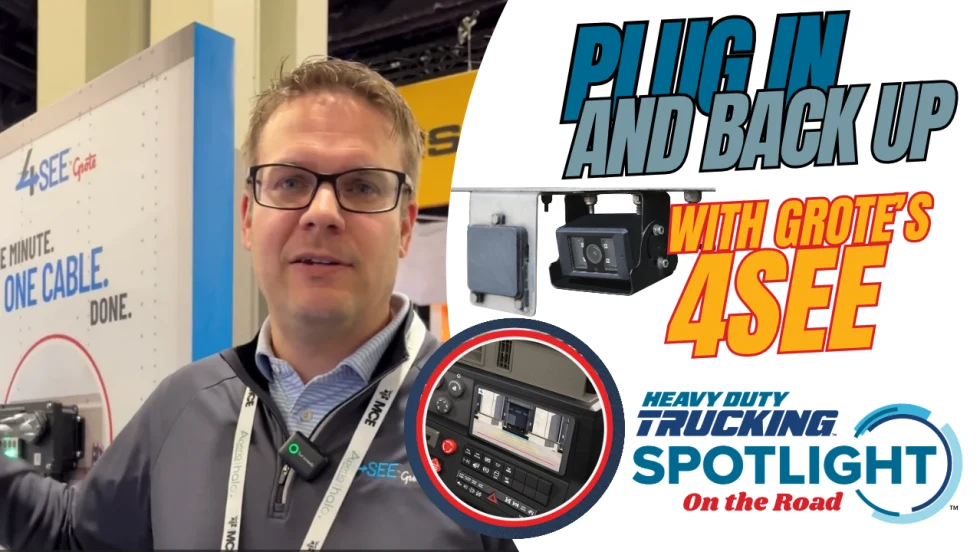
More Trailer Data Through the Same Seven-Way [Video]
Can trucking’s standard seven-way connector handle more cameras and trailer data? Grote’s Adam Slade shows HDT how the company is using new technology with its 4See trailer system, not only to add a new backup camera but also to expand other capabilities — without adding another connection.
Read More →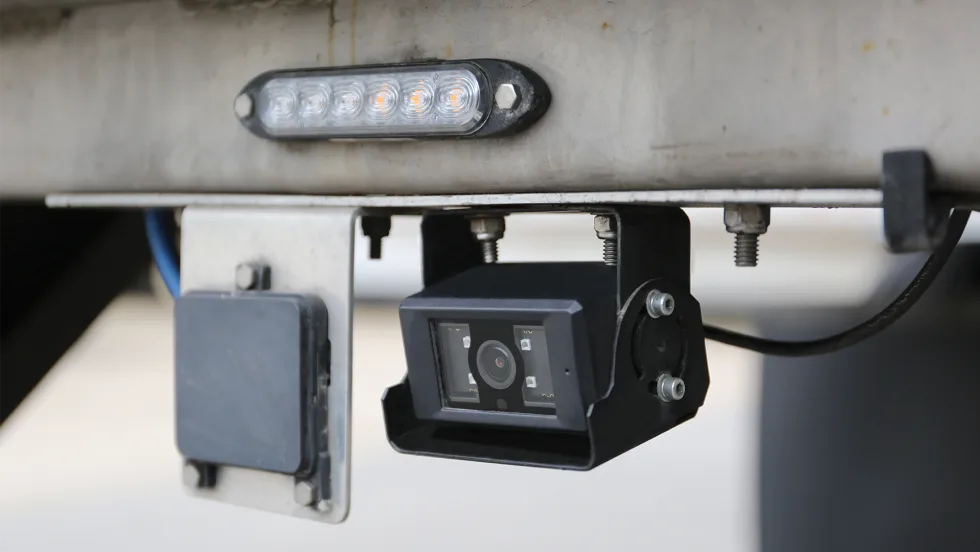
Grote: More Cameras, Same Seven-Way Connector
The next-generation 4See rear-view backup camera from Grote uses the standard seven-way connector and supports additional cameras and other trailer data.
Read More →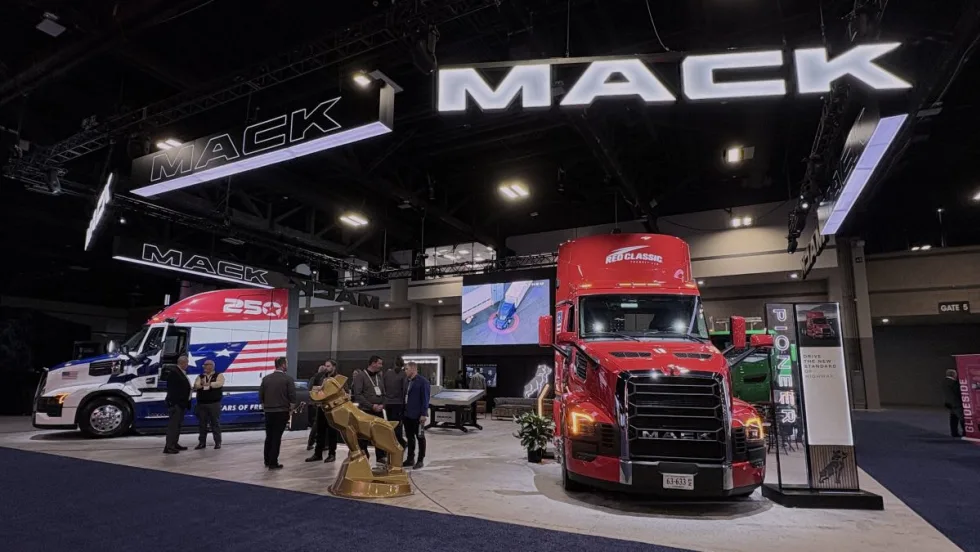
Trucks at ATA's 2026 MC&E in Charlotte, North Carolina [Photos]
From rigs decked out in patriotic America's 250 paint schemes to autonomous trucks and more, check out these photos from ATA's 2026 Management Conference & Exhibition.
Read More →
Help HDT Find Trucking’s Top Products
Have you come across a new product that could make a difference for trucking fleets? Nominate it for HDT’s 2027 Top 20 Products Awards by November 9.
Read More →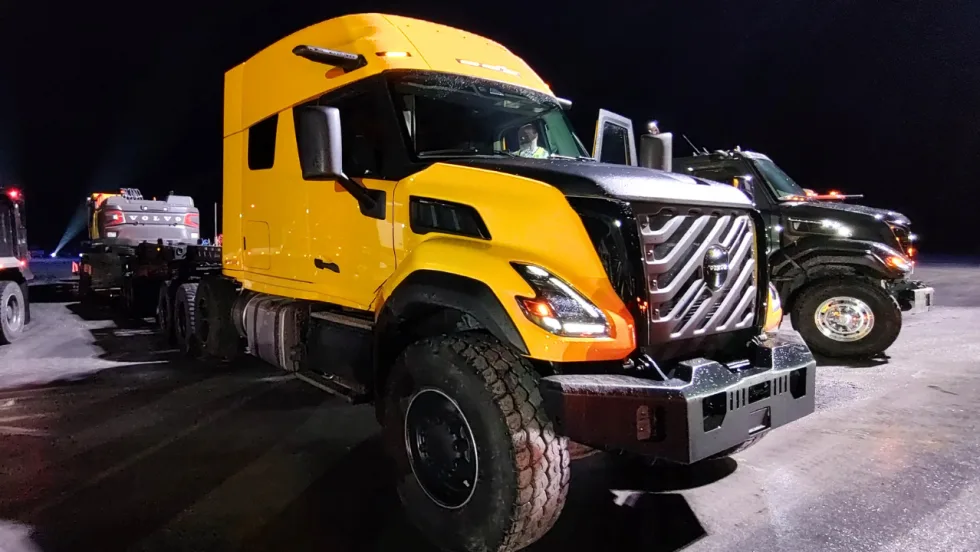
Volvo Unveils New VNX Heavy-Haul and Vocational Truck
Volvo Trucks has launched the VNX, a new vocational truck also available as a tractor in day cab and two sleeper configurations, with one heavy-haul model. The Volvo VNX is powered by Volvo's D13 platform, which delivers up to 540 horsepower and 1,950 pound-feet of torque and is EPA 2027-compliant.
Read More →
How GP Transco Cuts Trucking Fuel Costs, a Tenth of a Gallon at a Time
What’s another tenth of a mile per gallon worth? GP Transco shares how equipment upgrades and driver coaching turn small gains into meaningful fuel savings.
Read More →
Electric Yard Tractors Move Beyond Pilots
Operating-cost savings have overtaken sustainability goals as the leading reason surveyed fleets are adopting battery-electric terminal tractors, according to new NACFE research.
Read More →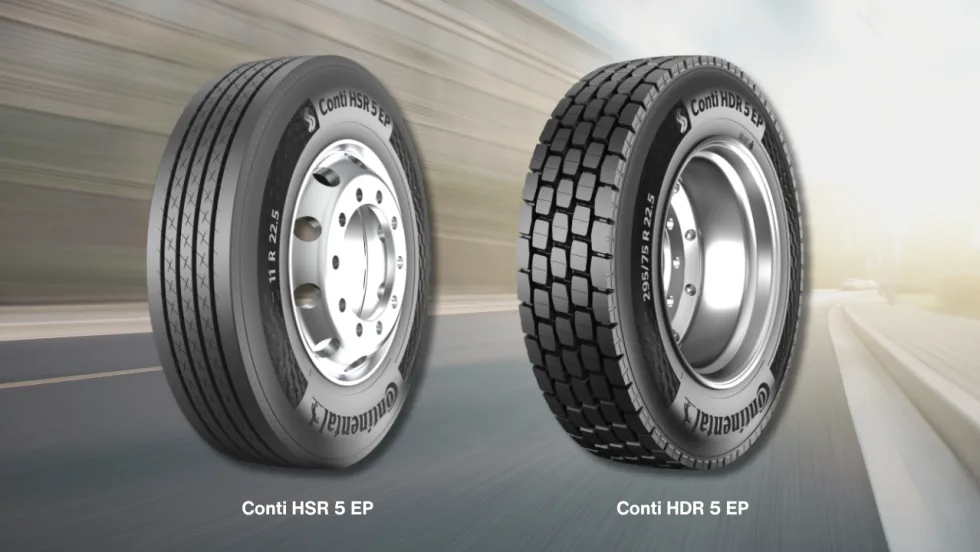
Continental Introduces New Regional Truck Tires
Continental says its new Generation 5 steer and drive tires for regional operations offer longer tread life, with estimated mileage gains of 22% and 19%, respectively.
Read More →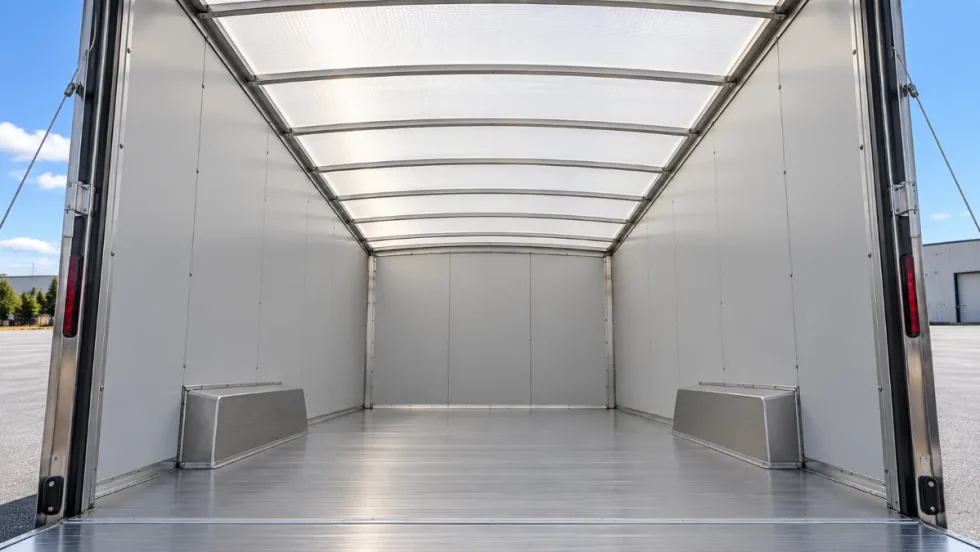
Tekmodo Introduces CargoBright Brand for Translucent Trailer Roofs
CargoBright is designed to diffuse daylight across the cargo area while performing as a working vehicle roof.
Read More →