




Q&A: Kenworth General Manager Talks Trucking's Future Challenges
Mike Dozier assumed his responsibilities as Kenworth Trucks new general manager after a three-year stint as general manager of Paccar's Australian operations. In a world of future tech, Mike Dozier wants to keep Kenworth focused on the customer.

Mike Dozier Photo: Kenworth

Mike DozierPhoto: Kenworth
Mike Dozier assumed his responsibilities as Kenworth Trucks new general manager after a three-year stint as general manager of Paccar's Australian operations.
HDT sat down with Dozier ahead of a press event at the company's headquarters in Kirkland, Wash., to get his thoughts on the state of North American trucking today, as well as the many technology challenges and trends coming in the near future. This interview has been lightly edited for clarity and length.
HDT: What's your background? How'd you get into designing, building and — ultimately — selling trucks?
Dozier: This past June was my 28th year at Paccar. I like trucks and always have. Growing up in Texas, my father was a big racing fan and I grew up surrounded by cars. When I went to Texas A&M, I studied mechanical engineering based on that upbringing. And when it came time to graduate, Paccar was on campus recruiting. And it seemed like a good fit. I started with Peterbilt and eventually became chief engineer at Kenworth in 2004. I left and went to Australia for three years. And now that I'm back, it's neat to see the products we started working on 10 years ago fully formed, mature and on the market today.
HDT: What are your priorities for Kenworth at the moment? What you think about when your feet hit the floor every morning?
Dozier: Overall, my challenge is to continually enhance the support we provide to our customers in terms of products, as well as new features to make drivers comfortable, and increasing uptime. We want our customers to get the most out of our trucks and be as successful in their businesses as they can be.
Key for our efforts is our TruckTech+ remote diagnostics tool, which monitors our trucks and provides our customers with another set of eyes to help them understand and run their businesses. It's really all about our customers and how we support them.
HDT: Three years in Australia was a really unusual assignment. What did you learn there? How does trucking in Australia differ from trucking in the U.S — other than hitting a kangaroo instead of deer on the road?
Dozier: Or a camel! People don't realize they brought camels into Australia, and they're all over the place.
It was an amazing experience to go over there and run that company for three years. It was the first time in my career I had to work to develop a new network and boost the dealer services and offerings there. But overall, the markets are very similar. The concerns are the same: Get maximum utilization of our products; make the drivers more comfortable.
But it was interesting to see Australian trucking up close. The lore is, of course, the road trains. And they are out there. But the biggest difference is how far the Australians have come with B doubles, triples and other heavy-duty vehicle and trailer combinations. You have to consider that Australia is the same size as the continental U.S., but only has a population of 24 million people. So they have to do more with less in terms of equipment. And their businesses are structured to work within those constraints.
HDT: Does that experience help you today back home? Trucking seems to become a more globally connected industry in terms of regulations and product development every year.
Dozier: It is important for Paccar to have a global reach and outlook. A good example of that is our MX engine platform. If you go back to the early 2000s, there was a very wide spread in terms of emissions regulations around the world. Today, those regulations are much closer together. Paccar's global presence lets us work though those challenges in a structured way. Our MX engines now have a largely common design across the board. That allows us to develop commonality in our products and leverage our experience worldwide, which is good for economies of scale and reducing product complexities. Because we can learn something from different markets all over the world and often put those lessons to use right here at home.
HDT: OEMs have to keep up with technology today. And so do fleets. What is the risk if you don't?
Dozier: Well, you can fall off the map. You can't compete.
Both fleets and OEMs have to be aware of what's going on with technology. From our perspective, we have to continually develop our products and allow them to evolve as both technology and markets dictate. And that must always be driven by a commitment to quality. At the end of the day, advanced electronics is driving more and more of overall design today. And the benefits are obvious: Many of the capabilities of diesel engines today – including their incredible fuel economy benefits – are a direct result of advanced electronic systems. That's why we have to stay engaged in and participate in cutting edge programs like Super Truck that drive technology.
But at the same time, we have to be very careful to make sure that any new technology adds value for our customers. And I think that's the most important thing. Technology for the sake of technology doesn't help anybody.
HDT: Telematics seem to be set as the next big tech revolution in trucking. Would you agree?
Dozier: Yes. It's certainly at the very top of the list for the most powerful fleet tools coming soon.
Today, we can monitor millions and millions of lines of data in real time. Now, how do we take all that information and boil it down to what is most meaningful to customers and then move from a diagnostic maintenance model to a prognostic one?
We're looking at things today that will give customers another set of eyes into their businesses. The challenge is to apply the right data analytics and take those massive streams of data and turn them into something that is actionable by our customers. Very soon, we'll be able to stop failure events from happening – or at lest mitigate the severity of those events.
But there's a secondary part to telematics, too. How do we enhance businesses and the role of the drivers and fuel economy and all those other aspects of fleet management behind pure vehicle maintenance? Telematics helps us do that today with our Truck Tech+ and PremierCare Gold service packages and the PeopleNet platform they're based on.
Telematics will be a series of evolutions. There aren't going to be a lot of singular events with this technology. It will evolve and become more powerful over time. In five years, I think we'll see products that are far more developed in terms of connectivity. Over-the-air powertrain updates are here, or coming shortly. These systems are like building blocks: We'll perfect one system. And then another. And then we'll integrate those systems so that they work together. And so on. And over time, the power of those integrated systems will grow exponentially.
But it all begins with understanding what is important to our customers. Because the possibilities are endless.
HDT: What about truck platooning? There is a lot of buzz about it today.
Dozier: Platooning is great example of how all those technologies all roll up into an integrated system – and suddenly a whole new way of operating your vehicles is possible.
I believe in the future platooning will provide benefits to the trucking industry. But there's still a lot of learning and development that has to happen so we can understand what the reality of platooning will be as it comes to market. There are a lot of benefits. But we need public infrastructure to support it, we need legislation to support it and we have to make sure the technology is ready and understand what it will all mean when we're ready to introduce platooning to the public at large.
And I think we'll learn a huge number of new things as we development platooning that will provide our customers advantages in the future. In fact, we really don't know what we'll learn, or what the possibilities are with these technology path yet.
HDT: What about autonomous driving technology? There is a lot of angst around this topic in trucking today.
Dozier: Autonomous driving is clearly on that same technology development timeline: Out beyond platooning you eventually get to vehicle automation.
I think autonomous driving is farther out down the road. But I think it has a lot of value in terms of using technology that allows drivers to be more efficient and safe on the road. And it has the potential to open up a wider pool of available truck drivers.
But we still have to keep the driver engaged with what's going on. Autonomous is a technology that has merit and needs to be understood. So we are working on it and will continue to work on it. And I see it as an aid – not a replacement – for drivers. In the distant future, it could replace drivers. But we have a long way to go before that is going to happen.
HDT: It's going to be an interesting future, isn't it?
Dozier: Yes. But for me, it's really about the demands on trucking companies today, which are greater than ever before. So we have to stay close to our customers and do whatever we can to help them grow their businesses and constantly improve the products and services we provide for them.
CORRECTIONS: This story was corrected 8/16 to reflect the correct names of to the TruckTech+ remote diagnostics tool and PeopleNet. Corrected 8/18 to reflect the correct city of Kenworth headquarters.
More Equipment
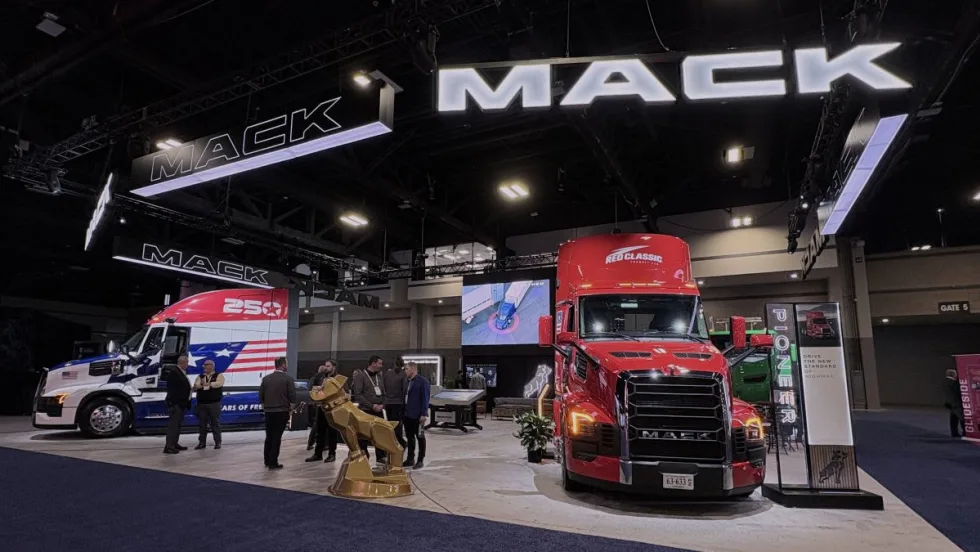
Trucks at ATA's 2026 MC&E in Charlotte, North Carolina [Photos]
From rigs decked out in patriotic America's 250 paint schemes to autonomous trucks and more, check out these photos from ATA's 2026 Management Conference & Exhibition.
Read More →
Help HDT Find Trucking’s Top Products
Have you come across a new product that could make a difference for trucking fleets? Nominate it for HDT’s 2027 Top 20 Products Awards by November 9.
Read More →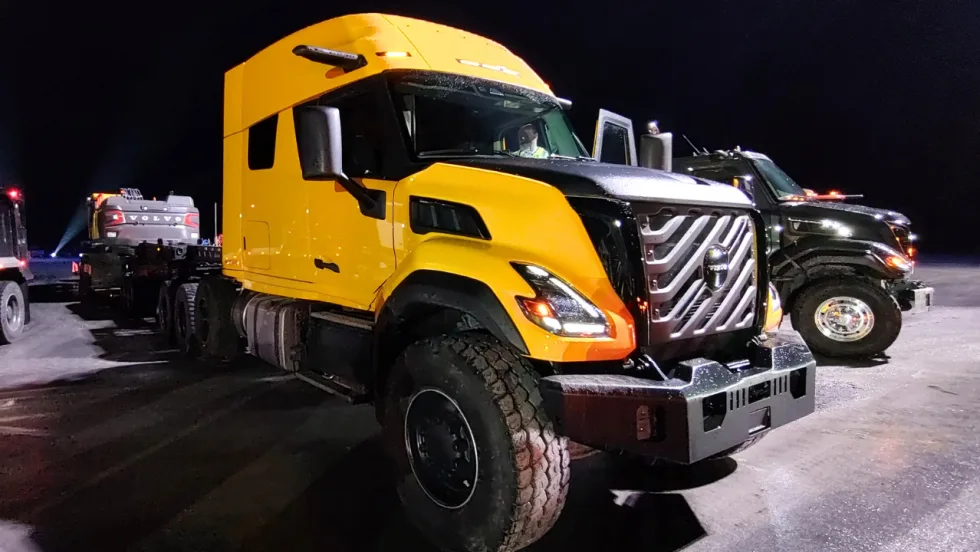
Volvo Unveils New VNX Heavy-Haul and Vocational Truck
Volvo Trucks has launched the VNX, a new vocational truck also available as a tractor in day cab and two sleeper configurations, with one heavy-haul model. The Volvo VNX is powered by Volvo's D13 platform, which delivers up to 540 horsepower and 1,950 pound-feet of torque and is EPA 2027-compliant.
Read More →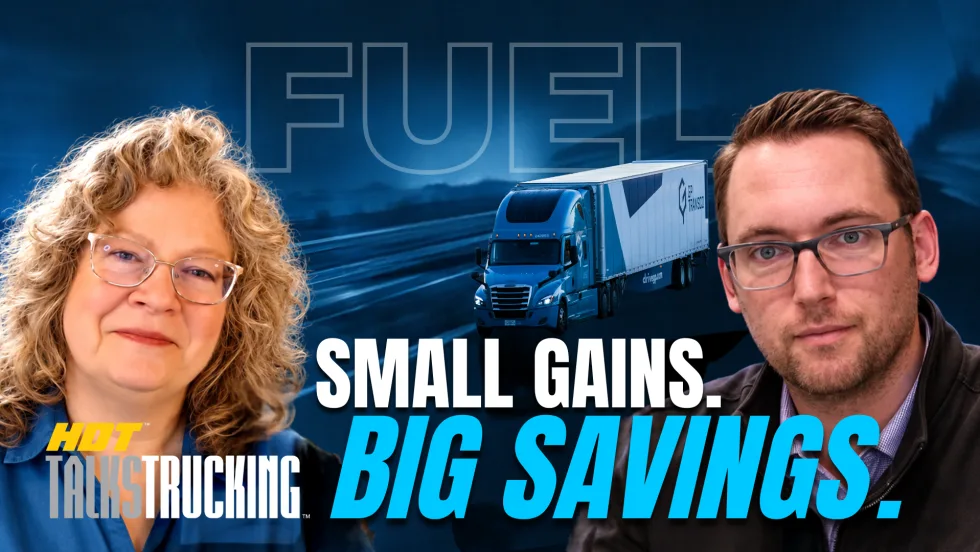
How GP Transco Cuts Trucking Fuel Costs, a Tenth of a Gallon at a Time
What’s another tenth of a mile per gallon worth? GP Transco shares how equipment upgrades and driver coaching turn small gains into meaningful fuel savings.
Read More →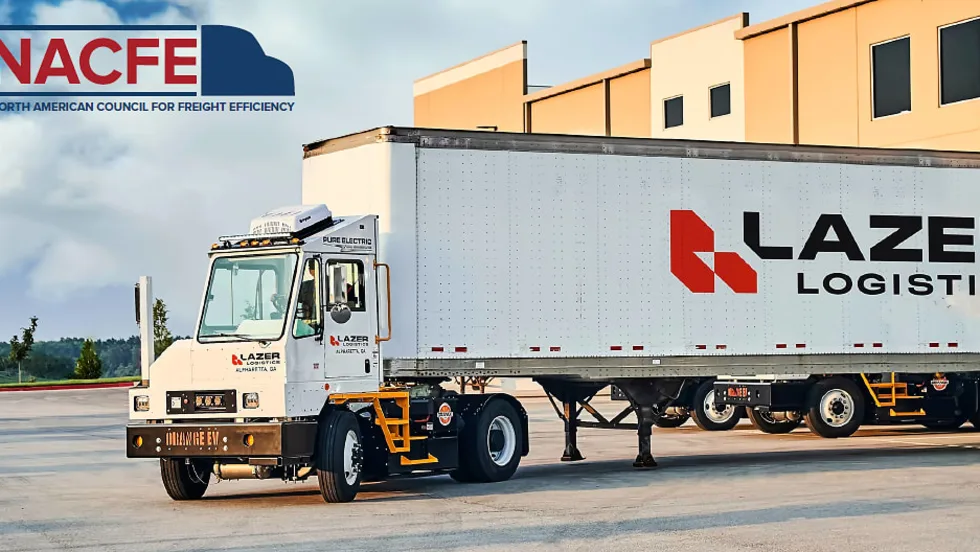
Electric Yard Tractors Move Beyond Pilots
Operating-cost savings have overtaken sustainability goals as the leading reason surveyed fleets are adopting battery-electric terminal tractors, according to new NACFE research.
Read More →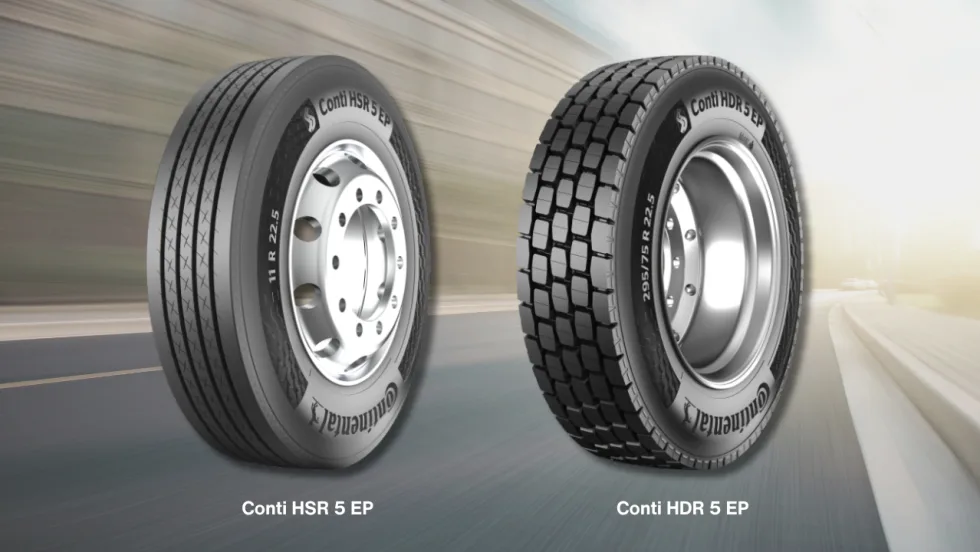
Continental Introduces New Regional Truck Tires
Continental says its new Generation 5 steer and drive tires for regional operations offer longer tread life, with estimated mileage gains of 22% and 19%, respectively.
Read More →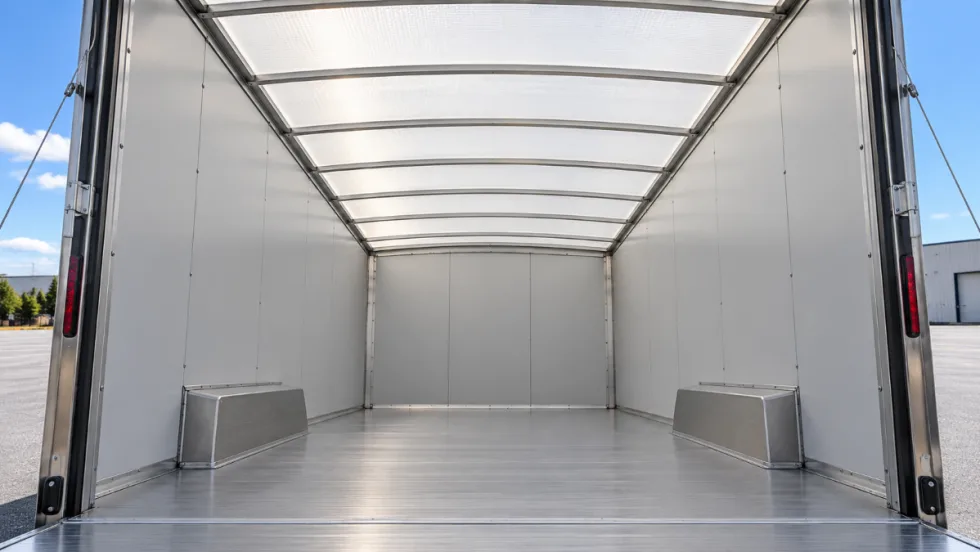
Tekmodo Introduces CargoBright Brand for Translucent Trailer Roofs
CargoBright is designed to diffuse daylight across the cargo area while performing as a working vehicle roof.
Read More →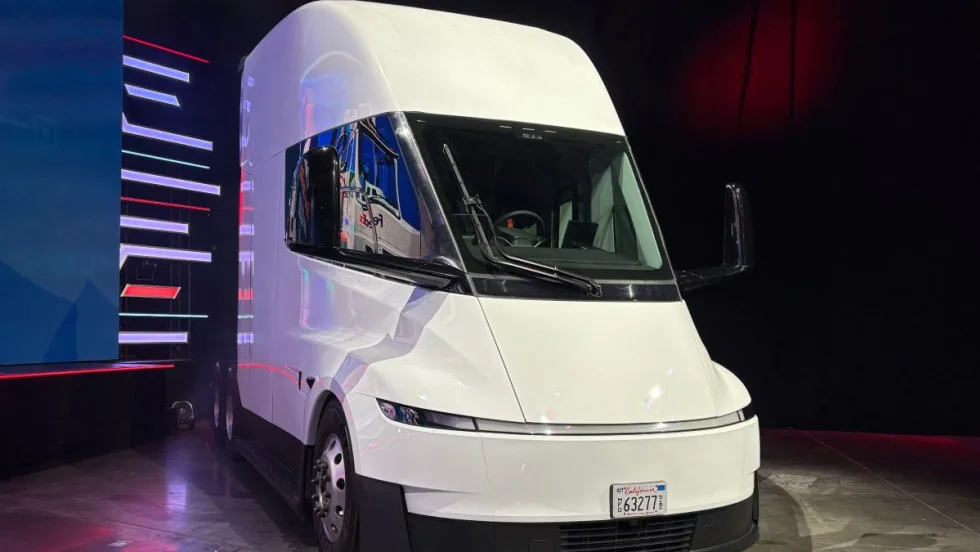
Fleet Economics Shape Electric Truck Outlook
ACT Research expects costs, charging infrastructure, and technology improvements to drive zero-emission commercial vehicle adoption as federal regulations and incentives retreat.
Read More →
Kodiak Targets Dallas–Houston for Driverless Trucks
The company says its autonomous trucks are completing the I-45 run without a safety observer taking control. It plans to remove the observer by the end of 2026.
Read More →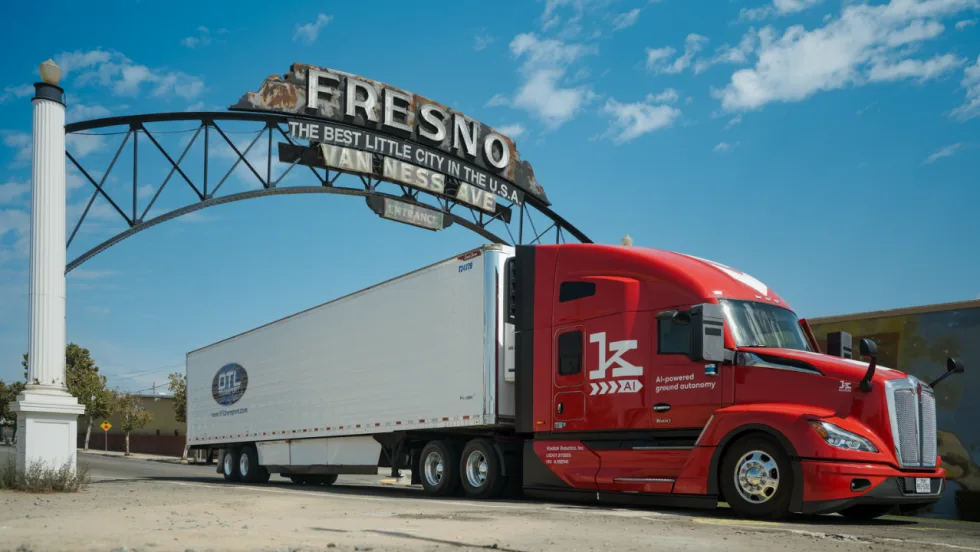
Kodiak Hauls Produce in California Autonomous Truck Pilot
Kodiak AI and DTL Transport have begun hauling produce between Fresno and Los Angeles under California’s new rules for testing heavy-duty autonomous trucks. A safety driver remains behind the wheel.
Read More →