




Q&A: DTNA's O'Leary on Creating Tomorrow
John O’Leary has had his hands full since he took on the role of president and CEO of Daimler Truck North America just under a year ago. We talked to him about where the company — and the industry — is going.


DTNA President and CEO John O'Leary talks about the future of the company and the industry.
Photo: Daimler Truck North America
“We create tomorrow. A tomorrow that’s cleaner, that’s that’s healthier, that’s safer, and smarter. A tomorrow we all want to see. A tomorrow we all want our children and their children to see. … We don’t build trucks. We move the world.”
That was the message of a video, entitled simply "Purpose," that Daimler Truck North America recently produced for its employees. When he narrated it, little did DTNA chief John O'Leary dream that those employees would be so moved by the video that they would share it to the world on social media. The company decided to give it a broader audience, posting it on its own YouTube channel, and showing it at events such as the American Trucking Associations' Technology & Maintenance Council annual meeting in Orlando, Florida, this week, to introduce his keynote address.
O’Leary has had his hands full since he took on the role of president and CEO of Daimler Truck North America just under a year ago, dealing with the ongoing COVID-19 pandemic, supply-chain issues causing shortages of computer chips and other truck parts, an accelerating push to zero-emissions vehicles, rapidly changing technology, and the spin-off of Daimler Truck from the Mercedes-Benz business.
Following his March 8 keynote address, I had a chance to sit down with O’Leary in person for the first time and talk about the challenges and opportunities facing his company and the trucking industry.
This interview has been lightly edited for length and clarity.
HDT: Before you took the stage this morning, your team showed a pretty powerful video with the message, “we don’t build trucks; we move the world.” And in fact, you narrated it. You explained during your speech that this initially was meant to be an internal video for employees. Tell us about it, and why it’s become more.
O'Leary: The execution is amazing; it’s great messaging. It tears at your heartstrings, really makes you feel. Even as I was standing there waiting to go on the stage, it still choked me up a little bit.
People really have latched on to it as a powerful representation of what we stand for, of what they stand for. I think at this point in time, when you consider all the challenges we have had with COVID, the great resignation, chip shortages, and so on, people are really looking for something that they can really feel a part of. I feel [the video] accomplished that goal at a time when we were looking to carve off a more defined culture and talking about our role in the world [with last year’s spin-off of Daimler Truck from Mercedes.]
We really didn’t intend to put it out so publicly, but then everyone started posting it, that’s the beauty of social media, saying ‘I’m so proud to be part of this company,’ and we realized we had something more powerful. People, not just our employees, see themselves in it.
HDT: And how is that transition going?
O'Leary: The change is going well. It’s still not complete. It’s going to take three years, especially in Europe, where systems were much more intertwined with the passenger car business. For instance, you had in a lot of cases, the truck and car dealership were the same.
In terms of how we run the business, think about the business, the decisions we make, the culture we aspire to — you’re not trying to explain to an employee how what they do is related to someone designing roadsters — we can focus more clearly on what we do well.
HDT: You’ve been meeting with customers here in Orlando. What are you hearing from them? What kinds of concerns do they have?
O'Leary: They want to know when they can get more trucks. None of us wants to turn away customers. The fact that it’s continued on for so long, the chip issue, there’s no absolute solution on the horizon, it continues to be a point of frustration for them and for us.
We have a call every two weeks between the heads of Europe, Asia, and myself, with the global heads of purchasing and manufacturing. We evaluate, part by part, which are the most problematic and what we are going to do about that. Sometimes Martin [Daum, head of Daimler Truck] has to make a call [to a supplier], but there’s only so much ponding on the table you can do. We’re continuing to work that as much as we possibly can.
The challenge is that even as a few of these situations have gotten better, typically on a truck you’re talking about seven, eight or nine [chips or other parts in short supply]. So even if you solve a couple, you still can’t ship the trucks.
HDT: Last year, we were hearing about shortages of a lot of items beyond chips, such as polymers. Is that still the case?
O'Leary: There’s always a few things out there, and polymers last year was one of them. It’s better than it was. Right now, tires is kind of an issue; the soot that goes into tires is scarce. But these things are measured in hundreds of trucks, versus thousands when it comes to chips.
One of these days it will be resolved.
HDT: You talked in your speech about the need to prepare for how fast areas such as connectivity, electrification, and autonomous technology are coming at the industry. For fleets, what kinds of things should they be doing? Most carriers don’t have the resources of some of these big companies that are on the cutting edge of these technologies.
O'Leary: Understand, and we continue to point out, that it’s not a light-switch moment. It’s not like diesel goes away in 2025. It’s going to be with us for a long time. But obviously, things like EPA regulations are making it more difficult, and we understand what the end goal is.
It’s going to be a challenge for everybody — for us, our customers, our suppliers, to make things happen as seamlessly as possible. We have consulting groups, an e-consulting group, a connectivity consulting group, and we’ve talked about putting in place a hydrogen fuel cell consulting group, which has very different challenges than on the battery side. We have the resources and ability to get that information and distribute it, especially to some of the smaller players.

Electrification is one of three key areas O'Leary identified shaping the future of trucking.
Screen capture, DTNA "Purpose" video
HDT: Speaking of hydrogen, there have been some interesting discussions recently about whether fuel-cells are really the best solution for long-haul decarbonization. Some believe battery-electric is a better choice.
O'Leary: We continue to believe it’s not an either-or proposition. There are people who say batteries eventually will get to the density that will allow long-haul applications. Today, that seems to be a bit of a stretch. You want multiple choices available for customers. We‘ve always had options, for example, natural gas, and multiple diesel options between Detroit and Cummins. We believe having choice for customers puts us in best possible position. No two customers are the same.
HDT: On that topic of choice, you also talked in your speech about the fact that Daimler Truck is offering its customers two different choices when it comes to autonomous trucks, Torc and Waymo. Can you tell us a little about how the two differ?
O'Leary: When we talk about Torc, we refer to them as pure play — they are completely dedicated to trucks. Waymo, on the other hand, does trucks but also do cars. Torc is majority owned by us, kind of our ‘house brand,’ if you will, which allows us to learn a lot more about how the chassis should be configured, how it interacts with the autonomy, all that. We’re a supplier to Waymo; they see it as, ‘deliver us a chassis and we put in our virtual driver.’ They’ve got a whole different set of algorithms.
At very high level, Torc today is sort of a point-to-point solution, picking up from a distribution center close to a freeway and delivering at another distribution center close to a freeway. Waymo is more, ‘We’re 5 miles deep into the city and we’re going to navigate our way all the way.’ It’s a more complex model they’re trying to tackle.
HDT: At what point do we see the convergence of these three areas — connectivity, autonomous, and electrification — all into one truck?
O'Leary: That’s a great question. What is the true truck of the future, one that has a zero-emission powertrain, is autonomous and features the latest connectivity? I’ve challenged our team to think about that.

In today's advanced driver assistance systems, you can start to see the foundational elements for Level 4 autonomous technology.
Screen capture, DTNA "Purpose" video
HDT: Taking a broader view, there are a couple of big stories going on in the U.S. and the world that affect trucking. First, this week the EPA issued its new emissions proposal for heavy-duty trucks. Any feel for how that’s going to affect the industry?
O'Leary: I haven’t had a chance to look closely at it because it just came out, but I’ll be looking at that on the plane home.
Editor’s note: The company’s official response to the EPA proposal is as follows: “DTNA is firmly committed to the continued reduction of nitrogen oxides (NOx) to provide cleaner air and better health for all communities. DTNA has a long history of working with EPA on stringent, enforceable, national rules to reduce emissions and looks forward to working with EPA on the Clean Truck Initiative.”
HDT: And we’re all seeing heartbreaking images coming from Ukraine, as well as concerns about things like supply chains and fuel prices.
O'Leary: I’d be remiss if I didn’t say how much in support of Ukraine we are. It’s a modern-day tragedy and I can’t say enough there. But I think we’re already seeing the first negative from that, fuel prices going up was a direct negative of that. I know if you’re in the passenger car business, who get their wiring harnesses out of Ukraine, they’re very nervous. We don’t have that type of exposure, fortunately. We’re OK in terms of our supply base. But otherwise, I would say it’s a big disaster for mankind.
More Equipment

Kodiak Lines Up Fleets for Driverless Trucking
An agreement for 75 trucks, a new Texas freight lane, and progress on safety validation move Kodiak closer to its planned driverless highway launch.
Read More →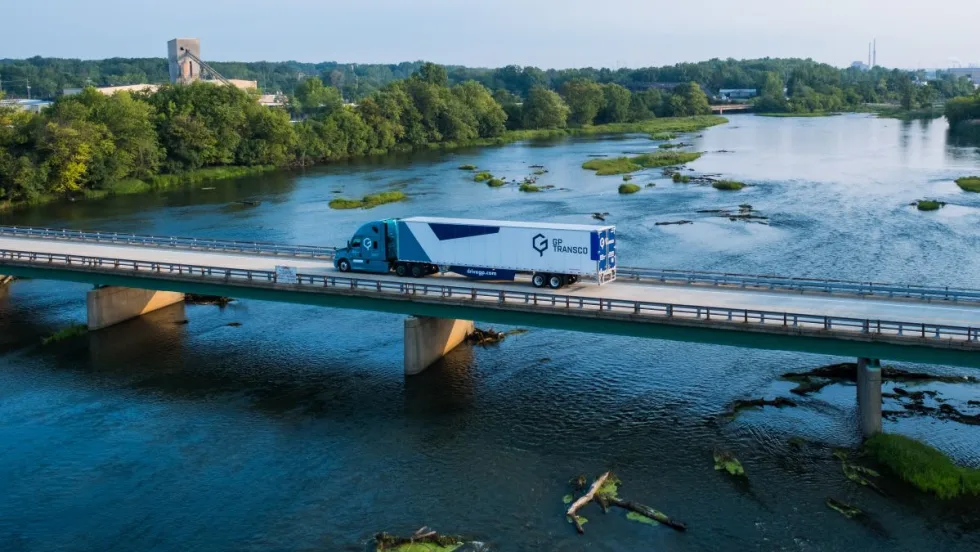
How GP Transco Builds Fuel Savings a Fraction at a Time
Aerodynamic specs, solar panels, and driver incentives help GP Transco turn small efficiency gains into savings it can reinvest in its people.
Read More →
More Trailer Data Through the Same Seven-Way [Video]
Can trucking’s standard seven-way connector handle more cameras and trailer data? Grote’s Adam Slade shows HDT how the company is using new technology with its 4See trailer system, not only to add a new backup camera but also to expand other capabilities — without adding another connection.
Read More →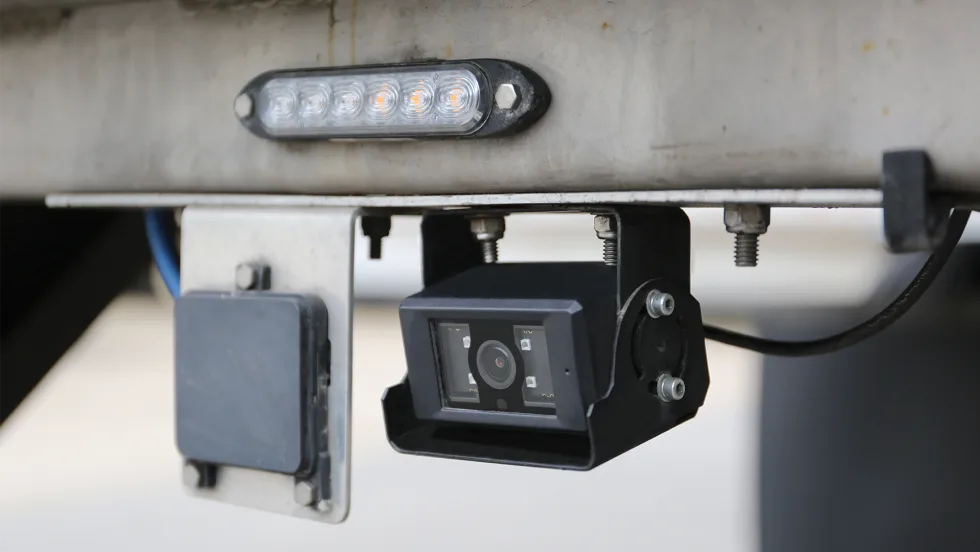
Grote: More Cameras, Same Seven-Way Connector
The next-generation 4See rear-view backup camera from Grote uses the standard seven-way connector and supports additional cameras and other trailer data.
Read More →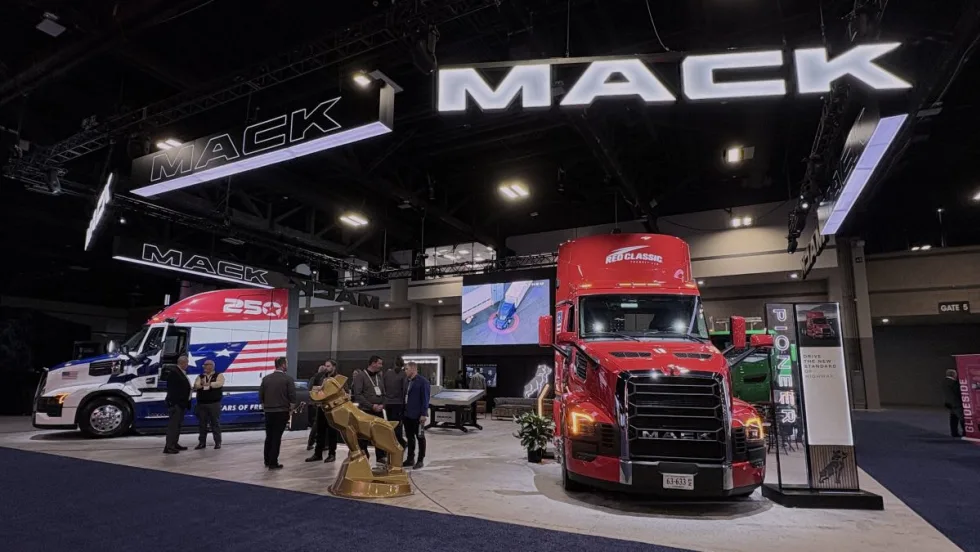
Trucks at ATA's 2026 MC&E in Charlotte, North Carolina [Photos]
From rigs decked out in patriotic America's 250 paint schemes to autonomous trucks and more, check out these photos from ATA's 2026 Management Conference & Exhibition.
Read More →
Help HDT Find Trucking’s Top Products
Have you come across a new product that could make a difference for trucking fleets? Nominate it for HDT’s 2027 Top 20 Products Awards by November 9.
Read More →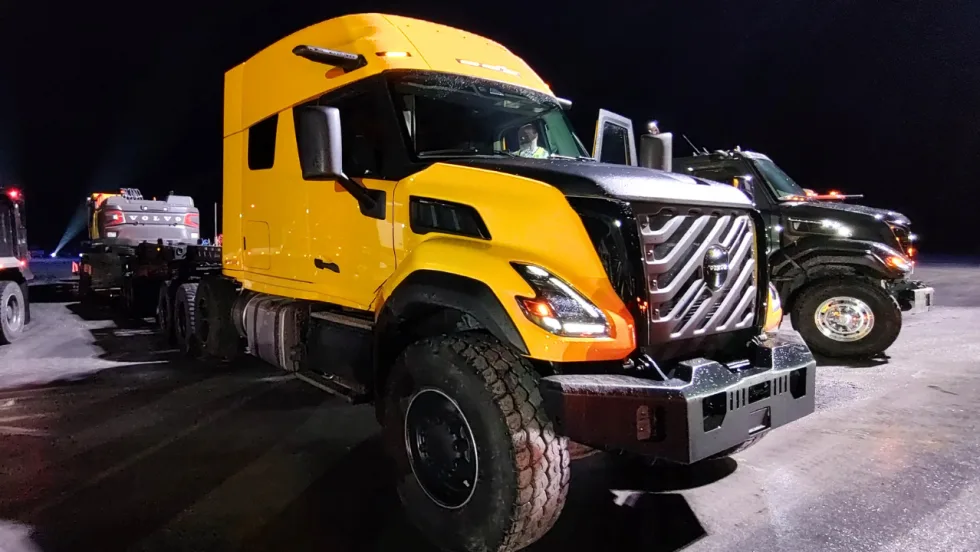
Volvo Unveils New VNX Heavy-Haul and Vocational Truck
Volvo Trucks has launched the VNX, a new vocational truck also available as a tractor in day cab and two sleeper configurations, with one heavy-haul model. The Volvo VNX is powered by Volvo's D13 platform, which delivers up to 540 horsepower and 1,950 pound-feet of torque and is EPA 2027-compliant.
Read More →
How GP Transco Cuts Trucking Fuel Costs, a Tenth of a Gallon at a Time
What’s another tenth of a mile per gallon worth? GP Transco shares how equipment upgrades and driver coaching turn small gains into meaningful fuel savings.
Read More →
Electric Yard Tractors Move Beyond Pilots
Operating-cost savings have overtaken sustainability goals as the leading reason surveyed fleets are adopting battery-electric terminal tractors, according to new NACFE research.
Read More →
Continental Introduces New Regional Truck Tires
Continental says its new Generation 5 steer and drive tires for regional operations offer longer tread life, with estimated mileage gains of 22% and 19%, respectively.
Read More →