




Q&A: Al Cohn on Fuel-Efficient Tires, Footprints and Inflation
We sat down with tire-industry expert Al Cohn to gain some insight into fuel-efficient tires. We asked about inflation pressure and how it relates to tire wear and fuel efficiency, and about the wisdom of paying more for a tire that doesn't last as long.

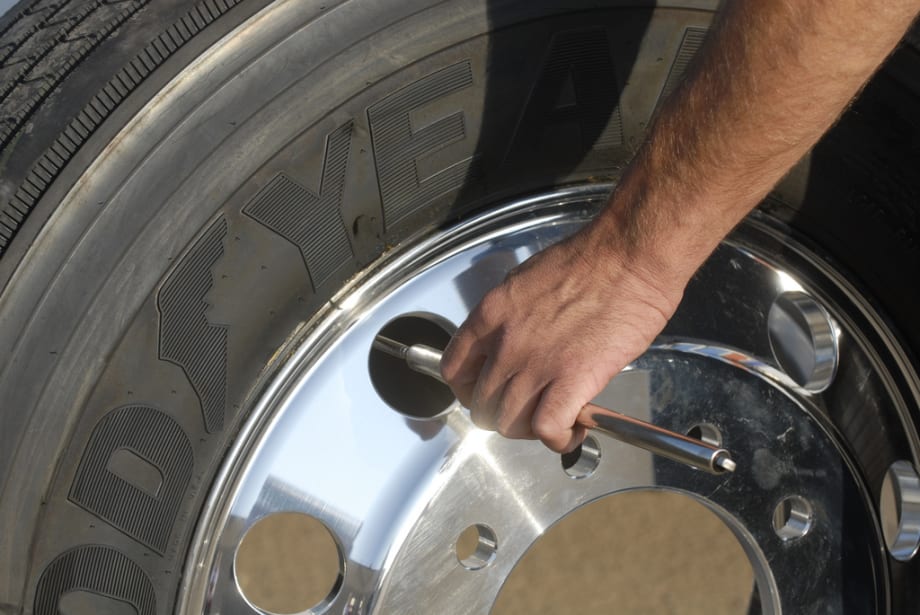
Buying fuel-efficient tires? Better make sure they're at the optimum inflation. (File photo: Goodyear)

Al Cohn, director of new market development and engineering support for Pressure Systems International, is well-known in truck tire circles. After nearly 30 years with Goodyear and nearly another decade with PSI, he has probably forgotten more than many people know about truck tires.
We sat down with Al recently to gain some insight into a topic that's front and center with many fleets today: fuel-efficient tires. We asked about inflation pressure and how it relates to tire wear and fuel efficiency, and about the wisdom of paying more for a tire that doesn't last as long.
Q: We know that inflation pressure has a direct impact on rolling resistance and ultimately on fuel efficiency. Can you explain what happens to an underinflated tire and how that related to fuel economy?
Cohn: When a tire is underinflated, the width of the tire stays practically the same, but the length of the footprint changes dramatically. As a result, the footprint becomes a lot longer, you get more flexing in the sidewall, and when you get more rubber on the road that equates to higher rolling resistance -- which is bad for fuel.
That longer footprint could equate to about 18% more rubber actually in contact with the road. For line-haul type operations the magic number is kind of like 5, that's the ratio for the amount of rubber, or rolling resistance, to fuel economy. So 18% more rubber meeting the road equates to about 3% worse for fuel economy if you were 30% under-inflated.
If you look at the numbers from all the companies, various tire surveys, and all the work we've done over the years, we have found that 10% under inflation is pretty common. If you’re 10% underinflated, it will cost you somewhere between 1% and 1.5% in fuel consumption.
Q: Worst case scenario: The fleet is really sloppy in its maintenance and tire pressures are all over the place. How much money is that fleet wasting in not looking after its tires?
Cohn: If you assume that all the tires are under-inflated by say 30%, that would equate to about 3% in fuel economy. And 3% for a fleet is a huge number. I always like to use the example, you’ve got 100 trucks and they go 100,000 miles per year. If you start doing the math on that, you need 16,667 gallons of fuel at 6 mpg, and at 2% worse, that means you get 5.88 mpg, and you figure out the fuel and another several hundred gallons per year, per truck. At $4 per gallon times 100, you’ve got big numbers all of a sudden.
Q: Getting back to the tire footprint for a moment, if you’re putting 18% more rubber on the road it’s also going to be chewing the tire up faster too, no?
Cohn: Absolutely, you’re going to generate a lot of uneven wear. And that’s what is going to cause the early tire removals.
Q: One question that comes up a lot when I’m talking to people about inflation pressure; they’ll refer to the load and inflation charts and say for a typical tandem weight 4,250 pounds per tire, the minimum pressure would be something in the 75-80 psi range, depending on the tire. Fleets typically run their drive and trailer tires at around 100 psi. What I’m told is margin of error keeps the tire from becoming under-inflated. What’s the penalty for going the other way, say to 125 psi. What happens to the tire then?
Cohn: Actually the fuel economy is better at the higher pressure, but you now have an issue with traction. You have a smaller footprint, which is good for rolling resistance but bad for traction. It’s like when you go to the beach and you’re in a sand dune buggy and they lower the pressure in the tires because the lower the pressure, the more traction. So one of the biggest concerns with over-inflating, number one is the drivers hate it because you’re bouncing all over the highway and it’s bad for the ride. And secondly, you have a drop in the traction. So in an emergency maneuver when you really have to stop, it’s going to take you another 50 feet to stop. Now it's a safety problem.
Q: So overinflating, like underinflating, also changes the footprint of the tire?
Cohn: When you over-inflate, the footprint gets a little smaller, but the biggest impact though, especially on trailers, is the loaded vs. unloaded conditions. Because you’re spec'ing the pressure based on the loaded worst case scenario, that’s why they choose 90 or 100 psi. In reality, 50% of the time in many cases, they’re empty. So when you’re empty, I mean it’s great for rolling resistance and fuel economy, but the tire is going to develop all kinds of issues, uneven wear, because you’re bouncing up and down the highway.
So the ultimate solution is central tire inflation system like the military uses, but that’ll never happen in trucking.
But that’s really the big thing, the footprint. If you look at the footprint of a dual tire when loaded to 4,250 pounds compared to the footprint when the trailer is empty and the tire is supporting maybe 1,600 pounds -- the shoulder isn’t even touching the ground. What happens is the shoulder, since it’s not touching the ground, it generates all this cupping and shoulder wear and all this other stuff.
Q: Where does the magic number of 100 psi inflation pressure come from when the load and inflation tables tell us drive and trailer tires need only about 75 or 80 psi?
Cohn: The reason they choose that higher, typically 100, magic number is mostly because you want to have one number that's easy for the mechanics and easy for the drivers to remember. Plus, when it comes to trailers, you may only see them once a year for an annual PM. So that’s why 100 psi comes into play. If you lose a couple pounds per month just through osmosis, you’re back at that 75 number soon enough.
More Fuel Smarts
Cummins Adjusts 2027 Engine Rollout After EPA Proposal
The engine maker will gradually introduce its new Model Year 2027 diesel engines while continuing to offer current models during the transition, citing the EPA's proposed emissions rule changes.
Read More →
EPA Proposal Could Ease 2027 Truck Costs and Buying Uncertainty
The proposal doesn't change the tougher NOx standard, but it would revise key implementation requirements that manufacturers say have driven up costs and complicated fleet purchasing decisions.
Read More →
Cummins, Paccar Ease DEF Derates After EPA Guidance
Updated diesel engine software gives truck operators more time to address emissions-system issues while staying compliant with EPA emissions standards.
Read More →
Maintenance in the Messy Middle Part 3: Biodiesel
Biodiesel can reduce emissions, improve fuel-system lubricity and use existing diesel infrastructure. But NACFE’s Messy Middle maintenance report says fleets must actively manage storage, cold-weather operation, filters and oil drain intervals to avoid problems.
Read More →
Enhance Fleet Performance with High-Efficiency Auxiliary Power Units
Drive sustainable cost savings while increasing driver comfort during short- and long-haul logistics operations.
Read More →
Maintenance in the ‘Messy Middle’ Part 2: Renewable Diesel Fuel
NACFE's latest Messy Middle Powertrain Service & Maintenance report says renewable diesel gives fleets an opportunity to reduce carbon emissions without changing trucks, fueling infrastructure or maintenance practices. But technicians still need to understand several important operational differences.
Read More →
The Diesel Engine Enters NACFE’s ‘Messy Middle’
NACFE’s new Messy Middle Powertrain Service & Maintenance report says keeping modern diesel engines running now depends as much on software, diagnostics and data as traditional mechanical service.
Read More →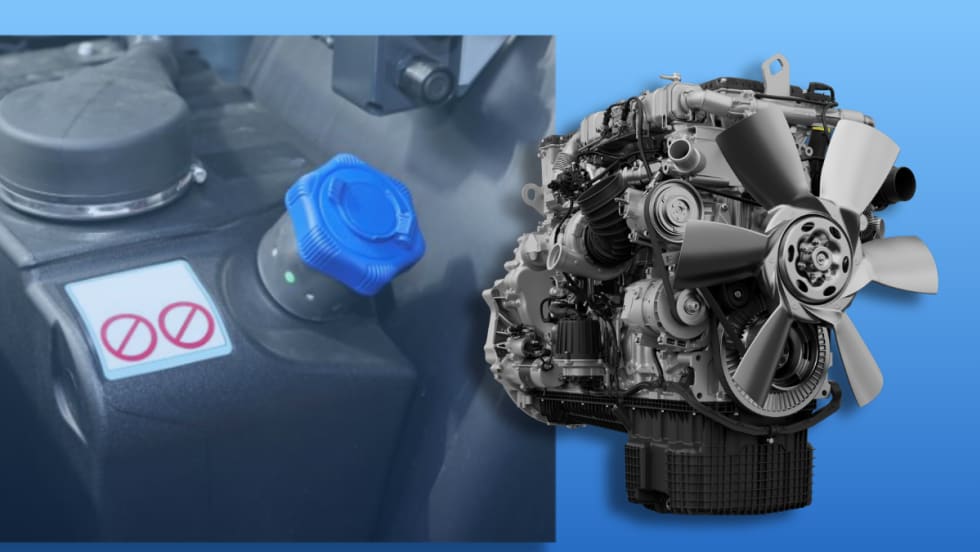
DTNA Software Update Gives Truckers More Time Before DEF Derates Take Effect
The changes reflect EPA guidance aimed at reducing downtime caused by emissions-system faults while maintaining compliance requirements.
Read More →
New Agentic Predictive Maintenance Report Demonstrates How Degraded Aftertreatment Systems Waste Fuel
Questar analyzed a large mixed-class fleet and discovered it was wasting as much as $30 in fuel per vehicle, per day, because of mechanically degraded aftertreatment systems.
Read More →
New York City's Microhub Project is Delivering Results
Trucking, last-mile delivery companies, and environmental advocates like what they are seeing so far with New York's microhub program.
Read More →