




Profit Is Hiding In Dark Places
Most fleets are operating on thin margins and that is not likely to change anytime soon. Yet many of them are missing an opportunity to add to their bottom line because they don’t have complete control over their procurement process.


Most fleets are operating on thin margins and that is not likely to change anytime soon.
Yet many of them are missing an opportunity to add to their bottom line because they don’t have complete control over their procurement process. If managed efficiently, the procurement process — what is purchased, how it is purchased, who makes the purchasing decisions — impacts profitability.
Purchasing sounds pretty straightforward, but in reality, for many fleets it is surrounded by a great deal of confusion.
In a recent survey conducted by AmeriQuest Business Services, 2,000 respondents who were responsible for managing or influencing their company’s procurement process shed light on why this process so often falls short of its potential:
20.4 percent of the companies had no procurement process in place;
13.3 percent had no idea if their company did, or did not have, a procurement process in place;
Less than a quarter of the survey respondents indicated that procurement was viewed as a strategic business partner;
Another 25 percent noted that procurement is simply seen as a function of accounts receivables/account payables;
Fifteen percent of the survey respondents didn’t know which department managed their company’s procurement, even though they were directly involved in the process.
Dr. Reggie Peterson, Director of Indirect Programs at AmeriQuest Business Services, has dubbed this phenomena “dark purchasing.” Basically, that refers to a fleet’s inability to track where its expenditures are going. According to the survey, employees often do not know the best way to make a purchase especially when it comes to items that are categorized as indirect spend — categories of goods and services that are necessary to support a fleet’s operation. In other words, everyday items like MRO supplies, office supplies, cleaning products, etc.
Yet it is often the little things that when added together end up costing more than imagined or anticipated. As Peterson says, “You will scrutinize large expenditures but may not pay too much attention to a bill for $6. But of you have 1,000 people spending $6 with no oversight, it adds up quickly.”
Estimates are that 15–40 percent of a company’s overall operating costs fall in the indirect spend category.
Dark purchasing usually involves the purchasing of goods and services outside of established procurement practices and often means purchasing from unapproved suppliers and redundant or unnecessary purchases.
Unfortunately, dark purchasing also applies to larger ticket items like trucks. There can be hidden costs in the purchase of trucks that are best found by conducting a total- cost-of-ownership analysis. A good TCO analysis includes depreciation interest on your loan, taxes and fees, insurance premiums, fuel costs, maintenance, repairs, resale value, etc.
To make sure your fleet’s asset purchases are not happening in the dark, always include operations and maintenance people in the asset purchase process, Peterson advises.
And whether the purchase is large or small, a consistent procurement process managed by an indirect spend program can help you maintain full visibility on all your purchase transactions.
More Fleet Management

How Innovative Trucking Leaders Turn Change Into an Advantage
As the pace of change accelerates in trucking, the fleets that adapt best have more than the latest technology. They have cultures that embrace improvement.
Read More →
Freight Broker Bonds Just Got Harder to Get. Here's What That Means for Your Fleet.
When it gets harder for a freight broker to prove they are financially sound, the ones who cannot clear that bar get pushed out of the market. And those are exactly the brokers who used to leave motor carriers holding the bag.
Read More →
Long-Awaited Canadian Border Bridge to Open in Detroit
For trucking, the bridge opening should offer immediate improvements in efficiency and reliability, with new customs facilities, expanded inspection capacity, and direct freeway-to-freeway connections.
Read More →
Aurora Rolls Out Next Generation of Driverless Trucks for Commercial Freight
Aurora's latest autonomous trucks it's rolling out with International feature lower-cost hardware designed for a million miles as the company expands commercial driverless freight operations across the U.S. Sun Belt.
Read More →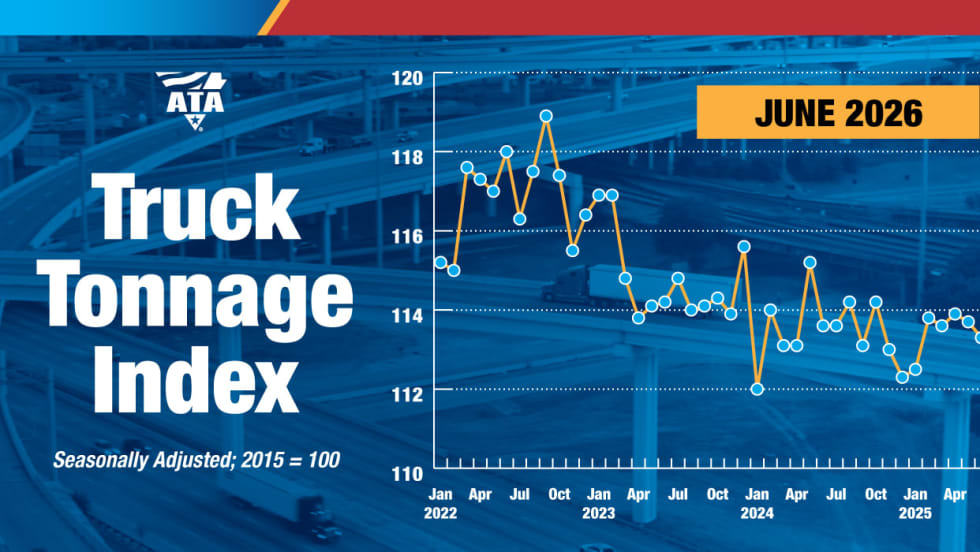
Freight Tonnage Down, Rates up, as Lower Capacity Powers Trucking Recovery
The recovery from the freight recession continues to be driven by reduction in capacity rather than by increased demand.
Read More →
Think Your Trucking Fleet Isn't Using Much AI? Think Again
Shadow AI — the use of unauthorized artificial intelligence tools at work — is becoming increasingly common, putting sensitive company data at risk. Learn how trucking fleets can protect sensitive data while embracing AI.
Read More →
ArcBest Consolidates Brands, Cuts Workforce
The company will bring three business units under the ArcBest brand, eliminate about 2% of positions, and expects the changes to generate $40 million in annual savings.
Read More →
Trucking Fleets Faced Record Operating Costs During Third Year of Freight Recession
ATRI's annual operational cost report shows carriers trimmed fleets, delayed equipment purchases, and ran older trucks as expenses continued to outpace freight rates.
Read More →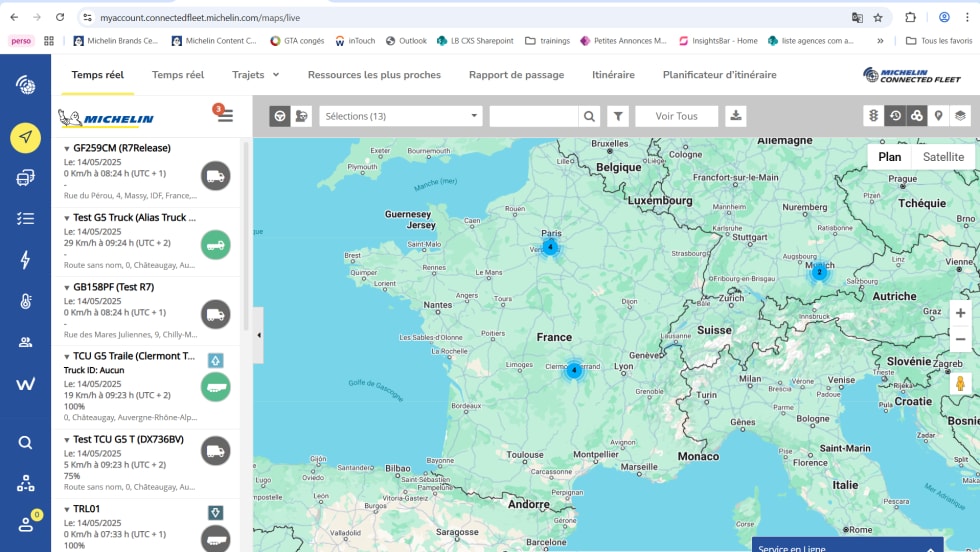
Michelin Adds AI Assistant to MyConnectedFleet Platform
Michelin’s new generative AI tool delivers instant fleet insights, helping managers analyze fuel use, tire maintenance, vehicle status, and operational performance without manually creating reports.
Read More →
LytxOne Platform Now Features AI, Compliance, and Asset Tracking Tools
New enhancements add AI-powered insights, asset tracking, compliance automation, and configurable privacy controls to Lytx's all-in-one fleet management platform.
Read More →