




Preventing Dock Walk
"Dock walk," the phenomenon of the trailer's body moving slightly away from the loading dock when a heavy forklift rolls aboard, has been around since air-ride suspensions came into use on trailers

"Dock walk," the phenomenon of the trailer's body moving slightly away from the loading dock when a heavy forklift rolls aboard, has been around since air-ride suspensions came into use on trailers.
It happens with trailing-arm air suspensions, and is interesting to watch. Reyco Granning has an instructive video on its website,http://reycogranning.com, that clearly shows dock walk as it happens:
The forklift's weight compresses the air bags, which causes the suspension's trailing arms to rotate slightly, pushing against the axles, whose wheels don't roll because parking brakes are set (or should be), and/or the wheels are chocked.
So the reactive motion continues into the body, which is pushed slightly forward, says Bill Hicks, a product-planning leader at SAF Holland. Forward motion can drag the suspension, axles and unchocked wheels slightly. Repeated entry by the loaded forklift can push the trailer forward a little each time, until a bigger gap develops.
The Reyco Granning video shows that after three trips aboard a trailer by a forklift toting heavy paper rolls, the trailer has moved 4 inches.
The trailer doesn't move if it's hitched to a tractor, whose brakes keep it from moving and whose fifth wheel blocks the trailer's kingpin and body, and keeps the entire rig in place. But the trailer can move if the trailer has been dropped at the dock and its nose rests on its landing gear.
The forward motion strains the landing gear posts. Their braces can weaken and the posts can bend; in severe cases, gear has been known to collapse, Hicks says. Gear can be reinforced to deal with such motion.
Dock walk is minimized or prevented by certain suspensions, which use different designs to accomplish this goal:
- A parallelogram design in Meritor's Ride Sentry doesn't rotate, note Bill Wakefield, manager of strategy and product management, and Carl Ellis, a product manager.
- A trailing- and leading-arm de sign in Reyco Granning's Dockmaster "safety suspension" cancel each other's motion. The suspension actually tends to push the trailer closer to the dock. Engineers aren't sure why, says Wayne Powell, vice president, marketing, but don't worry about it, because rearward movement only enhances safety.
- Locking levers prevent trailing arms from moving, as employed by Hendrickson's SureLok and SAF Holland's PosiLok. The levers can be deployed in various ways, including by swinging open the trailer's rear doors. Usually cylinders powered by the trailer's compressed air system push them into place and later retract them. If they don't retract, the suspension becomes a stiff, unsprung mechanism, and trailing arms and other components can be damaged.
So drivers should check that levers have retracted before starting out.
These countermeasures solve the walking, but air bags can still compress.
"Squat" and "trailer drop" are other terms for it. That plus tire deflection can lower the trailer's floor by several inches.
Hendrickson calls its anti-dock walk and ride height lock device SureLok, notes Jim Rushe, trailer systems program manager for on-highway products. "We find that the ride height lock feature is desired in many instances in order to provide a smooth transition at the trailer floor, and it also maintains the height of the top trailer at the loading dock so that tall forklift loads can be moved onto the trailer."
Some operators prefer to dump air out of the bags so the suspension rests on its bumpers. This provides stability, but a more severe drop of the floor creates a steeper grade on the ramp that can cause the lift's tires to slip. Also, drivers can forget to dump and replace air (something remedied by automatic systems), and valves can freeze in cold weather, Rushe notes. Hendrickson offers an air dumping system along with its SureLok.
Most customers whose trailers regularly load and unload by forklift specify suspensions designed with dock walk in mind. They aren't needed by trailers that don't back up to docks, such as curtainsiders, tankers, flatbeds and dumps, where a regular trailing-arm suspension is fine.
Why not just stay with simple steel leaf-spring "mechanical" suspensions? Most suppliers offer both types. But air-ride is chosen by a majority of customers for vans, reefers and other trailer types because it cushions cargoes, reducing damage and freight claims, and protects trailers themselves against breakage of lights and structural parts, our supplier sources say. Here air-ride's advantages outweigh its drawbacks, including possible dock walk.
From the September 2012 issue of HDT
More Equipment

Detroit Opens Orders for EPA 2027 Engines
Detroit isn’t starting from scratch to meet EPA 2027 diesel emissions standards. Its Gen 6 DD13 and DD15 engines keep much of today’s platform while updating the fuel and aftertreatment systems.
Read More →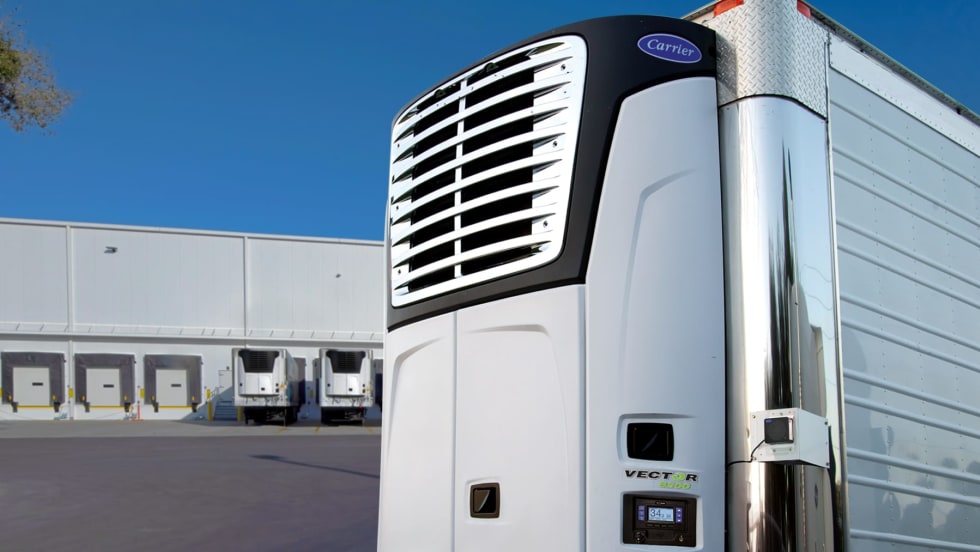
Carrier Transicold Adds All-Electric TRU for Stationary Cold Storage
Carrier Transicold’s new Vector 8200 all-electric transport refrigeration unit gives fleets a diesel-free option for temporary refrigerated and frozen trailer storage.
Read More →
A Closer Look at Kenworth’s Electric T880E Vocational Truck [Video]
Learn more about Kenworth's T880E battery-electric vocational truck at the Paccar Technical Center, including its range, applications, upfitting considerations, and PTO options, in this HDT Spotlight video.
Read More →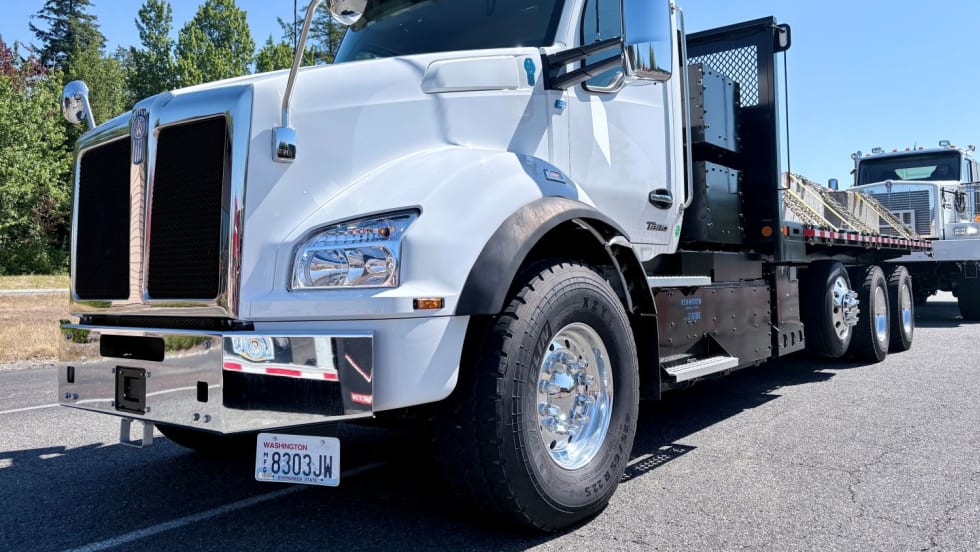
Kenworth T880E Brings EV Power to Vocational Trucks
A closer look at the Kenworth T880E’s range, charging, powertrain and upfit options — and where fleets are showing the most interest.
Read More →
What the U.S.-Canada Trade War Means for Trucking
Escalating U.S.-Canada tariffs could disrupt cross-border freight, reduce truck volumes, raise costs, and create new uncertainty for carriers on both sides of the border.
Read More →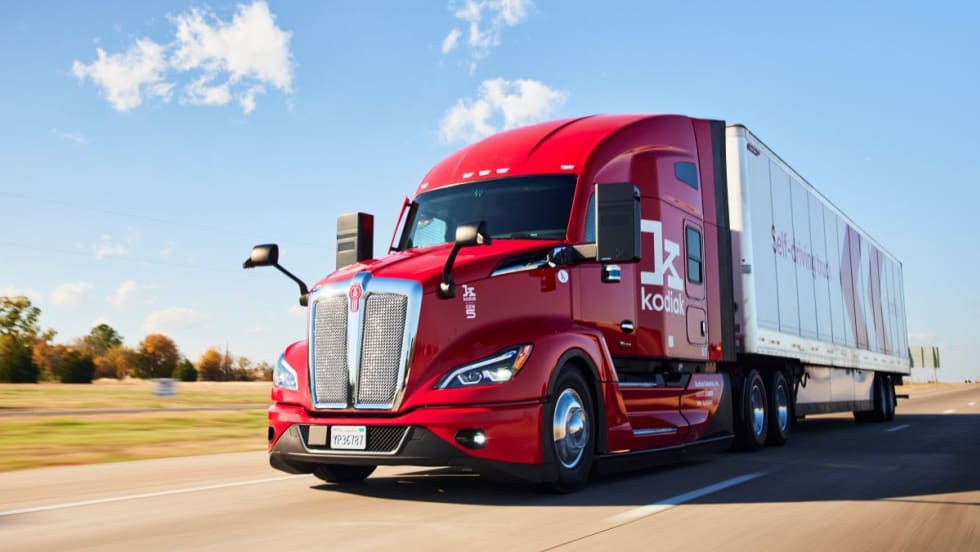
Autonomous Truck Testing Moves Ahead in California as Teamsters Challenge Rules
California has begun permitting heavy-duty autonomous truck testing, with Aurora and Kodiak among the first to receive approval, as the Teamsters sue the DMV over the new regulations.
Read More →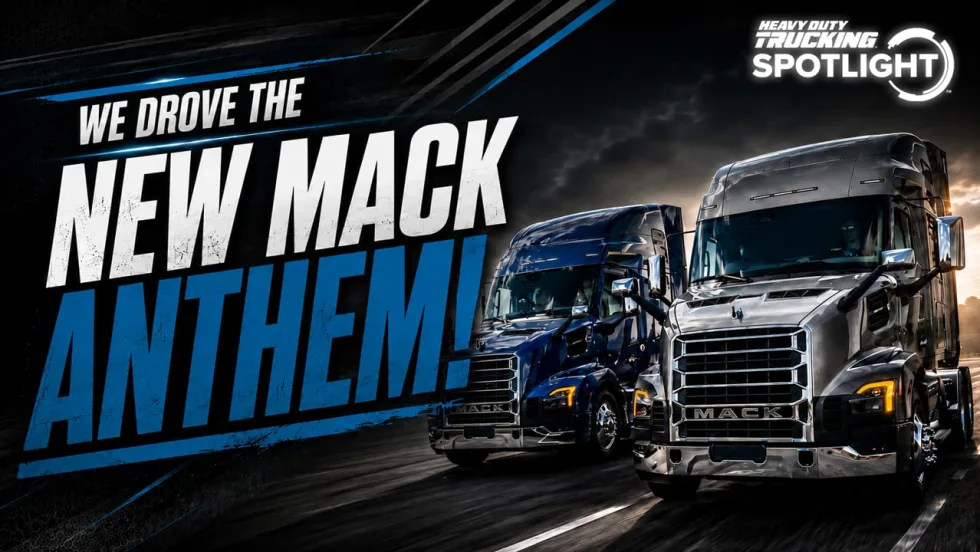
Behind the Wheel of the New Mack Anthem [Video]
HDT takes the new Mack Anthem around Mack’s Pennsylvania test track to see how its driver-focused design, technology, visibility and handling perform from behind the wheel.
Read More →
DTNA Plans New U.S. Truck Plant as Manufacturing Footprint Shifts
Daimler Truck North America is evaluating sites for a new assembly plant expected to open in 2029 while winding down operations at its longtime Portland manufacturing facility.
Read More →
Great Dane Flatbed Trailer Offers Light Weight and Strength
Freedom Ultra is designed for a wide range of open-deck applications, including building materials, lumber, machinery, steel products, industrial freight, and coil hauling.
Read More →
What It's Like Inside this Custom 2025 Peterbilt 589?
Take a driver's-eye tour of this customized 2025 Peterbilt 589 in this video, as longtime driver Ingrid Brown explains its features, compares it to previous models, and shares plenty of personality along the way.
Read More →