




On-the-Road Training
TREAD-1 computer training is a convenient classroom for drivers and a valuable risk management tool for fleets.
Nothing can replace a skilled instructor or a well-run safety meeting, but face-to-face training isn't always possible for over the road truck drivers. One alternative that's becoming increasingly popular is computer-based training such as TREAD-1, developed by Instructional Technologies Inc. of Vancouver, Wash.
TREAD-1 (TREAD stands for TRuckers Education And Development) uses video and high-quality graphics and animation to take drivers through 39 lessons covering safety-related topics such as defensive driving, backing and docking, accident procedures and speed management.
At regular intervals drivers are asked to answer questions about the material just covered. If they get the answer right, they move on. If they miss a question they must go back and review that section.
"You get it or you don't get out," explains Bruce Weiss, executive vice president of ITI. The idea isn't simply to test drivers on the material presented but to make sure they achieve 100 percent mastery of the topic – a learning concept used by the military. "You don't get an 85 percent in using a howitzer," he points out. "You get 100 percent."
Each lesson is designed to be completed within one hour, but drivers can stop mid-lesson and later pick up where they left off. Each driver is assigned an individual access code and must log in to start or resume a lesson. A secure database maintains records of what lesson each driver has completed and when.
TREAD-1 was introduced in late 2000. The original lesson menu was based on the curriculum approved by the Professional Truck Driver Training Institute. Over the years ITI has updated or added lessons to comply with changes in federal safety rules and user recommendations. The company also has developed several new ways to make its products accessible to drivers.
TREAD-1 uses ITI-supplied computers placed at fleet terminals or training centers, linked to the database by modem or high-speed Internet connections. Pro-TREAD, developed with Ryder Safety Services, offers online training anywhere drivers can log on to the Internet. Users of IdleAire systems can take TREAD-1 courses in their truck cabs. A version of TREAD-1 is included in the curriculum of the In-Cab University educational service recently introduced by TransMarkets. A home-study program for driving school students, e-TREAD, is offered through Career Path Training.
The possible uses for TREAD-1 fall into three main categories: compliance, safety and risk management.
The curriculum includes lessons designed specifically to meet federal requirements for new drivers who must be trained on hours of service, driver qualification, health maintenance, and whistleblower protections. Driver test records are maintained on the ITI database for at least a year and can be quickly and easily downloaded for the fleet's own files.
Creating safer drivers is, of course, the primary objective of TREAD-1. Like any training system, it's most effective when done regularly and consistently. TREAD-1 and Pro-TREAD costs are based on usage, so some fleets are tempted to use it sparingly. That's better than nothing, but probably won't offer the kind of results they see with regular use.
"It's like joining a gym because you want to lose 20 pounds," says Weiss. "If you only go once every few weeks, you can't expect results."
Newark, N.J.-based Daybreak Express requires each of its 90 drivers to complete one lesson per month. If they don't, they can't qualify for quarterly safety bonuses. Safety Director Mike Weiss (no relation to Bruce Weiss) says they got some resistance from drivers at first, but "once they realized we were serious about it, things started falling into place."
He doesn't have data that specifically measures the impact of TREAD-1, but he says he believes it has contributed to recent reductions in accident frequency and severity. The carrier's insurance premiums have also gone down. But the big payoff is something impossible to measure. "We see it as a way to build safety awareness and to reinforce a safety attitude," he explains. "Some lessons may not apply to a given driver, but the ideas are there. Somewhere along the way someone will run into a situation and maybe one little thing out of a lesson will help them prevent an accident."
KLLM Transport Services is a relatively new TREAD-1 user, so Vince Schott, vice president of safety, can't talk about results – but he can outline the carrier's many reasons for choosing computer-based training.
"Historically, our company, like a lot of trucking companies, has been very reactionary when you talk about safety," he says. "If something went wrong, we did a real good job of jumping all over the accident, analyzing the accident and correcting that behavior. But the accident had to happen first. The idea behind computer training is to be proactive. We want to prevent that accident from happening, and the only way you're going to do that is ongoing training. I want to talk to the guy who's not even on the radar and make sure that driver's always thinking proper safety. TREAD-1 is all about getting ahead of an accident as opposed to reaction when it occurs."
Computer-based programs make training convenient for drivers, which is a big plus. "If I pull you off the road for three days to do training, you're not going to be happy with me," Schott notes. "But guess what? You can get your whole quarter's worth of requirements out of the way in a couple hours at home. You sit at a computer and work at your own pace."
The response from KLLM drivers has mostly been favorable, although a few have balked – namely some of the veterans with good safety records. But as Schott points out, even drivers with 20 years on the road can start to take things for granted. "I don't think anybody can be over-trained," he says.
Some KLLM drivers have an extra incentive to log in. The company recently switched from a "three strikes and you're out" safety performance approach to a point system that more accurately reflects the interdependency of various safety elements such as log book violations, accidents and training. Drivers who take extra training on top of standard requirements may be able to reduce their points.
"So the drivers are empowered," says Schott. "They can do something to help their own record."
TREAD-1 is an excellent training tool, but "it's not an end-all answer by itself," cautions Chuck Petinga, director of transportation services for HNI Risk Services, Appleton, Wis. Strategies vary depending on the size of the fleet and the sophistication of its training program, but HNI recommends that computer-based training be offered in conjunction with other safety efforts. TREAD-1 might be used to reinforce regular training, or specific lessons might be part of a special safety campaign to address seasonal hazards or targeted issues.
The key, Petinga says, is to have everyone working on the same thing. For instance, if you're targeting backing accidents with training, posters and communications, the assigned TREAD-1 or Pro-TREAD lesson should be "Backing and Docking." Letting drivers choose their lessons isn't necessarily bad, he says, "but if you don't have a theme or focus you don't get the same results."
Schneider National's integrated approach to training is a three-legged stool, says Don Osterberg, vice president of driver training and safety. One leg is in-truck training, the second is simulation-based training, and the third is computer-based training. He envisions a number of possibilities that are likely to be realities within a couple of years.
For instance, new Schneider drivers could do some Internet pre-training before showing up for orientation. "We find that people come to us with different skill levels and experience," he notes. "If some students can accelerate through the training more quickly, and demonstrate hands-on proficiency, why not let them advance?"
For years Schneider has required all drivers to come in twice annually for safety training meetings, but drivers who meet the company's tough risk-assessment criteria are allowed to do the semi-annual training via telephone. This fall they'll take the Pro-TREAD winter driving lesson via the Internet.
As KLLM's Schott emphasizes, the main goal for TREAD-1 is to prevent accidents – but when something does go wrong, "it's another tool in our bag of tricks to help the driver learn from his mistakes."
Maybe a driver has a minor incident on the road – say he backs into a cement post at a truckstop. "I don't want to run him off for backing into a cement post," Schott says. "I want to make him aware of what he did wrong and make sure he gets proper training to avoid that mistake in the future." Or maybe a driver has an accident because he was following another vehicle too closely on a wet or icy road. "TREAD-1 is not going to be all the re-training that driver gets, but it may be one piece of that training."
Even the best drivers are involved in accidents, and even the best fleets can find themselves defending their safety practices in court. That's another area where the TREAD-1/ProTREAD database can be especially useful.
Weiss recalls one frantic call from a customer whose driver had been involved in an accident resulting in multiple fatalities. The company's attorneys were looking for any information that would help defend against a possible negligence claim. Very quickly they were able to pull records showing that the driver had completed four defensive driving lessons in the past few months, all with 100 percent mastery. The case was settled out of court, but the company estimated that third-party documentation of their training efforts saved several million dollars in punitive damages.
Weiss says about half of its TREAD-1 and Pro-TREAD clients are referred by insurance companies or agents. They're now working with several major insurers that may either offer the training to their clients or make it a requirement for coverage. "It's not that we do any magic," he says. "We just keep an accurate, standardized safety message in front of the driver, and the insurance companies know we can prove it in court."
More Fleet Management

How Innovative Trucking Leaders Turn Change Into an Advantage
As the pace of change accelerates in trucking, the fleets that adapt best have more than the latest technology. They have cultures that embrace improvement.
Read More →
Freight Broker Bonds Just Got Harder to Get. Here's What That Means for Your Fleet.
When it gets harder for a freight broker to prove they are financially sound, the ones who cannot clear that bar get pushed out of the market. And those are exactly the brokers who used to leave motor carriers holding the bag.
Read More →
Long-Awaited Canadian Border Bridge to Open in Detroit
For trucking, the bridge opening should offer immediate improvements in efficiency and reliability, with new customs facilities, expanded inspection capacity, and direct freeway-to-freeway connections.
Read More →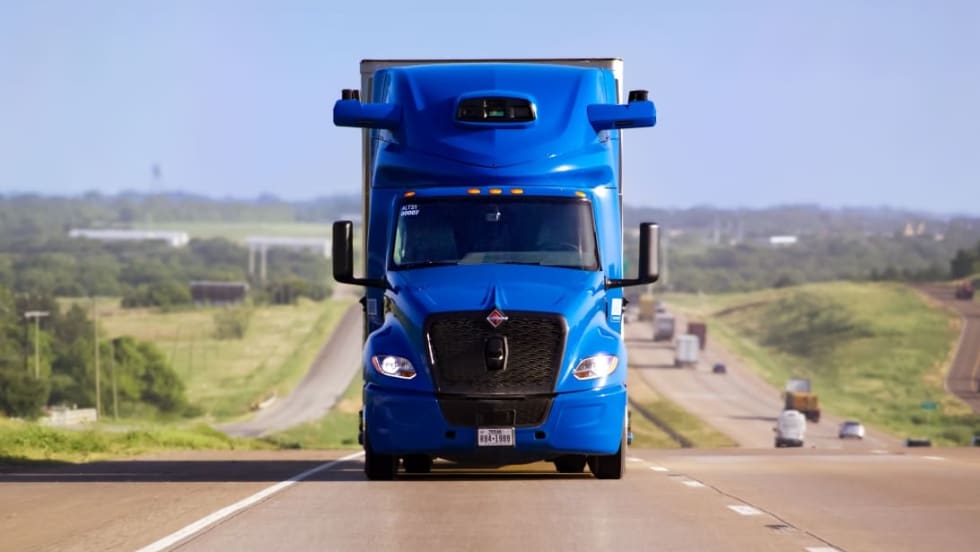
Aurora Rolls Out Next Generation of Driverless Trucks for Commercial Freight
Aurora's latest autonomous trucks it's rolling out with International feature lower-cost hardware designed for a million miles as the company expands commercial driverless freight operations across the U.S. Sun Belt.
Read More →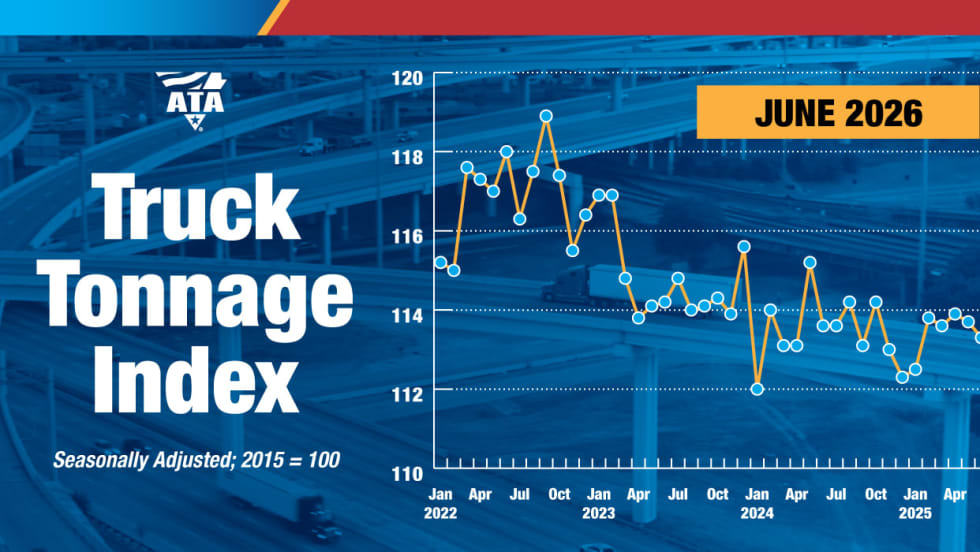
Freight Tonnage Down, Rates up, as Lower Capacity Powers Trucking Recovery
The recovery from the freight recession continues to be driven by reduction in capacity rather than by increased demand.
Read More →
Think Your Trucking Fleet Isn't Using Much AI? Think Again
Shadow AI — the use of unauthorized artificial intelligence tools at work — is becoming increasingly common, putting sensitive company data at risk. Learn how trucking fleets can protect sensitive data while embracing AI.
Read More →
ArcBest Consolidates Brands, Cuts Workforce
The company will bring three business units under the ArcBest brand, eliminate about 2% of positions, and expects the changes to generate $40 million in annual savings.
Read More →
Trucking Fleets Faced Record Operating Costs During Third Year of Freight Recession
ATRI's annual operational cost report shows carriers trimmed fleets, delayed equipment purchases, and ran older trucks as expenses continued to outpace freight rates.
Read More →
Michelin Adds AI Assistant to MyConnectedFleet Platform
Michelin’s new generative AI tool delivers instant fleet insights, helping managers analyze fuel use, tire maintenance, vehicle status, and operational performance without manually creating reports.
Read More →
LytxOne Platform Now Features AI, Compliance, and Asset Tracking Tools
New enhancements add AI-powered insights, asset tracking, compliance automation, and configurable privacy controls to Lytx's all-in-one fleet management platform.
Read More →