




On/Off Highway Tires: One Size Won't Fit All
A racehorse would do about as well dragging a plow through a muddy field as a plow horse would do plodding down the back stretch at Churchill Downs.


Tires such as Bridgestone's M843 provide a balance of good traction, good fuel economy and good tread life when used as an all-position tire.
A racehorse would do about as well dragging a plow through a muddy field as a plow horse would do plodding down the back stretch at Churchill Downs.
It's very similar to what you're looking at in the differences between tires designed for long-haul, on-highway service and the deep-lug tires that pull dump trucks out of muddy pits all day long.
Tires, like horses, are designed to be task-specific. When you need a tire to function in two diametrically opposed environments, there are going to be compromises. The challenge is minimizing what you give up on one front to gain something on the other.
Fuel economy and miles to removal will always be high priorities for on-road fleets. Traditionally, those concerns took a back seat to traction in off-road operations, but even mixed-service operators are becoming more concerned about fuel economy. The need to balance those priorities with traction requirements in off-road operations is changing fleets' priorities.
The need for off-road traction is often overestimated by operators accustomed to running on-highway, says Curtis Decker, manager of product development at Continental Tire North America.
"In most cases, trucks won't be operating in conditions that require a full off-road tire for traction," he explains. "Those areas where on- and off-highway trucks typically operate are not critically bad in terms traction demands. We have found that customers who stand back and take a serious look at what they need will find they can get away with a much less aggressive tread than they first thought."
That boils down to analyzing your needs and making some real-world comparisons. What percentage of time will your trucks be operating in mud, sand or gravel compared to paved surfaces? When off-road, will they be on a prepared surface or on raw earth?
Structurally speaking, Decker says traction and fuel economy are often at odds.
"The wider, deeper voids between the tread blocks as well as the deeper siping on a traction tire don't lend themselves to longevity or fuel economy," he says. "So if the tire spends more of its time on roads - and that's usually the case - a deep-lug traction tire won't perform well. On the other hand, we've had very good feedback on our HDR1 Eco Plus tire, which is an open-shoulder design yet still made it onto the EPA SmartWay list. We're hearing it's doing a good job satisfying those two often opposing demands."
Gary Enterline, a product category manager at Michelin Americas Truck Tires, specializes in on- and off-highway tires, and he says the amount of traction you'll need varies with the surfaces you're running on.
"If you're running on gravel roads or into some light mud, chances are an all-position tire will be enough," he says. "Our XZY3 is a steer tire, but it's equally at home as an all-position tire with its closed shoulder design and a blocky tread sculpture and no sipes. It's got good cut and chip resistance, which helps fight aggression on the road."
That tire would be roughly comparable to Goodyear's G287 MSA or Bridgestone's M840 or M850. All feature solid shoulders for better fuel economy, coupled with bold tread blocks for optimal traction in not-too-severe conditions.
When you get into softer soils, traction becomes more of a concern - especially when using an all-position tire in a drive application.
Compare an all-position tire with a drive tire intended for on- and off-road use and see the tread grooves open up and the blocks get bolder for optimized traction. Typically, you'll see an open-shoulder design.
That's not what the over-the-road crowd would describe as a fuel-efficient tire, but protecting against the perils of off-road operation often outweighs the desire for fuel efficiency.
Enterline related a conversation he had with a logging truck driver who ran about 40% off-road.
"We were recommending an XDY3 - a moderate on-/off-road drive - but the customer was more comfortable with the deeper and more aggressive XDY-EX2," Enterline says. "It's really a preference, and he understood what he was giving up in terms of tread life and fuel economy in the on-road portion of his operation. To him, minimizing the possibility of getting stuck on a remote logging road or breaking traction on a hill in the bush was a more important consideration than the cost of running that tire on-highway."
Also high on the priority list for any tire that battles rocks and tree limbs all day are casing and sidewall protection. A blowout on a steep mountain haul road would be as catastrophic as breaking traction, so tires designed for that application are built with extra thick sidewalls to provide better casing protection and more robust crown and belt packages to resist punctures.
Bridgestone uses what it calls "split-belt" construction on the tread face of its M843 on-/off-highway tire to improve the flexibility of the tread face.
"That allows the tire to envelop obstacles like rocks as it passes over, rather than riding over them putting more pressure on a single spot on the tread face," says Guy Walenga, Bridgestone's director of engineering for commercial products and technologies.
As one might imagine, armoring a tread face and sidewall to that extent is going to increase the heat generated by the casing in on-road service, which could compromise retreadibility.
Goodyear says tire temperatures can skyrocket when carrying heavy loads at highway speeds. Its solution was a new tread compound developed for the G287 MSA, along with a tread design engineered for mixed-service applications.
Decker says the choice of a tread pattern for a mixed-service tire is driven, obviously, by the need for traction when off-road and good ride and handling while on road as well as maintaining good wear characteristics. But he notes that terrain is an important factor in the spec'ing decision.
"We see big variations across the country in the tires fleets choose because the off-road conditions are vastly different in different areas of the country," he says. "In the Southwest, for example, you'll find sandy, pebbly soil off-road, whereas in the Northeast you get shale and granite - sometimes exposed, sometimes embedded in loamy soil. Those are different terrains that pose very different challenges to the tire user."
On the lighter side of off-road life, haul roads are often gravel-covered surfaces over semi-prepared roadbeds, a fairly solid surface covered with a very abrasive material. That doesn't provide the tire much of a cushion.
Chipping and tearing of the tread is as much of a threat over time as the rocks and tree stumps can be on a logging road. Call it death by a thousand cuts.
"Stone drilling is a problem in off-road service, especially with a wider tread groove," says Walenga. "There's room there for larger stones to wedge between the grooves and drill up into the tread face, so stone rejection has to be considered when choosing a tread pattern for the surface you're running on."
Off-road operation is just part of the portfolio for a mixed-service tire.
Running on pavement takes a toll on these tires too. Treads optimized for traction and resistance to puncture are going to wear faster on hot dry pavement. Wide grooves and blocky tread means there's less rubber meeting the road surface.
"You have so much void between the tread blocks, there's less rubber in contact with the road," Enterline says. "You have to understand that it's going to wear down a little faster.
"The user has to decide how far they want to go with
More Equipment

Kodiak Lines Up Fleets for Driverless Trucking
An agreement for 75 trucks, a new Texas freight lane, and progress on safety validation move Kodiak closer to its planned driverless highway launch.
Read More →
How GP Transco Builds Fuel Savings a Fraction at a Time
Aerodynamic specs, solar panels, and driver incentives help GP Transco turn small efficiency gains into savings it can reinvest in its people.
Read More →
More Trailer Data Through the Same Seven-Way [Video]
Can trucking’s standard seven-way connector handle more cameras and trailer data? Grote’s Adam Slade shows HDT how the company is using new technology with its 4See trailer system, not only to add a new backup camera but also to expand other capabilities — without adding another connection.
Read More →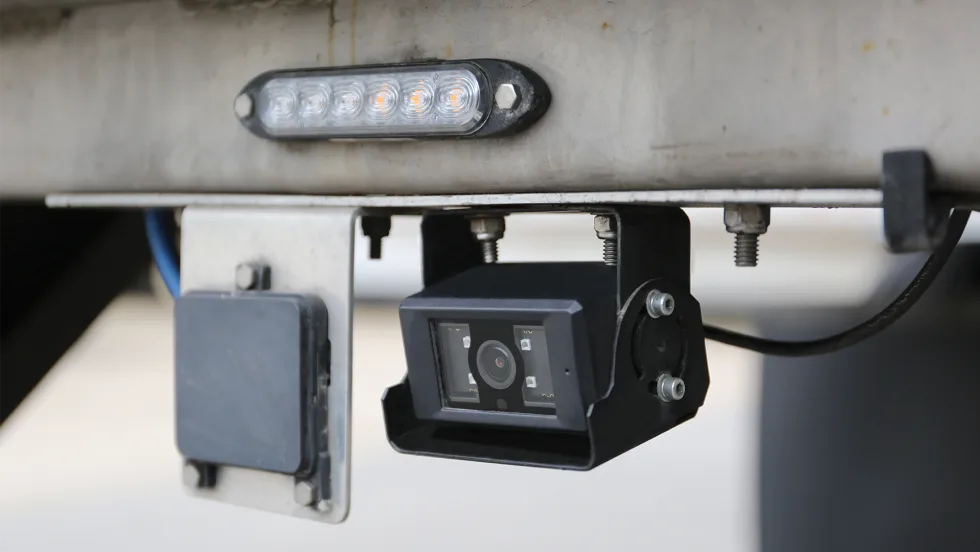
Grote: More Cameras, Same Seven-Way Connector
The next-generation 4See rear-view backup camera from Grote uses the standard seven-way connector and supports additional cameras and other trailer data.
Read More →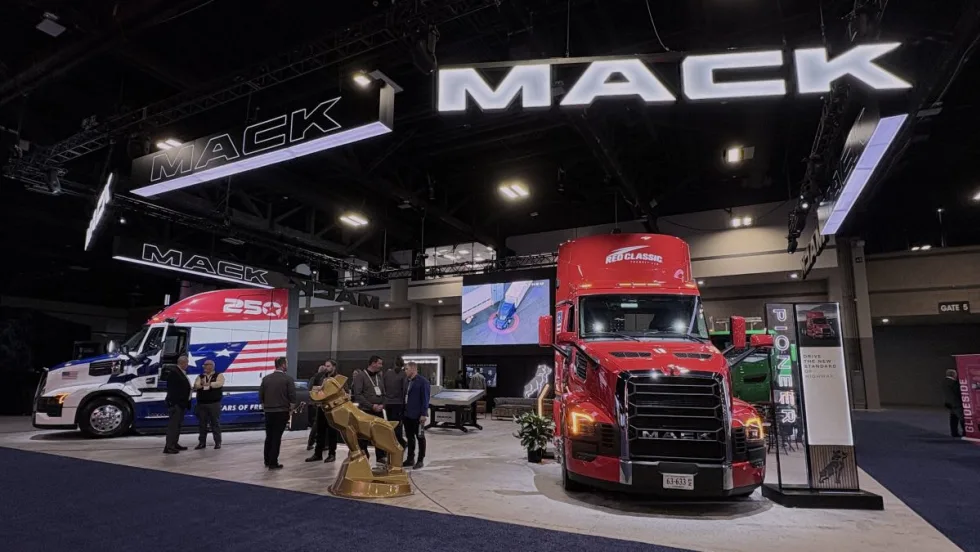
Trucks at ATA's 2026 MC&E in Charlotte, North Carolina [Photos]
From rigs decked out in patriotic America's 250 paint schemes to autonomous trucks and more, check out these photos from ATA's 2026 Management Conference & Exhibition.
Read More →
Help HDT Find Trucking’s Top Products
Have you come across a new product that could make a difference for trucking fleets? Nominate it for HDT’s 2027 Top 20 Products Awards by November 9.
Read More →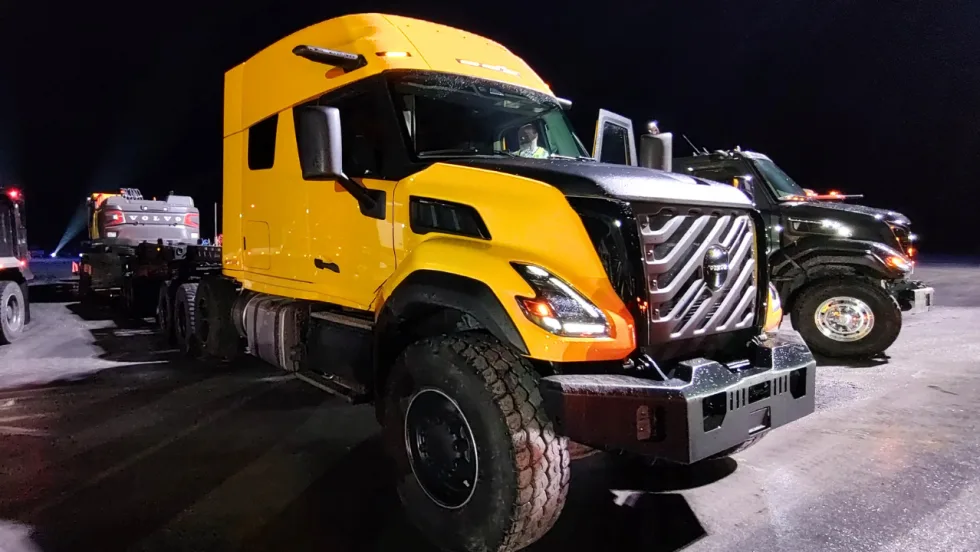
Volvo Unveils New VNX Heavy-Haul and Vocational Truck
Volvo Trucks has launched the VNX, a new vocational truck also available as a tractor in day cab and two sleeper configurations, with one heavy-haul model. The Volvo VNX is powered by Volvo's D13 platform, which delivers up to 540 horsepower and 1,950 pound-feet of torque and is EPA 2027-compliant.
Read More →
How GP Transco Cuts Trucking Fuel Costs, a Tenth of a Gallon at a Time
What’s another tenth of a mile per gallon worth? GP Transco shares how equipment upgrades and driver coaching turn small gains into meaningful fuel savings.
Read More →
Electric Yard Tractors Move Beyond Pilots
Operating-cost savings have overtaken sustainability goals as the leading reason surveyed fleets are adopting battery-electric terminal tractors, according to new NACFE research.
Read More →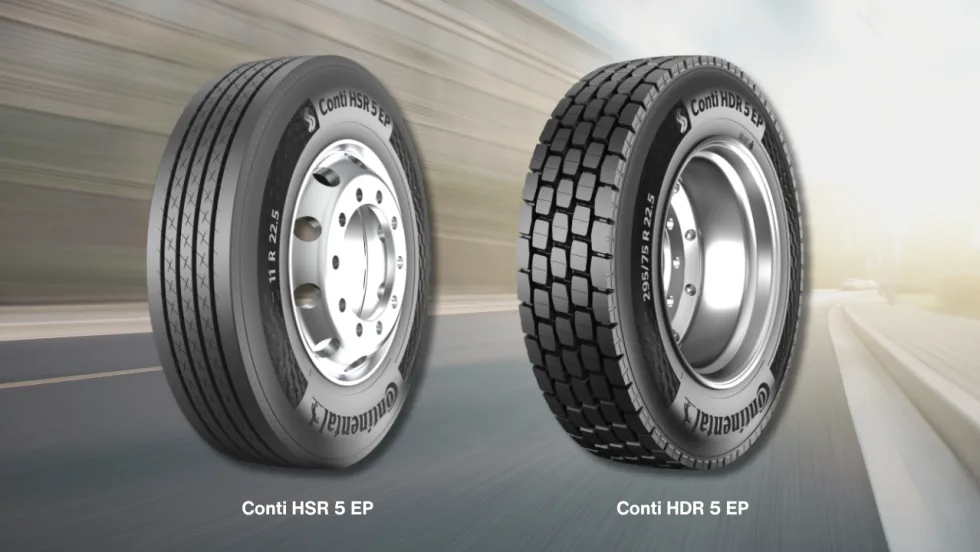
Continental Introduces New Regional Truck Tires
Continental says its new Generation 5 steer and drive tires for regional operations offer longer tread life, with estimated mileage gains of 22% and 19%, respectively.
Read More →