




NTSB Explains How Video Recorders Could Have a Major Impact on Safety
The National Transportation Safety Board would like to see video event recorders in every commercial vehicle to help with crash investigations and improve driver safety.

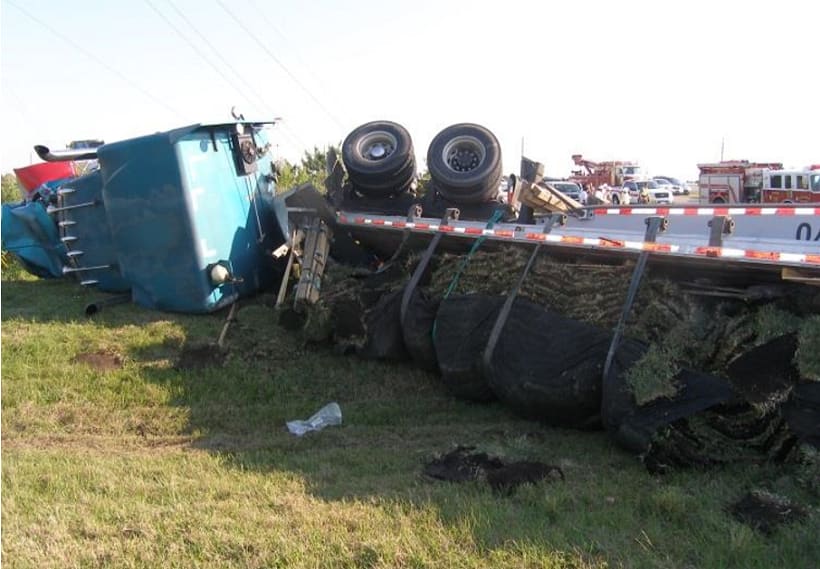
The NTSB says that video recorders can help with commercial vehicle crash investigations and significantly improve driver safety.
Photo via Florida Highway Patrol
The National Transportation Safety Board would like to see video event recorders in every commercial vehicle to help with crash investigations and improve driver safety, the agency explained in a recent presentation.
The NTSB hosted a webinar on Sept. 13, entitled Reducing CMV Crashes Through the Use of Video Recorders, where investigators, fleet owners, and drivers all explained the benefits of having cameras in the cab.
In its own investigations the NTSB has seen the way that video recorders provide a more decisive look into fatal commercial vehicle accidents and the group would like to see adoption rates increase because of the significant impact they could have on safety.
Contrasting two crash investigations, one with video recorder and one without, the NTSB demonstrated how cameras are able to provide an unbiased view into crucial details that interviews, wreckage, and even telematics could never provide.
Video recorders can offer clarity
One investigation involving a collision between a FedEx Truck and a chartered bus in California was unable to draw many concrete conclusions because there were no video recorders. The FedEx Truck traveled across a median and struck the bus head on, but the ECM was destroyed in the fire and was unrecoverable, offering no telemetry from the crash. With a video recorder, the NTSB could have determined the sequence of the collision and gained understanding into why the driver drifted, as well as gotten a better look at vehicle crashworthiness and occupant protection. Without one, there was only speculation.
The second example was another accident involving a bus that collided with a barrier dividing the main highway from an interchange exit. In the investigation, NTSB discovered that the driver had only had five hours of sleep the night before and had commuted five hours to work before driving the bus. With this information alone, the crash might have been attributed to fatigue and drowsiness. The bus had a video recorder, however, and once the data was analyzed, the NTSB concluded that fatigue had little to do with it.
Video showed that it was dark and rainy at the time of the accident and visibility from the cab was low. The driver, though experienced, was also unfamiliar with this particular highway interchange and wasn’t sure if he needed to take an exit in the far right lane or if he would be able to make the transition in the HOV lane on the left. Lastly, a barrier and sign that divided the HOV lane from the highway had been damaged from a previous incident and didn’t have the requisite reflectors and visible warnings that could have helped the driver realize he was no longer in a lane.
Without this video evidence, NTSB’s takeaways and safety recommendations to prevent future similar accidents might have been wrong. But armed with the video, it was clear that immediate improvements to the road and signage could be made to prevent future problems.
Video recorders are on the NTSB’s Most Wanted List — a series of high-priority safety changes the agency would like to see made mandatory. The group states that the information they can capture from video is critical to helping investigators take proactive steps toward prevention. But so far, video recorder adoption in the commercial vehicle industry is low, estimated to be at around 6% or about 400,000 commercial vehicles total.
Without a mandate, word-of-mouth may be the only way to increase that number. As part of the presentation, NTSB brought in safety managers from Ryder Integrated Logistics and Greyhound Bus to speak on the impact that video recorders have had within their own fleets.
Safety tool and key witness
Greyhound has video cameras on 1,200 buses – both outward and inward facing – that it uses to analyze driving habits and risky behavior and incidents and to fight claims against the company related to accidents. Over a five-year period after adopting recorders, Greyhound saw yearly claims costs fall from $26.9 million to $14.6 million. Within the first 15 months, it saw a 24% reduction in crash frequency and a 27% improvement in the average severity of these crashes. Collisions overall were reduced by nearly 50%.
The improvements were not attributed to drivers merely worrying about the cameras watching them drive. Greyhound proactively used recordings of risky behavior to coach drivers and make them aware of habits they might not even be cognizant of. Managers were also able to set goals for drivers and incentivized good driver behavior through acknowledgement of top performing drivers.
Ryder saw similar improvements to safety after incorporating video recorders into its oil and gas fleet in the Gulf of Mexico in 2012. After seeing these benefits, the company eventually rolled the recorders out to its full fleet of more than 5,200 units in dedicated and supply chain operations.
Drivers were skeptical of the cameras watching them at first but Ryder lost no drivers despite the complaints. Randy Tomlinson, senior manager of safety, health, and security at Ryder, said that the company lucked out with a few early wins where drivers were exonerated by video evidence in accident claims. Afterward, the drivers were much more amenable to their presence.
Ryder used video to coach drivers just like Greyhound had and also used it to identify problems it wasn't previously aware of. Prior to adopting recorders, Ryder had assumed that texting while driving and wearing seatbelts were not issues in its fleet. Video evidence, however, pointed out that many of its drivers exhibited the bad habits. Ryder used the video to point out and stop the behavior and found that occurrences were now at a more acceptable and safe level.
“When you bring it to people’s attention you can drive these behaviors out of the business,” said Tomlinson.
Implementation
Both Ryder and Greyhound recommended both inward and outward facing cameras saying that without the less-popular and harder-to-sell inward facing cameras, fleets were giving up major safety improvement opportunities. They also cautioned that video recorders were not a silver bullet for improving driver safety and the devices were only as good as the management process built around their use. Communication with drivers and managers was key to successful coaching — and for celebrating the wins.
James Moore, a driver with Saia LTL Freight and member of American Trucking Associations' America’s Road Team Captains, also spoke on behalf of the safety technology. He said that at first he didn’t want video recorders in his truck either, but once he saw how they could be used to improve the driving behavior of even safety-minded drivers he went along with it. Now he was an advocate for the technology.
To help fleets win over drivers when adopting video recorders, Moore suggested approaching the drivers in a positive manner. Let drivers know that the video wasn’t going to be used to fire people but as a teaching tool to improve driving skill. And for the drivers who remained negative and weren’t interested in improving their driving behavior, Moore asked if fleets really wanted that kind of employee at all.
“There are so many more positive aspects to this than negatives,” said Moore.
More Safety & Compliance

FMCSA Pauses Biennial-Update Enforcement Amid Motus Transition
Carriers whose updates were due on or after June 1 have more time, while FMCSA works to stabilize its new registration system and warns of phishing sites impersonating its new carrier registration system, Motus.
Read More →
ZF Expands Commercial Vehicle Push in North America
ZF is expanding its North American commercial-vehicle presence with new transmission applications, electrification, trailer technology and autonomous-driving systems.
Read More →
Truck Drivers Need More Than Another Alert
Fleets have more visibility into truck health, safety events, and driver activity than ever. The next challenge is turning all that information into useful guidance for the person who has to decide what to do next.
Read More →
Tesla Wants a Self-Driving Semi. Are Cameras Enough?
Could Tesla’s camera-only autonomous driving technology work on an 80,000-pound Semi? In this commentary, HDT's Deborah Lockridge takes a look at Tesla, Cybercab, and how autonomous trucks see the road.
Read More →
What DOT’s Automated Vehicle Strategy Means for Trucking
The U.S. Department of Transportation issued a new automated-vehicle strategy that outlines plans for driverless-truck regulations, cross-state freight corridors, and federal safety standards.
Read More →
NYC Expands Speed, Pedestrian Safety Tech Across Fleet
New York City is expanding intelligent speed assistance and pedestrian-alert systems across its municipal fleet, moving the technologies from pilot programs into vehicle procurement and retrofit requirements.
Read More →
FMCSA Removes 110 Truck Driver Training Schools from Certified ELDT List
Federal regulators also are targeting more than 160 additional training providers and launching a nationwide audit of third-party CDL skills testers as part of a broader crackdown on trucking fraud.
Read More →
Beyond DOT Compliance: What Makes a Trucking Fleet Truly Safe?
A trucking fleet can follow every rule and still make unsafe decisions. The real test comes when safety conflicts with freight, productivity, or cost.
Read More →
Hours of Service Pilot Programs: FMCSA Readies for 2027 Rollout
Two pilot programs could eventually reshape hours-of-service rules, giving truck drivers options to pause their 14-hour clock or use longer split sleeper rest periods.
Read More →
New Guide Offers Pet Safety Tips for Truck Drivers
Hundreds of thousands of pets travel in truck cabs. A new safety guide from Volvo Trucks and the Center for Pet Safety offers practical advice for truck drivers who bring dogs and cats along for the ride.
Read More →