




Is a CNG Fleet in Your Future?
With the advent of hybrid cars, more and more people are rethinking American energy dependence and choosing alternative energy. While we still have a long way to go toward true energy independence, most of our gasoline and diesel vehicles could be replaced by vehicles fueled by compressed natural gas (CNG)
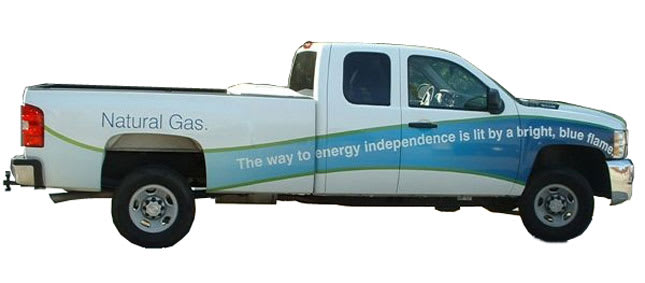
Chevrolet Silverado bi-fueled natural gas pickup
With the advent of hybrid cars, more and more people are rethinking American energy dependence and choosing alternative energy. While we still have a long way to go toward true energy independence, most of our gasoline and diesel vehicles could be replaced by vehicles fueled by compressed natural gas (CNG).
We need to find ways to reduce our dependence on foreign oil and use our own natural resources in order to ensure energy security for our country. The use of CNG in natural gas vehicles (NGVs) can play an important role in addressing these challenges.
Corporate America continues to look for ways to balance the social, economic and environmental needs of all stakeholders by rethinking the use of alternative energy in its fleets such as taxis, buses, and delivery vehicles.
Economic Benefits to NGV Fleets
Any business with a fleet of vehicles is a good candidate for natural gas vehicles - transit, garbage, laundry supply, and food and beverage trucks are common users of natural gas.
While there are upfront costs to buying or converting to a natural gas fleet, the fuel costs are considerably lower making them much more affordable over the long run. In the U.S., we are paying more than $3.60 per gallon for gasoline. The price of natural gas ranges from just over $1.00 to around $2.00 per equivalent gallon.
That's why AT&T, UPS, Verizon, Waste Management and others are switching to natural gas; they can save millions on fuel costs.
Reduced Maintenance Costs & Emissions
Gasoline and diesel engine lives are shortened because of the build-up of carbon. Natural gas engines, on the other hand, have virtually no carbon build-up, so ring wear is reduced and engine life is extended.
Tune-ups and oil changes for natural gas vehicles aren't needed as frequently because compressed natural gas burns so much cleaner than gasoline or diesel. Some fleet owners report service lives two to three years longer than gasoline or diesel vehicles.
According to Mitchell Pratt, chief operating officer, Clean Energy, their CNG-powered taxis measure near zero emissions at the tailpipe and will reduce greenhouse gases by almost 30 percent when compared to petroleum powered vehicles.
CNG Availability Regionally
At the end of 2010, there were nearly 1,000 natural gas stations in the U.S., and there are efforts underway to build more. There are five regional corridors where public and private entities are working hard to get stations built near intersections of major interstates and highways:
1) Texas Triangle - Dallas to San Antonio to Houston
2) Colorado Rockies Corridor - Colorado, Wyoming, Utah
3) Southeastern Corridor - Georgia, Florida, Alabama, North Carolina, South Carolina, Kentucky, Tennessee, Florida, Mississippi, Arkansas, Virginia
4) Eastern Corridor - Runs north of Virginia into the New England States
5) I-75 Corridor - Runs along I-75 from the northeastern U.S. down toward the southeastern states
In Alabama, the goal is to have as many as 12 public stations by the end of 2012. We're building natural gas stations primarily for Alagasco's fleet for now, but will be opening stations to the public as well. This means that if all the planned public stations are open for business, you could drive across Alabama from the Tennessee line all the way to the Florida coast in a natural gas vehicle.
Recently, California's first CNG-powered Ford Transit Connect taxis have gone into service in the greater Los Angeles area and, since 2001, the number of CNG filling stations in Orange County has tripled to about 30.
CNG & Natural Gas Vehicles Good for Economy
Americans spend about $1 billion each day on foreign oil. While there are numerous benefits to running your fleet on natural gas, we think keeping your dollars in the U.S. is first among them.
Certainly as we produce more NGVs and stations, this will lead to job creation, but consider this: the U.S. spent $30 billion on imported oil in one month alone. If we were not burdened by our dependence on foreign oil, think about what we could have done with that money. We could have hired over 443,000 new teachers. We could have funded highway repairs for more than eight years. We could have built 39,500 new elementary schools.
Since the beginning of this the current economic recession, American citizens and corporations alike are seeking a more balanced and sustainable co-existence. We think natural gas will play a large role in our overall economic recovery and financial independence.
About the Author: Bob Strickland is an expert on natural gas vehicles (NGVs) and Manager of Natural Gas Transportation at Alagasco, Alabama's largest distributor of natural gas. He's a board member of NGVAmerica and the Alabama Clean Fuels Coalition and chairs the Southeastern States NGV Corridor Committee.
More Fuel Smarts

Record Diesel Prices Squeeze Trucking Fleets
Average U.S. diesel prices have climbed to nearly $6 a gallon, surpassing the 2022 record as tight refinery capacity and Middle East disruptions keep fuel costs elevated.
Read More →
How Fuel Delivery Shapes Engine Performance
Fuel delivery depends on more than what happens at the injector. For fleet, maintenance and technical professionals, looking at the full path from pump to injector can provide useful context for understanding engine performance.
Read More →
East Coast Port Launches $45M Electric Truck Push
The Port Authority of New York and New Jersey announced millions in incentives for zero-emission drayage trucks, yard tractors, and new charging hubs near the port.
Read More →

California Bill Could Shed Light on Electric Truck Prices
Why do battery-electric Class 8 trucks remain so expensive? A California bill headed to Gov. Gavin Newsom would give fleets and state agencies more visibility into what manufacturers charge.
Read More →
Detroit Opens Orders for EPA 2027 Engines
Detroit isn’t starting from scratch to meet EPA 2027 diesel emissions standards. Its Gen 6 DD13 and DD15 engines keep much of today’s platform while updating the fuel and aftertreatment systems.
Read More →
Zero-Emission Truck Corridor Planned for West Coast
California, Oregon, Washington, British Columbia and Baja California are coordinating plans for truck charging and hydrogen fueling from Canada to Mexico.
Read More →
A Closer Look at Kenworth’s Electric T880E Vocational Truck [Video]
Learn more about Kenworth's T880E battery-electric vocational truck at the Paccar Technical Center, including its range, applications, upfitting considerations, and PTO options, in this HDT Spotlight video.
Read More →
Kenworth T880E Brings EV Power to Vocational Trucks
A closer look at the Kenworth T880E’s range, charging, powertrain and upfit options — and where fleets are showing the most interest.
Read More →
Jennie Abarca Is Proving Electric Trucks Can Do the Job
HDT Truck Fleet Innovator Jennie Abarca is building confidence in fleet electrification one load at a time while openly sharing the challenges she encounters along the way as a small-fleet owner.
Read More →
Cummins Adjusts 2027 Engine Rollout After EPA Proposal
The engine maker will gradually introduce its new Model Year 2027 diesel engines while continuing to offer current models during the transition, citing the EPA's proposed emissions rule changes.
Read More →