




International TranStar
The star of this show was the MaxxForce 13-liter, 1,700 pounds-foot engine destined for a high mileage fleet.
The test truck was the International TranStar in the new nomenclature - 8600 in the past. But the other new badges, high on the side of the hood, told the story: MaxxForce. This tractor was one of the International validation units for the new big-bore engines, destined for a high-mileage fleet to get fast results before the engine becomes commercially available around mid-year.
The engine is the MaxxForce, and it will come as an 11- and 13-liter. The one under the hood of the daycab TranStar was the top of the line 475, with 1,700 pounds-feet of peak torque. When it is launched, the engines will be rated 330 horsepower/1,250 pounds-feet; 370/1,350 and 390/1,400 for the 11-liter, and 410/1,450, 430/1,550 and of course 475/1,700 for the 13-liter.
The tractor was a fairly basic spec with an Eaton Fuller 10-speed and Meritor RT40-145P tandem with 3.9 ratios. Looking over the line-set ticket at the spec before heading out, I picked out Meritor Q-Plus brakes, Dana front axle and - good show - Sheppard M-100 power steering.
I had only an afternoon trucking west out of Chicago to Rockford to loop south and back east again into the engine plant in Melrose Park.
But I knew I\'d enjoy it.
THE ENGINE
The Class 8 big-bore from International has been pretty much an open secret for the last couple of years. It is a cooperative effort between International and MAN of Germany, though as Tim Schick, the marketing director for the new engines puts it, International basically got a set of drawings.
And that's how it will be when the engine goes into its final phase. The engines will be built in Huntsville, Ala. The castings will be sourced from the International joint-venture MWM in Brazil. Initially, though, the engines will be based on the MAN D20 and D26.
These 11- and 13-liter engines have been developed by MAN for European heavy-duty applications. They feature compacted graphite blocks for great rigidity and light weight, with conventional one-piece cast iron heads. These and the rotating parts have been sourced from MAN. while the air and fuel systems have been developed by International to suit American regulations and market requirements.
Going in to production, then, International MaxxForce big-bore engines are based on the proven reliable MAN engines but with unique International two-stage turbocharging and intercooling, with exhaust-gas recirculation for emissions control and a Bosch common-rail fuel injection system with controls developed in cooperation with Siemens.
Siemens has partnered previously with International on the DT series engines, contributing the Siemens/Sturman injectors for the 466 and 530/570 engines.
The new engines are further Americanized with accessories like the alternator and power steering pump pad mounted to suit market preferences here.
The engine shares the Cummins aftertreatment system. This allows for EGR plus a diesel particulate filter to meet 2007 emissions levels, but is a big plus for International, which in the 8000 models offers Cummins as an available engine option. From outside the truck, there is no difference from the engine back between a Cummins or a MaxxForce installation, greatly simplifying development, manufacturing and service.
The engine features a multiple-event injection with the ability to actively regenerate the filter from a rich post injection. However, the engines feature a doser in the exhaust stream, like Cummins' ISX, to create active regeneration.
ON THE ROAD
We took the truck on a short 140-mile loop from the Melrose Park engine plant where the truck had been staged for its subsequent delivery to the prove-out fleet. It was a cool, bright winter day, but the truck had been idling for a while and the daycab interior was warm and comfortable. After a quick look under the hood for a couple of pictures, I was on my way.
The trailer was loaded, to around 68,000 pounds. It would not make a lot of difference to any grades, for there are none to speak of in this part of Illinois, but at least it gave the engine something to work against under acceleration. And so I trickled away, using minimum rpms to get the truck moving.
This 13-liter engine is like the new Detroit Diesel in that it is extremely quiet. It spools up very quickly, thanks to the smaller high-speed turbo, and then hangs in there with loads of low-speed torque thanks to the bigger turbo. In its MAN configuration, the engine is designed to lug down to 900 rpm or even lower, so I had no reservation about asking it to do the same on this first evaluation. I think at no time did I take it over 1,400 rpm, even though the highway rating is 1,900, and severe service allows for 2,100 rpm. There is simply no need to let it rev out there, as shifting between 1,300 and 1,400 rpms with the 10-speed would bring it back into the solid torque around 1,100 rpm.
And like the Detroit Diesel I had driven only a couple of weeks earlier, the engine does its work without any fuss. Lugging it down simply means it runs more slowly, but it is still solidly producing torque. In lower gears, getting on the throttle brings in the power quickly without waiting for the engine to build up torque and horsepower.
I put a sound meter on in the cab, but trying to draw any parallels between this installation and that in a big sleeper is meaningless because a basic-spec daycab is always noisier than a big sleeper. Suffice to say, the engine is quiet at idle and even under maximum torque is free of the heavy knock traditionally associated with the diesel cycle. This is a tribute to the stiffness of the block and the quiet combustion from high-pressure common rail injection in multiple events.
The engine also has other attributes, like the cunningly crafted oil pan that is decoupled from the block by a rubber gasket. Incidentally, the rigidness of the block is extended to the support of the crankshaft. The main bearings are fractured after machining and when bolted up again on the crankshaft, the granular surfaces meet again to provide bearing caps that will never move in the life of the engine.
SUMMARY
This was a first look at the new International big-bore engine. We shall have another opportunity to drive under more demanding conditions shortly. But the launch of a new engine from a non-traditional manufacturer like this is cause for excitement that was in no way disappointing.
Obviously for International, it is a big step. But basing its new big-bore on the MAN engines is a brilliant move. MAN is a terrific technology company with a long heritage in diesel engines. The air and fuel handling is something that International and its partners well understand and have demonstrated on the smaller engines. And International has service everywhere.
International's customers later this year will have another option when spec'ing powertrains, and from this first look it would appear to be an option that many will take. And not regret.
.
More Fleet Management

How Innovative Trucking Leaders Turn Change Into an Advantage
As the pace of change accelerates in trucking, the fleets that adapt best have more than the latest technology. They have cultures that embrace improvement.
Read More →
Freight Broker Bonds Just Got Harder to Get. Here's What That Means for Your Fleet.
When it gets harder for a freight broker to prove they are financially sound, the ones who cannot clear that bar get pushed out of the market. And those are exactly the brokers who used to leave motor carriers holding the bag.
Read More →
Long-Awaited Canadian Border Bridge to Open in Detroit
For trucking, the bridge opening should offer immediate improvements in efficiency and reliability, with new customs facilities, expanded inspection capacity, and direct freeway-to-freeway connections.
Read More →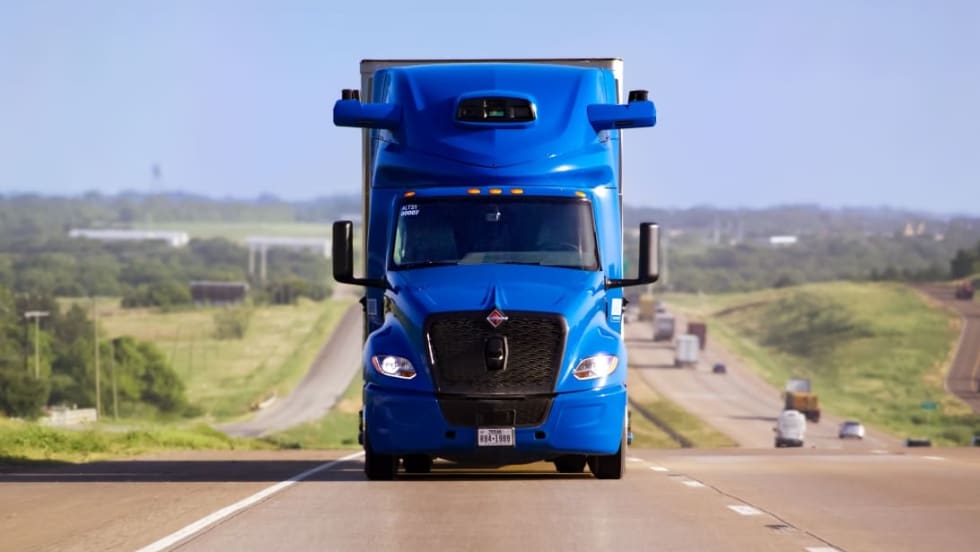
Aurora Rolls Out Next Generation of Driverless Trucks for Commercial Freight
Aurora's latest autonomous trucks it's rolling out with International feature lower-cost hardware designed for a million miles as the company expands commercial driverless freight operations across the U.S. Sun Belt.
Read More →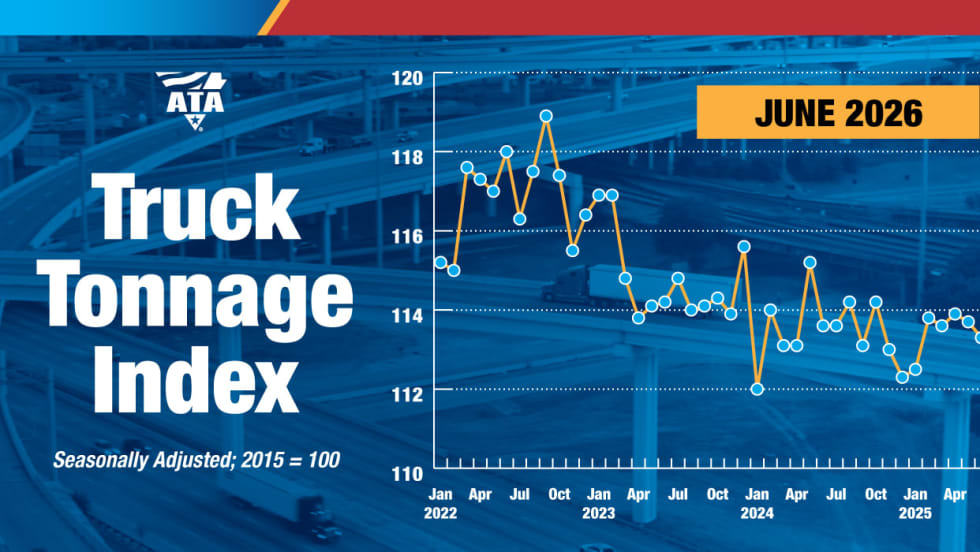
Freight Tonnage Down, Rates up, as Lower Capacity Powers Trucking Recovery
The recovery from the freight recession continues to be driven by reduction in capacity rather than by increased demand.
Read More →
Think Your Trucking Fleet Isn't Using Much AI? Think Again
Shadow AI — the use of unauthorized artificial intelligence tools at work — is becoming increasingly common, putting sensitive company data at risk. Learn how trucking fleets can protect sensitive data while embracing AI.
Read More →
ArcBest Consolidates Brands, Cuts Workforce
The company will bring three business units under the ArcBest brand, eliminate about 2% of positions, and expects the changes to generate $40 million in annual savings.
Read More →
Trucking Fleets Faced Record Operating Costs During Third Year of Freight Recession
ATRI's annual operational cost report shows carriers trimmed fleets, delayed equipment purchases, and ran older trucks as expenses continued to outpace freight rates.
Read More →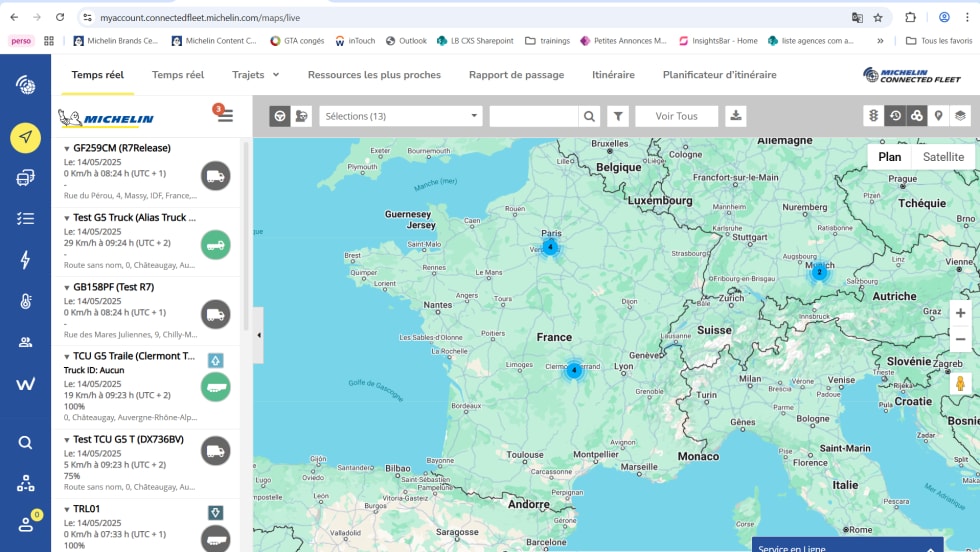
Michelin Adds AI Assistant to MyConnectedFleet Platform
Michelin’s new generative AI tool delivers instant fleet insights, helping managers analyze fuel use, tire maintenance, vehicle status, and operational performance without manually creating reports.
Read More →
LytxOne Platform Now Features AI, Compliance, and Asset Tracking Tools
New enhancements add AI-powered insights, asset tracking, compliance automation, and configurable privacy controls to Lytx's all-in-one fleet management platform.
Read More →