




Industry Trends Prompting More Fleets to Look at Leasing Equipment
As trucking companies cautiously poke their heads out of their shells after struggling to survive the recession, they're finding higher prices for new equipment

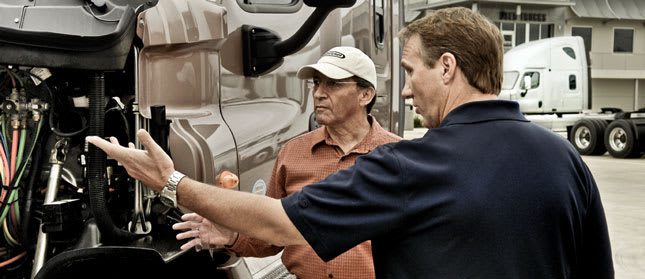
As trucking companies cautiously poke their heads out of their shells after struggling to survive the recession, they're finding higher prices for new equipment,
concerns about the availability of credit and use of capital, uncertainties about new emissions technology, rising fuel costs, pressure to be "green," a volatile used-truck market, and the need to replace aging fleets in an era of a coming driver shortage and more regulatory focus on maintenance via the Federal Motor Carrier Safety Administration's CSA enforcement program.
Leasing equipment is one strategy to consider.
"We can't forget we've just come out of two very, very challenging years," says John Deris, senior vice president of national sales for fleet management solutions, Ryder System. "A lot of companies have put off fleet investment. Equipment has gotten much older. They have to make adjustments in their maintenance operations. People are finally seeing the demands of putting off decisions. Aging fleets and more stringent emissions regulations are forcing people to invest in new equipment.
"All these issues have come after them all at once," he says. "The excuses to delay are slowly running out."
Some companies are exploring leasing as a way to cope.
"I know first-hand from talking with customers, where we've traditionally always done a retail deal for them, [many] want to evaluate and look at a couple of different options," says Geoff Robinson, vice president for sales, marketing and remarketing for Daimler Truck Financial.
Gene Scoggins, president of NationaLease, cites a customer that owns about 80 trucks. "They had come through the tough economy very well. But they had sold off trucks, had not replaced trucks, had not maintained their trucks properly."
This customer decided to go with full-service leasing, where the lessor handles all the maintenance, repair and administrative duties in addition to simply leasing the piece of equipment - everything but the driver and the insurance.
"That gives him a way to get new equipment," Scoggins says. "It will cut his maintenance costs dramatically, and it gives him peace of mind knowing what it's going to cost him to run that truck two, three, four years down the road."
One of the biggest trends affecting the lease-vs.-buy decision is changes in the capital market. For many companies, it's harder to get access to capital and financing these days. Leasing is more likely to be available, and is less impacted by changes in the banking market.
"Capital availability over the last three years has shifted pretty dramatically," says Brad Hoffelt, senior vice president of analytics at GE Capital Fleet Services. "There's more liquidity today in the market, but it's available to fewer companies." Leasing, he says, provides a good alternative in that environment.
It's not just the availability and cost of financing at work. There's also the question of how your company prioritizes use of its existing capital.
"If you're going to own equipment, even if [you have the money in] the bank, you have to make a decision on whether to tie up your capital in owning equipment or use it for something else," explains Mike Dreller, CFO of Xtra Lease, which specializes in leasing over-the-road trailers. "The difficulty in financing is shining a brighter light on the financial flexibility of leasing."
Financial flexibility isn't the only way leasing offers fleets flexibility. For instance, if a fleet needs more trailers to serve a new customer, he may be able to lease trailers for the length of the contract with the customer. This is especially valuable if the new customer needs a different type of trailer spec than those in a trucking operation's existing fleet.
Some fleets may find it's beneficial to own some trailers but lease others. "They can forecast demand and equipment for some portion of their business, but for an incremental part of their business they can't do that as well," Dreller says. "So they've mitigated their risk on that incremental part of their business."
Beyond capital concerns, there's the cash flow consideration.
"Generally leases provide the lowest monthly cash flow from a customer's perspective," says Tom Guse, vice president of truck financial services for Volvo Financial Services. "That's critically important." And there's typically less up-front money involved.
Cash flow is one reason Jim Mickey, co-owner and president (administration) of Coastal Pacific Express in British Columbia, and an HDT 2010 Truck Fleet Innovator, leases all of his trucks.
"Our approach to leasing our rolling stock is driven primarily by the desire to match our monthly income to our monthly expenses as close as we are able, to manage our income taxes, and to keep our internal cash as free as possible," he explains. "It appeals to us to have a monthly payment that approximates the actual monthly value of the asset. The net effect is a nice clean monthly picture on our P&L with no considerations for 'equity build' in the fleet." Mickey also points out that the leasing strategy frees up cash to fund other targets, such as accounts receivable.
Some fleets also may find leasing offers tax advantages, depending on the company's operation and how the lease is structured. "As you head into an environment where there are new tax incentives for things like alternative fuel technologies or the up-front depreciation credit, utilizing all those tax benefits can be a challenge for companies that want to own the asset," says GE's Hoffelt. "For companies that may be dealing with an AMT tax situation and they can't use all those credits, leasing offers an alternative."
The recent extension of the 2010 Tax Relief Act, which allows lessors to write off 100 percent of equipment costs in 2011, also will affect leasing.
"If somebody needs depreciation, buying can often be a better solution than leasing," explains Volvo Financial Services' Guse. "For customers that aren't making as much money or don't need the depreciation, companies like mine that act as a lessor might be able to make them really competitive offers, because we ourselves can depreciate the equipment over one year. Their monthly payment will be reduced. But it really depends on the customers' tax strategy and their tax position."
Many leasing companies can provide maintenance along with the equipment lease. Options range from entirely maintaining the equipment in your own shops to a completely outsourced, full-service program where the customer doesn't need any mechanics or shops. Emergency roadside assistance is another option.
"The equipment is getting so highly technical to work on, more and more customers are looking for a turnkey solution to their transportation needs," Guse says.
These issues only get more difficult as new EPA 2010 engines come into the mix. Equipment prices have gone up dramatically due to EPA-mandated emissions, but that's only part of it. There's also the ability to adjust from a maintenance standpoint, and to make sure diesel exhaust fluid will be available for selective catalytic reduction, the technology being used by most manufacturers to meet EPA 2010. Ryder, for instance, recently announced it will be offering DEF at every full-service location in North America; it's already available at more than 550.
"The complexity of the new emissions, whether it be EGR or SCR, I think that's another bonus" of leasing," says Jack Saum Jr., dealer principle of Beltway International in Baltimore, who started the company's leasing business, Idealease of Baltimore. "Small operators are going to be less and less inter
More Fleet Management

How Telematics Improves Visibility, Control, and Performance in Refrigerated Fleets
Explore how telematics help refrigerated fleets improve visibility, uptime, efficiency, compliance, and cargo protection across connected cold chain operations.
Read More →
What the U.S.-Canada Trade War Means for Trucking
Escalating U.S.-Canada tariffs could disrupt cross-border freight, reduce truck volumes, raise costs, and create new uncertainty for carriers on both sides of the border.
Read More →
What Are Trucking’s Top Concerns for 2026?
The American Transportation Research Institute wants to know what's worrying trucking fleet managers, drivers, and other stakeholders in its annual Industry Issues survey.
Read More →

American Trucking Associations Looks for a New Leader
ATA President and CEO Chris Spear abruptly left his job at the association on August 21, at a pivotal time for the trucking industry.
Read More →
Public Wi-Fi Cybersecurity Risks: How Truck Drivers and Fleets Can Protect Their Data
Public Wi-Fi can expose truck drivers and fleets to credential theft, malware, and other cyber threats. Here’s how to reduce the risk on the road.
Read More →
For Nicky Cupp, Fleet Innovation Starts With Frustration
HDT Truck Fleet Innovator Nicky Cupp turns everyday pain points at Fraley & Schilling into opportunities for better technology and smarter processes.
Read More →
Adam Buttgenbach’s Approach to Electric Trucks: Start With Where They Fit
HDT Truck Fleet Innovator Adam Buttgenbach helped PepsiCo build one of North America’s largest EV fleets by focusing on where electric trucks make operational sense.
Read More →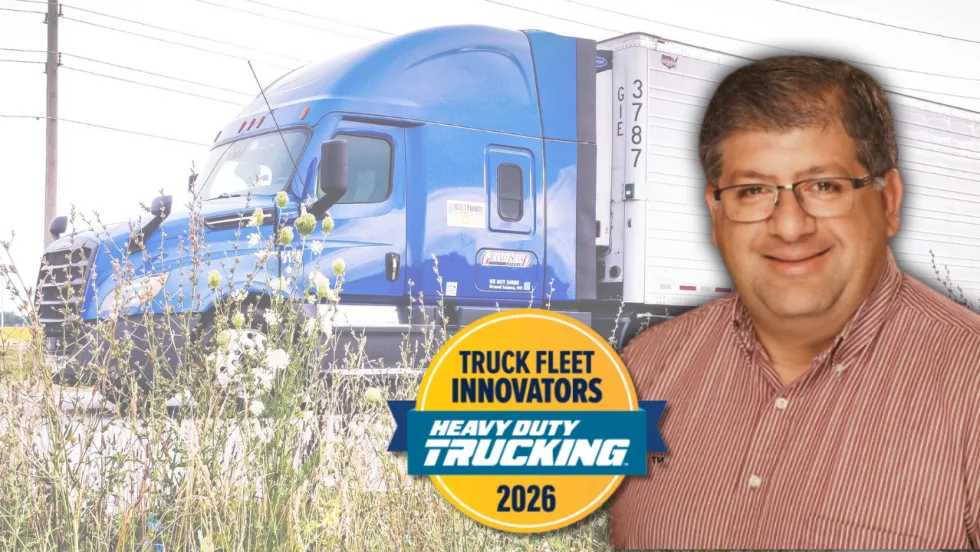
Deen Albert: Let Automation Do the Math, People Make the Decisions
HDT Truck Fleet Innovator Deen Albert makes sure people are still at the heart of operations at Grand Island Express, even while adopting artificial intelligence tools. AI-assisted dispatch helped boost revenue 25% with the same number of trucks.
Read More →
Trimble’s New AI Agent Takes Aim at Fleet Back-Office Busywork
Arc Agent works across Trimble TMS products to automate repetitive tasks such as freight orders, maintenance, invoices, fuel costs and more.
Read More →
How HDT’s 2026 Truck Fleet Innovators Are Rethinking Fleet Operations
Meet five trucking leaders who are challenging assumptions, solving operational problems, and putting innovative ideas to work.
Read More →