




How to Successfully Navigate Technology Evolution
Every aspect of a fleet’s operation is being affected by technology; embracing it is critical for future success.
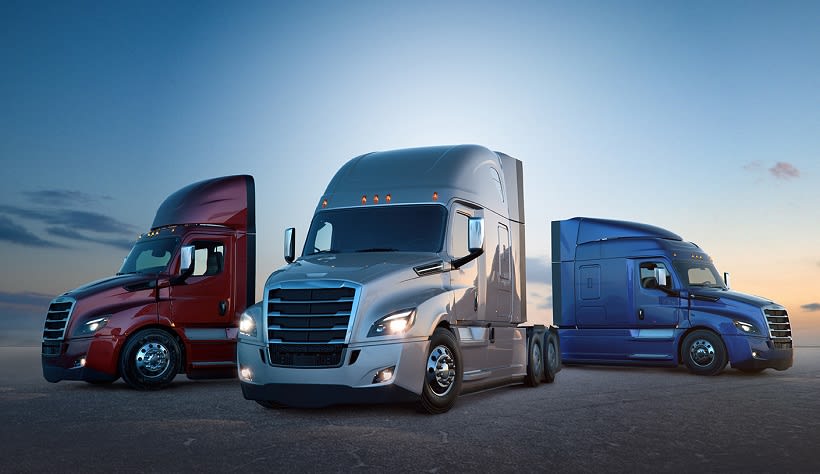
Every aspect of a fleet’s operation is being affected by technology; embracing it is critical for future success.
Photo courtesy Corcentric
Change is occurring rapidly in the transportation industry and along with that there have also been major developments in the way fleets purchase, pay, and get paid.
It’s practically a full-time job for fleet managers to keep pace with the change moving through the industry. Managers must become experts in labor markets, financial markets, technology, and regulation.
But fleets need to step back and determine how much is relevant to their business, and how much is accurate. The alternative is becoming overwhelmed and making poor decisions in a transportation environment that has little tolerance for fleets that lag their peers.
There are no magic bullets when it comes to technologies like fuel efficiency tech, ELD implementation, or route optimization analytics. Fleet technology is not in a revolution; it’s an evolution. If you don't start to evolve at the beginning of a transformational technology event, you probably won’t be able to catch up.
Keeping Up with Change
Everybody looks at evolution as being a long-term thing, but it’s happening much faster now. Today, the time frame between the conversation about an innovative concept and its actual marketplace adoption is relatively short. It took over 30 years for the passenger car to go from an innovative concept born in Germany in the mid-1880’s to finally supplanting carriages and trains in the U.S. by 1920. In a third of that time, the smart phone eclipsed landline phones the world over. My point is that you have to anticipate the long game — but recognize that the game is moving faster than ever.
The rate of change — in trucking technology especially — is taking many by surprise. In our personal lives, rapid technological evolution is becoming the norm — we now expect newly equipped smartphones on a 12-month cycle and our apps to update overnight while we sleep. Technology evolution at this sort of pace is mind-boggling for the fleet manager who has to commit to a specific capital equipment lifecycle strategy with a four-ten-year time horizon.
These developments have an impact on the way fleets are financing their capital equipment. You have to pay closer attention to the predicted residual values of the trucks you are buying today. You must ask yourself if you are doing something today with your trucks specs that could be a detriment to resale value. What are the technology-related specs of the vehicle that will maximize resale value four years down the road?
Fleets also need to pay closer attention to extending the life cycle of the truck. Those who have access to operational analytics data and technology have a leg up in this regard. Capturing this information helps fleets make the right choice of equipment and the appropriate loan or lease instruments to accommodate the vehicle’s utilization profile.
Post-recession, we enjoyed years of low and stable interest rates, and as of just a year ago, “lower for longer” was the outlook for borrowing costs. In just the past few months, rates have been on the move, and the 10-year benchmark is now above 3%. Just when we thought it was difficult enough to execute a fleet acquisition and disposal strategy, we now have higher borrowing costs moving into the picture. It’s ironic that, while technology is making the fleet manager’s job more complicated, it is also the answer to optimizing your capital equipment financing strategy.
A More Efficient Back Office
In addition to all the developments fleets face in trucking technology, they also need to be aware of what’s happening in the back office, which is evolving faster than ever before. The term “back office” is becoming obsolete because financial process automation technologies are unlocking strategic value in businesses’ purchasing and payment processes — value that is making them an asset to the front office. Businesses in every industry are seeing the benefits of bringing procurement, payments, and billing processes together under a single technology strategy that eliminates manual, paper-based processes.
Cost savings is an obvious advantage here, but the benefits are moving far beyond that as the technology evolves and the back office moves from point-solution technology to holistic solutions. Business relationships are improved when errors are eliminated from manual billing and payments.
The entire process of purchasing a product or service, all the way through its invoicing and payment, (known as the Procure-to-Pay cycle), is now manageable under a single, touchless digital solution. Business managers are being given powerful tools that can analyze and predict spend, track cash flow in real time, and communicate every document instantly with trading partners.
The entire back office used to be a tactical tool at best, but now, holistic financial process technology is transforming it into a strategic asset. Cloud (web) based automation technology is the way any fleet can keep its focus where it belongs — on transportation.
But there is no need to feel overwhelmed. There are steps you can take regarding technology on your trucks or in your business operations. Fleets need to position themselves to evolve: research the technologies, develop a culture that supports testing and piloting promising technologies; and be mindful of the kind of work force you will need in five years to support those technologies. When you are hiring today, ask yourself if candidates will fit into your fleet environment in 5-10 years. The maintenance competencies will differ when a diesel fleet moves into electric. The same thing is true with autonomous vehicles.
Arm Yourself With Information

Doug Clark, founder, CEO, and chairman of Corcentric
Photo courtesy Corcentric
Additionally, the fleet manager has to stay informed and engaged with peers. Review industry journals and publications like HDT on a regular basis. And more than ever, it is important to speak with your peers at trade conferences. These events provide invaluable forums for the exchange of ideas regarding the evolving fleet technology environment.
With fleets’ business operations, financial process automation technology will soon become a necessity to remain competitive. Rising fuel costs, increasingly expensive capital equipment, the growing driver shortage, and the demand for reliable last-mile shipping services from consumer e-commerce — all of this is pushing fleets to identify savings.
The transportation industry has been relatively slow to embrace the benefits of automating the processes behind how they purchase, pay, and get paid. But we’re now at a point where these three back office processes can be made tremendously more efficient (and valuable) with almost none of the adoption pains that were common only 10 years ago.
If your fleet hasn’t begun to integrate financial process automation in procurement, accounts payable, or billing, you’re leaving a key competitive advantage on the table — and missing bottom-line savings that your competitors already have.
While most fleets keep current on changes to trucking technology, they are not as well versed in the technology surrounding how they purchase, pay and get paid. Forty-four percent of trucking fleets have completely manual, paper-based procurement and payables processes. Only one-in-five have deployed comprehensive financial process automation to the back office.
Transportation lags most industries in embracing technology to improve how they purchase, pay, and get paid. The complexity of truck technologies has made the fleet manager’s job quite complicated, and since much of it has come about as a result of regulatory mandates, it is somewhat understandable that back office technologies have not been given due attention.
Nonetheless, let’s look at how a fleet purchases and pays for goods and services — the cycle that I referred to earlier as “Procure-to-Pay.” When you add up the costs of this process in your back office, automation can decrease this expense by up to 83%. Imagine if you could adopt an engine technology that dropped fuel costs by 83%! It makes no sense for fleets to ignore this type of savings potential in the back office, because ultimately, savings found in the back office filter down to the same bottom line as savings from fleet efficiency technologies.
Moreover, the ROI on automating how you purchase, pay, and get paid is usually immediate, whereas those aerodynamic wheel fairings, trailer skirts, and TPMS systems you’re looking at are going to take quite a while to break even.
It’s a challenging time to be a fleet operator, and technology is at the center of the change necessary to evolve and thrive in the years ahead. But if you are willing to evolve yourself and embrace today’s changes, you can then evolve your fleet as to how you purchase, pay, and get paid-- all of which will be essential to your success in the years ahead.
About the Author: Doug Clark is founder, CEO and chairman of Corcentric (formerly AmeriQuest Business Services). The company recently completed a brand unification initiative, bringing the AmeriQuest and Corcentric business units and its portfolio of solutions together under the Corcentric name. This article was authored and edited according to the standards of HDT’s editors to provide useful information to our readers.
More Fleet Management

Color Match Smarter: Tools That Restore & Perform
For fleet managers and collision repair professionals keeping heavy-duty trucks on the road, getting the color right the first time isn't just about appearance — it's about efficiency, turnaround time, and bottom-line results. Discover how today's digital color tools are transforming the repair process from guesswork to precision.
Read More →
FMCSA Pauses Biennial-Update Enforcement Amid Motus Transition
Carriers whose updates were due on or after June 1 have more time, while FMCSA works to stabilize its new registration system and warns of phishing sites impersonating its new carrier registration system, Motus.
Read More →
2026 Blueprint for Countering Smarter Supply Chain Theft
Cargo theft is no longer just the cost of doing business. It's a multi-billion-dollar criminal enterprise exploiting vulnerabilities across your fleet, drivers, and supply chain.
Read More →


How Telematics Improves Visibility, Control, and Performance in Refrigerated Fleets
Explore how telematics help refrigerated fleets improve visibility, uptime, efficiency, compliance, and cargo protection across connected cold chain operations.
Read More →
What the U.S.-Canada Trade War Means for Trucking
Escalating U.S.-Canada tariffs could disrupt cross-border freight, reduce truck volumes, raise costs, and create new uncertainty for carriers on both sides of the border.
Read More →
What Are Trucking’s Top Concerns for 2026?
The American Transportation Research Institute wants to know what's worrying trucking fleet managers, drivers, and other stakeholders in its annual Industry Issues survey.
Read More →
American Trucking Associations Looks for a New Leader
ATA President and CEO Chris Spear abruptly left his job at the association on August 21, at a pivotal time for the trucking industry.
Read More →
Public Wi-Fi Cybersecurity Risks: How Truck Drivers and Fleets Can Protect Their Data
Public Wi-Fi can expose truck drivers and fleets to credential theft, malware, and other cyber threats. Here’s how to reduce the risk on the road.
Read More →
For Nicky Cupp, Fleet Innovation Starts With Frustration
HDT Truck Fleet Innovator Nicky Cupp turns everyday pain points at Fraley & Schilling into opportunities for better technology and smarter processes.
Read More →
Adam Buttgenbach’s Approach to Electric Trucks: Start With Where They Fit
HDT Truck Fleet Innovator Adam Buttgenbach helped PepsiCo build one of North America’s largest EV fleets by focusing on where electric trucks make operational sense.
Read More →