




How Does CSA Affect Small Carriers?
Despite all of the folklore that has been built around it, at its core, CSA (Compliance, Safety, Accountability) is simply a program used by the Federal Motor Carrier Safety Administration to track and evaluate carriers based on compliance and crash history. Carriers that do not score well in the system are the ones FMCSA will spend time warning or investigating.
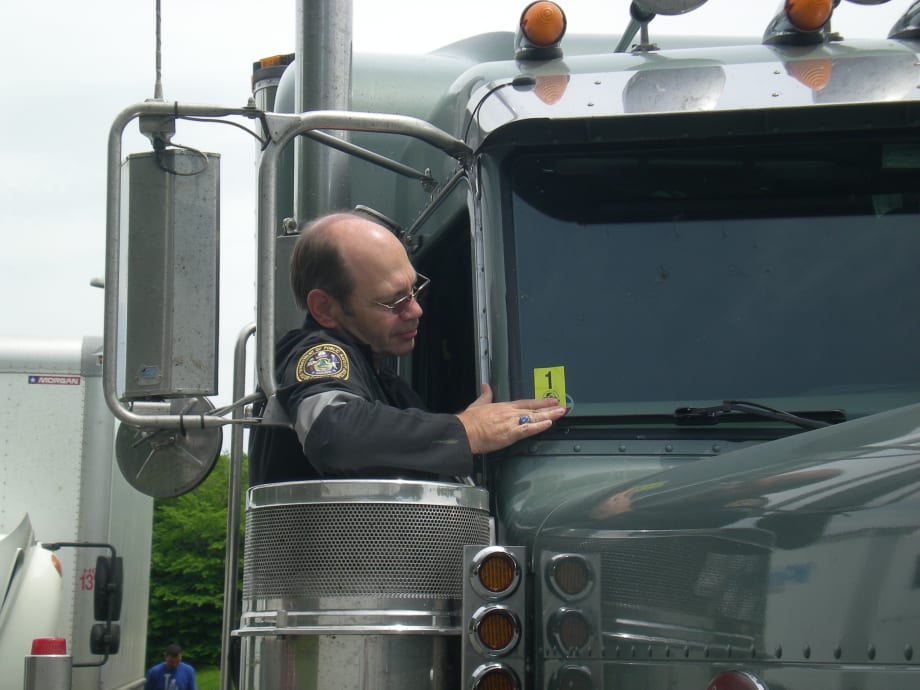
The scoring in the system is based on roadside inspections, violations listed on roadside inspection reports, and crash reports.
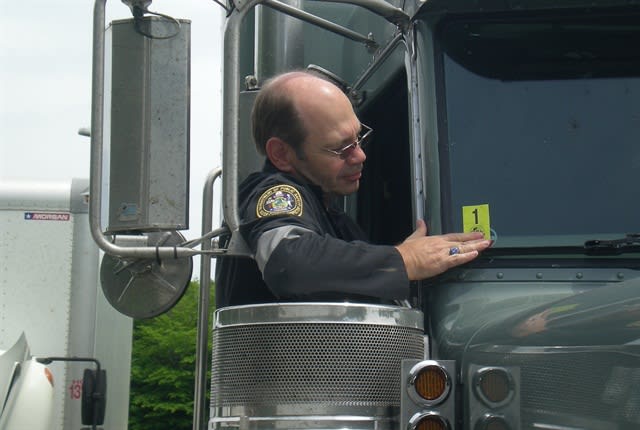
The scoring in the system is based on roadside inspections, violations listed on roadside inspection reports, and crash reports.
The first question that comes up in many discussions is, “What is CSA and what does it do?”
Despite all of the folklore that has been built around it, at its core, CSA (Compliance, Safety, Accountability) is simply a program used by the Federal Motor Carrier Safety Administration to track and evaluate carriers based on compliance and crash history. Carriers that do not score well in the system are the ones FMCSA will spend time warning or investigating.
The size of the carrier is not a factor in deciding which carriers the FMCSA will investigate, but size is a factor in how carrier scores are calculated.
How the scoring works
The scoring in the system is based on roadside inspections, violations listed on roadside inspection reports, and crash reports. Violations are “valued” based on severity and time. The severity of a violation is based on its relationship to crash causation. Severity weighting uses a 1 to 10 scale, with 10 being violations that have the closest relationship to crash causation.
The time factor involves multiplying the severity of a violation by a “time weight.” The severity for any event (inspection, violation, or crash) that has occurred in the last 6 months is multiplied by 3. If the event took place between 6 and 12 months ago, it is multiplied by 2. Events that took place between 12 and 24 months ago are multiplied by 1. Events over 24 months old are not used in the scoring.
In most of the Behavioral Analysis and Safety Improvement Categories (BASICs), the total of all severity- and time-weighted violations is divided by the time-weighted inspections a carrier has undergone. This results in a “BASIC Measure” that reflects a “violation rate per inspection,” with severity and time factors considered.
Two of the BASICs, Unsafe Driving and Crash, use a different process for calculating the measures. It involves dividing the total of all severity- and time-weighted violations by the company’s power unit count that has been multiplied by a utilization factor. The utilization factor is based on the carrier’s average miles per power unit. The power unit count and mileage are taken from the carrier’s MCS-150s that have been on file over the last 18 months.
Once the BASIC Measures have been calculated, they are compared to other carriers’ BASIC Measures.
To start this comparison process, carriers are placed into “Safety Event Groups” in all of the BASICs. Depending on the BASIC, the groups are based on the number of violations, inspections, or crashes. The result is that small carriers are compared to small carriers and large carriers are compared to large carriers. The carrier with the best (lowest) measure in each group gets a “percentile rank,” or BASIC Score, of “0.” The carrier with the worst (highest) measure in the group gets a BASIC Score of “100.” All other carriers in the group will have a score in between these two extremes based on their BASIC Measure.
Carriers that do not perform well are the ones that are placed on the “intervention list,” and can expect the FMCSA to take action against them. The action can include a warning or an investigation.
Because the system uses DOT numbers as its basis, if you are an owner-operator operating under your own DOT number, all inspections and violations are scored directly against your DOT number. If you are leased onto another carrier and operate under that DOT number, your inspections and violations are scored under that DOT number.[PAGEBREAK]
There are 'minimums'
Each of the BASICs has minimum standards; that is, inspections, violations, and crashes, to be scored. If the carrier does not have enough data in a BASIC, the carrier is not scored in that BASIC. Here is a table that explains what is required in each BASIC to receive a score.
Data requirements
All three criteria below, where applicable, must be met before a BASIC score (percentile) will be assigned.
BASIC | Min. # of inspections/crashes in past 24 months | Min. # of violations/crashes in past 12 months | Min. # of violations recorded during latest relevant inspection |
Unsafe Driving | 3 inspections | 1 violation | 0 |
Drug & Alcohol | 1 inspection | 1 violation | 0 |
HOS Compliance | 3 inspections | 1 violation | 1 |
Driver Fitness | 5 inspections | 1 violation | 1 |
Vehicle Maintenance | 5 inspections | 1 violation | 1 |
HM Compliance | 5 inspections | 1 violation | 1 |
Crash Indicator | 2 crashes | 1 crash | — |
These standards are why many small carriers, including one-truck owner-operators, are not scored in most or all BASICs. They either do not have enough inspections or violations to receive a score.
Drivers are separate
The driver scoring system is different. All drivers are scored in the Driver Safety Measurement System, which works basically the same as the carrier system discussed above. The differences are that drivers are not held responsible for certain technical violations and the driver system uses a different time weighting.
In the driver scoring system, drivers are scored independently of the carriers. It does not make any difference what carrier the driver is working for when the inspection and/or violation occurs.
Driver scores are completely confidential and they are only used by FMCSA investigators when investigating carriers. Part of the carrier investigation process is to review the carrier’s drivers’ BASIC scores, and investigate the drivers that have high scores.
How do I make my BASIC scores better?
The easiest way to get better BASIC Scores (as a carrier or as a driver) is to get good inspections. In five of the BASICs, this will make an immediate difference due to the “violation free” inspections being used directly in the math. In the other two BASICs (Unsafe Driving and Crash), good inspections do not help in the math, but they don’t hurt you either since there is no violation to bring into the BASICs for scoring.
What’s the challenge with being a small carrier?
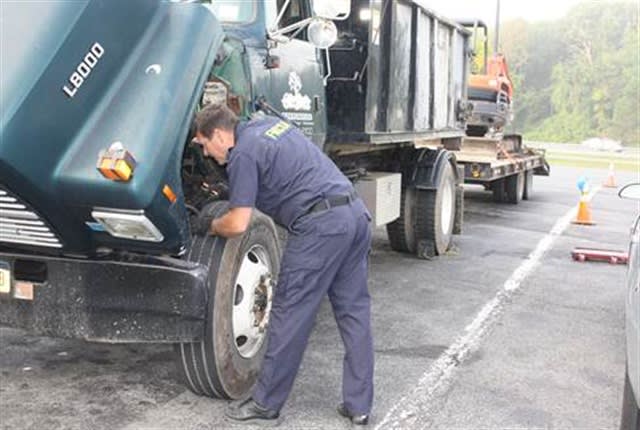
As a small carrier, once you get a bad score, it is hard to get it to come down. What’s the solution to this challenge? Avoid violations in the first place.
The challenge is, once a small carrier gets a score, the carrier does not have a broad base of inspections over which to “spread” the violations. The result is that each violation has a significant impact on the carrier’s BASIC Measures, and therefore scores. The Safety Event Groups used in the comparison process help even this out, but only to a certain point. In most BASICs, the smallest Safety Event Groups are based on 3 to 10 inspections or 5 to 10 inspections. One violation spread over 3 inspections has quite a different impact than one violation spread over 10 inspections.
Also, small carriers are not likely to see an increase in inspections due to increased BASIC Scores, so getting good inspections to offset high scores is difficult. Large carriers that have high scores will see an increase in inspections, and if they can pass them they can actually see their scores lowered fairly quickly.
So what is the biggest challenge with being a small carrier as far as CSA is concerned? Once you get a bad score, it is hard to get it to come down. What’s the solution to this challenge? Avoid violations in the first place. This can be done by being aggressive with maintenance and inspection, and keeping your credentials and log current at all times.
Thomas Bray is an editor in the Transportation Publishing Department of the Editorial Resource Unit at J.J. Keller & Associates, Inc, specializing in motor carrier safety and operations management.
More Drivers
Platform Science Adds Dispatch and Safety Tools
Four additions to PS Fleet help fleets monitor loads, manage driver coaching, share truck locations and adjust video system settings.
Read More →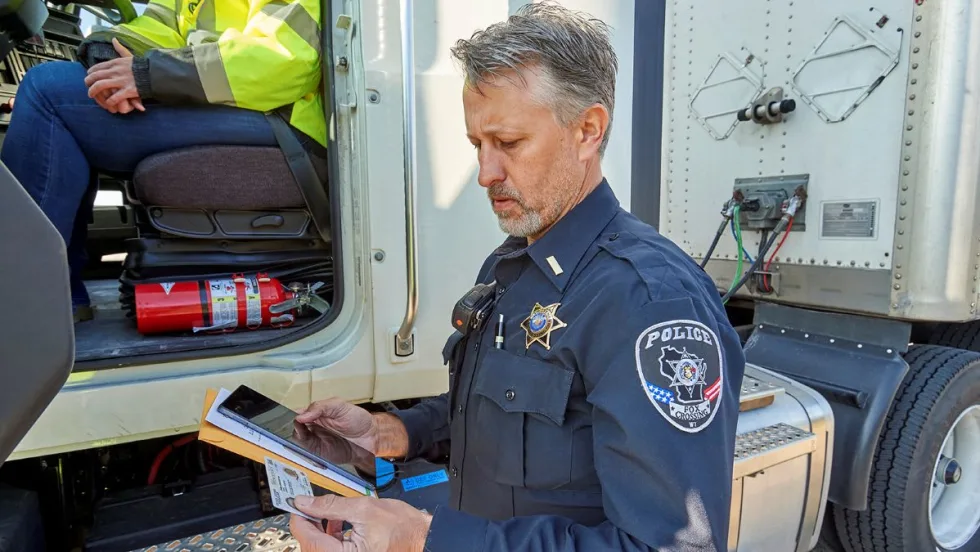
When Language Stops the Truck: The Return of ELP Out-of-Service Orders
English language proficiency rules for commercial drivers aren’t new, but renewed out-of-service enforcement has raised the stakes. Here’s what carriers need to know before a driver reaches a roadside inspection.
Read More →
Samsara Launches Custom AI Agent Builder
Agent Studio lets fleets create AI tools for hours-of-service monitoring, reporting and driver support, including agents that communicate by phone.
Read More →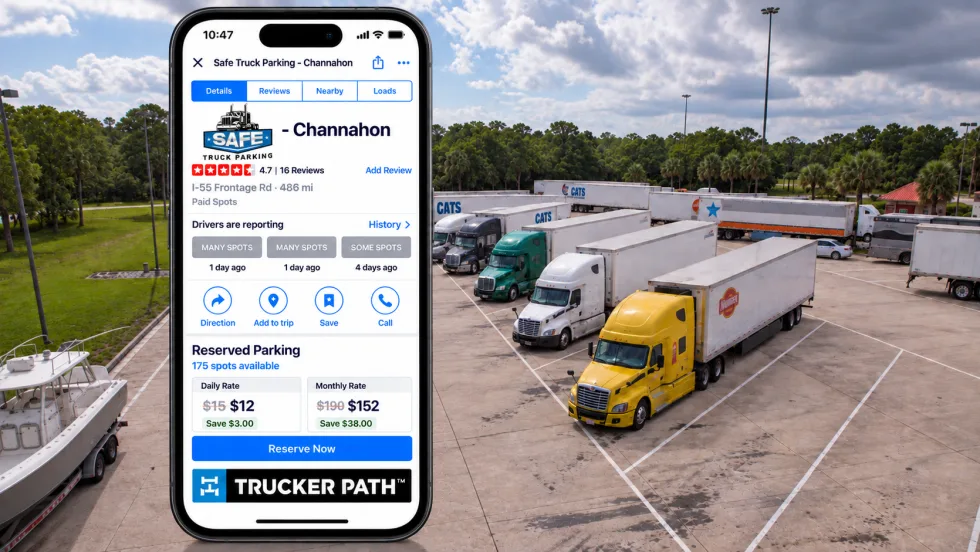
Trucker Path Expands Reserved Parking Network
Trucker Path has added close to 6,000 more truck parking spaces to its Trucker Path Reserved Parking Network with the addition of Safe Truck Parking.
Read More →
EEOC Sues Texas Trucking Company Over Driver Age Limits
The agency says Trancasa USA rejected applicants over 65 and applied tougher driving-record standards to those over 60.
Read More →
Nussbaum, Roehl Announce Second Driver Pay Increase This Year
This year has seen a swath of major truck driver pay increases as freight capacity has tightened.
Read More →
From One Generation to the Next: How Mentorship Builds Safer Truck Drivers
After three decades in trucking, Harold Perry shares what he's learned about driver safety, mentorship, and helping the next generation build confidence behind the wheel.
Read More →
Truck Drivers Need More Than Another Alert
Fleets have more visibility into truck health, safety events, and driver activity than ever. The next challenge is turning all that information into useful guidance for the person who has to decide what to do next.
Read More →
FMCSA Removes 110 Truck Driver Training Schools from Certified ELDT List
Federal regulators also are targeting more than 160 additional training providers and launching a nationwide audit of third-party CDL skills testers as part of a broader crackdown on trucking fraud.
Read More →
Hours of Service Pilot Programs: FMCSA Readies for 2027 Rollout
Two pilot programs could eventually reshape hours-of-service rules, giving truck drivers options to pause their 14-hour clock or use longer split sleeper rest periods.
Read More →