




Hiring Technology: Automated Recruiting
Wayne Cedarholm told a story 20 years ago about his employer C.R. England, the major refrigerated carrier based in Salt Lake City
Wayne Cedarholm told a story 20 years ago about his employer C.R. England, the major refrigerated carrier based in Salt Lake City.
In an interview, he said the company wasn't a freight hauler - it was a sausage machine. Back then, it was all about finding new ways of attracting drivers for the "machine," getting them through the recruiting and orienteering process and into trucks.
C.R. England is a different company today. It is one of the most sophisticated technology companies in trucking. (In fact, the company has developed an in-house predictive modeling program to improve the safety of its drivers.)
That kind of sophistication - and software - is the way good companies differentiate themselves with drivers and win in the recruiting, management and retention of the best people that will help the company develop and prosper.
That's especially important right now. It looks like the economy has bottomed out, and most economists believe we're coming out of the recession. By a year from now, trucking industry analysts are predicting a capacity crunch.
That also means the return of triple-digit driver turnover.
Recruiting can be a grueling, time-consuming job. From the application process to the orientation packet, a lot of paperwork has to pass through the recruiter's hands. What if your recruiters could spend less time managing stacks of faxed applications and an e-mail inbox stuffed full of driver prospects from the Internet, and more time actually finding the safe, qualified drivers your fleet will need?
There are many tools in the marketplace to automate much of the recruiting and hiring process. Such tools cut down on the amount of paperwork, saving time, money and the number of people needed to manage this information.
Implement them now, and you'll have a head start on the coming driver shortage.
Automating the routine
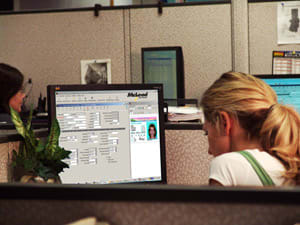
Automated recruiting technology typically involves software that allows drivers to apply for jobs through a carrier's web site, or through another online portal. This is a much easier method for a driver, because he or she doesn't have to attend a truck show or job fair, or wait for an application to arrive in the mail. The application can be filled out at his or her convenience.
In an age when most drivers have laptops - and they're the ones you likely want - having an online automated recruiting process makes a lot of sense. The process is fast, easy and thorough. Some systems check for completeness of forms before they can be submitted, saving a recruiter the time of going back to the driver looking for missing data. This frees up recruiters to do what they should do: search for new recruits instead of spending time on clerical tasks.
These solutions can perform many tasks automatically, such as determining whether a candidate meets minimum requirements or not.
For example, RecruitGear, which develops hiring management solutions for the transportation industry, has technology that flags applications and groups them according to status. If an application has a green flag, it passed the company's hiring criteria. A yellow flag is given to a candidate's application that was previously submitted but can be considered again because it now meets the requirements. A red flag means a candidate was rejected, but the recruiter can still access the application.
Yet for many carriers, recruiting is the last department to implement automated solutions, according to Mark Reese, vice president of sales and marketing at RapidHire, which provides driver recruiting management software. A lot of fleets are still using paper, making it very difficult to follow up with people. With an automated solution, recruiters have all the data and records at their fingertips, he says. "You're going to work much smarter."
In addition, because these technologies can hold on to these driver applications for long periods of time, fleets will have a permanent database of qualified drivers to choose from when the upturn comes around.
Quality vs. quantity
Once the driver shortage comes back in full force, fleets will be scrambling after the same qualified candidates to fill open positions, according to Pam Krengal, president of GlobalMagic Corp. "It's going to be fast and furious," she says.
However, because fleets now have the luxury to tap a large pool of quality employees, it may be the perfect time to find those candidates, Krengal says. These types of recruiting technologies, such as RecruitGear, can build an in-house database of candidates, so that carriers are ready to pull the trigger when the need to hire comes up. "Can't afford to miss qualified recruits," she adds.
When there was more freight than trucks to haul it a few years ago, many fleets were mainly concerned with getting a warm body to fill a truck. Smart carriers are now shifting their focus to upgrade their pool of drivers and weed out the less profitable ones, says Cindy Nelson, vice president of marketing and business development at EBE Technologies. EBE's SHIPS management software offers recruiting and human resource management solutions, including Truck Driver Recruiting Software, Internet Driver Recruiting and Online Application, Driver Recruiting On Demand Orientation Software, Company and Owner Operator Driver Files, Personnel File (non-driver) Workflow. Nelson says EBE's recruitment system can store a driver's information indefinitely, so fleets can search for qualified drivers when the time comes.
Mark Reese at RapidHire says his company's goal is to automate the recruiting process and get qualified drivers in the door. He wants customers to focus on the quality of drivers, not the quantity of applications coming in. Reese says that when fleets hire quality drivers, the retention rate goes up and turnover goes down.
Quality's also the focus at MTS Driver Recruiters, Southfield, Mich. MTS acts as a trucking company's recruitment arm, specializing in finding experienced drivers anywhere in the country. Ken Walker, principal, says the company maintains a population of drivers for its clients to fill vacancies on the spot. Using its own proprietary techniques as well as its national database of over 300,000 commercial truck drivers, MTS can find qualified drivers in the smallest, most remote town. Having this diverse pool to draw from provides carriers with better quality workers, he says. "A better selection gives you a better result."
With automation of the hiring process, obvious knockouts in the recruiting process are identified quickly, says Tim Crawford, president of Oklahoma-based Tenstreet, which offers recruiting and retention solutions. Gone is most of the time-consuming collection of the various bits of paperwork, some deliberately vague to hide employment problems. The good candidates are apparent - and so are the bad.
Tenstreet's IntelliApp, Xpress and Xchange programs automate and track the driving job applicants, so there's more chance of finding the right applicants - and more of them - faster. And experience shows that the speed of response to an application is critical is securing the right driver for the job.
The difference is that a job offer can be made to the good candidate before another carrier gets to him or her, Crawford explains. The traditional process could take three days or even three weeks from initial recruitment call to an assembly of all the DOT-required documentation. A good hire might be long gone.
Time is money
Inundating recruitment staff with hundreds of applications is expensive and time-consuming, says RapidHire's Reese. "It's a giant waste of their time and resources." Recruiters should mainly be involved with selling employees on the idea of working for the company, he says. A system such as RapidHire automates many of these time-consuming tasks. "Then the selling process can begin much quicker."
These automated recruiting systems ar
More Fleet Management

Color Match Smarter: Tools That Restore & Perform
For fleet managers and collision repair professionals keeping heavy-duty trucks on the road, getting the color right the first time isn't just about appearance — it's about efficiency, turnaround time, and bottom-line results. Discover how today's digital color tools are transforming the repair process from guesswork to precision.
Read More →
FMCSA Pauses Biennial-Update Enforcement Amid Motus Transition
Carriers whose updates were due on or after June 1 have more time, while FMCSA works to stabilize its new registration system and warns of phishing sites impersonating its new carrier registration system, Motus.
Read More →
2026 Blueprint for Countering Smarter Supply Chain Theft
Cargo theft is no longer just the cost of doing business. It's a multi-billion-dollar criminal enterprise exploiting vulnerabilities across your fleet, drivers, and supply chain.
Read More →


How Telematics Improves Visibility, Control, and Performance in Refrigerated Fleets
Explore how telematics help refrigerated fleets improve visibility, uptime, efficiency, compliance, and cargo protection across connected cold chain operations.
Read More →
What the U.S.-Canada Trade War Means for Trucking
Escalating U.S.-Canada tariffs could disrupt cross-border freight, reduce truck volumes, raise costs, and create new uncertainty for carriers on both sides of the border.
Read More →
What Are Trucking’s Top Concerns for 2026?
The American Transportation Research Institute wants to know what's worrying trucking fleet managers, drivers, and other stakeholders in its annual Industry Issues survey.
Read More →
American Trucking Associations Looks for a New Leader
ATA President and CEO Chris Spear abruptly left his job at the association on August 21, at a pivotal time for the trucking industry.
Read More →
Public Wi-Fi Cybersecurity Risks: How Truck Drivers and Fleets Can Protect Their Data
Public Wi-Fi can expose truck drivers and fleets to credential theft, malware, and other cyber threats. Here’s how to reduce the risk on the road.
Read More →
For Nicky Cupp, Fleet Innovation Starts With Frustration
HDT Truck Fleet Innovator Nicky Cupp turns everyday pain points at Fraley & Schilling into opportunities for better technology and smarter processes.
Read More →
Adam Buttgenbach’s Approach to Electric Trucks: Start With Where They Fit
HDT Truck Fleet Innovator Adam Buttgenbach helped PepsiCo build one of North America’s largest EV fleets by focusing on where electric trucks make operational sense.
Read More →