




Graphic Success: This Fleet's Testing Helped it Choose Aero Devices
Testing on regular runs showed Duplainville Transport which aerodynamic improvers to use on its 53-by-102 van trailers, and experience shows substantial fuel economy gains with a quick payback on the extra money invested


(Photo by John Ehlers, Quad Graphics)
Testing on regular runs showed Duplainville Transport which aerodynamic improvers to use on its 53-by-102 van trailers, and experience shows substantial fuel economy gains with a quick payback on the extra money invested.
Three separate products plus free-rolling tires with pressure inflation systems are together called the "SmartWay package," reflecting the fleet's membership in the voluntary fuel-saving program managed by the U.S. Environmental Protection Agency.
Duplainville is the private trucking arm of Quad Graphics Inc., based in Sussex in southeastern Wisconsin. QG is one of America's largest four-color printing firms with 42 plants in the U.S., Canada and overseas. Duplainville (named after a nearby railroad junction) has 65 tractors and 240 trailers, plus owner-operated equipment, which run 48 states and the province of Ontario.
"We do a lot of plant-to-plant runs, so it's easy for us to test things - the same lanes, the same routes, loaded with 45,000 pounds of product 85 percent of the time," explains John Drake, the fleet manager since 1997. "We'll run a trailer with a device against a trailer without it. Each is pulled by the same truck on the same route in close to the same time." Eventually this provides real-world numbers that lead to well-founded decisions.
SmartWay Package
The equipment now includes:
Laydon Composites eight-panel skirts, chosen for effectiveness and appearance. "We liked the looks of the Laydon," Drake says. "We want our customers to look at our equipment and say, 'First-class equipment, first-class company.'" The skirts don't vibrate as the trailer goes down the road, but the rubber strips along the bottom are flexible enough to withstand brushing against obstacles. (www.laydoncomp.com/trailer-skirts.php).
Freight Wing gap reducer on the nose, to fill the space between tractor and trailer where turbulence would otherwise develop, especially in crosswinds. The aerodynamic tractors cut through the air effectively enough so that an aero fairing as such isn't needed - a conclusion drawn from past experience with Nose Cones, he says. (www.freightwing.com)
Airtab vortex generators around the rear door frame (www.airtab.com). "For the money you spend on Airtabs, it's well worth it," Drake says. "They control the wind vortex and you don't get the buffeting behind the trailers. And rear doors stay cleaner, too. Because of that, we have the Airtabs on some of our local trailers, too. We don't have them on our tractors, but some of our owner-operators have them on the trailing edges of the cab extenders."
Michelin X One wide-base single tires on Alcoa aluminum wheels, to reduce rolling resistance and cut weight. Some of Duplainville's latest tractors also have X Ones on their drive axles.
Mertor/P.S.I. pressure monitoring and inflation system hooked to the four tires, to keep pressure at proper levels. This preserves tread and casing life and guards against flats.
The Duplainville SmartWay package is installed on new trailers by the fleet's two trailer suppliers. Everything from the aero improvers to Quad Graphics' graphics to an on-board greasing system are installed at the factory. When delivered, the trailers are road-ready, which Drake considers a big advantage.
So far 10 of Duplainville's company trailers have the SmartWay package. Another 50 trailers - 25 Utility 4000D-Xs and 25 Great Dane SSLs - are due in soon, and they'll all have the package. Because the fleet has resumed ordering new trailers following a recessionary pause, Drake decided not to install the devices on existing vehicles.
The devices definitely work.
"We're realizing between eight-tenths and 1 mpg savings compared to a stock trailer without any of that stuff," Drake says. The approximate cost of the devices totals $4,400 per trailer, installed, and the return on investment is fast. "The ROI is seven and a half months, but with drop-and-hook operations that's closer to nine months," he figures, from fuel savings alone.
The fleet's average economy is already a respectable 7.47 mpg, thanks to efficient design of its 65 company tractors, and driver discipline that centers on a road-speed limit and an incentive program.
"Our company speed limit is 60 mph," he says. "We set our limiters at 65 and ask drivers to hold it to 60. Our fuel mileage incentive bonus is based on 60. If we see that we have a habitual violator - if he's constantly pushing 65 - we'll help him by setting the limiter at 60."
Power includes aerodynamic Kenworth T2000s and Peterbilt 387s and 386s. All have TriPac auxiliary power units to cut engine idling. Drake says Duplainville tested early TriPacs made by Transport Refrigeration, a Thermo King dealer in central Wisconsin, which later sold the product's design to Thermo King corporate.
Membership in SmartWay, an information exchange run by the federal Environmental Protection Agency (www.epa.gov/smartway), is also a valuable sales point for Quad Graphics' representatives. Many customers are interested in the movement to save fuel and reduce emissions, so "our print people have a full portfolio on our fleet efforts," Drake says. "There's a lot of 'green' people out there."
From the November 2010 issue of Heavy Duty Trucking magazine.
More Equipment

ZF Expands Commercial Vehicle Push in North America
ZF is expanding its North American commercial-vehicle presence with new transmission applications, electrification, trailer technology and autonomous-driving systems.
Read More →
Tesla Wants a Self-Driving Semi. Are Cameras Enough?
Could Tesla’s camera-only autonomous driving technology work on an 80,000-pound Semi? In this commentary, HDT's Deborah Lockridge takes a look at Tesla, Cybercab, and how autonomous trucks see the road.
Read More →
Kodiak: Driverless Long-Haul Truck Launch on Track for 2026
Kodiak AI says its driverless long-haul safety case is 93% complete and it remains on track to begin commercial operations by year-end 2026.
Read More →
What DOT’s Automated Vehicle Strategy Means for Trucking
The U.S. Department of Transportation issued a new automated-vehicle strategy that outlines plans for driverless-truck regulations, cross-state freight corridors, and federal safety standards.
Read More →
East Coast Port Launches $45M Electric Truck Push
The Port Authority of New York and New Jersey announced millions in incentives for zero-emission drayage trucks, yard tractors, and new charging hubs near the port.
Read More →
PlusAI Going Public to Fund Autonomous Truck Launch
A SPAC deal could provide PlusAI with up to $300 million as it works toward a 2027 commercial launch of factory-built autonomous trucks.
Read More →
NHTSA Moves to Rewrite Truck Fuel-Economy Rules
The National Highway Traffic Safety Administration says it lacks authority to regulate medium- and heavy-duty truck engines separately from complete vehicles, but the existing standards have not yet been eliminated.
Read More →
Detroit Opens Orders for EPA 2027 Engines
Detroit isn’t starting from scratch to meet EPA 2027 diesel emissions standards. Its Gen 6 DD13 and DD15 engines keep much of today’s platform while updating the fuel and aftertreatment systems.
Read More →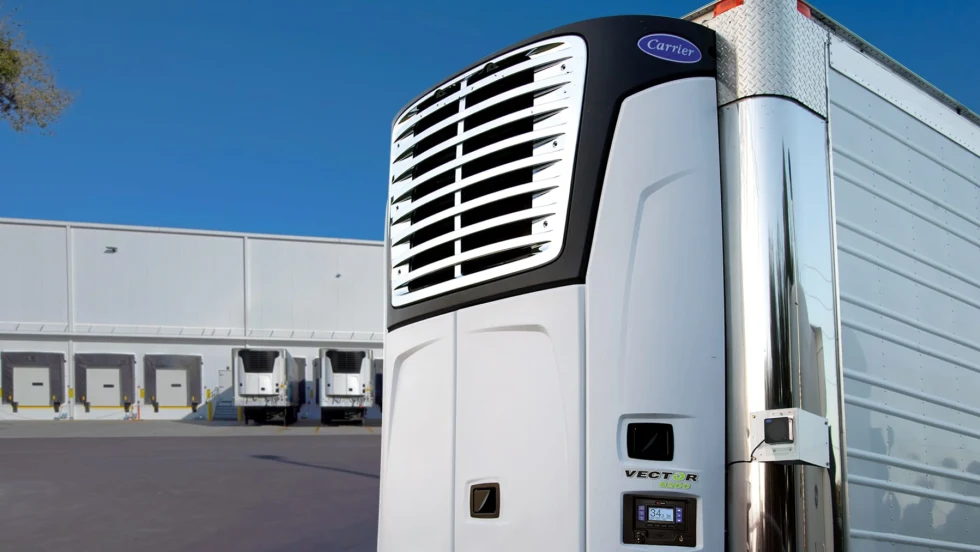
Carrier Transicold Adds All-Electric TRU for Stationary Cold Storage
Carrier Transicold’s new Vector 8200 all-electric transport refrigeration unit gives fleets a diesel-free option for temporary refrigerated and frozen trailer storage.
Read More →
A Closer Look at Kenworth’s Electric T880E Vocational Truck [Video]
Learn more about Kenworth's T880E battery-electric vocational truck at the Paccar Technical Center, including its range, applications, upfitting considerations, and PTO options, in this HDT Spotlight video.
Read More →