




Good stories countered by complaints at TMC's Fleet Talk
What's going on with the latest diesels? The answer depends on who's doing the talking
What's going on with the latest diesels? The answer depends on who's doing the talking.
In press releases, manufacturers are painting a happy picture with stories of reliable and economical service being turned in by their latest products. Well, we expect them to accentuate the positive. What's curious is that they seem eager to talk about their EPA 2010-spec engines but don't mention their 2007 versions. From this we infer that the 2010s are turning in better fuel economy and are more reliable than the 2007s. Users tend to verify this.
Yet the latest diesels aren't exactly trouble-free, according to what was said at the Technology & Maintenance Council's Fall Meeting last month in Raleigh, N.C. In the Fleet Talk session, managers griped freely about engines and the trucks they're in. Although some politely avoided naming product names, others identified what's giving them grief.
To encourage participants to speak freely, Fleet Talk is closed to suppliers, and trade-press people in the room are expected to protect identities of managers and products. So I shan't name names, but can report that some of the complaints bordered on bitter.
One well-known medium-duty engine, which was once the best one out there, has been failing early and often, a manager said. Its maker suggests repairs that will carry an engine past its warranty, and it breaks down again. And then the owner is on his own for costs.
Another manager reported "problems right out of the box" with brand-new heavy-duty engines from a different manufacturer. A third manager said new trucks arrive with their Check Engine lights burning, and it's up to his technicians to find out why, or try to get the dealer to help.
That got people complaining about dealers who don't have enough technicians to handle regular work, much less the problems with brand-new trucks. They said they find techs on staff are not trained in the latest products and sometimes don't have the tools to work on them. One fleet man quoted the service manager at his dealer as saying, "We can't afford to take a guy off the shop floor for training."
This was ironic, because TMC's Fall Meeting is also the venue for final competition in the SuperTech program. These are the most competent and dedicated fix-it fellas in the U.S., the kind you'd want working on your trucks. Quite evidently, however, there simply aren't enough of them.
So new trucks sit on dealers' lots for four or five days and sometimes up to two weeks before techs can even begin looking at them. And some dealers don't stock certain parts, such as diesel particulate filters, to get trucks fixed and on the road, which adds to delays.
Many problems are related to inferior wiring and connectors, still another manager said. He thinks it's because old, reliable suppliers went out of business during the recent recession and new companies are making inferior parts. Truck builders are trying to sort this out.
It all translates to lousy reliability for increasingly expensive products. The manager of a major snack-foods fleet said it's not unusual for a brand-new walk-in van to break down on its very first run.
And here's an upsetting statistic: "Twenty percent is the out-of service norm" for another manager's new heavy trucks.
"I'm glad I'm not in the norm," remarked a fleet manager from Georgia at lunch the next day. "We've seen very few problems with our trucks," heavies which are the same make as some of those criticized in Fleet Talk. "Knock on wood," he added.
"Or iron," I suggested.
TMC has sponsored "report card" sessions about new-technology engines since the start of the ever-stricter emissions regulations cycle, starting with the advent of exhaust-gas recirculation in October 2002. During them, managers gave mixed reviews, and they ranged from people with a handful of trucks to those with thousands.
Of course, an informal complaint session is hardly a scientific sampling. So, to find out how many fleets are now having problems with engines and the stuff related to them, and what those problems are, TMC is working on a survey of members.
The survey asks managers to compare EPA '07 and '10 diesels with previous models in 20 categories, ranging from performance and durability/reliability to driver satisfaction to serviceability and ease of diagnosing. Factory support and warranties are also in there, and the answers should be interesting.
More Equipment

ZF Expands Commercial Vehicle Push in North America
ZF is expanding its North American commercial-vehicle presence with new transmission applications, electrification, trailer technology and autonomous-driving systems.
Read More →
Tesla Wants a Self-Driving Semi. Are Cameras Enough?
Could Tesla’s camera-only autonomous driving technology work on an 80,000-pound Semi? In this commentary, HDT's Deborah Lockridge takes a look at Tesla, Cybercab, and how autonomous trucks see the road.
Read More →
Kodiak: Driverless Long-Haul Truck Launch on Track for 2026
Kodiak AI says its driverless long-haul safety case is 93% complete and it remains on track to begin commercial operations by year-end 2026.
Read More →
What DOT’s Automated Vehicle Strategy Means for Trucking
The U.S. Department of Transportation issued a new automated-vehicle strategy that outlines plans for driverless-truck regulations, cross-state freight corridors, and federal safety standards.
Read More →
East Coast Port Launches $45M Electric Truck Push
The Port Authority of New York and New Jersey announced millions in incentives for zero-emission drayage trucks, yard tractors, and new charging hubs near the port.
Read More →
PlusAI Going Public to Fund Autonomous Truck Launch
A SPAC deal could provide PlusAI with up to $300 million as it works toward a 2027 commercial launch of factory-built autonomous trucks.
Read More →
NHTSA Moves to Rewrite Truck Fuel-Economy Rules
The National Highway Traffic Safety Administration says it lacks authority to regulate medium- and heavy-duty truck engines separately from complete vehicles, but the existing standards have not yet been eliminated.
Read More →
Detroit Opens Orders for EPA 2027 Engines
Detroit isn’t starting from scratch to meet EPA 2027 diesel emissions standards. Its Gen 6 DD13 and DD15 engines keep much of today’s platform while updating the fuel and aftertreatment systems.
Read More →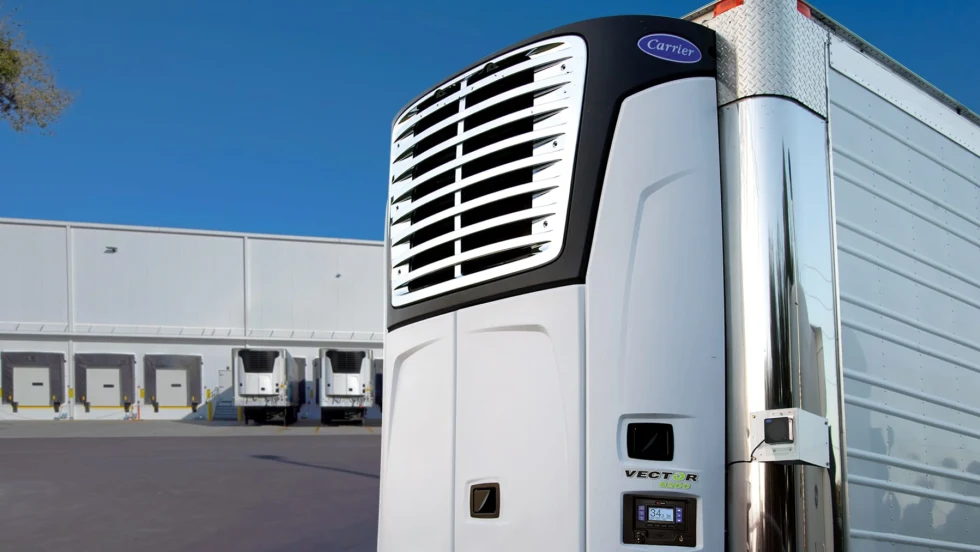
Carrier Transicold Adds All-Electric TRU for Stationary Cold Storage
Carrier Transicold’s new Vector 8200 all-electric transport refrigeration unit gives fleets a diesel-free option for temporary refrigerated and frozen trailer storage.
Read More →
A Closer Look at Kenworth’s Electric T880E Vocational Truck [Video]
Learn more about Kenworth's T880E battery-electric vocational truck at the Paccar Technical Center, including its range, applications, upfitting considerations, and PTO options, in this HDT Spotlight video.
Read More →