




Get Drivers Involved in Tire Maintenance
Trying to get drivers actively involved in tire maintenance programs is like pushing rope uphill. If you're lucky, the good ones will kick or thump the tires during a pre-tri


There are still a few drivers out there who care enough to help keep tire costs down.
Trying to get drivers actively involved in tire maintenance programs is like pushing rope uphill. If you're lucky, the good ones will kick or thump the tires during a pre-trip
. The better ones will bring a soft or damaged tire to your attention before they leave. The others ... well, that's why tire inflation systems were invented.
Drivers are intimately connected to their tires - your tires, really - and they can have a real impact on the life expectancy and their overall performance of the tires. Curbing can't always be avoided, but there's a clear difference between drivers who care enough to look after the equipment and those who run roughshod over what ever gets between them and the loading dock. You can probably tell the difference between the two. The good ones don't need a lot of oversight. The others, however, can cost your fleet a ton of money.
How then, do you improve the work habits of the poorer drivers? Do incentive programs work? Fleets who have tried such programs say no.
Incentives a bust
James Husted, director of maintenance with the Garner Transportation Group of Findlay, Ohio, says he's tried everything from encouragement to coercion, with little success. Ditto for incentives. At the end of the day, Husted says technology is the best - the only - solution.
"We try to use technology as much as possible to take that out of the drivers' hands," Husted says. "We've tried incentives, and we found that generally the people that are actually getting something from the incentive are the people who would have complied regardless of whether there were incentives or not.
"We found that incentives do little toward turning bad drivers into better drivers. We've schooled our drivers and trained our drivers, but there are still issues with getting drivers to do tire pressure checks on a daily basis."
Bruce Stockton, vice president of maintenance and asset management for Joplin, Mo.-based Con-way Truckload, considered incentives at one time for drivers who got exceptional mileage from their tires, but decided not to implement the program for safety reasons.
"From a safety standpoint, it's dictated when a tire has to be removed. We typically remove them before that point as an added measure of safety," Stockton explains. "When we discussed having an incentive for drivers, there was a fear that a driver, in an effort to make the incentive, might try to push the tire beyond its useful and safe life."
Other fleets do it in reverse.
"Some fleets do have incentive programs for drivers, but they are mostly punitive," says Doug Jones, customer engineering support manager, Michelin Americas Truck Tires. "They are intended to ensure drivers do not operate any vehicle in a way that would damage the tires. In these fleets, when a tire does come out of service, a determination is made as to whether or not the driver was at fault for the tire's removal. If the driver is at fault, the value of the tire is typically prorated and charged to the driver."
A screw-up like that could amount to a few day's pay for an average driver. You'd think that might be enough to make them be more careful with their tires. Often it's not.
Driver training
Driver training obviously plays a role here. Husted goes over company policies with every new hire and every new driver they bring in from the training schools. He speaks at most driver meetings about some maintenance-related driver responsibility, including tires, and the company puts notes in their pay envelopes occasionally to remind them of the their duties and obligations.
Michelin's Jones says drivers are a critical component in any fleet's tire maintenance program, and they should be actively involved in ensuring the tires are properly maintained.
"They should know the fleet's target tire pressures, and should check and adjust tire pressures as needed. If tires are worn excessively, irregularly, or damaged in any way, the driver should rectify the situation or notify the fleet maintenance personnel right away," he says.
Getting them to do it is another matter.
Con-Way Truckload gives each driver a tire gauge, and expects them to use it. But as Stockton acknowledges, "We can't make them.
"Drivers will swear they can tell the difference between 80 and 110 psi by kicking the tire. They can't, of course, but at least they're getting close enough to the tire to have a look at it."
Pre- and post-trip inspections
Drivers have specific obligations in terms of trip inspections. They are required by law to perform pre- and post-trip vehicle inspections, and to note and report any defects discovered. While the report should include remarks on the condition of the tires if deficient, DOT's requirements don't include pressure checks.
One way of overcoming driver apathy is to track incidents of drivers calling in with flat tires when picking up dropped trailers. If it was dropped with flat or soft tires, the driver who dropped the trailer should be spoken to. Disciplinary measures should be in place to deal with negligence. But bear in mind, slow-leakers may not be obvious.
Garner Transportation Group's Husted says he has had some success keeping drivers mindful of their obligations by auditing trip inspection reports.
"We inspect recently dropped trailers and then compare our findings with the driver's write up. There are things that can be honestly missed, but there are other obvious items that drivers should catch. If we find obvious defects, the driver missed, like flat, soft, or damaged tires, we remind them," Husted says. "All you can do is let drivers know you're watching them. After that, it's up to them."
Real-world challenges
In the drivers' defense, checking tire pressure is a time-consuming task, and when hours of service are factored in, drivers are giving up revenue-producing time to perform a maintenance task - usually for free. Dan Murray, an eight-year driver based in Buffalo, N.Y., says he does what he can when he can, but the task has to wait until he has some free time.
"I can't do it in the morning when the tires are cold because if I have an appointment, it's usually an early morning start. Later in the day, the tires are hot and the pressure won't be accurate," he points out. "Besides, it's on-duty time. If I'm laid over and the tire pump isn't backed into some dirty corner of the truckstop near the trash bins, I'll do it."
Why is it such a challenge to get drivers to care about tire inspections and pressure checks?
"You hate to say they just don't care, but the bottom line is, it's not their equipment," admits Husted. "When it comes to the equipment, you have guys who will look after it and guys that won't. I hate to say that about my drivers because I think we have a pretty good group here, but that's the reality."
Garner Transportation runs 90 power units and 300 trailers in a just-in-time operation. Downtime is to be avoided at all costs, and while the drivers are very much aware of the cost of a tire failure, Husted says he's turning to technology.
"Tire inflation systems are the way to go," he says. "It automates the chore, keeps the tires properly inflated all the time, and keeps the drivers out of the loop."
From the September 2009 issue of Heavy Duty Trucking.
More Equipment

Kodiak Lines Up Fleets for Driverless Trucking
An agreement for 75 trucks, a new Texas freight lane, and progress on safety validation move Kodiak closer to its planned driverless highway launch.
Read More →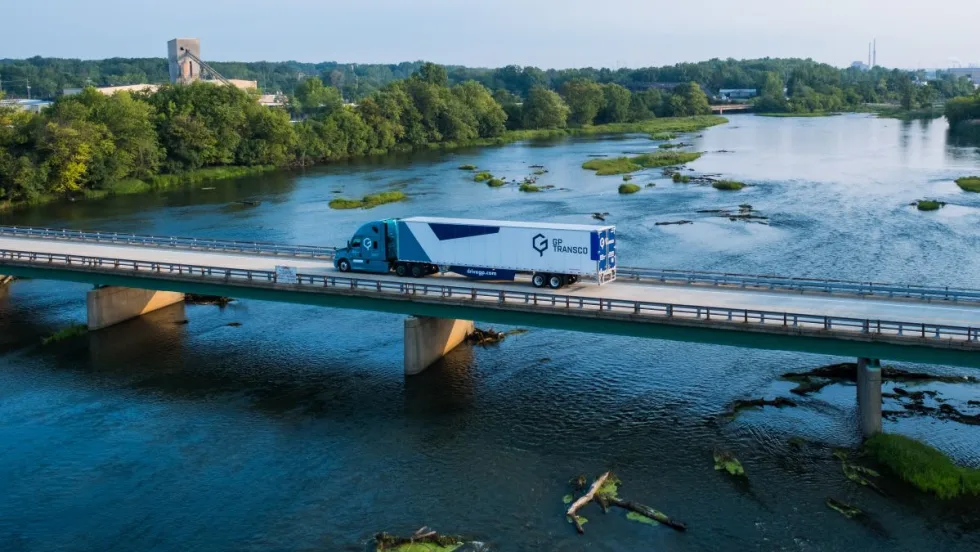
How GP Transco Builds Fuel Savings a Fraction at a Time
Aerodynamic specs, solar panels, and driver incentives help GP Transco turn small efficiency gains into savings it can reinvest in its people.
Read More →
More Trailer Data Through the Same Seven-Way [Video]
Can trucking’s standard seven-way connector handle more cameras and trailer data? Grote’s Adam Slade shows HDT how the company is using new technology with its 4See trailer system, not only to add a new backup camera but also to expand other capabilities — without adding another connection.
Read More →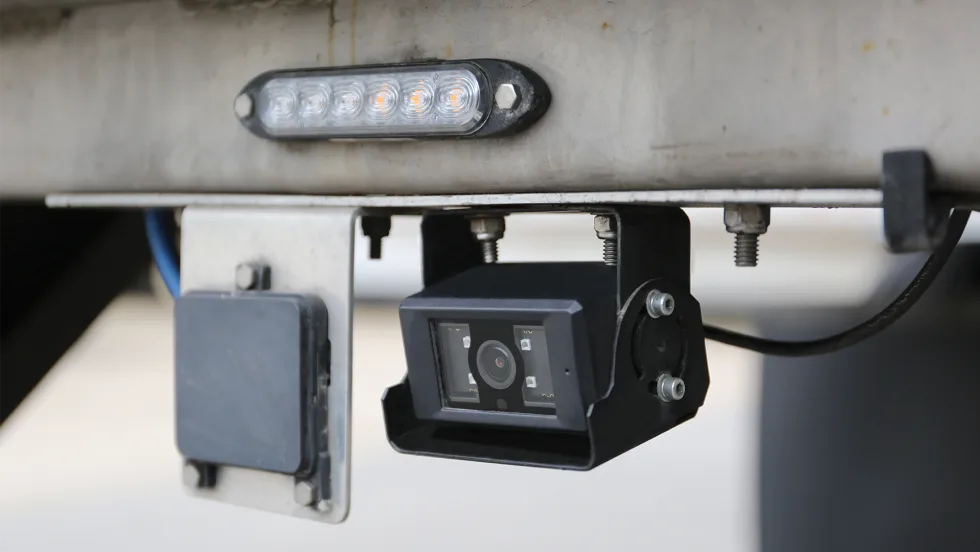
Grote: More Cameras, Same Seven-Way Connector
The next-generation 4See rear-view backup camera from Grote uses the standard seven-way connector and supports additional cameras and other trailer data.
Read More →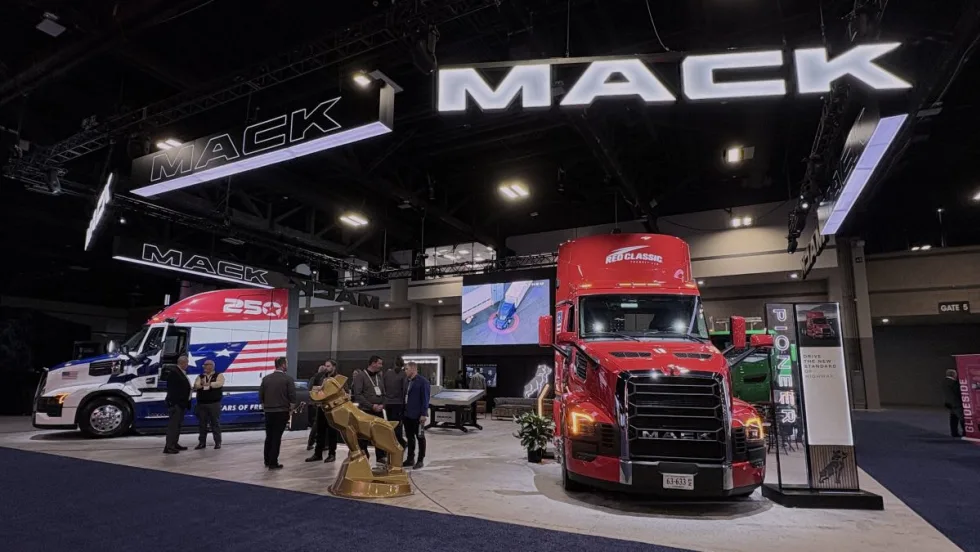
Trucks at ATA's 2026 MC&E in Charlotte, North Carolina [Photos]
From rigs decked out in patriotic America's 250 paint schemes to autonomous trucks and more, check out these photos from ATA's 2026 Management Conference & Exhibition.
Read More →
Help HDT Find Trucking’s Top Products
Have you come across a new product that could make a difference for trucking fleets? Nominate it for HDT’s 2027 Top 20 Products Awards by November 9.
Read More →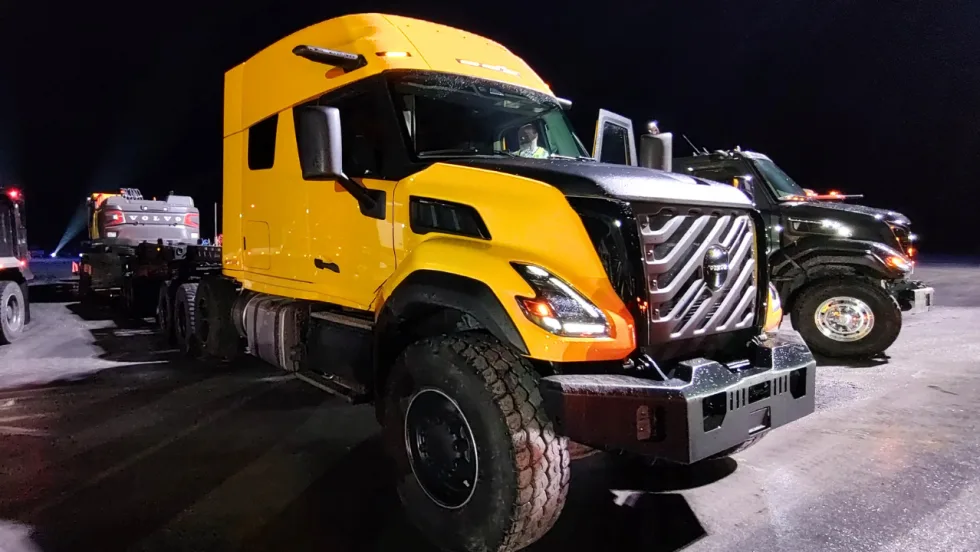
Volvo Unveils New VNX Heavy-Haul and Vocational Truck
Volvo Trucks has launched the VNX, a new vocational truck also available as a tractor in day cab and two sleeper configurations, with one heavy-haul model. The Volvo VNX is powered by Volvo's D13 platform, which delivers up to 540 horsepower and 1,950 pound-feet of torque and is EPA 2027-compliant.
Read More →
How GP Transco Cuts Trucking Fuel Costs, a Tenth of a Gallon at a Time
What’s another tenth of a mile per gallon worth? GP Transco shares how equipment upgrades and driver coaching turn small gains into meaningful fuel savings.
Read More →
Electric Yard Tractors Move Beyond Pilots
Operating-cost savings have overtaken sustainability goals as the leading reason surveyed fleets are adopting battery-electric terminal tractors, according to new NACFE research.
Read More →
Continental Introduces New Regional Truck Tires
Continental says its new Generation 5 steer and drive tires for regional operations offer longer tread life, with estimated mileage gains of 22% and 19%, respectively.
Read More →