




Geofencing: More Than 'Big Brother'
"Big Brother" comes to mind in any otherwise-official definition of "geofencing," the tracking method that keeps track of employees entering or leaving certain geographic area

"Big Brother" comes to mind in any otherwise-official definition of "geofencing," the tracking method that keeps track of employees entering or leaving certain geographic areas
. Geofencing is available from many IT companies and is usually part of a broader package of services.
Geofencing can irk and anger mobile workers who don't want the boss looking over their shoulders, and who infer that supervisors don't trust them and therefore take offense. The positive thinkers among them will note that "if you're doing your job, there's nothing to gripe about," and they're right. However, there are benefits to drivers, too.
Fact is, geofencing can relieve drivers of clerical chores and even adds convenience. That's according to Kent Szalla, director of business systems for Pitt Ohio Express, a less-than-truckload carrier headquartered in Pittsburgh, Pa., that operates about 1,200 power units and 4,500 trailers in Mid Atlantic and Midwest states. Most shipments are delivered the next day, and tracking trucks and tractors greatly adds efficiency.
Easier P&D
Geofencing is part of Pitt Ohio's PeopleNet-provided IT services, and the carrier began using it for its pick-up and delivery operation three years ago.
The GPS-derived locating function is integrated with engine data and billing, Szalla explains. In each cab is a small terminal that a driver uses while he runs his route. Pertinent numbers appear on screens in cabs and in the dispatch department. Data are transmitted by economical cell phone links.
"For deliveries, the driver logs in manifest numbers, and the computer system automatically creates a geofence around that delivery stop," Szalla explains. "When the driver crosses that fence, the system marks it as delivered. In high-density areas the system is smart enough to understand one customer from another. If two areas overlap, the computer can look at engine operation and know that he went from one to the other. The driver hits a button for time in and time out, and forgets it.
"On pick-ups it's very similar; he confirms what the manifests say. When he crosses the geofence, it's recorded. It's an aid to the driver. In days before geofencing, he had to fill in times, odometer readings, and other numbers on the manifest. Geofencing automates that. All he has to do is confirm the manifest."
Punching a Button
The driver confirms arrivals by punching a button on his terminal, explains Jim Shepherd, operations manager at the company's terminal in Columbus, Ohio. Departures are automatically logged. On office computer screens, the PeopleNet system can list a variety of information, like deliveries and pick-ups, color-coded by whether they're assigned (brown), waiting (yellow) or completed (green). The electronic geofences, though, are not shown on the map.
Dispatchers can also call up any truck's location, which in a few seconds is displayed on a map with speed and direction of travel. He can zoom in on a truck to further pinpoint it. The system stores such data and can recall it if, for example, a driver is involved in an accident; then it can confirm the truck's speed for investigators, said Chris Timo, terminal manager.
City driver Aaron Weaver says the system does a lot of busy work and frees him from looking at paper manifests. "All you have to do is scroll up or down on the screen and you know the assignments. When you're headed to a customer, it'll list how far you are now - maybe 12 miles - and it keeps dropping so when you're close it might read a half a mile. When you think that a lot of outfits are still using two-way radios, it's pretty neat."
Linehaul, Too
About a year ago, Pitt Ohio began using geofencing to facilitate relays in its linehaul operations. For example, a trailer, tractor and driver come out of Toledo and another rig comes out of Harrisburg; they meet halfway and swap trailers, and each driver goes back home. That's a neat system, especially for drivers. But where exactly do they meet and at what time?
"In the old days, there were a lot of calls back to the home office to confirm the relay," Szalla recalls. "Even with cell phones, there's still a lot of calling to one central person, who can become a bottleneck because he might have calls backed up and the drivers calling in are on hold, or they have to call back. Now with geofencing, they know the status and so does the home office.
"The system knows because the trucks are crossing geofences. This automates it, and the times and so on are transmitted right away so docks, managers and dock workers know if the drivers will be on time or if they'll be late so they can plan operations. So there's more efficiency and a lot less stress for everybody."
From the June 2009 issue of Heavy Duty Trucking.
More Fleet Management
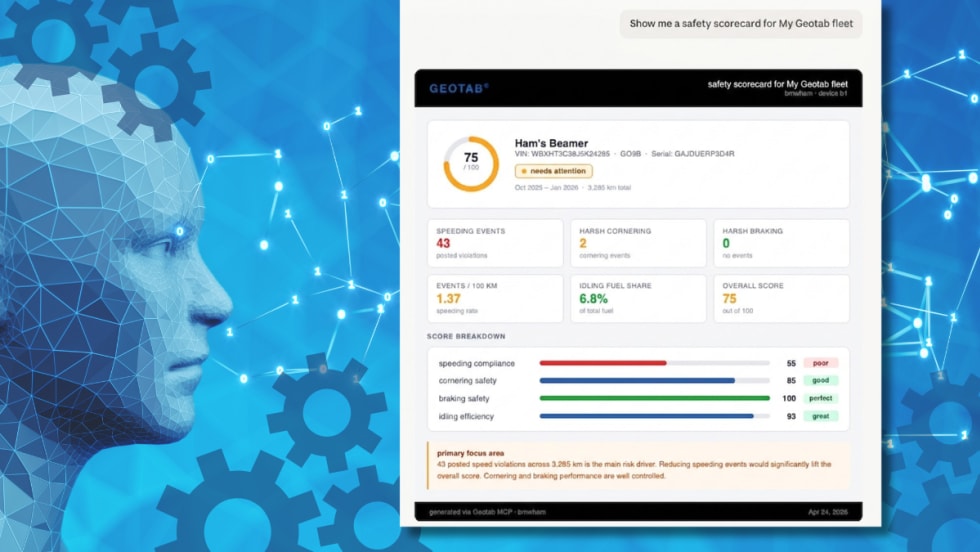
What Geotab's New AI Connector Means for Fleets
Fleets can now ask their usual AI assistants questions about maintenance, safety, fuel use, and vehicle performance, using their live Geotab data, and take action on the answers without leaving their preferred AI tool.
Read More →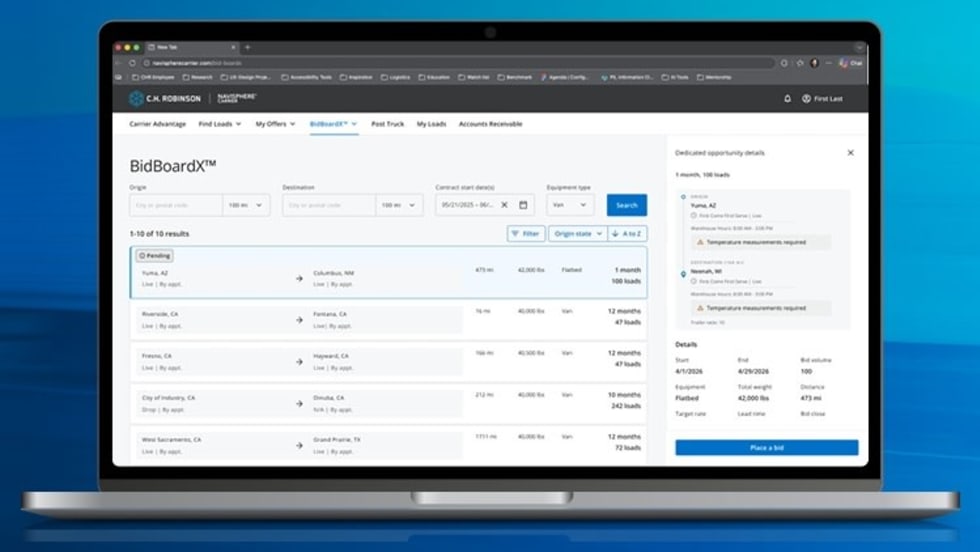
New C.H. Robinson Tool Opens Door to More Predictable Freight
BidBoardX lets carriers search, bid on, and secure committed freight opportunities through a single digital marketplace.
Read More →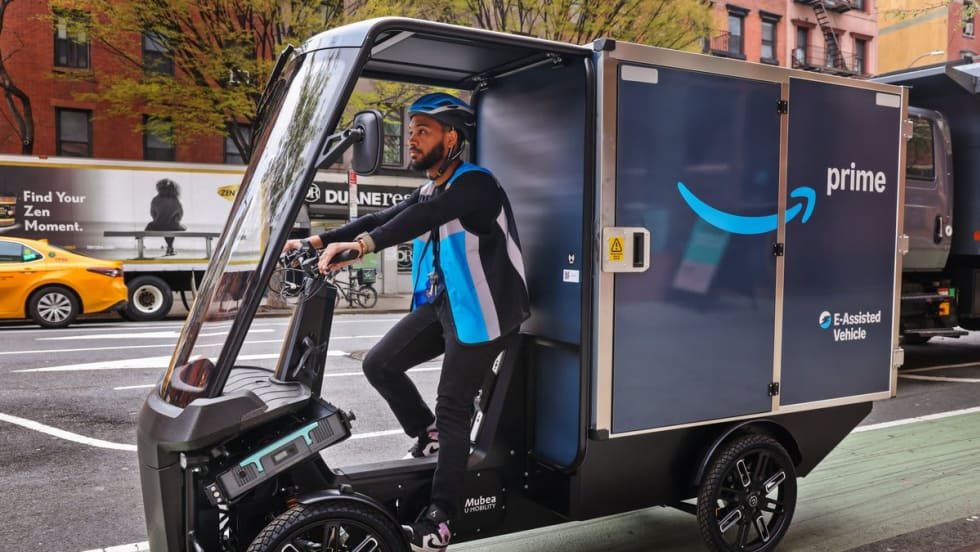
New York City's Microhub Project is Delivering Results
Trucking, last-mile delivery companies, and environmental advocates like what they are seeing so far with New York's microhub program.
Read More →
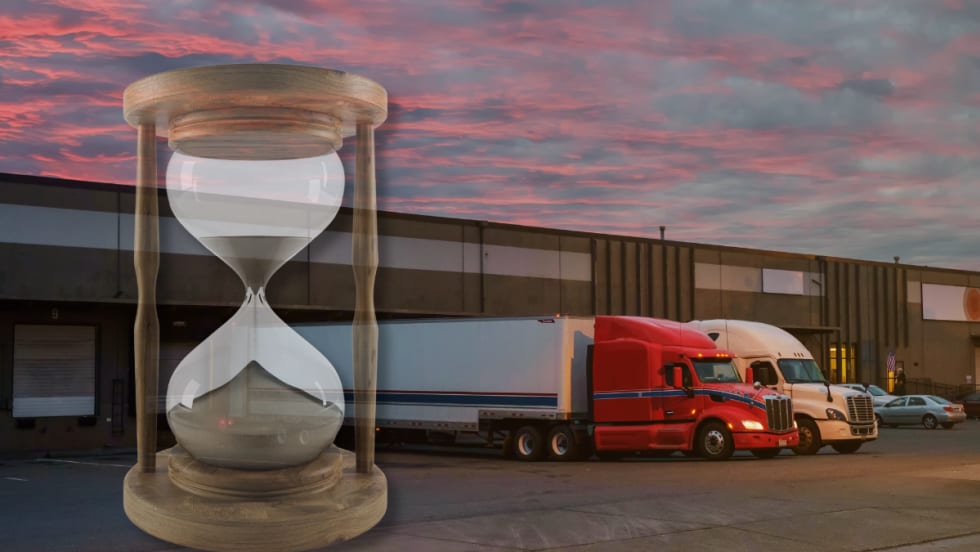
Why Truck Detention Keeps Costing Fleets Time and Money
A 2024 ATRI study found detention affects nearly 40% of truckload stops and costs the industry more than $15 billion annually. Despite the toll on drivers, fleets, and supply chains, the problem remains stubbornly persistent.
Read More →
Time is Running Out to Apply for Exclusive HDT Event
Heavy Duty Trucking Exchange brings fleet managers and suppliers together for the deeper conversations that lead to ideas, partnerships, and solutions. Time is running out to apply for the September event.
Read More →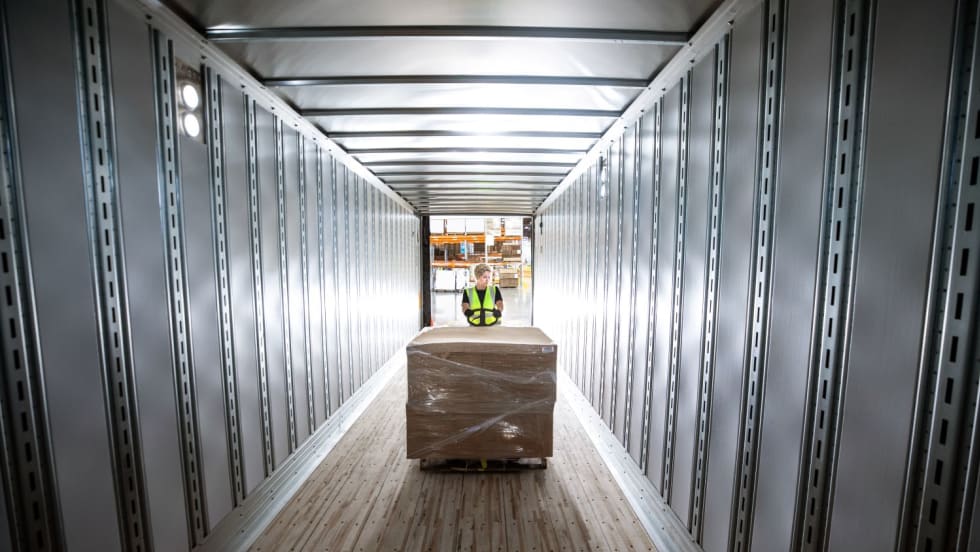
Amazon Launches Less-Than-Truckload Freight Offering for All Businesses
This launch is the latest addition to Amazon Supply Chain Services, a portfolio of supply chain capabilities from Amazon, including freight, distribution, fulfillment, and parcel shipping.
Read More →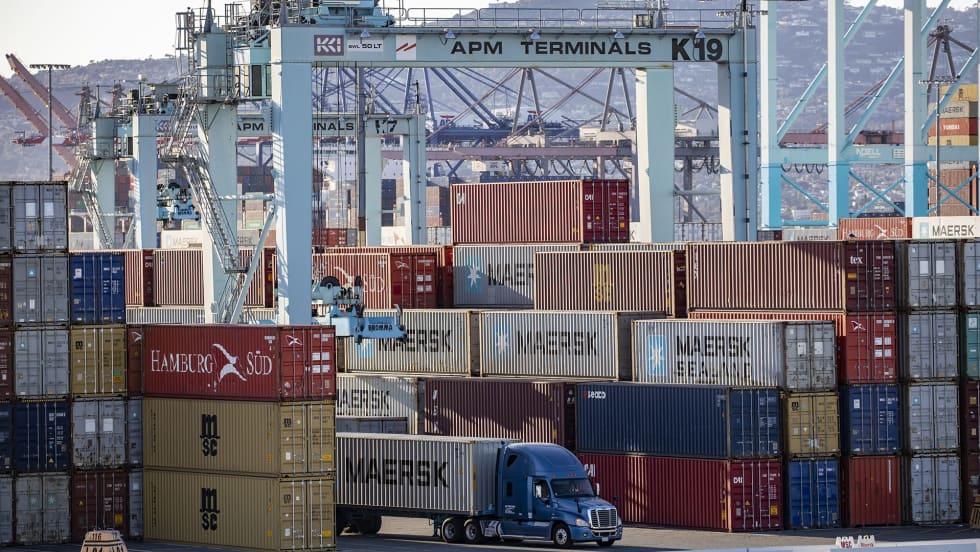
Import Cargo Volume to See Year-Over-Year Gain Again in June, Then Remain Below 2025 Levels Into Fall
After July, the report predicts a weakening in import volume as consumer uncertainty remains high and the impact of increasing inflation takes its toll.
Read More →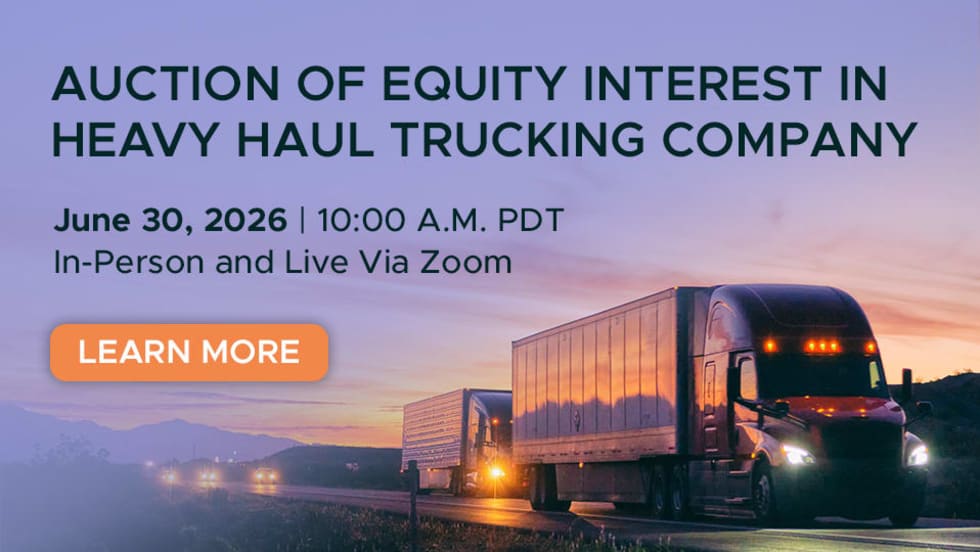
AUCTION OF EQUITY INTEREST IN HEAVY HAUL TRUCKING COMPANY!!
Mark your calendar: June 30, 2026 (10:00 a.m. PDT). A 37.5% ownership interest in MagnaTrans, LLC, a California limited liability company doing business as Magna Transportation Group, will be sold in an in-person and online auction to the highest bidder or bidders under Article 9 of the Uniform Commercial Code. The Rancho Cucamonga-based heavy haul and over-dimensional trucking company operates across California, Oregon, and Arizona.
Read More →
Volvo Trucks Adds Unattended Over-the-Air Software Update Capabilities
The latest evolution of Volvo’s over-the-air update technology allows software updates to run while trucks are parked, helping fleets keep vehicles current without disrupting operations.
Read More →
How Waste Connections is Using Data, Telematics, and AI
How do you manage and maintain more than 18,000 connected trucks? Data. Lots of it.
Read More →