




Firm and Fair: Recruiting and Retention at ADM
"It pays to operate in accordance with the law." That's one way ADM Trucking Inc., Decatur, Ill., is able to recruit and retain drivers, according to Sam Richardson, assistance vice president of operations

"It pays to operate in accordance with the law." That's one way ADM Trucking Inc., Decatur, Ill., is able to recruit and retain drivers, according to Sam Richardson, assistance vice president of operations.
Since Richardson started working for ADM Trucking 19 years ago, the company has slashed the amount it spends on damage-cutting it from 1.8 million a year to just over $300,000 last year-with an emphasis on clear policies for operations and continued training and development for drivers.
Richardson was sharing his experiences during a panel on driver recruiting and retention at the National Private Truck Council annual convention in Cincinnati last year.
ADM Trucking is primarily a tank hauler, both hazardous materials and food grade, although it also has some flatbeds and van trailers. Although it is ADM's private fleet, it actually is a for-hire carrier, which enhances the company's ability to get backhauls and lowers costs to the parent company, Archer Daniels Midland Company.
Turnover among its approximately 500 drivers is about 15%, and the average age of drivers is 50.5. "A lot of our guys came out of the van business," Richardson said. "Bulk work allows our drivers more home time, and combined with our good benefits, that's a reason why a lot of guys come to retire with us."
Another reason drivers stay with ADM is the consistency of rules. "We're firm, fair and consistent," Richardson said. "We go out and observe people doing their job; hopefully to find out they're doing it right, we also will take disciplinary action if we get knowledge that they're not doing it right. We have high expectations, but we're fair about it and we're consistent about it. Our discipline policy is spelled out. We run an extremely legal operation." Plenty of trucking companies say that, he noted, but "I've had guys come back to me after orientation that say, 'This is the first company I've worked for that really means it.'"
Once a year, Richardson said, they go with every driver and observe everything the driver does - pretrip, postrip, driving, loading, unloading - every aspect of their job. Is the driver following the written procedure? If not, why? Is there something wrong with the procedures, with the training? "The last thing we look at is if there are attitudes or perceptions that we need to address with the person," Richardson said. "That's how we go about improving our operation."
There are also peer to peer audits, where the drivers observe each other and give each other feedback, and they post those statistics so everyone can see them. Also posted are data on things like fuel economy, speed events, rapid decelerations and hard braking events. "It becomes a competition among ourselves to improve, and we review that quarterly," Richardson said. "It's to let them know they're doing well in most cases, but also to work with those who aren't."
The process starts when drivers are hired. Every new hire spends at least four days at the corporate office for orientation and training. "We know when they leave there they've been oriented into the company. Then they go back to the location and get location-specific orientation, then work with our driver training program, where these new hires work with driver trainers for the first couple weeks. We want these new people to be successful when they start."
This program has helped significantly improve the company's statistics as far as accidents and injuries among new hires (drivers are considered a new hire for the first year.) This year, new hires made up only 5% of the fleet's injuries and accidents, and they represent 15% of the driver force. "They're actually performing better than the people who have been with us for a while."
ADM uses the "care" word a lot when referring to employees, Richardson said, "and they mean it. All of our policies are about caring for our people."
For instance, there's a work/life program, which provides help throughout people's career when they have problems with children, parents, or other things going on in their life. "We've seen too many times a good driver have an issue and lose his way," he said.
"We also have great benefits. One of the things that makes me very proud is our drivers have the same benefit level that I have, and I think that's very important."
"What keeps people working with us is home time and steady work and pay," Richardson said. "We work diligently to get our people home every week. We try to keep our people on the same schedule as best we can. There's some seasonality to our product, but we have many more trailers than we have tractors. If our oilseed business is up, maybe corn products are down, so we're able to move our guys from one commodity to another and flatten out that seasonality."
There's also an open door policy, he said. "It's not unusual for a driver to walk in and talk to me, and we really encourage that." Even during the hiring process, he said, they encourage candidates to speak to existing drivers to get the real story, not just the recruiting pitch.
"If we happen to have a driver in the office, we just grab that guy and say talk to this recruit and tell him what it's really like. Sometimes they hear something that's a little negative, but we think it's important to actually hear from the guy who's doing the job."
The company also conducts an annual satisfaction survey of drivers. "We get some interesting comments," he said. "Some of them I carry with me to remind myself of some of the things I need to work on. We've been able to improve our satisfaction in our driver workforce by working on those issues."
Many of the complaints centered on dispatch, so the company's dispatch manager followed up with a second survey and got more specifics on how to improve. "We have dispatch policies that we follow. It's not just to our convenience; it's to the drivers'. We care about their fatigue and their home time."
More Fleet Management

How Telematics Improves Visibility, Control, and Performance in Refrigerated Fleets
Explore how telematics help refrigerated fleets improve visibility, uptime, efficiency, compliance, and cargo protection across connected cold chain operations.
Read More →
What the U.S.-Canada Trade War Means for Trucking
Escalating U.S.-Canada tariffs could disrupt cross-border freight, reduce truck volumes, raise costs, and create new uncertainty for carriers on both sides of the border.
Read More →
What Are Trucking’s Top Concerns for 2026?
The American Transportation Research Institute wants to know what's worrying trucking fleet managers, drivers, and other stakeholders in its annual Industry Issues survey.
Read More →

American Trucking Associations Looks for a New Leader
ATA President and CEO Chris Spear abruptly left his job at the association on August 21, at a pivotal time for the trucking industry.
Read More →
Public Wi-Fi Cybersecurity Risks: How Truck Drivers and Fleets Can Protect Their Data
Public Wi-Fi can expose truck drivers and fleets to credential theft, malware, and other cyber threats. Here’s how to reduce the risk on the road.
Read More →
For Nicky Cupp, Fleet Innovation Starts With Frustration
HDT Truck Fleet Innovator Nicky Cupp turns everyday pain points at Fraley & Schilling into opportunities for better technology and smarter processes.
Read More →
Adam Buttgenbach’s Approach to Electric Trucks: Start With Where They Fit
HDT Truck Fleet Innovator Adam Buttgenbach helped PepsiCo build one of North America’s largest EV fleets by focusing on where electric trucks make operational sense.
Read More →
Deen Albert: Let Automation Do the Math, People Make the Decisions
HDT Truck Fleet Innovator Deen Albert makes sure people are still at the heart of operations at Grand Island Express, even while adopting artificial intelligence tools. AI-assisted dispatch helped boost revenue 25% with the same number of trucks.
Read More →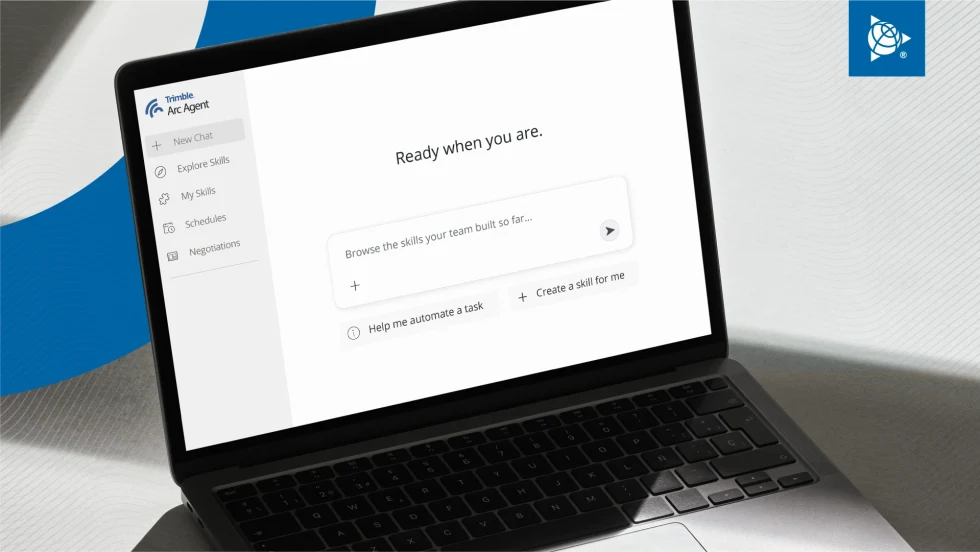
Trimble’s New AI Agent Takes Aim at Fleet Back-Office Busywork
Arc Agent works across Trimble TMS products to automate repetitive tasks such as freight orders, maintenance, invoices, fuel costs and more.
Read More →
How HDT’s 2026 Truck Fleet Innovators Are Rethinking Fleet Operations
Meet five trucking leaders who are challenging assumptions, solving operational problems, and putting innovative ideas to work.
Read More →