




Federal field testing proves ROI on automatic tire inflation systems
We now have conclusive proof that automated tire inflation systems and tire pressure monitoring systems offer quantifiable payback

We now have conclusive proof that automated tire inflation systems and tire pressure monitoring systems offer quantifiable payback.
The systems will save fuel, improve tread life and return their investment over a short time. Best of all, they continue putting money in your pocket long after they have paid for themselves.
Speaking at the annual meeting of the Technology & Maintenance Council of the American Trucking Associations earlier this year, Chris Flanigan of the Federal Motor Carrier Safety Administration's Office of Analysis, Research and Technology presented findings of a two-year field study on automated tire inflation and tire pressure monitoring systems.
The goals of a 2008 field test were to assess cost/benefit, to determine whether the systems can influence maintenance intervals and practices, and determine impact on performance and safety - all without adding to maintenance.
In 2003, FMCSA did an extensive survey of tire pressure at roadside. Inspectors found only 50% of the tires checked were within 5% of their recommended pressure. One out of every 14 tires was at least 20 psi underinflated, which is considered run flat by tire experts. In dual tire assemblies, only 20% of the tires checked were within 5 psi of the tire beside it.
The U.S. Department of Transportation looked at the financial implications of underinflated tires and determined that tire procurement costs could be 10% to 13% higher (in 2003 dollars), fuel economy losses could be as high as 0.6% and it would account for at least one road call per year.
In nice round numbers, Flanigan concluded that underinflation can increase the total annual operating costs per truck by as much as $600 to $800.
While the sellers of such systems have been telling prospective customers that for years, these numbers come from an impartial source and were drawn from well-documented research.
John Morgan, product manager for Meritor Tire Inflation Systems, observes that the naysayers to ATIS fall into three categories: "The skeptics that aren't yet ready to accept the touted benefits, those who are concerned about the acquisition costs, and those who tried a system 10 years ago and weren't satisfied with it."
This DOT study puts all those concerns to rest. The final bit of proof is that the fleets in the trial are still using the systems, and have equipped more vehicles in their fleets since the study wrapped up in 2010.
The importance of proper tire pressure maintenance can't be over-stated. Failure mode analysis of another DOT study showed that 90% of the tire debris found on highways has its roots in a low-pressure condition that led to a blowout.
Tires usually don't come apart on their own. The heat generated in the casing while run soft literally destroys the rubber compounds inside the tire, leaving it very susceptible to blowouts. That goes for old tires, new casings as well as retreads.
Morgan says fleets that really pay attention to such things know the true cost of an on-road failure.
"You're looking at $ 1,000 in real costs by the time you buy the tire, account for the downtime, lost driver and equipment productivity, etc.," he says.
Keeping tires properly inflated will practically eliminate inflation-related blowouts, but DOT's 2003 tire condition study also found a high prevalence of mismatched pressures across dual tires. The risk there, according to Matt Wilson, controls business unit manager at Hendrickson, which offers the TireMaax Pro inflation system, is with unequal loading across the tires, you're killing both tires because of one fault. The harder of the two does most of the heavy lifting, while the soft tire flexes and squishes its way to an early grave.
"Equalizing the pressure across duals as well as maintaining optimum pressure by bleeding off excess pressure due to changes in ambient temperature or operational temperature [and pressure] increases helps prolong tread and casing life," Wilson says.
Tire and rubber costs are rising, and fuel is staying stubbornly high. Fleets can't afford to give up much on either front.
"At about 1.9 cents per mile, tires are a significant maintenance cost for fleets," FMCSA's Flannigan said. "The initial surveys we did in 2003 led us to conduct field tests of automatic tire inflation systems and tire pressure monitoring systems, and those tests proved our hypothesis that the cost recovery on those systems is there, and they provide ongoing cost savings and fuel economy improvements. In other words, they are worth the investment."
In September, at the IAA Commercial Vehicles trade show in Hanover, Germany, Dana and Goodyear each announced products aimed at the heavy-duty on-highway commercial vehicle automatic tire inflation market. Both systems are currently in the testing and development phase, with products already in the field. Neither company has announced an official launch date.
Dana is developing a tire-pressure management technology optimized for power units, using internal routing of the air lines. According to Steve Slesinski, director of Global Product Planning at Dana, engineers built on previous tire inflation technology used in military and civil applications to rapidly inflate and deflate tires, but scaled it for on-highway use as a monitor and inflate-only tool.
"We run the air outside the axle through a patented sleeve that accepts air seals between the axle and the hub," he says. "Then we move the air through the hub and out to the wheel-end with no modifications to the bearing systems. Our steer-axle system is similar to what you currently see on trailer systems, with a rotary union at the hub."
The system also will monitor tire pressure as it triggers the system to inflate, signaling drivers and/or fleet management of the event. Slesinski says the final system configuration has yet to be determined.
"I can tell you we have the capability to monitor tire pressure at each of the drive-axle and steer-axle wheel-ends," he says. "The data runs through the J-1939 architecture, so it can be uploaded if a telematics system is present. It can also trigger a warning on the dash to alert the driver."
Dana won't disclose a target price, but says it is looking at a two-year return on investment.
Goodyear's new Self-Inflating Technology got its start in passenger car tires in Europe a few years ago, but was brought into the heavy vehicle market with the help of a $1.5 million grant from the Department of Energy.
Fleet customers told Goodyear they wanted a low-maintenance solution to tire pressure management, and the tire maker has delivered a system that requires no external plumbing, no electronics, no external air source and no moving parts. The entire system is contained within the tire itself. The tire itself does the pumping, generating its own inflation pressure as it rotates.
"It's totally mechanical," explains John Kotanides, project manager for advanced concepts at Goodyear's Global Innovations Group. "There's a small pre-set regulator within the tire and a filter. That's it. There's a 'pumping tube' built circumferentially into the bead of the tire that is open to the atmosphere at one end and enclosed in the tire cavity at the other. As air enters the tube at ambient pressure, it gets squeezed as the tire rotates, pushing the air through the regulator (when open) to inflate the tire."
Kotanides says the system is not intended to inflate a flat tire, but testing has shown it capable, through peristaltic action, of pumping 15 psi into a tire in 30 minutes while running at about 30 mph.
The system will be built right into the tire during manufacturing, so there's nothing more to buy, no parts to stock and no installation to worry about. It will be available for steer, drive and trailer axles. Fleet field trials will begin later next year.
From the November issue of HDT.
More Equipment

PlusAI Going Public to Fund Autonomous Truck Launch
A SPAC deal could provide PlusAI with up to $300 million as it works toward a 2027 commercial launch of factory-built autonomous trucks.
Read More →
NHTSA Moves to Rewrite Truck Fuel-Economy Rules
The National Highway Traffic Safety Administration says it lacks authority to regulate medium- and heavy-duty truck engines separately from complete vehicles, but the existing standards have not yet been eliminated.
Read More →
Detroit Opens Orders for EPA 2027 Engines
Detroit isn’t starting from scratch to meet EPA 2027 diesel emissions standards. Its Gen 6 DD13 and DD15 engines keep much of today’s platform while updating the fuel and aftertreatment systems.
Read More →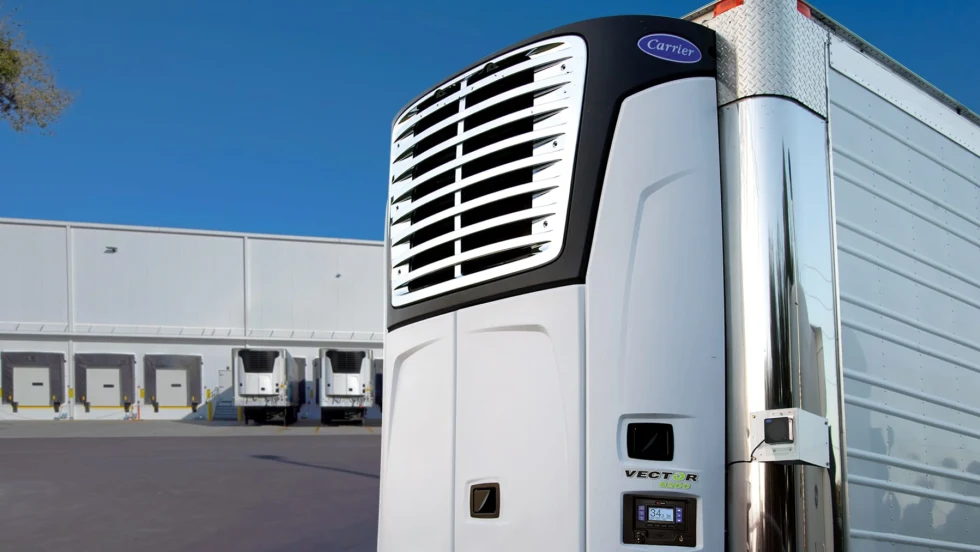
Carrier Transicold Adds All-Electric TRU for Stationary Cold Storage
Carrier Transicold’s new Vector 8200 all-electric transport refrigeration unit gives fleets a diesel-free option for temporary refrigerated and frozen trailer storage.
Read More →
A Closer Look at Kenworth’s Electric T880E Vocational Truck [Video]
Learn more about Kenworth's T880E battery-electric vocational truck at the Paccar Technical Center, including its range, applications, upfitting considerations, and PTO options, in this HDT Spotlight video.
Read More →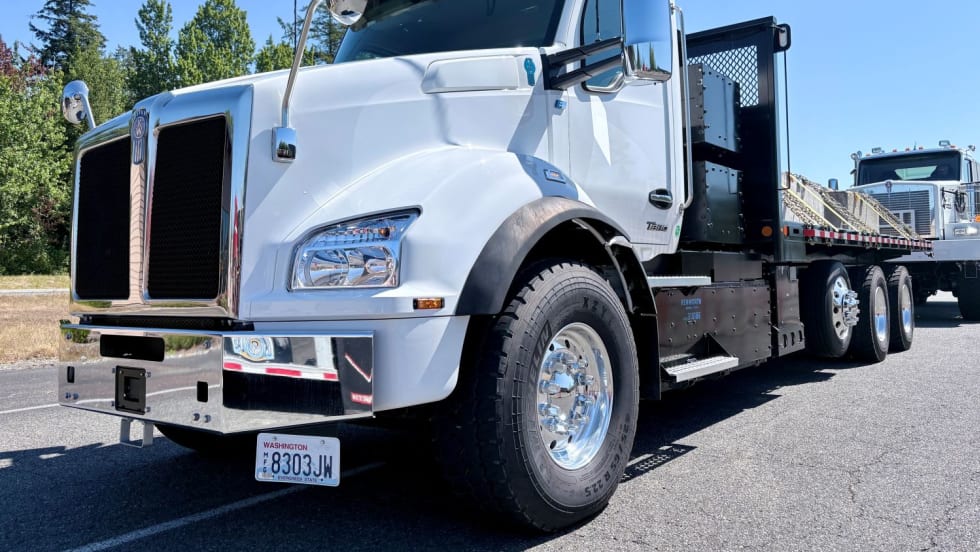
Kenworth T880E Brings EV Power to Vocational Trucks
A closer look at the Kenworth T880E’s range, charging, powertrain and upfit options — and where fleets are showing the most interest.
Read More →
What the U.S.-Canada Trade War Means for Trucking
Escalating U.S.-Canada tariffs could disrupt cross-border freight, reduce truck volumes, raise costs, and create new uncertainty for carriers on both sides of the border.
Read More →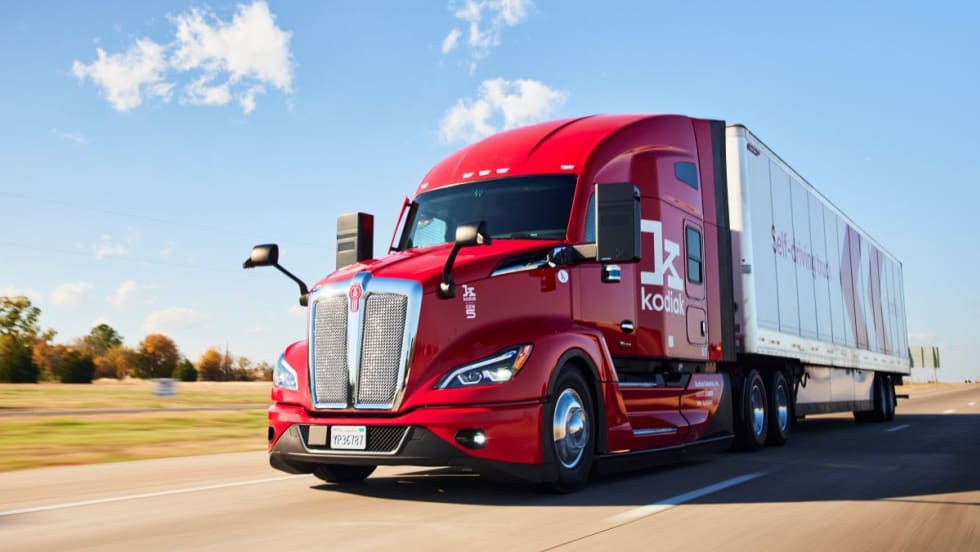
Autonomous Truck Testing Moves Ahead in California as Teamsters Challenge Rules
California has begun permitting heavy-duty autonomous truck testing, with Aurora and Kodiak among the first to receive approval, as the Teamsters sue the DMV over the new regulations.
Read More →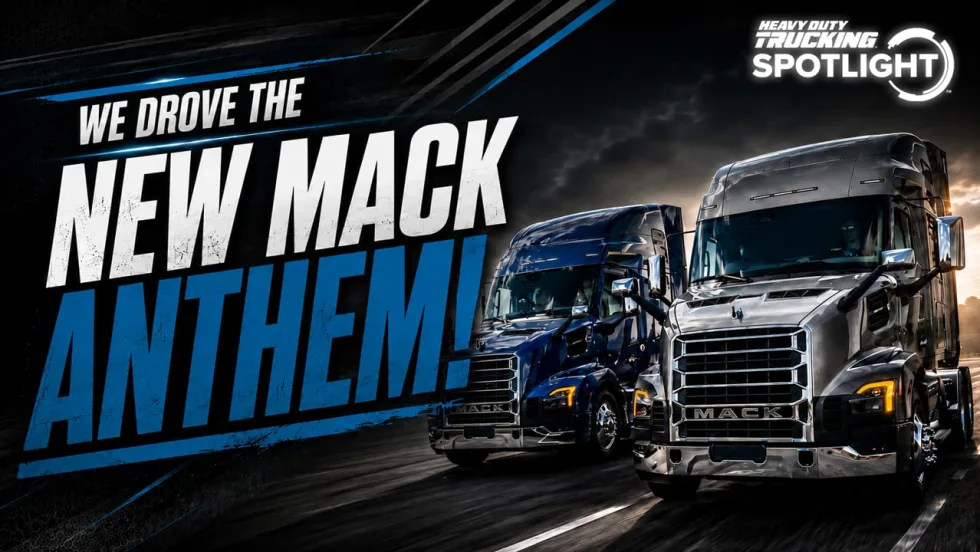
Behind the Wheel of the New Mack Anthem [Video]
HDT takes the new Mack Anthem around Mack’s Pennsylvania test track to see how its driver-focused design, technology, visibility and handling perform from behind the wheel.
Read More →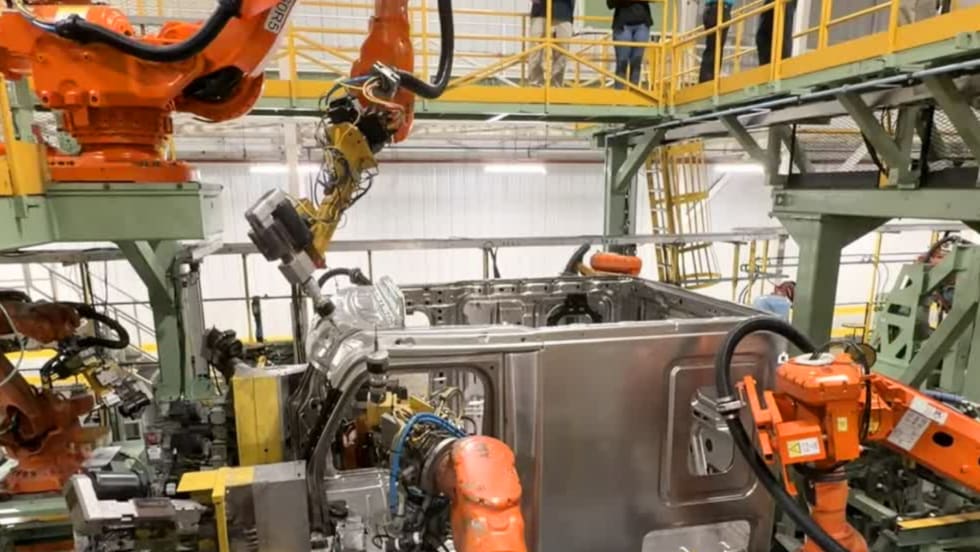
DTNA Plans New U.S. Truck Plant as Manufacturing Footprint Shifts
Daimler Truck North America is evaluating sites for a new assembly plant expected to open in 2029 while winding down operations at its longtime Portland manufacturing facility.
Read More →