




Fatigue Study Provides Basis for 34-Hour Restart Proposal
The 34-hour restart gives daytime drivers a chance to catch up on their rest, but it does not work as well for night drivers. In fact, it may even be detrimental to driver performance

The 34-hour restart gives daytime drivers a chance to catch up on their rest, but it does not work as well for night drivers. In fact, it may even be detrimental to driver performance.
That's the conclusion of a study the Federal Motor Carrier Safety Administration is using to justify its proposal that the restart include two periods of rest between midnight and 6 a.m.
The proposal is a point of strong contention between the agency and the industry, which is arguing that the two-night requirement will force night drivers to take as much as 53 hours off, possibly away from home, and begin their shifts during morning rush hour when exposure to accident risk is higher.
The study, done for FMCSA by Hans Van Dongen and Gregory Belenky of the Sleep and Performance Research Center at Washington State University, found that the effectiveness of the 34-hour restart depends on the timing of the driver's work schedule.
Van Dongen, speaking at the Transportation Research Board conference in Washington, D.C., this week, explained that the study compared the performances of two groups of drivers over two 5-day work periods separated by a 34-hour restart period.
One group of drivers was on a daytime shift and slept at night. The other group drove at night and rested during the day. The day drivers got two nights of sleep in their restart. The night drivers got one night and two long nap periods. The drivers were tested in a variety of ways to see if the 34-hour restart was effective in maintaining performance after the break.
The tests showed that the day drivers performed as well after the restart as they had before. But the night drivers' performance was impaired after the break, indicating that the restart was not effective in helping them maintain performance. The underlying cause is that the timing of the sleep periods for the night drivers ran counter to normal circadian rhythms, Van Dongen said.
A follow-up study, which has not yet been published, found that the effectiveness of the break was improved by adding an additional nighttime sleep period, Van Dongen said.
He said that this research "informed the debate (about HOS reforms) very significantly," and the agency's commentary on the restart proposal bears that out.
"FMCSA believes that the two phases of this study plus (other research) justify (the) proposal to amend the 34-hour restart by expanding the required restart period and adding a requirement for two off-duty periods from midnight to 6 a.m.," the agency said in its proposal.
In proposing the two-night requirement, the agency said it has stuck by the 34-hour restart in past versions of the rule because it provides productivity benefits and it believed that drivers would not use the provision to work extreme hours. "The agency assumed that drivers would use the restart mainly to simplify bookkeeping and to limit downtime while away from home."
Now the agency says that it learned during the listening sessions last year, and from comments in the docket, that drivers and carriers do use the 34-hour restart as a minimum. Drivers who are on the road for weeks at a time could work very long hours, and some carriers with regular schedules say they use the restart to add one work shift a week.
"If carriers have arranged their schedules so that drivers are on duty for the full 14-hour day, as ATA claimed in its 2010 comment to the docket, then the restart allows a driver to work more than 80 hours in 7 days compared with 60 hours in the pre-2003 rule."
The agency said it continues to believe the 34-hour restart is a sensible way to let drivers spend less idle time on long runs, but it must balance this against the risk that the restart may be exacerbating problems with long hours and resulting fatigue.
More Safety & Compliance
FMCSA: Stop Using These 15 Electronic Logging Devices
Fleets and drivers must replace the revoked ELDs with ones on the FMCSA's registered device list of electronic logging devices.
Read More →
How HDT’s 2026 Truck Fleet Innovators Are Rethinking Fleet Operations
Meet five trucking leaders who are challenging assumptions, solving operational problems, and putting innovative ideas to work.
Read More →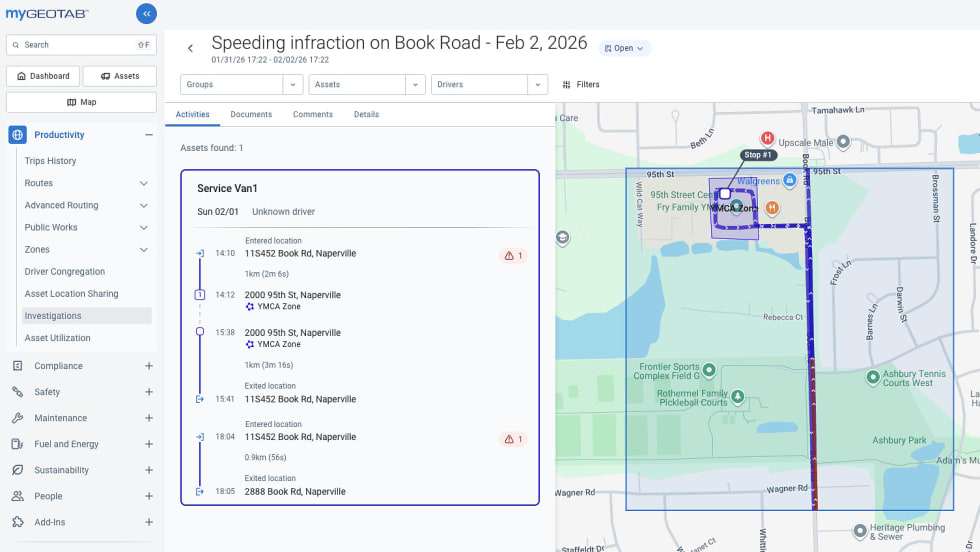
Geotab Launches Tool to Speed Fleet Incident Investigations
Geotab Investigations brings telematics data, video, photos, reports and other evidence into one case file to help fleets determine what happened and resolve incidents faster.
Read More →
FMCSA Moves to Codify English Language Requirements for Commercial Drivers
By changing regulations on English-language proficiency requirements for commercial drivers, rather than relying on a guidance memo, the FMCSA said future administrations won't be able to walk back the Trump administration's stricter enforcement with just a memo.
Read More →
Trump Administration Expands Homeland Security's Role in Trucking Enforcement
The administration's latest trucking crackdown goes beyond roadside inspections, expanding Homeland Security's role in commercial vehicle enforcement and investigations involving CDL training schools.
Read More →
Paccar Recalls 2027 Trucks Built This Summer for Possible Electrical Problem
The nearly 6,000 Kenworth and Peterbilt trucks in the recall could potentially lose engine power, among other things.
Read More →
Brake Safety Week to Focus on Drums and Rotors
Commercial vehicle inspectors will be focusing on brakes during CVSA's Brake Safety Week, August 23-29.
Read More →
Trump Administration Looks to Put More Veterans Behind the Wheel
The Freedom Haulers program pulls together existing and expanded programs at several federal agencies to recruit veterans to drive commercial heavy-duty trucks and cut the red tape for them to get a CDL, training, and employment.
Read More →
$604 Million Verdict Tests Broker Liability After Supreme Court Ruling
C.H. Robinson plans to appeal after a Texas jury found it bore the largest share of responsibility for a fatal 2021 crash, in a case that follows the Supreme Court's Montgomery decision allowing negligent hiring claims against freight brokers.
Read More →
How Fraley & Schilling Improved Logbook Compliance by Over 50%
Fraley & Schilling needed a way to close a compliance workflow gap in its ELD system without adding more work from driver training, reminders, and back-office follow-ups. It found the answer in a custom driver app.
Read More →