




Cutting-Edge Customer Service
When a customer calls Southeastern Freight Lines, he doesn't hear, "press one for sales, press two for maintenance, press zero for a company directory.

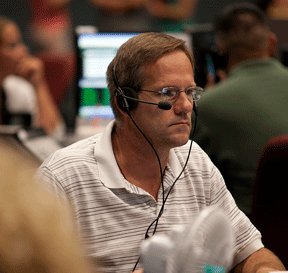
Getting the freight there on time and undamaged is just the beginning. (Photo: Con-way)
When a customer calls Southeastern Freight Lines, he doesn't hear, "press one for sales, press two for maintenance, press zero for a company directory."
Instead, a real live human being answers, "Southeastern Freight Lines, how may I serve you?"
Trucking is about more than selling space on a truck. It's about selling service. While the most basic measure of that service is the on-time delivery of an undamaged load, in a business that is becoming increasingly commoditized, customer service can mean the difference between a company that simply survives and one that excels, grows and prospers.
"We don't build a product, we don't sell a commodity. All we have to offer is our service," says Mike Heaton, senior vice president at Southeastern Freight Lines. "We believe that to truly differentiate our company from the rest of the industry, we've got to serve better than anyone else."
We talked with Southeastern and other fleets known for cutting-edge customer service to get their insights on serving customers well, and how that pays off in the long run.
Jim Mickey, co-owner of Coastal Pacific Xpress, a British Columbia-based refrigerated carrier, says communication is the single highest priority his company has identified for differentiating its service.
"The best way to stand out is within the sphere of communication throughout the entire process, but particularly when something is amiss with the initial commitments undertaken," he says. "Customers value transparency and early notification above all else, and they feel distrust and disrespect when they are subjected to poor communication."
At CPX, the goal is to keep the customer as informed of his load and its on-time status as if he had a permanent employee sitting on CPX's central dispatch floor.
"The more our customer knows about any potential deviation from his stated plan for his load, the better that customer can run his own business," Mickey says.
At A. Duie Pyle, which received top scores among LTL carriers in its region in Logistic Management magazine's Quest for Quality awards, "our business is almost as much about information as it is about transportation," says President Steve O'Kane. "To keep our reputation in the marketplace, we need to be great at both."
Technology has changed the face of communication with customers. Satellite tracking has long allowed major fleets to be able to tell customers where their load is at any given time. These days, however, it's gone well beyond that.
"The days of being able to retain a shipper's business because you are a nice guy are long gone," says Sean VanDyck, vice president of sales for PCS Software. "Today's shippers want to track their freight online. They also want online access to invoices, proof of delivery and account statements."
While a common way to do this is to have the shipper log in at the carrier's website, VanDyck points out that many shippers, especially if they are using multiple transportation companies, will instead simply call the carrier as they always have. If the carrier gets more calls than it can answer and the shipper has to leave a message, this can be perceived as bad service.
"In this day and age, it is not enough to answer each phone call," VanDyck says. "business people are multitasking more and more, and do not want to have to stop what they are doing to call their carrier."
That's why technologies are now available to provide automatic notification to shippers on their load status. And with the increasing use of smartphones, some fleets are taking advantage of that technology to communicate with customers. For instance, A. Duie Pyle recently launched a mobile site, allowing customers to enter pickups and track shipments and obtain transit times, ETAs, delivery notifications and PODs. Con-way Freight offers an app that allows customers to create a personalized rate quote, as well as track shipments, view shipping documents and locate and call service centers.
Technology also works behind the scenes to make sure loads get where they're going on time. Dave Kramer, executive VP of corporate sales at C.R. England, points out that today, you can tell not only where a truck is, but with electronic logs, how many hours a driver has left.
C.R. England uses this and other information in an optimization program that will flag a shipment in jeopardy of missing its delivery time. The system also walks the customer manager through potential solutions. For instance, if a driver is almost out of hours, the system can direct the service representative not only to the nearest available driver, but also to the one who has enough hours left to complete the run.
Yet technology is no substitute for real, personal customer service.
At Southeastern Freight Lines, the people who answer the phone are trained to do it correctly and courteously. Its P&D drivers are taught basics such as making sure to thank customers for their business, and not to be rude and talk on their cell phone while dealing with a customer.
Some fleets find it helpful for customers to have a regular person servicing their account.
C.R. England assigns a customer manager to each account. "Their whole purpose is to track shipments and meet specific needs and requests," Kramer explains.
At A. Duie Pyle, incoming calls are automatically sorted by zip code. This way, each customer is consistently serviced by a small group of customer service representatives based on location.
"This provides us the advantage of the training, stability, flexibility and efficiency of a large customer service group, while the customer has the experience of dealing with only a limited number of CSRs familiar with their account," explains O'Kane.
CPX has taken a cue from FedEx and aims to be the carrier shippers turn to when "it absolutely positively needs to be done," and done right. The driver is key in this effort.
CPX has actively gone after freight that requires a better person behind the wheel, which in turn helps it get higher rates. Those higher rates, in turn, allow it to pay enough to attract drivers who provide excellent customer service.
With good drivers that can offer a higher level of service, CPX is able to go to shippers and offer to take their toughest lanes. Mickey says he tells customers, "Give us the junk that nobody else will do for you."
"Once we perform spectacularly on their toughest stuff, every time the other guy stumbles, they'll ask themselves, 'Why are we using this guy when we could be using CPX?'"
SEFL's Heaton agrees about the importance of driver relationships with customers. "We don't have a lot of turnover, so many of our guys build relationships that solidify the partnership. That makes it difficult for a customer to make a change based on price, because our driver is serving them so well," he says.
John Larkin, who heads up transportation and logistics research for the Stifel Nicolaus investment firm, told refrigerated carriers this summer they "should not be bashful" about negotiating higher rates, because they offer a premium service, "a very difficult service to provide well."
Speaking at the Truckload Carriers Associations' Refrigerated Division meeting, Larkin said, "From my point of view, the temperature-controlled business is a much more specialized business [than dry van]. The equipment is specialized. The freight that is being handled is much more subject to damage, much more perishable, and it should really be a premium service. Shippers are entrusting you with very expensive product that, if not transported properly, could go bad quite easily."
Now is an excellent time to emphasize that premium service to shippers during rate negot
More Fleet Management
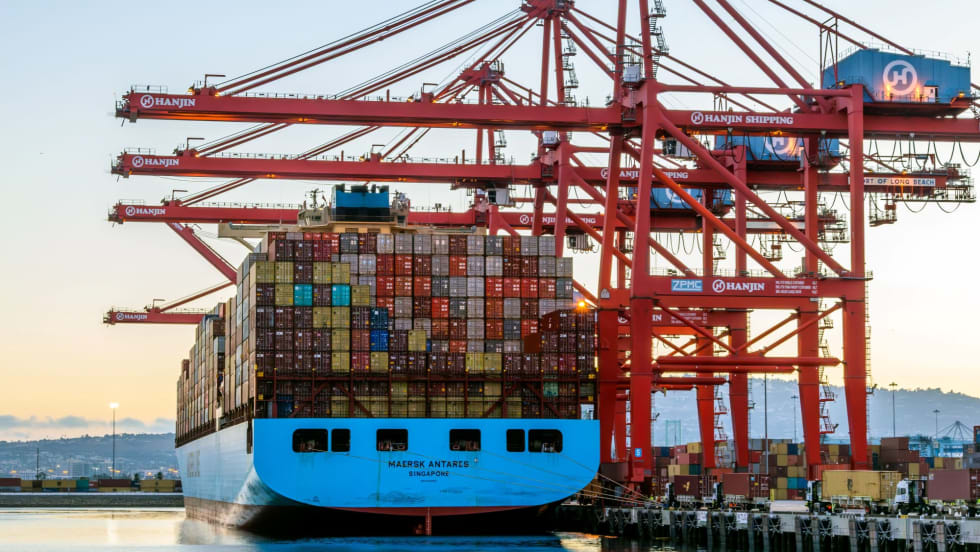
July Imports Poised to Set Container Record
The National Retail Federation projects July container imports will surpass the pandemic-era record as shippers frontload freight ahead of expected August tariff increases.
Read More →
HDT Announces 2026 Truck Fleet Innovator Finalists
From AI and fleet electrification to safety, operations, and leadership, these HDT Truck Fleet Innovator finalists are changing how trucking gets done.
Read More →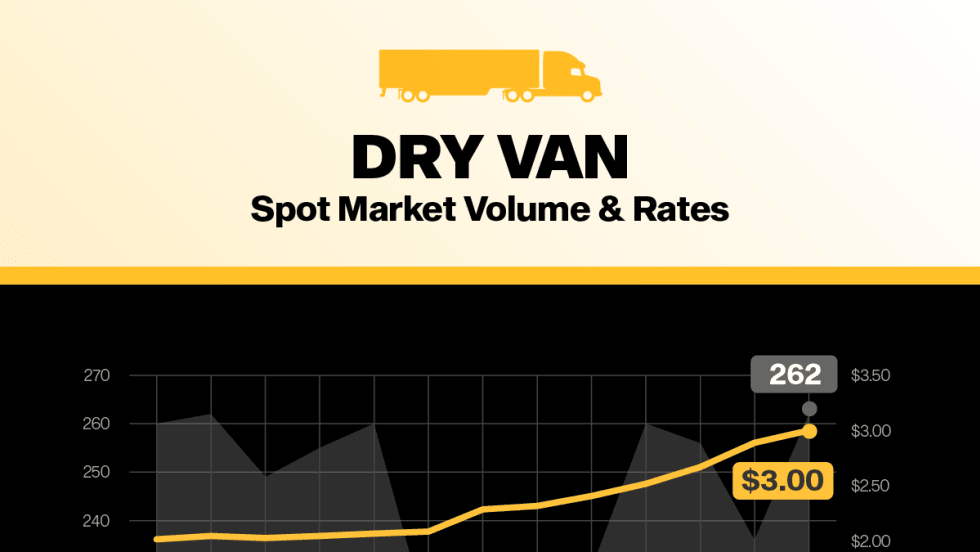
Van Spot Rates Top Contract Rates for First Time Since 2022
There’s more good economic news for the North American trucking industry according to the latest Truckload Volume Index report from DAT.
Read More →
Carrier Transicold Extends Refrigerated Trailer Life
Fleet Refresh enables refrigerated fleets to replace aging transport refrigeration units instead of entire trailers, while adding Lynx Fleet telematics and BluEdge service coverage.
Read More →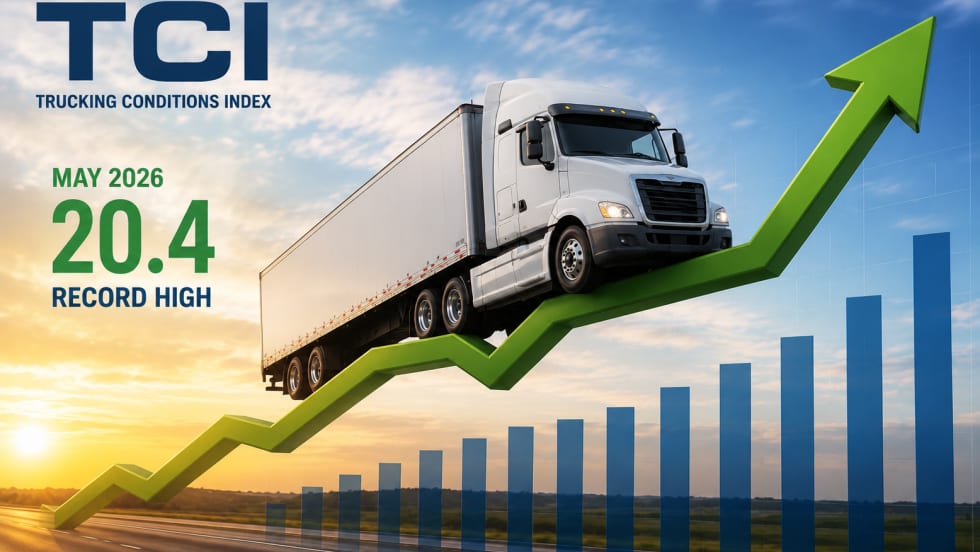
FTR Says Freight Rates Surged in May
FTR's Trucking Conditions Index surged to a record high in May, the analytics firm reports.
Read More →
Meet HDT's Truck Fleet Innovators at Heavy Duty Trucking Exchange
Heavy Duty Trucking Exchange brings fleet managers and suppliers together for the deeper conversations that lead to ideas, partnerships, and solutions. Time is running out to apply for HDTX, September 23-25.
Read More →
Enhance Fleet Performance with High-Efficiency Auxiliary Power Units
Drive sustainable cost savings while increasing driver comfort during short- and long-haul logistics operations.
Read More →
Is Your Parts Procurement Process Reactive or Proactive?
Ready to revamp your parts procurement process? Learn how now with “Strategic Parts Purchasing: A Process Checklist”
Read More →
What Trucking Events are Happening in 2026?
Looking for trucking-related conventions, expos, and other events? Heavy Duty Trucking has developed this list of national and larger regional trucking shows and events.
Read More →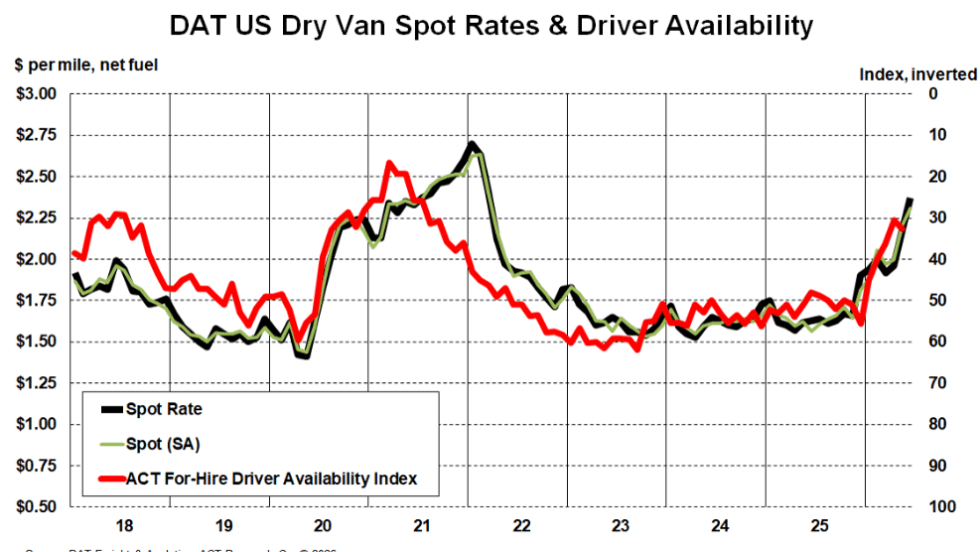
Truckload Rates Keep Rising as Tight Capacity Fuels Freight Market Recovery
Spot and contract rates continued climbing in May and June, not because freight demand is surging, but because fewer trucks and drivers are available.
Read More →