




Credit Crunch: Surviving The Storm
Better batten down the hatches and tighten the belts, motor carriers. This thing is going to get worse before it gets better. That was the message last month from economic experts

Better batten down the hatches and tighten the belts, motor carriers. This thing is going to get worse before it gets better. That was the message last month from economic experts.
The consensus is we're currently in the beginning of a recession that will last until at least the middle of next year - a recession that will look much more like the recession of 1981-1982 than the two we've had more recently.
As the credit market fails and the economy slides into full-blown recession, trucking companies are being advised to tend to basics: improve cash management and operating performance, and cultivate relationships with your lenders.
The Economy
During an panel discussion on the economy at the American Trucking Associations' annual meeting, as the market came crashing down in early October, Wachovia Senior Economist Mark Vitner predicted that a soft freight market will be further impacted by the credit crunch, causing businesses to pull back on production and freight demand. He predicted a "long, hard recession through 2008 and throughout 2009 that could be the worst in 25 years," noting he had revised earlier estimates of growth downward 2 percent.
ATA Chief Economist Bob Costello summed up the freight situation, saying that the first half of 2008 wasn't "absolutely terrible," but he said it would get worse before it got better, implying that fleets are in for more woe, compounding the business failures that already have seen 1,905 fleets fail in the first half of this year. "They will get worse before they get better," he said. "It all depends on how long it will take to get credit flowing."
Vitner predicted a recession for as much as 16 months, nearly twice the length of the more recent downturns. Fox News Correspondent Stuart Varney, who moderated the panel, was less pessimistic, saying that in a year we will be looking at the other end of the trough.
As HDT went to press in mid-October, FTR Associates gathered a panel of experts for a conference call to discuss how the past several weeks of economic turmoil and the government's efforts to deal with it would likely affect trucking and intermodal business.
Economic predictions had turned a lot gloomier than their previous conference call just three weeks earlier.
Bill Witte, director of the Center for Econometric Model Research, Truck, Rail & Intermodal Freight and Transportation Environment, said the predictions of even a couple of weeks earlier for a slow but positive GDP growth of around 1.8 percent had been downgraded to projections of a recession of 1.2 percent, with rising unemployment and the loss of 2 million jobs before the economy starts to turn around. In fact, said Witte, there's every indication that we will have at least four quarters of negative growth, indicating not only a recession but one that will be relatively long-lasting. It could rival the recession of 1981-1982, he said, deeper and longer lasting than either of the two more recent ones.
Adding to the gloom, Noel Perry, senior analyst with FTR, said the impact will be felt by both trucking and intermodal. "We're now in the third year of declines in truck, rail and intermodal freight. This has not happened since the early '80s." Over the last five years, Perry said freight volumes have declined for trucking by 2.5 percent, or an average half percent each year. He's also concerned about the possibility of bankruptcies among large discounters or retail establishments in addition to the obvious stress in the automotive sector.
Jon Starks, FTR transportation analyst, said we may also see more bankruptcies among trucking companies. "Bankruptcies have tended to be a little guy phenomenon, but that may be starting to change as we keep lengthening this downturn," he said. "Recently Gainey Corp., the number 16 carrier in Transport Topics' for hire carriers list, filed for Chapter 11 and said it was specifically due to the credit crisis. This cash crunch is switching from fuel to financing, and we fully expect bankruptcies to be continue to be elevated throughout 2009 thanks to this weak freight and tight financing environment."
From Credit Crunch to Comeback
For carriers that can weather the storm of thin freight volumes and tight credit, there are good times ahead. The major carriers are relatively well placed with sufficient cash (though a couple of heavily leveraged carriers recently taken private are possibly less liquid). But the credit problem likely will hit the lesser carriers in the middle and small size, and of course owner-operators. Fuel pricing issues have eased somewhat, the FTR panelists said, but the available cash sources for the small operator - the banks and other credit institutions, the cash from their own resources or from family - are just not there.
For companies with good credit, the captive programs of the OEMs will be available to finance deals, but even there, the cost of the money will reflect the tighter credit market.
"We had easy, easy credit for such a long time," says Bob Costello, chief economist at American Trucking Associations. "Those days are probably gone, at least in the near term."
Costello and others observed that while the credit crisis has so far been confined mainly to lending among banks, the impacts of that event are affecting the availability, price and terms for borrowed money.
The Federal Reserve reports that credit standards have tightened across the board, but as of mid-October, credit was still available to borrowers who could make the grade.
"We're okay for a couple of years," said Daniel Ustian, CEO of Navistar International Corp., in reference to the truck builder's ability to provide financing for its customers. "We put our facilities in place some time back that will take us through the next couple of years."
He added, however, "It's not free. There's more interest now."
A spokesman for Daimler Financial, which provides lending services to Freightliner, Sterling and Western Star, among others, agreed. There have been no big changes in credit availability, he said.
And there was a similar view from the sales floor. Todd Sipe, a sales rep for a Freightliner dealer in Wichita, Kan., said he has not seen a problem with credit yet. "I don't see where anybody's been turned down for financing because credit's not available."
It's the freight slowdown that's putting a lid on Sipe's business. His customers are mostly owner-operators and are hesitant to move in this market. His message to them is to cut back on expenses by slowing down to conserve fuel and try to hang in until things turn around.
"I think there's going to be a shortage of trucks next year to haul freight, and I think their rates will go up."
Costello's take is that while the credit situation is not catastrophic, carriers are finding that credit is more of an issue than it used to be.
"Fleets [say] that while they used to buy heavy-duty trucks from three suppliers, now they get them from only two [because] it's harder to get financing," he said.
The impact is harder on smaller fleets, he said. "Some smaller fleets are not getting credit at truckstops any more. They used to be able to pay later but now have to pay on the spot."
Also, shippers going through the same wringer are starting to extend their terms - payment in 45 days instead of 30, for example. A carrier whose cash flow has been affected by this sort of thing no longer can be sure that the bank will approve a short-term bridge loan to cover payroll, Costello warned. "Those are the sorts of thing that I think will start to pop up."
Like Sipe of Wichita, Costello believes that the carriers who can get through this will enjoy a bountiful rebound.
"There is so much capacity going out of the market - has gone out of the market and will continue to go out of the market - that those who are left standing at the end are going to be in a very good po
More Fleet Management

Long-Awaited Canadian Border Bridge to Open in Detroit
For trucking, the bridge opening should offer immediate improvements in efficiency and reliability, with new customs facilities, expanded inspection capacity, and direct freeway-to-freeway connections.
Read More →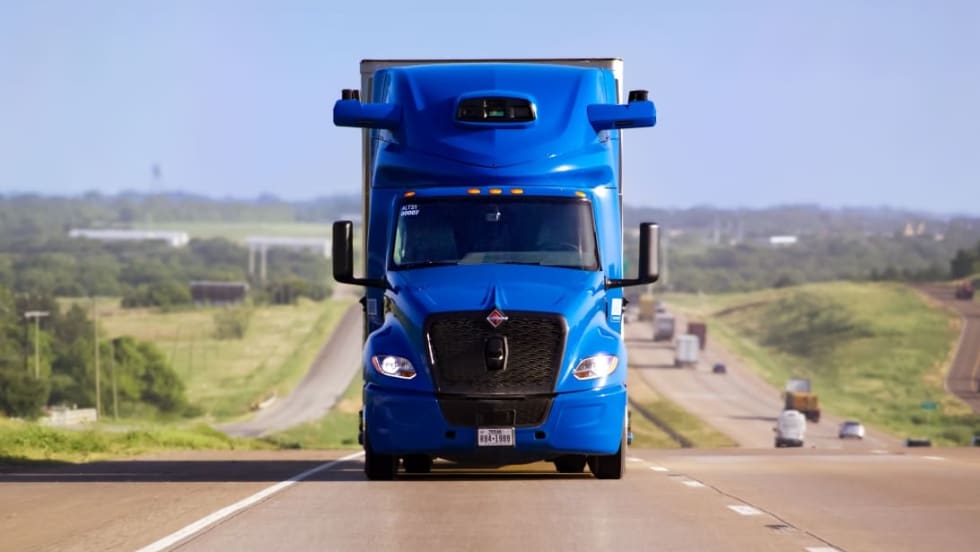
Aurora Rolls Out Next Generation of Driverless Trucks for Commercial Freight
Aurora's latest autonomous trucks it's rolling out with International feature lower-cost hardware designed for a million miles as the company expands commercial driverless freight operations across the U.S. Sun Belt.
Read More →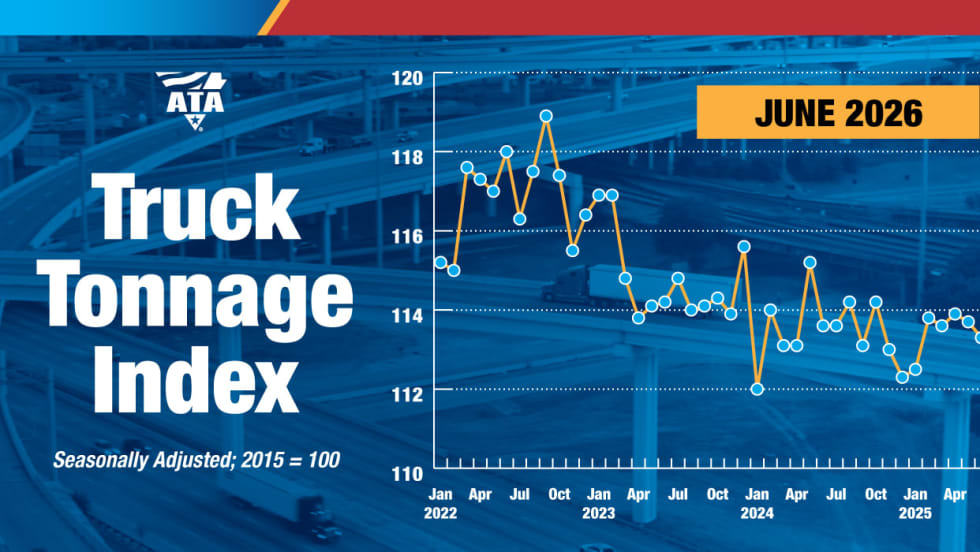
Freight Tonnage Down, Rates up, as Lower Capacity Powers Trucking Recovery
The recovery from the freight recession continues to be driven by reduction in capacity rather than by increased demand.
Read More →

Think Your Trucking Fleet Isn't Using Much AI? Think Again
Shadow AI — the use of unauthorized artificial intelligence tools at work — is becoming increasingly common, putting sensitive company data at risk. Learn how trucking fleets can protect sensitive data while embracing AI.
Read More →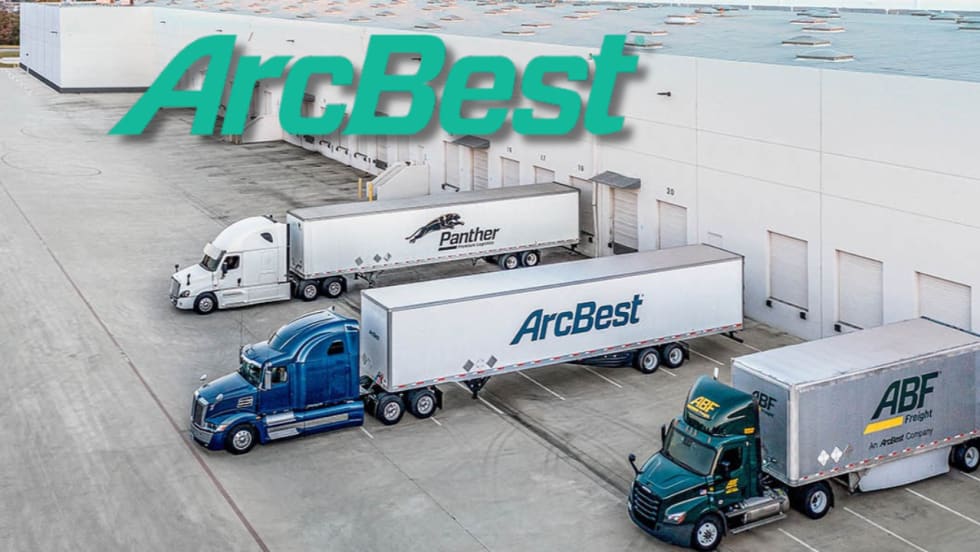
ArcBest Consolidates Brands, Cuts Workforce
The company will bring three business units under the ArcBest brand, eliminate about 2% of positions, and expects the changes to generate $40 million in annual savings.
Read More →
Trucking Fleets Faced Record Operating Costs During Third Year of Freight Recession
ATRI's annual operational cost report shows carriers trimmed fleets, delayed equipment purchases, and ran older trucks as expenses continued to outpace freight rates.
Read More →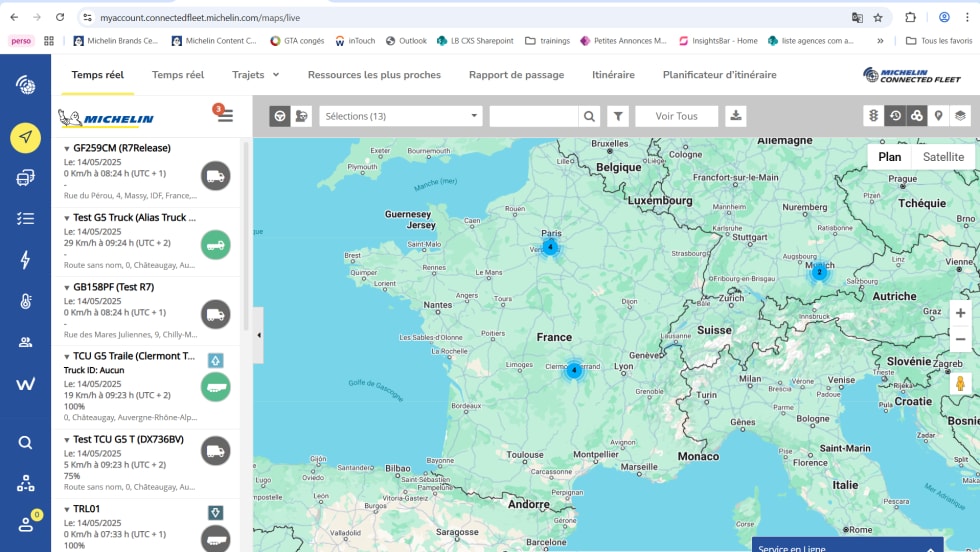
Michelin Adds AI Assistant to MyConnectedFleet Platform
Michelin’s new generative AI tool delivers instant fleet insights, helping managers analyze fuel use, tire maintenance, vehicle status, and operational performance without manually creating reports.
Read More →
LytxOne Platform Now Features AI, Compliance, and Asset Tracking Tools
New enhancements add AI-powered insights, asset tracking, compliance automation, and configurable privacy controls to Lytx's all-in-one fleet management platform.
Read More →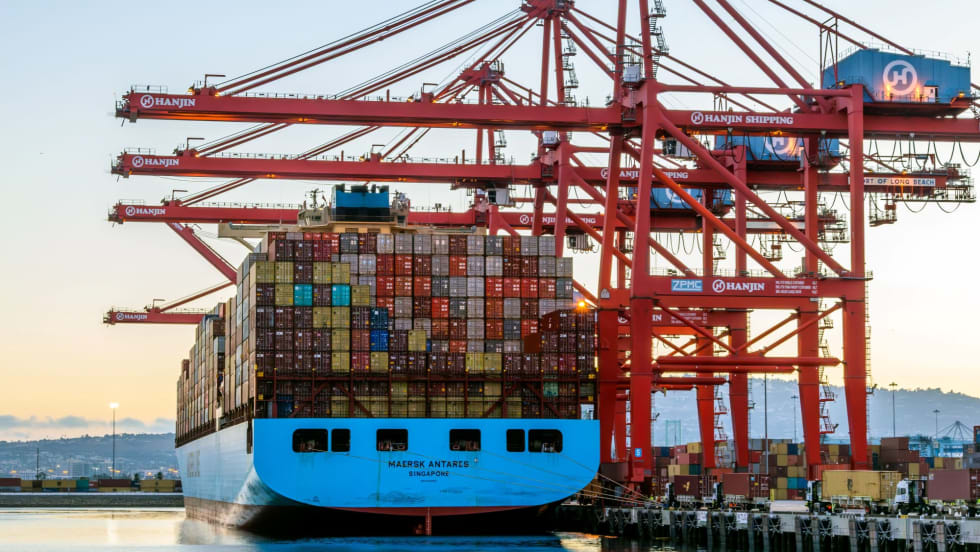
July Imports Poised to Set Container Record
The National Retail Federation projects July container imports will surpass the pandemic-era record as shippers frontload freight ahead of expected August tariff increases.
Read More →
HDT Announces 2026 Truck Fleet Innovator Finalists
From AI and fleet electrification to safety, operations, and leadership, these HDT Truck Fleet Innovator finalists are changing how trucking gets done.
Read More →