




Construction Dead? Think Again.
Construction is dead, right? Not entirely. Even in down times there are things a-buildin,' and some people are buying new vocational trucks, say truck-maker representatives

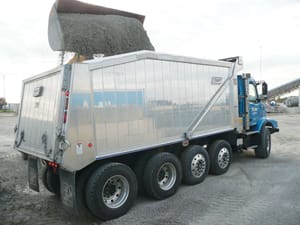
Construction is dead, right? Not entirely. Even in down times there are things a-buildin,' and some people are buying new vocational trucks, say truck-maker representatives.
They see glimmers of activity in several applications, and the boom continues in oil and gas drilling, which need trucks similar to those used in mainstream construction.
Home building, a major driver of trucking activity, remains quiet as the country struggles with a vast inventory of existing homes for sale, many of which were foreclosed following the collapse of home values and the mortgage lending crisis. Road and bridge building aren't what they once were because all government entities are strapped for money. But some highway work is going on as previously committed funds are allocated and contracts awarded.
So a few fleets have resumed buying dump trucks. Even some mixer chassis and block trucks, which haven't sold for the last two years, are being ordered, the OEMs say. Buyers are taking various Class 8 makes and models, some of which are using the builders' latest proprietary diesels.
"Not only has the first quarter of 2011 seen an increase of roughly 325% in order intake over the same period last year, total orders for the first five months of 2011 have already outpaced orders for the entire year of 2010," reports Ann Demitruk, director of marketing at Western Star.
Most of that is coming from central and western Canada, where oil field work is healthy, and in Ontario, where stimulus funding for infrastructure improvements requires new trucks. The central and western U.S. also seem to be reviving.
"There's an uptick in the mixer market, but nothing like three or four years ago," says Alan Fennimore, vocational segment marketing manager at Kenworth. "We've sold as many mixers so far this year as we sold in the two years prior. People are starting to replace what they bought in '04-06, and then they started pulling back."
Industrywide, the increase in mixer sales was 30% to 35% in the first five months of this year, says Dave Rinas, Terex Advance's director of sales, who quoted the numbers from a monthly report issued by the National Ready Mix Concrete Association's Truck Mixer Manufacturers Bureau. Domestic sales, which includes North America, was up 15%, while exports were up dramatically as other world economies are recovering faster.
But the market's become stagnant again, Rinas says. This is not unusual in the concrete business, whose operators tend to order trucks in the first and last quarters and lay off in summer and early fall.
Terex Advance builds front-discharge mixers, a small segment of the construction market that's been heavily impacted by the economy. Rinas says that glider trucks - new chassis and cabs with used or rebuilt engines, transmissions and tandem axles - make up 80% to 90% of the company's sales. New trucks account for 10 to 20%.
Cash-strapped concrete producers see much value in gliders because they cost 35% to 40% less than new trucks, and buyers also avoid the 12% federal excise tax imposed on new heavy trucks, Rinas says. There are also lots of parts sales, of drums and other components, "to extend the life of trucks that should be replaced by now," he says.
At Kenworth, "We're seeing good growth in the oil field and oil field servicing market with the price of oil the way it is," Fennimore says. "That's something we play very well at."
Mack Trucks also sees growth in the oil fields, particularly in western Pennsylvania and eastern Ohio, where deep drilling for natural gas has boomed in the last year or so. The process is economically and strategically promising, because natural gas has become a viable alternative to imported oil. But it's controversial because it involves fracturing gas-bearing rock with chemical-laced high-pressure water, which some claim threatens ground water. And millions of barrels of brine that come back up must be disposed of.
But for now the business is such that "I can't get enough trucks," remarked one Mack customer, who then excused himself from a phone conversation because he was "swamped" with work.
He was one of only two vocational truck buyers HDT was able to converse with. The other was a manager at a Georgia firm that mines and hauls kaolin clay, a chalky substance used primarily in paper making but also in a variety of consumer products. He's replenishing his fleet of International PayStar trucks and tractors, powered by MaxxForce Advanced EGR engines, because business is up as the general economy improves.
About a half-dozen other fleet people were "very busy," as several receptionists said, and too preoccupied with business to return our calls. But if they do, we'll try to post their comments at www.truckinginfo.com.
2010-legal engines
Buyers of new trucks are getting 2010-legal engines, most of them equipped with diesel exhaust fluid injection devices that help cleanse exhaust. "It's good to see them getting their feet wet in 2010 emissions technology," says Kenworth's Fennimore. Many KW customers are trying the recently introduced Paccar MX-13 diesel, but Cummins power is also popular. The same is true at KW's sister company, Peterbilt, representatives said.
More than 90% of Western Star construction customers are buying Detroit Diesel DD13 or DD15 engines, which also use selective catalytic reduction, because they like the fuel savings and clean back of cab allowed by compact packaging of the exhaust aftertreatment equipment, says Ann Demitruk.
Curious about Cat
Considerable curiosity follows Caterpillar, a builder that quit the truck engine business in 2009 and early this year entered the on/off-highway vocational truck market. Its new CT (Cat Truck) conventional-cab models are based on International's PayStar series and use Navistar-made diesels. Production of CT-660s began a couple of months ago at Navistar's Garland, Texas, plant, and deliveries to customers will start this month.
"I've been surprised by the interest in the truck," which was unveiled at the ConExpo show in March, says George Taylor, Cat's director of global on-highway trucks. "There are over 1,000 quotes that we're working on. The specs have to be right for the customer," and application engineers are reviewing orders for them.
Orders are evenly split between 115- and 122-inch BBC versions of the CT-660, which has a setback front axle. The trucks will go to a variety of applications, including dumpers and mixers. And buyers are choosing the 13-liter engine more than the 11, he says.
"They're not in a hurry to get SCR" - selective catalytic reduction with urea injection, which Navistar diesels do not use. "We have had a lot of comments on that." No SCR weighs in Cat's favor for such customers, and agrees with its philosophy on emissions reduction, as it's avoided SCR in the engines of its construction machinery.
About half the truck orders are for automated or automatic transmissions, and the rest for manual gearboxes. Cat is using its own CX automatics and Eaton's automated and manual transmissions.
While the construction market is not booming, Taylor believes 2012 will be stronger. And he's concerned about how future production will be supported.
"Our challenge is that sales of over-the-road trucks are starting to impinge on suppliers," he says. "I expect the fourth quarter to be really tight on supplies, and there'll be supply chain issues for critical components," such as tires and certain mechanical parts. "A lot of the supply base during the downturn either went out of business or constricted."
From the July Issue of Heavy Duty Trucking
More Fleet Management

How Innovative Trucking Leaders Turn Change Into an Advantage
As the pace of change accelerates in trucking, the fleets that adapt best have more than the latest technology. They have cultures that embrace improvement.
Read More →
Freight Broker Bonds Just Got Harder to Get. Here's What That Means for Your Fleet.
When it gets harder for a freight broker to prove they are financially sound, the ones who cannot clear that bar get pushed out of the market. And those are exactly the brokers who used to leave motor carriers holding the bag.
Read More →
Long-Awaited Canadian Border Bridge to Open in Detroit
For trucking, the bridge opening should offer immediate improvements in efficiency and reliability, with new customs facilities, expanded inspection capacity, and direct freeway-to-freeway connections.
Read More →
Aurora Rolls Out Next Generation of Driverless Trucks for Commercial Freight
Aurora's latest autonomous trucks it's rolling out with International feature lower-cost hardware designed for a million miles as the company expands commercial driverless freight operations across the U.S. Sun Belt.
Read More →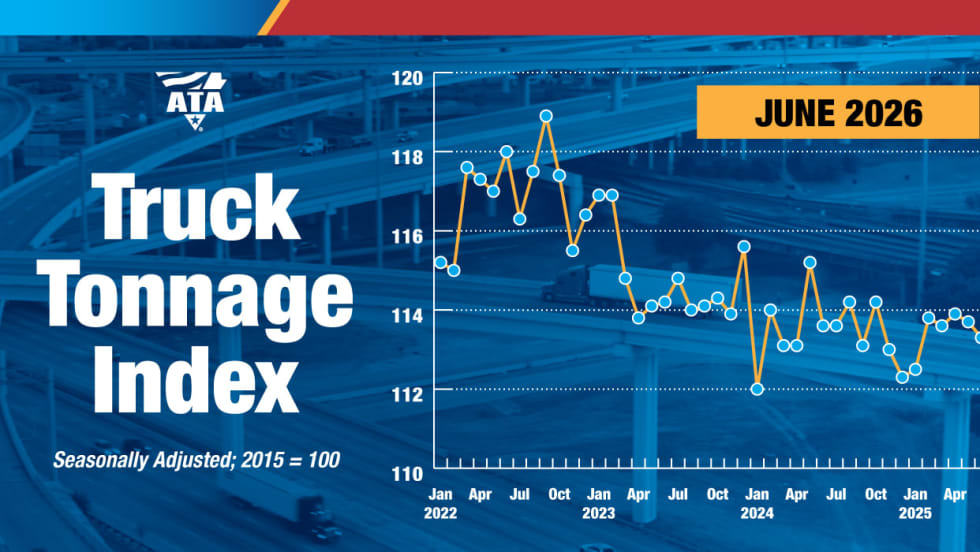
Freight Tonnage Down, Rates up, as Lower Capacity Powers Trucking Recovery
The recovery from the freight recession continues to be driven by reduction in capacity rather than by increased demand.
Read More →
Think Your Trucking Fleet Isn't Using Much AI? Think Again
Shadow AI — the use of unauthorized artificial intelligence tools at work — is becoming increasingly common, putting sensitive company data at risk. Learn how trucking fleets can protect sensitive data while embracing AI.
Read More →
ArcBest Consolidates Brands, Cuts Workforce
The company will bring three business units under the ArcBest brand, eliminate about 2% of positions, and expects the changes to generate $40 million in annual savings.
Read More →
Trucking Fleets Faced Record Operating Costs During Third Year of Freight Recession
ATRI's annual operational cost report shows carriers trimmed fleets, delayed equipment purchases, and ran older trucks as expenses continued to outpace freight rates.
Read More →
Michelin Adds AI Assistant to MyConnectedFleet Platform
Michelin’s new generative AI tool delivers instant fleet insights, helping managers analyze fuel use, tire maintenance, vehicle status, and operational performance without manually creating reports.
Read More →
LytxOne Platform Now Features AI, Compliance, and Asset Tracking Tools
New enhancements add AI-powered insights, asset tracking, compliance automation, and configurable privacy controls to Lytx's all-in-one fleet management platform.
Read More →