




Commentary: Fast-Tracking Technicians
The TechSpedite program teaches technicians how to do the job not just from a technical perspective but from a personal and professional perspective too, explains Aftermarket Contributing Editor Denise Rondini in her September column.


Denise Rondini

Denise Rondini
The tremendous need in the market for entry-level technicians is the reason Pro-Mech Learning Systems started the TechSpedite program.
The four-week, hands-on class teaches students how to do basic shop tasks such as performing preventive maintenance inspections and diagnosing and repairing common service problems.
“The course is laser-focused on a very specific set of skills,” explained Mike Compisi, vice president of operations at Pro-Mech, which provides advanced diesel technician training and comprehensive shop support services.
Compisi was quick to point out that Pro-Mech “absolutely believes in vo-tech schools. They do a wonderful job of teaching a comprehensive set of skills.” The TechSpedite program is different, however, in that it gives students a limited but practical set of skills that they can use immediately in a shop.
The inaugural session of the class kicked off in May with limited enrollment “because we wanted to make sure we worked out all the kinks,” Compisi explained. The second class graduated in July. All students from the first class have been placed in shops, and at the time I spoke with Compisi, potential employers had just completed interviewing students from the second class. “I have every reason to believe the guys in the current class will also be hired,” he said.
The course combines classroom instruction and hands-on practice, and class size is limited to 15 to facilitate the hands-on learning. The course first goes over content in an instructional manner; then the students go practice on a piece of equipment. “That way they start to learn muscle memory from doing things in a repetitive manner, so when they get to their places of employment, they will be able to replicate what they learned and continue with best practices and proper safety procedures.”
Students are tested throughout the program in every content area for competency and proficiency. At the end of the program, each student’s potential employer gets a detailed report card so employers will know the student’s strengths as well as areas in which they may need additional training.
In addition to hard skills such as doing brake jobs, replacing lights, replacing filters, changing oil, etc., the course teaches soft skills. “We teach them how to do the job not just from a technical perspective but from a personal and professional perspective too,” Compisi said. They learn things like the importance of being on time and not being constantly on their cell phones during work hours — two things potential employers indicated were important to them.
Pro-Mech is working with the Department of Veterans Affairs, workforce development organizations, and local school districts to attract students to the program, which will run about 10 times a year.
In addition, some employers are sponsoring students for the program. “They will take a fuel bay tech or a wash bay tech and send them to the class,” Compisi said. “They already know they are good kids, so it is a good investment on their part to get a trained technician in just a few weeks.”
Currently, the course is only available at the company’s location in Avon, New York, although there is a residency model where students come for the course, stay at a local hotel during the week and return home on weekends. Compisi said this works best for someone within a five- to six-hour driving distance. Future plans call for offering classes in other locations as well as an eight-week evening class. Currently, classes are held from 8 a.m. to 5 p.m., which makes it difficult for people who have jobs to attend.
Compisi said the program makes sense for both students and shops, because “at the end of the day we provide short bite-sized components of content that are extremely relevant to the industry.”
More Maintenance

Color Match Smarter: Tools That Restore & Perform
For fleet managers and collision repair professionals keeping heavy-duty trucks on the road, getting the color right the first time isn't just about appearance — it's about efficiency, turnaround time, and bottom-line results. Discover how today's digital color tools are transforming the repair process from guesswork to precision.
Read More →
Wrong Repair Prompts Recall of Freightliner, Western Star 4x2 Trucks
DTNA is recalling more than 2,400 trucks that received an incompatible software fix instead of the hardware repair required to address brake valve corrosion.
Read More →
Truck Drivers Need More Than Another Alert
Fleets have more visibility into truck health, safety events, and driver activity than ever. The next challenge is turning all that information into useful guidance for the person who has to decide what to do next.
Read More →
The Maintenance Checks Trucking Fleets Should Prioritize Before Fall Freight Picks Up
Making it through August isn’t the same as being ready for the next several months of operation. Find out what systems may have suffered from summer heat and need to be checked out before fall.
Read More →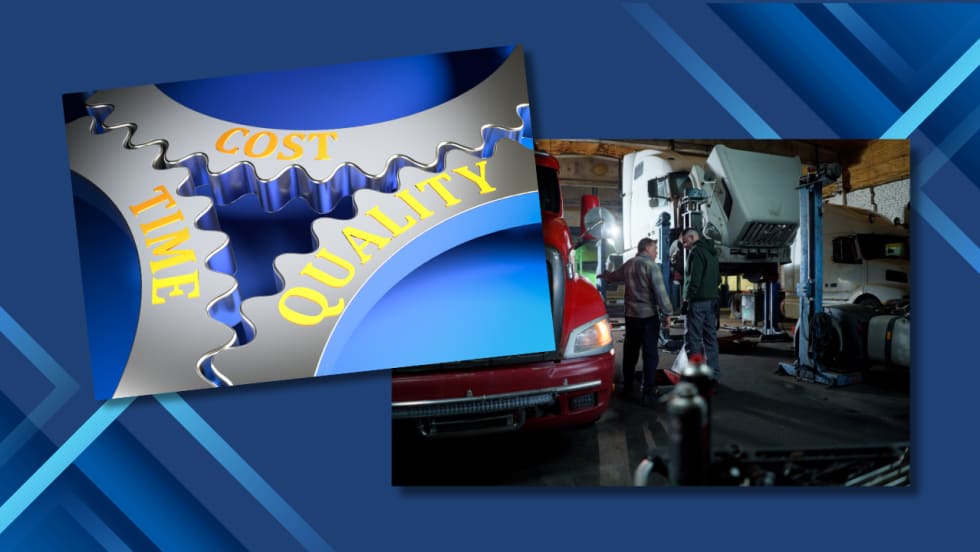
What Three Fleets Are Doing Differently When Buying Truck Parts in 2026
With freight improving but costs still climbing, fleet maintenance executives explain how they're balancing price, quality, and supplier relationships.
Read More →
Paccar Recalls 2027 Trucks Built This Summer for Possible Electrical Problem
The nearly 6,000 Kenworth and Peterbilt trucks in the recall could potentially lose engine power, among other things.
Read More →
Will API PC-12 Oil Change Trucking Fleet Maintenance?
The new API PC-12 heavy-duty engine oil category reflects the changing demands of modern diesel engines. But fleets like Foodliner are looking to getting their own data before making decisions on adopting the new oils and questions such as extending oil drain intervals.
Read More →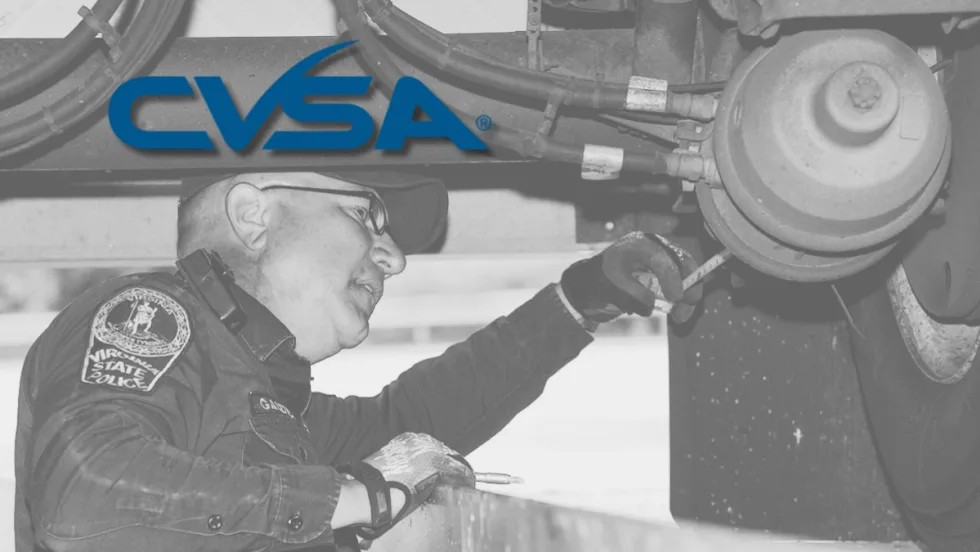
Brake Safety Week to Focus on Drums and Rotors
Commercial vehicle inspectors are focusing on truck brakes during CVSA's Brake Safety Week, August 23-29.
Read More →Possible Battery-Cable Fires Prompt Recall of 15,000+ International MV and HV Trucks
On the recalled vehicles, manufacturing variations can cause the battery interconnect cable to contact the auxiliary stud and hold down the bracket.
Read More →
Rush, MCT Team Up to Grow Refrigeration Service Network
The joint venture will operate MCT's network of Carrier Transicold dealerships and mobile service locations, with the companies promising greater service capacity and uptime for refrigerated fleets.
Read More →